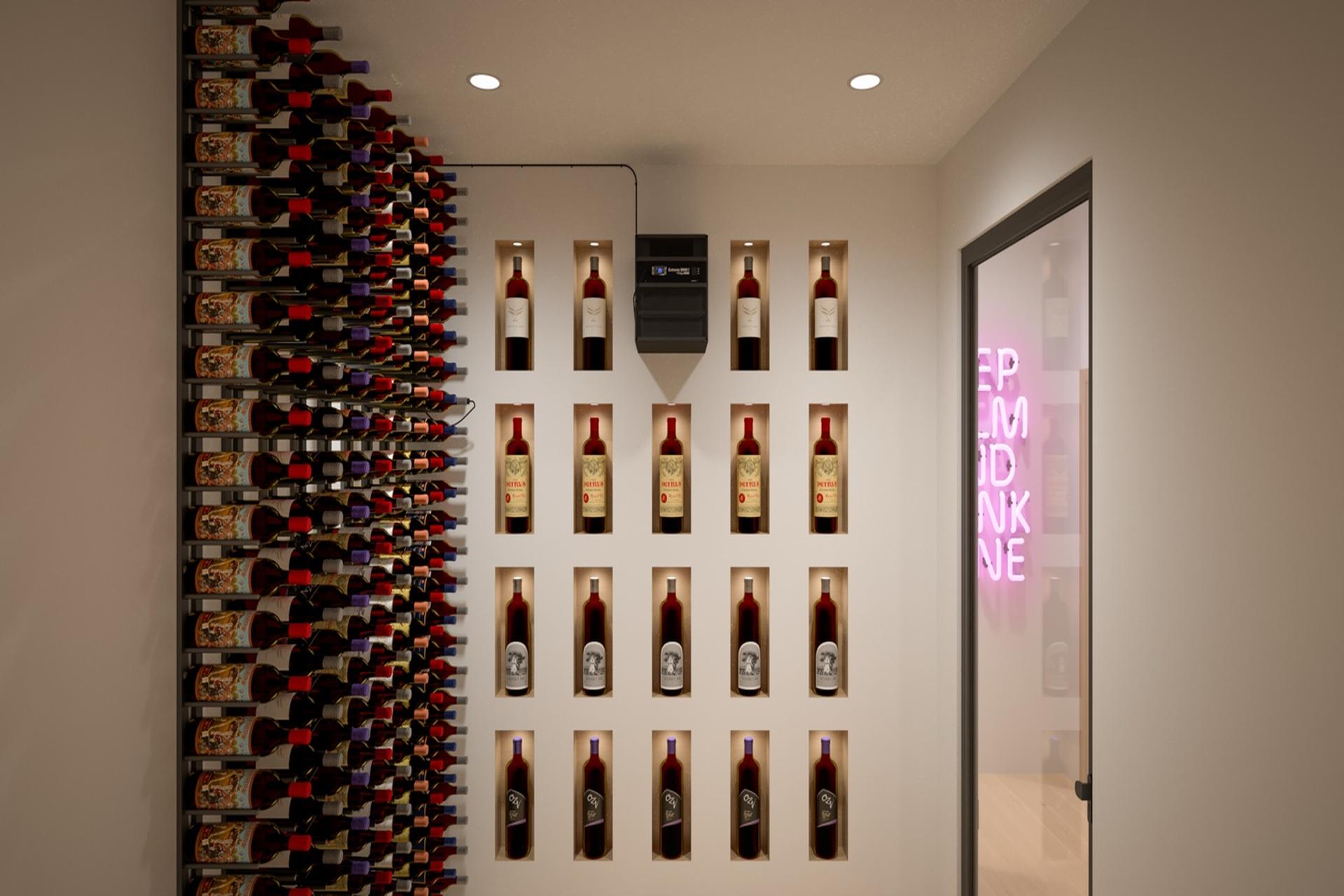
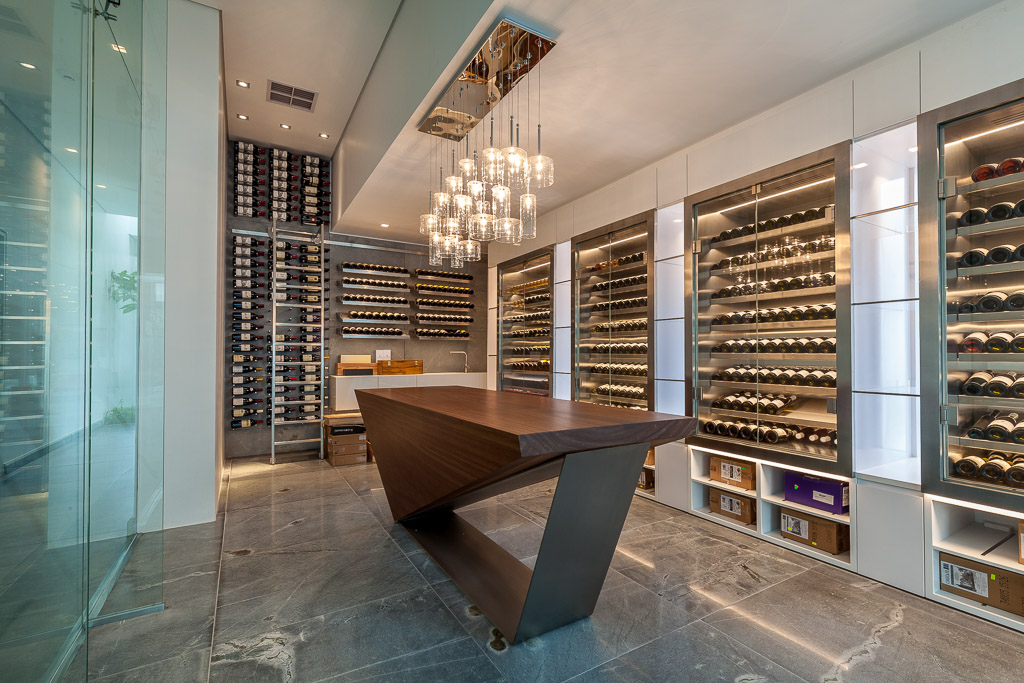
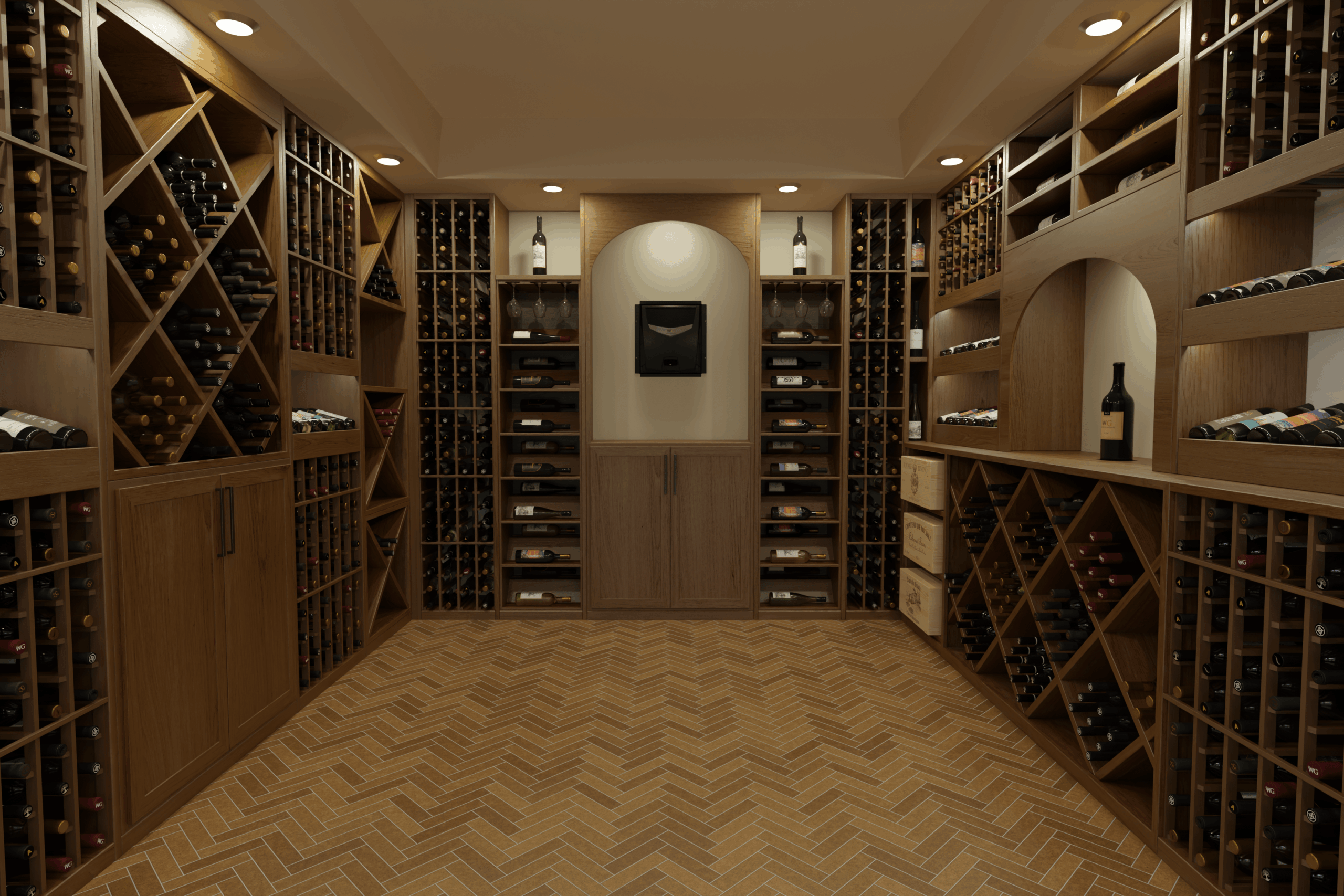
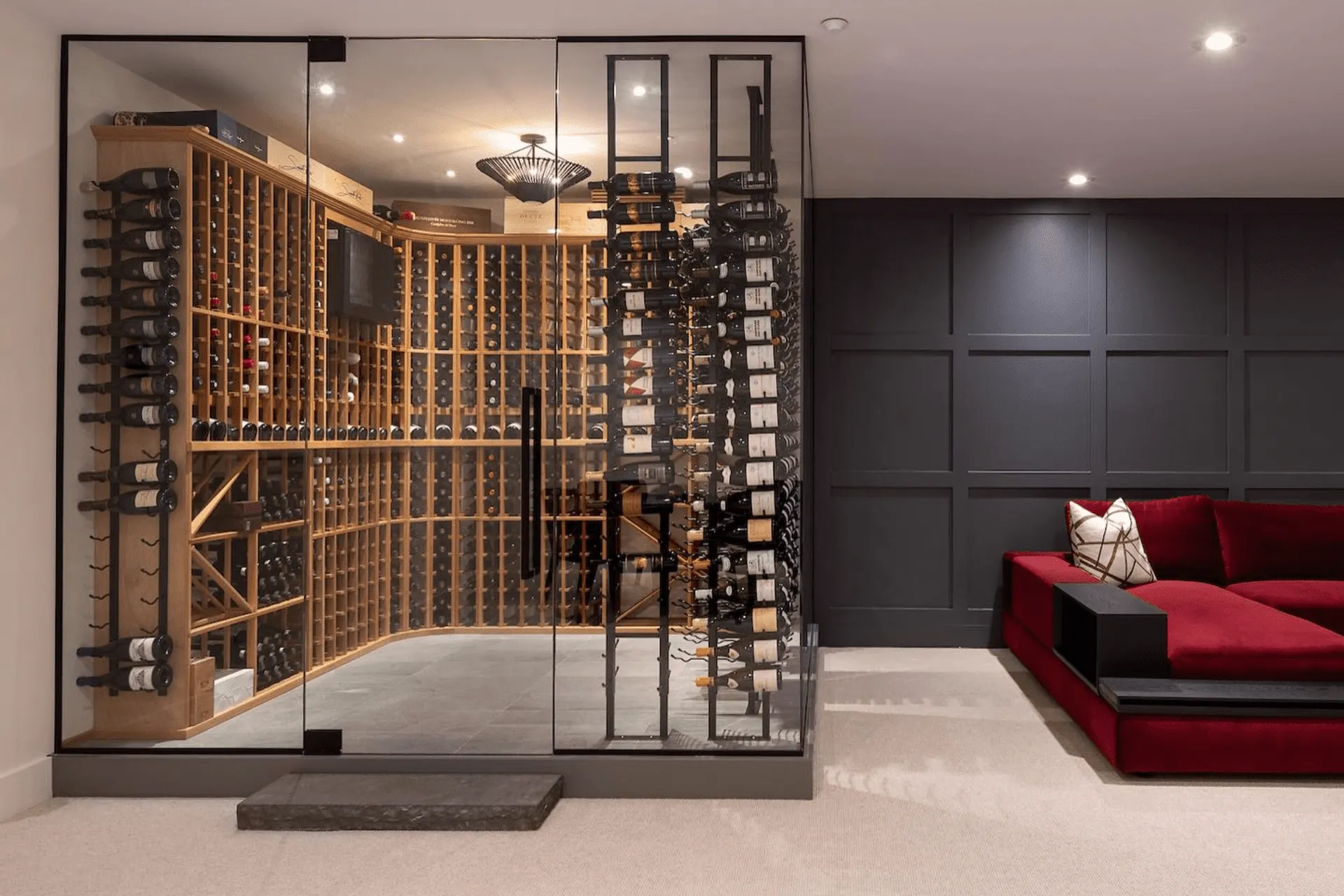
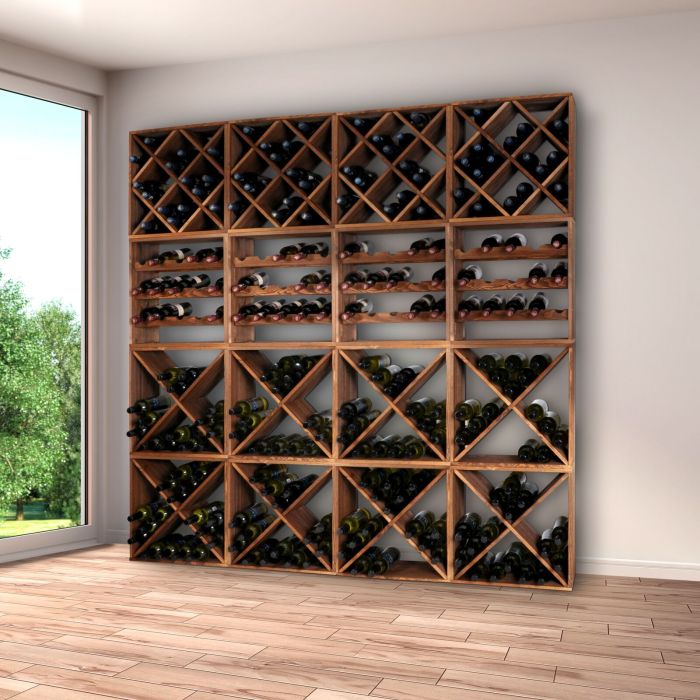
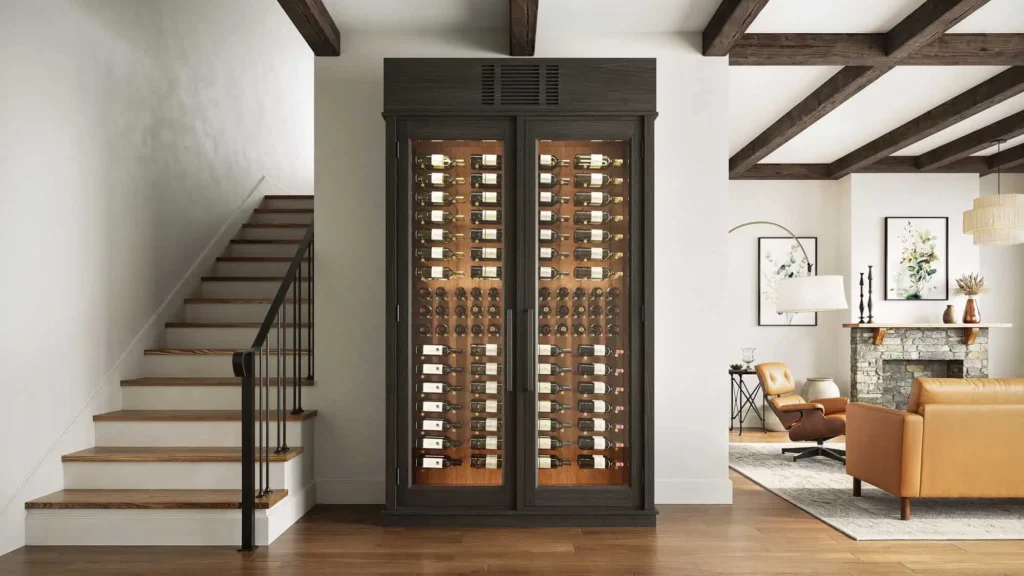
From budget-friendly starter kits to freestanding pieces and members-only lockers, our solid hardwood racking ages as gracefully as the collection it holds — pine, oak, mahogany, and redwood, all built for real cellars.
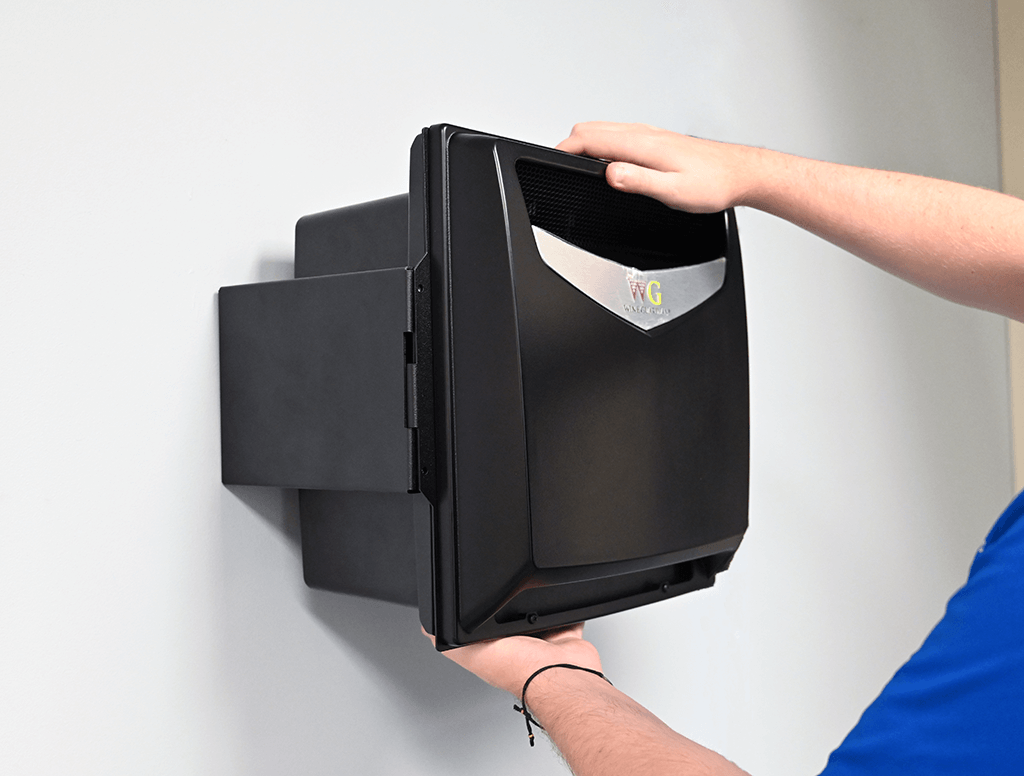
Wine cellar cooling unit is a specialized cooling system designed to maintain the ideal temperature and humidity levels required for storing wine. It ensures the longevity and quality of your wine collection by preventing temperature fluctuations and excessive humidity.
Wine is a delicate beverage that can easily spoil if not stored under the right conditions. A cooling unit is essential to maintain a consistent temperature, typically between 55°F (13°C) to 58°F (14°C), which is considered optimal for wine storage.
These units use a compressor and evaporator system to cool the air inside your wine cellar. They also provide humidity control and circulation, ensuring proper air quality and preventing mold or mildew growth.
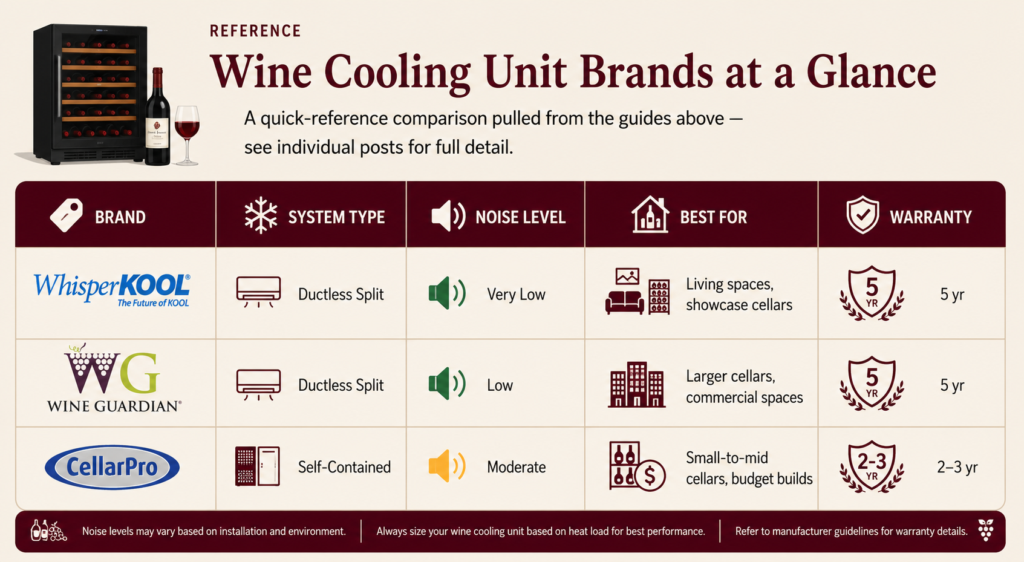
Key factors to consider include the size of your wine cellar, insulation quality, noise level of the unit, ease of installation, power consumption, and additional features like remote control, digital temperature display, and alarms.
Cooling capacity is measured in British thermal units (BTUs) or in cubic feet per minute (CFM). To determine the right capacity, consider the insulation, room size, number of bottles, and the desired temperature range for your wine cellar. It is advisable to consult with a professional if you’re unsure.
While some units offer a DIY installation option, it is generally recommended to hire a professional HVAC technician or a wine cellar specialist to ensure proper installation and avoid potential damage to your wine cellar.
To confirm the correct size unit for your wine cellar a Heatload calculation needs to be completed. Room dimensions are important but there are other factors at play as well. Room location, room construction, and ambient temperature around the wine cellar are some of things to consider when completing a Heatload calculation. For a free Heatload calculation please contact us at 1-800-323-3130 or Click Here to fill out our request form.
Regular maintenance is essential for optimal performance. This includes cleaning or replacing air filters, checking refrigerant levels, and inspecting the unit for any obstructions or leaks. It is recommended to follow the manufacturer’s guidelines for maintenance.
No, a properly functioning cooling unit will not create excess humidity. In fact, most wine cellar cooling units come with built-in humidity control systems to maintain the ideal moisture levels for wine storage, usually around 50-70% relative humidity.
It is possible to use a wine cellar cooling unit in other spaces, it is important to note that these units are designed specifically for wine cellars. They may not be as effective in maintaining optimal conditions in different environments due to factors like insulation, temperature fluctuations, and potential moisture issues.
The lifespan of a wine cellar cooling unit can vary depending on the brand, model, maintenance, and usage. On average, a well-maintained unit can last between 8 to 15 years. Regular servicing and cleaning will help extend its lifespan.