How Do I Size A Wine Cooling Unit Based On Room Dimensions and Insulation?
Book an appointment Request free design Free Heatload Calculation Selecting the right wine cooling unit is one of the most important
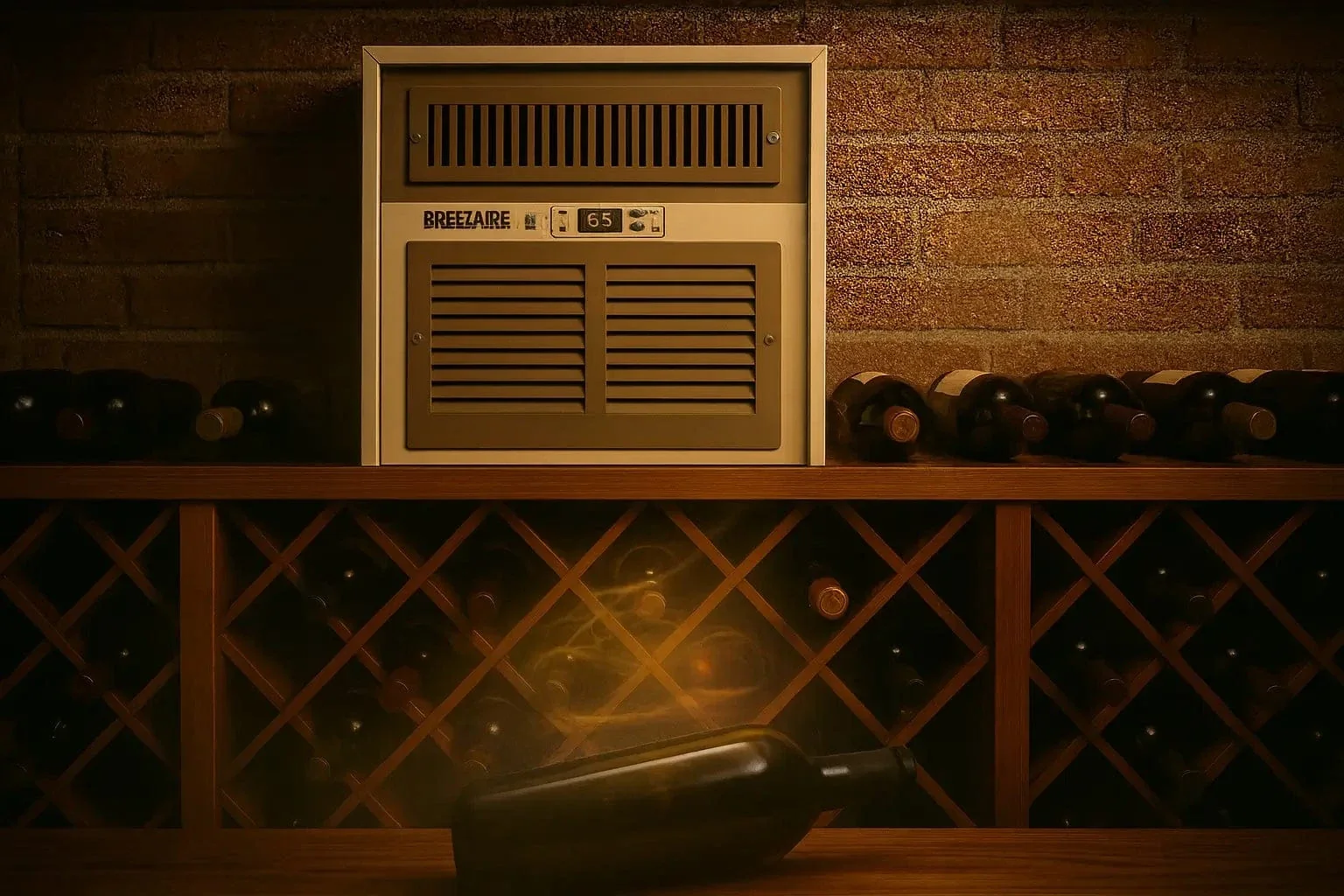
All Breezeaire Wine Cooling Systems that create the kind of carefully controlled environment demanded by products that are highly sensitive to changes in temperature and humidity. All cooling systems are made to deliver superior performance. Built using only the highest quality components and hand assembly by expert craftsmen in our U.S. production facilities.
All Breezeaire Wine Cooling Systems are made to control vibration by dampening mounts throughout the cooling system. All units are hand assembled and tested to ensure that they meet the most exacting standards, resulting in wines that have greater clarity and brilliance.
Our wine cellar experts are ready to assist in finding the ideal wine-cooling unit for your cellar. Just tell us the style, size, budget, and cellar details – we’ll handle the rest.


Breezaire wine cooling units are specifically designed for wine storage environments. Unlike conventional air conditioners, they maintain wine cellar temperatures while preserving humidity levels that help protect corks and labels. Standard air conditioners often remove too much moisture, which can damage wine over time.
Most wine collectors set their Breezaire unit between 55°F and 58°F for long-term wine storage. Breezaire systems include adjustable thermostats that allow precise temperature control within the ideal wine aging range of approximately 50°F to 60°F.
Yes. Breezaire units are engineered to maintain relative humidity levels between approximately 50% and 75%, helping prevent cork shrinkage while minimizing excess moisture that can lead to mold and label damage.
Breezaire cooling systems are designed with vibration reduction and quiet operation features. Their low-vibration design helps protect aging wine from unnecessary disturbance while providing discreet operation in residential wine cellars.
The correct unit depends on the wine cellar’s cubic footage, insulation, vapor barrier, glass exposure, and ambient room conditions. An undersized unit may struggle to maintain temperature, while an oversized unit may cycle excessively. Proper cellar measurements should be calculated before selecting a model.
Yes. Breezaire offers models specifically designed for wine cabinets and smaller enclosures. These units provide stable temperature and humidity control for custom cabinetry and compact wine storage applications.
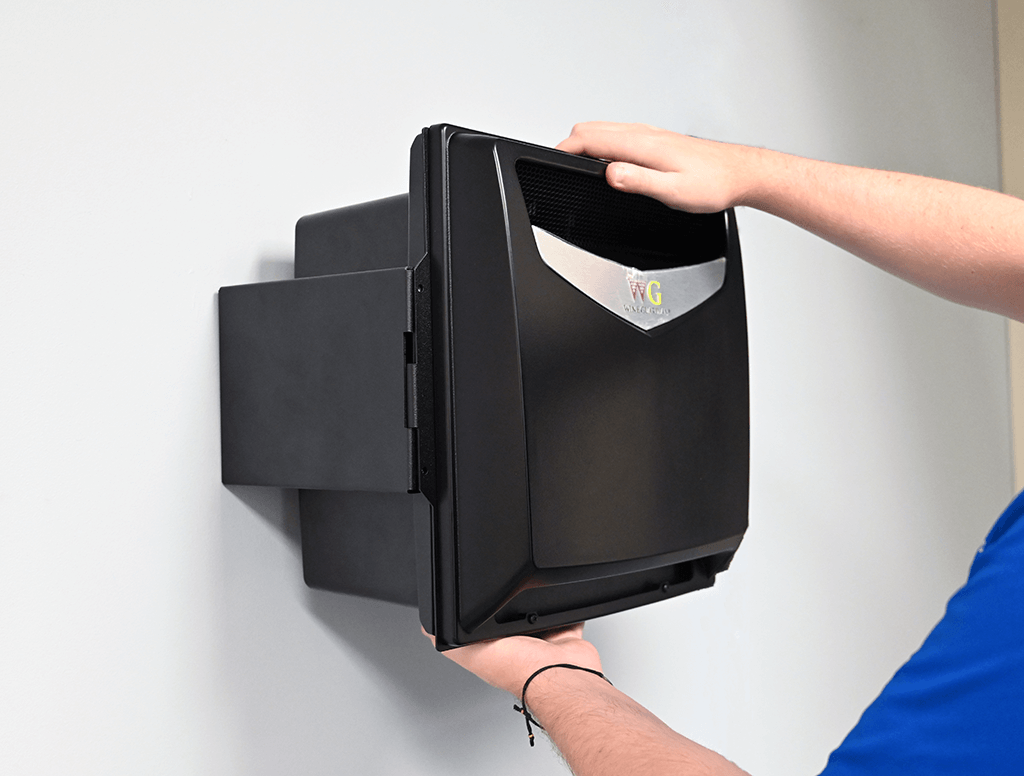
Many Breezaire self-contained units are designed for relatively straightforward installation and can be mounted through a wall with access to a standard 115V electrical outlet. However, proper cellar construction and ventilation are critical for optimal performance, so professional installation is often recommended.
Routine maintenance is minimal. Breezaire recommends inspecting and cleaning the condenser coil approximately every three months to ensure proper airflow and cooling efficiency.
Common causes include inadequate insulation, poor vapor barrier installation, warm air infiltration, blocked condenser airflow, improper cellar construction, or an incorrectly sized cooling unit. In many cases, cellar construction issues are responsible rather than equipment failure.
No. Breezaire systems are designed for long-term wine storage and aging rather than rapid cooling or serving-temperature refrigeration. They maintain stable cellar conditions instead of refrigerator-level temperatures.
Many Breezaire units remain in service for well over a decade when properly maintained. The company also notes that replacement units are designed to fit installations dating back to the 1980s, making upgrades easier for existing wine cellars.
Breezaire self-contained cooling units include a five-year parts warranty and one year of factory labor coverage for eligible products. Warranty terms may vary depending on the model and installation conditions.
Key benefits include:
Some owners report that proper cellar construction is critical for achieving expected performance. Self-contained units also require adequate ventilation for heat exhaust, and periodic condenser cleaning is necessary. For larger or more complex wine cellars, a split-system cooling solution may sometimes be preferred.
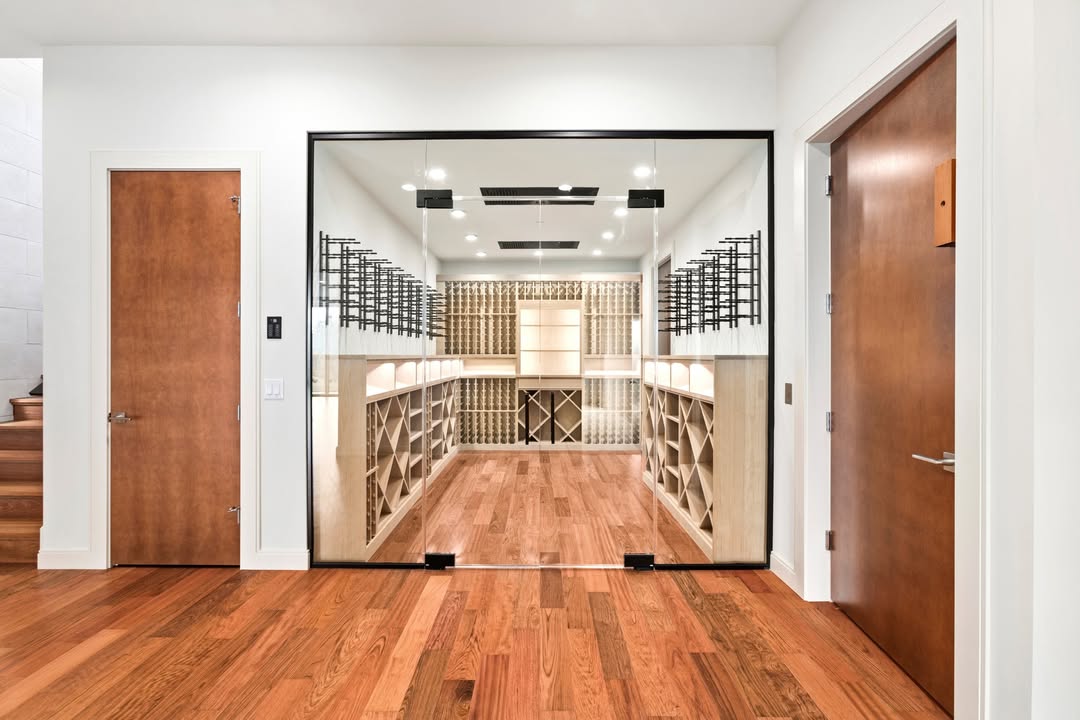
Yes, but glass wine cellars typically have higher cooling loads due to increased heat transfer. Proper sizing calculations, insulation strategies, and glass specifications should be evaluated before selecting a Breezaire unit.

Book an appointment Request free design Free Heatload Calculation Selecting the right wine cooling unit is one of the most important
Wine collectors and others who store or age delicate products have special requirements that cannot be satisfied by standard refrigeration equipment. Unlike air conditioners or commercial refrigeration systems. Our units gently cool the air without removing the moisture. Its essential for maintaining the integrity of the corks and the wine itself. Only excess moisture is removed in order to maintain 50% to 75% relative humidity. Our units are not made to chill wines to a low serving temperature or to cool “service cabinets,” which are opened or entered frequently.
The most popular cooling systems are completely self-contained modules that are simply mounted on a wall and connected to a standard 115 AC source. No plumbing, complicated wiring, or special procedures including the on-site installation of refrigerant, are required. The gentle cooling action of the system maintains the relative humidity in the 50 to 75 percent range. Thus eliminating excess moisture but never allowing the air to become dry enough to create an undesirable condition. (Additional moisture may be required in extremely dry climates.)