
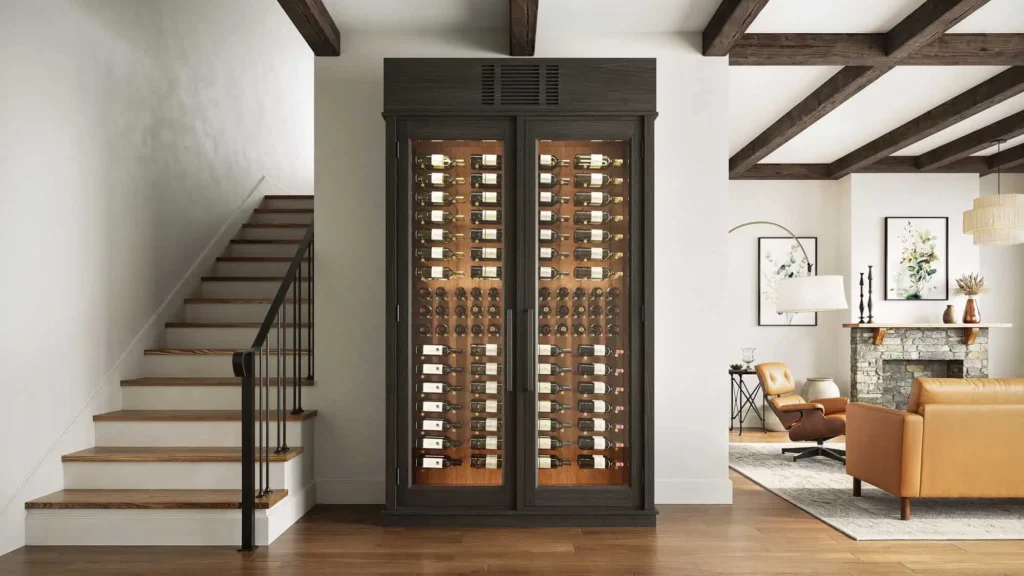
A beautifully designed wine cellar means very little if it cannot consistently maintain the ideal storage environment. One of the biggest challenges homeowners face is building a wine cellar against one or more exterior walls. While it may seem like the most convenient location, exterior walls expose your cellar to constantly changing outdoor temperatures, making it significantly harder to maintain the stable conditions that fine wine requires.
Whether you’re planning a new custom wine cellar or troubleshooting an existing one, understanding how exterior walls affect cooling performance can save you thousands of dollars in energy costs, equipment upgrades, and potential wine damage.
Why Temperature Stability Matters for Wine
Wine doesn’t simply need to stay cold—it needs to stay consistent.
The ideal storage environment is typically:
- Temperature: 55°F (13°C)
- Humidity: 60–70%
- Minimal temperature fluctuations
- Protection from UV light and vibration
Even if your cellar averages 55°F, repeated swings between 50°F and 65°F accelerate aging, dry out corks, and negatively affect the flavor and longevity of your collection.
Why Exterior Walls Create Problems
Unlike interior walls, exterior walls are constantly influenced by outdoor weather conditions.
During the day they absorb:
- Direct sunlight
- Summer heat
- Cold winter temperatures
- Rain and moisture
- Wind-driven air infiltration
All of this heat (or cold) eventually transfers into the wine cellar.
Your cooling system must continuously fight this thermal load.
Heat Transfer Never Stops
Heat naturally moves from warm areas toward cooler areas.
If it’s:
- 95°F outside
- 55°F inside your cellar
there is a 40°F temperature difference pushing heat through the wall all day long.
The larger this difference becomes, the harder your refrigeration system must work.
Solar Heat Gain Makes It Worse
South and west-facing walls receive intense afternoon sunlight.
Exterior wall temperatures can become much hotter than the outdoor air itself.
For example:
- Outdoor air: 92°F
- Sun-heated wall surface: 120–140°F
That extra heat slowly migrates into the insulated wall cavity before reaching your cellar.
Without proper insulation and vapor barriers, this creates a constant heat source.
Poor Insulation Is a Common Problem
Many homes were never built with wine cellars in mind.
Typical residential exterior walls often contain:
- Fiberglass insulation
- Air gaps
- Electrical penetrations
- Plumbing penetrations
- Poor sealing
While these may be acceptable for bedrooms, they are rarely sufficient for maintaining a precision-controlled wine cellar.
Wine cellars require:
- High R-value insulation
- Continuous vapor barriers
- Completely sealed wall assemblies
Air Leaks Cause Hidden Temperature Problems
Even tiny gaps around:
- Electrical outlets
- Baseboards
- HVAC ducts
- Door frames
- Ceiling penetrations
allow warm humid air to enter.
Every small leak adds:
- Extra cooling load
- Extra humidity
- Increased condensation risk
- Higher operating costs
A cellar is only as effective as its air seal.
Humidity Becomes Harder to Control
Warm exterior air usually carries moisture.
When humid air meets cool cellar surfaces:
- Condensation forms
- Mold can develop
- Wood racks may warp
- Drywall can deteriorate
- Insulation loses effectiveness
Proper vapor barriers prevent moisture from entering wall cavities where damage often remains hidden for years.
Glass Exterior Walls Increase Cooling Loads
Modern glass wine rooms are beautiful, but glass positioned on exterior walls creates one of the highest cooling loads.
Glass transfers heat much faster than insulated walls.
Even insulated glazing allows significantly more heat transfer than a properly insulated framed wall.
For exterior glass wine rooms, professionals often recommend:
- Double-pane insulated glass
- Low-E coatings
- Thermally broken frames
- Precision BTU calculations
- Larger cooling systems when necessary
Wine Cooling Units Must Work Much Harder
Every bit of extra heat entering the cellar must be removed by the cooling system.
This results in:
- Longer compressor run times
- Higher electricity bills
- Increased equipment wear
- Shorter cooling unit lifespan
- Greater maintenance needs
Many cooling issues blamed on the refrigeration system actually begin with poor cellar construction.
Seasonal Weather Creates Constant Challenges
Exterior walls experience dramatic seasonal changes.
Summer
- High outdoor temperatures
- Solar heating
- High humidity
- Increased cooling demand
Winter
- Cold wall surfaces
- Potential condensation inside wall cavities
- Greater humidity control challenges
- Larger temperature differentials
A properly engineered wine cellar performs consistently throughout every season—not just during mild weather.
Signs Your Exterior Wall Cellar Is Losing Temperature
Your cellar may be struggling if you notice:
- Cooling unit runs continuously
- Cellar never reaches 55°F
- Temperature fluctuates throughout the day
- Condensation on glass or walls
- Rising energy bills
- Excess humidity
- Mold or mildew odors
- Warm spots near exterior walls
These symptoms often indicate insulation or construction problems rather than cooling unit failure.
How Professionals Overcome Exterior Wall Challenges
Experienced wine cellar builders design around these issues using specialized construction techniques.
Common solutions include:
Closed-Cell Spray Foam Insulation
Spray foam seals gaps while providing superior thermal performance compared to traditional fiberglass insulation.
Continuous Vapor Barrier
A properly installed vapor barrier prevents moisture migration into wall cavities.
Thermal Break Construction
Reducing direct thermal bridges helps minimize unwanted heat transfer.
Proper Cooling System Sizing
Professional builders calculate cooling requirements based on:
- Wall construction
- Glass area
- Ceiling height
- Room volume
- Climate zone
- Exterior wall exposure
- Door specifications
- Lighting heat load
Rather than choosing a unit solely by room size, they determine the required BTU capacity using the cellar’s total heat load.
High-Performance Wine Cellar Doors
Insulated, weather-sealed doors prevent conditioned air from escaping and warm air from entering.
Can You Still Build a Wine Cellar on an Exterior Wall?
Absolutely.
Many exceptional wine cellars are built against exterior walls.
The key is understanding that the construction must be engineered differently than a standard interior room.
When properly designed, an exterior-wall cellar can maintain:
- Stable 55°F temperatures
- Proper humidity
- Lower operating costs
- Longer cooling equipment life
- Reliable long-term wine preservation
The success of the project depends far more on insulation, vapor barriers, air sealing, and proper cooling calculations than on the wall location itself.
Final Thoughts
Exterior walls present unique challenges because they are constantly exposed to changing weather, solar heat, and humidity. Without proper insulation, vapor barriers, and cooling system design, these factors create a continuous thermal load that makes it difficult to maintain ideal wine storage conditions.
Fortunately, these challenges are entirely manageable with thoughtful engineering and quality construction. By investing in the right insulation, airtight sealing, and a correctly sized cooling system, you can enjoy a wine cellar that protects your collection year-round—regardless of what the weather is doing outside.
A professionally designed cellar doesn’t simply cool the room—it controls every factor that affects the long-term preservation of your wine.