
Call Us 📞 800-323-3130
Mon–Fri 8am–6pm CST, Sat–Sun 9am–1pm CST
Free design consultations
Showrooms in Miami & Fort Lauderdale
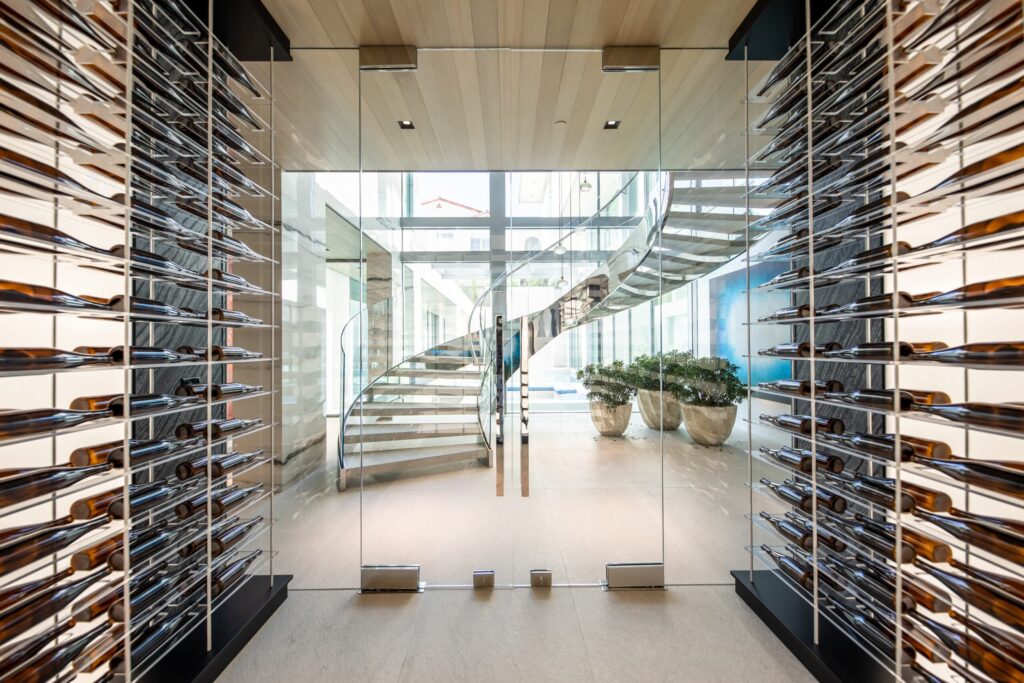
Standard air conditioners are designed to cool human spaces quickly, drying out the air in the process. Wine cellar cooling units are specialized HVAC systems built to maintain a constant 55°F (13°C) temperature and a relative humidity level of 50% to 70%.
Understanding how these units operate and evaluating which design offers maximum energy efficiency can help you protect your collection effectively.
Wine cooling systems operate on a traditional vapor-compression cycle, but they are tuned specifically for low temperatures and high moisture retention.
                 +---------------------------+
                 |    1. Compressor          |
                 |  (Pressurizes refrigerant)|
                 +-------------+-------------+
                               |
                               v
                 +---------------------------+
                 |    2. Condenser Coil      |
                 |   (Releases heat outside) |
                 +-------------+-------------+
                               |
                               v
                 +---------------------------+
                 |   3. Expansion Valve      |
                 |    (Drops pressure/temp)  |
                 +-------------+-------------+
                               |
                               v
                 +---------------------------+
                 |    4. Evaporator Coil     |
                 |   (Absorbs cellar heat)   |
                 +---------------------------+
Evaporation (Heat Absorption): Cold liquid refrigerant passes through the evaporator coil located inside or ducting into the cellar. A low-velocity fan blows cellar air across these cold coils, absorbing heat from the room.
Compression: The refrigerant—now a warm gas—travels to the compressor, which pumps it up to high pressure, significantly raising its temperature.
Condensation (Heat Rejection): The hot gas flows through the condenser coil, located outside the cellar (or outside the home), where a fan dissipates the heat.
Expansion & Cycle Repeat: The high-pressure liquid refrigerant passes through an expansion valve, where its pressure and temperature drop rapidly before returning to the evaporator coils to start again.
Humidity Destruction: Standard AC units rapidly pull moisture out of the air to maximize human comfort. Wine cooling units use oversized evaporator coils running at higher surface temperatures to cool the room without freezing out essential moisture.
Temperature Floor Limits: A residential AC unit is designed to cool down to roughly 65°F (18°C). Pushing it down to 55°F causes its coils to freeze over. Wine units are engineered specifically to run continuously at lower operating temperatures without icing up.
Wine cooling systems generally fall into three design categories. Efficiency depends heavily on mechanical design, ducting resistance, and component placement.
In a split system, the evaporator unit sits inside or near the cellar, while the heavy-duty compressor and condenser sit outdoors or in a utility space far away.
Efficiency Level: Highest
Why: The hot motor components (compressor and exhaust fan) are completely removed from the cellar envelope. The unit doesn’t have to fight heat radiated back into the room from its own motor. Additionally, split systems utilize larger, commercial-grade condensers that reject heat far more effectively.
Both the evaporator and condenser are housed in a remote equipment room, with insulated ducts carrying cold air to the cellar and returning warm air back to the unit.
Efficiency Level: Moderate to High
Why: Like split systems, heat-generating components stay outside the cellar. However, friction loss from long duct runs slightly reduces overall airflow efficiency compared to ductless split setups.
These compact units mount directly into a cut-out in an interior or exterior wall, exhausting heat directly out the back into an adjacent room.
Efficiency Level: Lowest
Why: Because the compressor and evaporator share a single small cabinet, heat from the compressor can easily bleed through the unit casing back into the cellar. They also vent heat into interior home spaces, which forces your main home HVAC system to work harder.
| Feature | Split Systems | Fully Ducted | Through-the-Wall |
| Energy Efficiency | Maximum | High | Moderate |
| Noise Level in Cellar | Ultra-quiet | Virtually silent | Noticeable fan/compressor hum |
| Installation Complexity | Requires licensed HVAC technician | Moderate to High (Contractor) | Low (DIY friendly) |
| Upfront Cost | High ($3,500 – $8,000+) | High ($4,000 – $10,000+) | Budget-friendly ($1,500 – $3,500) |
| Best For | Medium to large custom cellars | Luxury rooms where equipment must be hidden | Small cabinets or budget DIY cellars |
Even the most advanced cooling unit will run inefficiently if the surrounding room is poorly designed. Real-world thermal efficiency depends on three crucial installation factors:
Vapor Barrier Placement: Wine cellars require a continuous vapor barrier (typically 6-mil plastic sheeting) wrapped around the warm side of the insulation. Without it, warm moisture migrates through drywalls, causing the cooling unit to run endlessly to condense migrating humidity.
Insulation (R-Value): Minimum insulation standards call for R-13 to R-19 in exterior walls and R-30 in the ceiling. Inadequate thermal insulation forces the compressor to short-cycle or run continuously.
Variable-Speed Compressors: Units featuring inverter-driven compressors adjust their cooling output incrementally rather than snapping full-on and full-off. This conserves significant electricity while keeping ambient cellar temperatures within half a degree of the target setting.
For optimal performance and long-term energy savings, a Ductless or Ducted Split System equipped with an Inverter/Variable-Speed Compressor is the clear winner.
Leading manufacturers like Wine Guardian and WhisperKOOL produce split systems engineered to handle high ambient heat without dragging down performance. While upfront equipment and HVAC installation costs are higher, the lower energy consumption, quieter operation, and extended equipment lifespan offer the best return on investment for serious collections.