
Call Us 📞 800-323-3130
Mon–Fri 8am–6pm CST, Sat–Sun 9am–1pm CST
Free design consultations
Showrooms in Miami & Fort Lauderdale
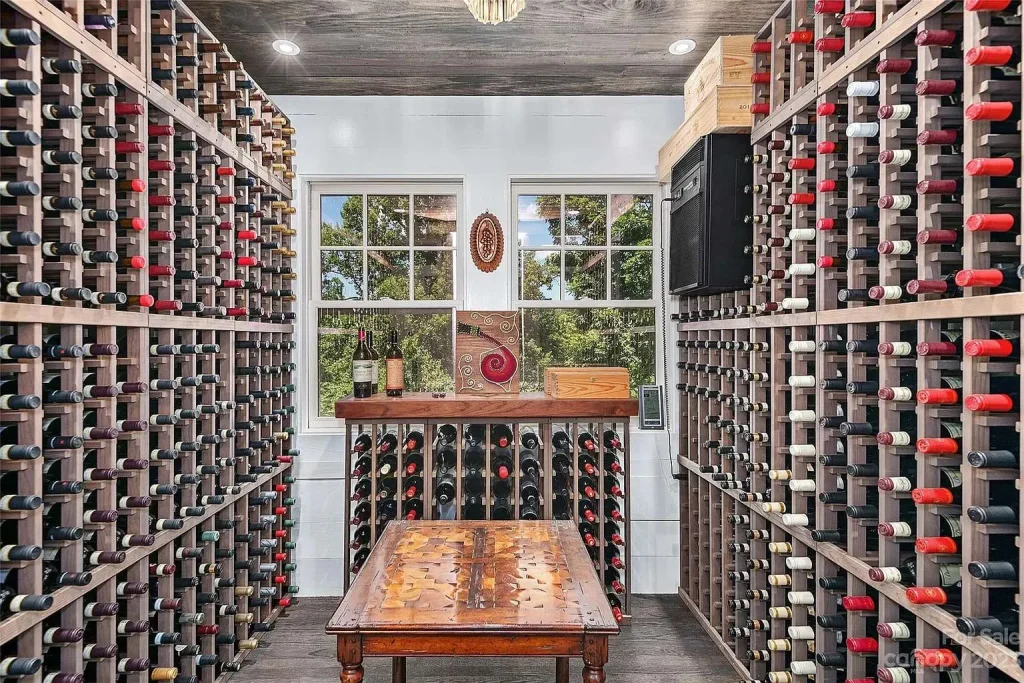
When homeowners start planning a wine cellar, one of the first questions they ask is:
“What size wine cooling unit do I need?”
Unfortunately, most online calculators answer this question using only the room’s cubic footage. While room size is important, it tells only part of the story.
The real answer comes down to BTU calculations—a method that measures how much heat enters your wine cellar every hour. Understanding BTUs can mean the difference between a perfectly preserved wine collection and a cooling system that constantly struggles to maintain temperature.
In this guide, we’ll explain the BTU math in simple terms and show you why professional sizing produces far better results than choosing a unit based solely on room dimensions.
BTU stands for British Thermal Unit, which measures the amount of heat a cooling system removes from your wine cellar every hour.
Every wine cooling system is rated by its cooling capacity in BTUs per hour.
The higher the heat entering your cellar, the higher the BTU rating your cooling unit must have.
Think of it this way:
Heat enters your cellar.
The cooling system removes that heat.
The system must remove heat faster than it enters.
If it cannot, your cellar temperature will continue to rise.
Many websites recommend cooling units based only on room volume.
For example:
500 cubic feet = Unit A
800 cubic feet = Unit B
1,200 cubic feet = Unit C
While this works as a rough estimate, two wine rooms with identical dimensions can require completely different cooling capacities.
Imagine these two cellars:
Interior room
Fully insulated
Solid wood door
No windows
Basement location
Same size
Three glass walls
Glass entry door
Second floor
South-facing windows
Florida climate
Although both rooms have identical cubic footage, Cellar B may require nearly twice the cooling capacity because it gains much more heat.
This is why BTU calculations are so important.
Professional wine cellar designers evaluate several heat sources before recommending a cooling system.
1. Room Dimensions
Length × Width × Height determines the total air volume that must be cooled.
Larger spaces naturally require more cooling.
2. Insulation
Proper insulation dramatically reduces heat entering the room.
Professionally insulated wine cellars are much easier to cool than unfinished rooms.
Poor insulation forces the cooling unit to run longer, increasing energy use and equipment wear.
3. Glass Walls
Glass is one of the biggest contributors to heat gain.
A cellar with multiple glass walls usually requires significantly more BTUs than one enclosed with insulated walls.
Large glass wine rooms almost always require professional heat-load calculations.
4. Exterior Walls
Walls exposed to outdoor temperatures absorb heat throughout the day.
The more exterior walls your cellar has, the greater the cooling demand.
5. Ceiling Exposure
A wine room beneath an attic experiences much greater heat gain than one located in a conditioned basement.
Ceiling construction plays a major role in system sizing.
6. Door Type
An insulated wine cellar door helps retain cool air.
Standard interior doors often leak air and increase the cooling load.
Glass doors may also require additional BTU capacity depending on their size and insulation value.
7. Local Climate
Climate matters.
A cellar located in Arizona, Florida, or Texas experiences much higher heat loads than one in a cooler region.
Hotter climates require larger cooling systems even for similarly sized rooms.
8. Lighting and Equipment
Every light fixture, refrigerator, display cabinet, and electronic device inside the cellar produces heat.
Modern LED lighting minimizes this effect but still contributes to the overall BTU calculation.
9. Air Leakage
Small gaps around doors, ceilings, electrical penetrations, and ductwork allow warm air to enter continuously.
Proper sealing is just as important as insulation.
Imagine two homeowners each have a 600-cubic-foot wine cellar.
Basement location
Excellent insulation
Solid wood door
No windows
Estimated cooling requirement:
Lower BTU capacity
Main floor
Three glass walls
Glass door
Warm climate
Ceiling below attic
Estimated cooling requirement:
Much higher BTU capacity
Even though both rooms are exactly the same size, the second cellar may need a significantly larger cooling system because of the additional heat entering the space.
Undersized systems often create ongoing problems, including:
Difficulty maintaining 55°F
Longer run times
Higher electricity bills
Increased wear on the compressor
Temperature fluctuations
Reduced equipment lifespan
Poor humidity control
Many homeowners assume their cooling unit has failed when it is actually undersized for the room.
Not necessarily.
An oversized wine cooling system can also cause issues such as:
Short cycling
Uneven temperatures
Reduced humidity
Increased equipment wear
Less efficient operation
The goal isn’t to buy the biggest unit available—it’s to install one that matches the calculated heat load.
Professional wine cellar designers don’t simply measure room dimensions.
They evaluate:
Room size
Glass percentage
Insulation quality
Door construction
Ceiling conditions
Exterior wall exposure
Local climate
Lighting
Heat-producing equipment
Ventilation requirements
These factors are combined into a detailed heat-load calculation to determine the correct BTU capacity.
This process helps ensure the cooling system performs efficiently, protects your wine collection, and operates reliably for years.
Can I size a wine cooling unit using cubic feet alone?
Cubic footage provides a starting point, but it doesn’t account for insulation, glass walls, climate, or other heat sources. A BTU-based heat-load calculation is much more accurate.
How many BTUs do I need for my wine cellar?
There is no universal answer. The required BTU capacity depends on room size, insulation, glass surfaces, door type, ceiling exposure, and local climate.
Do glass wine cellars require larger cooling systems?
Yes. Glass transfers more heat than insulated walls, so wine rooms with extensive glass often require higher BTU capacities.
What temperature should a wine cellar maintain?
Most wine collections are best stored at approximately 55°F (13°C) with stable humidity levels to support long-term aging.
Can an oversized cooling unit damage my wine cellar?
An oversized system can short cycle, reduce humidity control, and wear out components prematurely. Proper sizing is just as important as adequate capacity.
Choosing the right wine cooling system involves much more than measuring the room and selecting a unit from a sizing chart. Every wine cellar has a unique heat load influenced by insulation, glass, climate, construction, and room layout. Get a Free Heatload Calculation from our experts today.
A properly calculated BTU requirement helps ensure consistent temperatures, better humidity control, improved energy efficiency, and long-term protection for your wine collection. Before investing in a cooling system, take the time to evaluate the factors that truly affect performance. The right size today can save you from costly upgrades and temperature problems in the future.