
Call Us 📞 800-323-3130
Mon–Fri 8am–6pm CST, Sat–Sun 9am–1pm CST
Free design consultations
Showrooms in Miami & Fort Lauderdale
Call us at 800-323-3130 or email us at info@coolwinecellar.com in case of any questions.
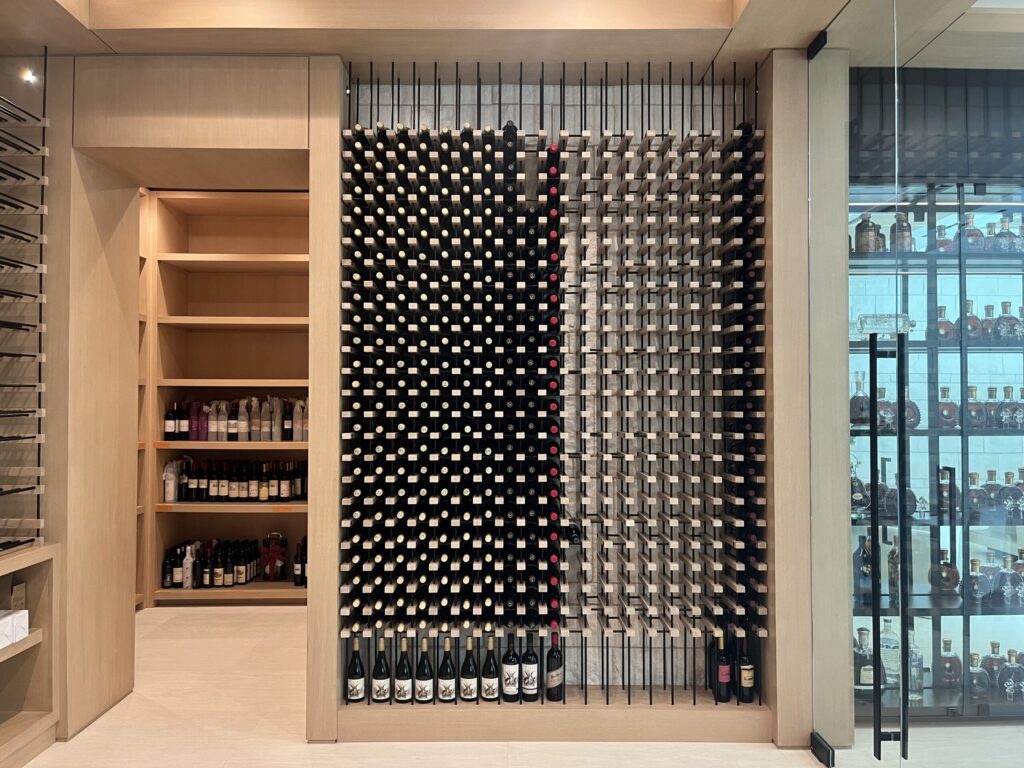
Short answer: a cellar for investment grade wine has to do three things an ordinary display cellar does not: hold its conditions steady for decades, keep working when a piece of equipment fails, and be able to prove both. In practice that means a sealed, insulated room held near 55°F and 50–70% relative humidity, a correctly sized cooling system with monitoring and alarms, real security, racking that protects labels and original cases, and storage records a future buyer will trust.
Below are the eight considerations we work through when a client tells us the collection is an asset as well as a pleasure.
| Factor | Target | Why it matters for rare bottles |
|---|---|---|
| Temperature | About 55°F, held as steady as possible | Heat speeds up aging; swings push wine past the cork |
| Relative humidity | 50–70% | Too dry shrinks corks; too damp damages labels |
| Light | Dark by default, low-heat LED only | UV light degrades wine and fades labels |
| Vibration | As little as possible | Keeps sediment settled in older vintages |
| Bottle position | On the side for cork-sealed bottles | Keeps the cork in contact with the wine |
1. How stable does the temperature need to be?
For wines you may hold for 10, 20 or 30 years, stability matters more than hitting an exact number. The widely used target is about 55°F. What damages fine wine is repeated swings: the liquid expands and contracts, which can work wine past the cork and pull air back in. Signs of that, such as a raised cork or seepage under the capsule, are exactly what a buyer or auction specialist looks for when judging a bottle.
Stability starts with the room, not the cooling unit. Walls, ceiling and floor need continuous insulation and a properly placed vapor barrier, and the door has to seal. Our guide to vapor barriers and insulation in a wine room covers the build-out, and if you want glass, read insulated vs non-insulated glass doors first.
2. What humidity protects both corks and labels?
Aim for 50–70% relative humidity. Below that range corks can dry and shrink over the years. Above it, mold and label damage become a risk, and on a collectible bottle a stained or peeling label reduces value even when the wine inside is perfect. In dry climates or heavily air-conditioned homes a dedicated humidifier is often needed; see do you need a humidifier for your wine cellar?
3. How should the cooling system be sized and backed up?
An undersized unit runs constantly and still lets the room drift; an oversized one short-cycles and struggles to manage humidity. The right size comes from a heat load calculation that accounts for room volume, insulation, glass area, lighting and the surrounding climate. We provide a free heatload calculation for every project and supply wine cellar cooling units from WhisperKOOL and Wine Guardian, including ducted systems and split systems that keep noise and vibration away from the bottles.
For a high-value collection, also plan for failure:
Keep the cellar dark when no one is in it. Use LED lighting, which produces very little heat and no meaningful UV, on a timer or motion sensor. If the cellar has glass walls, keep it out of direct sunlight or specify glass that filters UV. Keep compressors, pumps and subwoofers off the walls that carry racking, and choose a remote condenser when the cellar sits next to living space.
Security should be proportionate and discreet: a keyed or electronic lock on the cellar door, access logs if staff or guests enter, a camera covering the entry, and locking sections for the top bottles. Individual wine lockers inside a larger cellar are a practical way to separate the investment tier from everyday drinking. More ideas are in discreet ways to add security to a luxury wine cellar.
6. What racking suits investment grade wine?
Solid wood wine racks remain the usual choice for case storage and long-term aging, with metal wine racks used for the display section.
7. Why do provenance and records affect the design?
Provenance is the documented history of a bottle: where it was bought and how it has been stored since. A cellar designed for investment grade wine makes that record easy to keep. Build in logged temperature and humidity data from the monitoring system, an inventory system with a location for every bottle, and space to keep purchase receipts. When you sell, a continuous storage log is evidence that the wine was kept correctly.
8. Should the cellar be active, passive or professional storage?
Very few homes can hold 55°F year-round without mechanical cooling, so nearly every cellar built for valuable wine is actively cooled. The trade-offs are explained in passive vs active wine cellars. It is also fair to say that some collectors keep purely financial holdings in professional storage and build a home cellar for the bottles they want close at hand. A well-built home cellar can match professional conditions; what it must add is the monitoring and paperwork that a storage facility provides by default.
What temperature should investment grade wine be stored at?
About 55°F, held as steady as possible. Consistency matters more than the exact figure, and repeated temperature swings do the most harm.
What humidity is best for a rare wine cellar?
Between 50% and 70% relative humidity. That range keeps corks from drying out without encouraging mold or label damage.
Should investment wine stay in its original wooden case?
Where possible, yes. Unopened original cases are generally easier to resell, so design shelving or bins that hold full cases.
Does a home wine cellar hurt resale value compared with professional storage?
Not if conditions are right and documented. Logged temperature and humidity data, purchase records and clean labels are what buyers look for.
Do I need a backup for my wine cellar cooling unit?
For a high-value collection, plan at least for remote alerts and backup power, so a failure is caught in hours rather than days.
Design a cellar worthy of the collection
Cool Wine Cellar designs and builds custom cellars for serious collectors, with free heat load calculations and professional installation. Visit our Miami and Fort Lauderdale showrooms, request a free design, explore our wine cellar design services, or call 800-323-3130.