
Call Us 📞 800-323-3130
Mon–Fri 8am–6pm CST, Sat–Sun 9am–1pm CST
Free design consultations
Showrooms in Miami & Fort Lauderdale
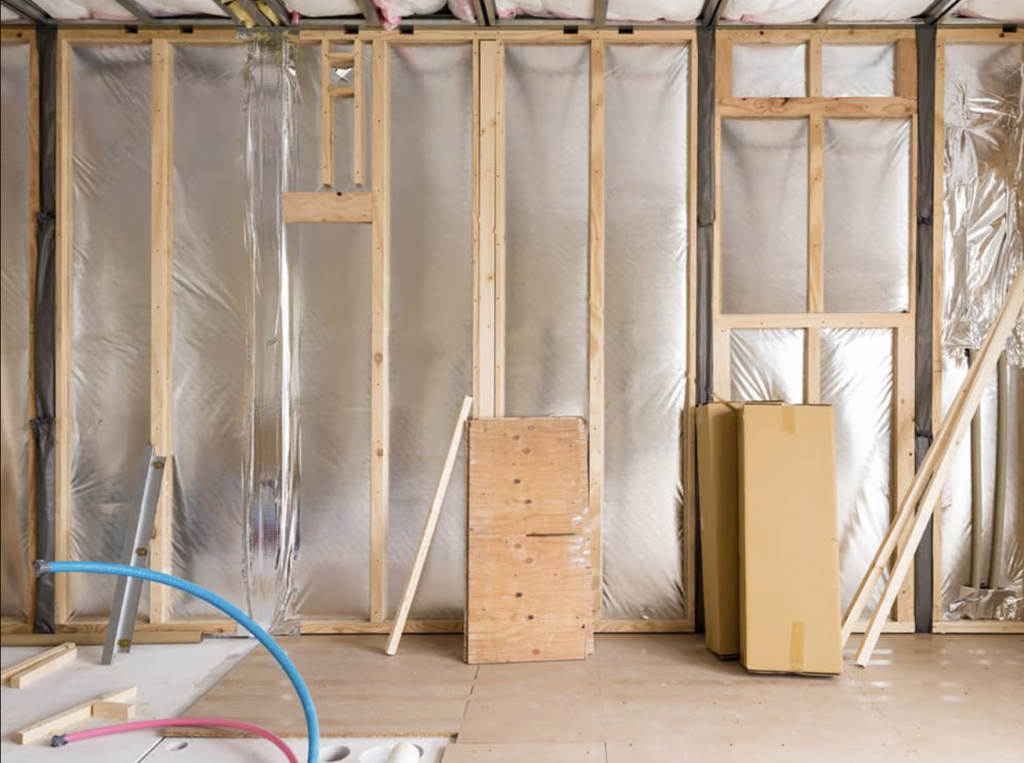
Building a climate-controlled wine room requires more than installing wine racks and a cooling unit. The room itself needs to be properly constructed so it can maintain a stable environment for the wine collection.
Two of the most important components of a wine room build-out are insulation and vapor control.
If these elements are improperly designed or installed, warm, humid air can enter the wine room’s wall assembly, potentially leading to condensation, mold, wood damage, inefficient cooling, and temperature instability.
A properly constructed wine room creates a controlled envelope around the collection, allowing the cooling system to work more efficiently and helping protect the wine for years to come.
A wine cellar is designed to maintain conditions that are different from the surrounding space.
While the exact temperature and humidity targets can vary depending on the application, a typical wine cellar is maintained at a cool, relatively stable temperature. The surrounding areas of a home may be considerably warmer and more humid.
That temperature difference creates a potential pathway for heat and moisture to move through the walls.
Proper insulation helps slow heat transfer, while an appropriately designed vapor-control layer helps manage moisture movement through the building assembly.
Together, they help create a more stable wine room environment.
Before thinking about the cooling unit, consider the wine room as a complete enclosure.
The envelope generally includes:
Walls
Ceiling
Floor
Door
Windows or glass
Penetrations for electrical wiring
HVAC penetrations
Cooling-system openings
Any other openings into adjacent spaces
Every part of the enclosure matters.
A beautifully insulated wall will not perform as intended if the door has large air gaps or if numerous unsealed penetrations allow warm, humid air into the room.
The goal is to create a continuous, well-sealed enclosure around the wine room.
Insulation and vapor control perform different functions.
Insulation primarily reduces heat transfer between the wine room and surrounding spaces.
Common insulation materials may include:
Closed-cell spray foam
Rigid foam boards
Fiberglass insulation
Mineral wool
Other code-approved insulation systems
The appropriate material depends on the construction assembly and project requirements.
A vapor-control layer is intended to limit or manage the movement of water vapor through the building assembly.
It is important to understand that vapor control is not the same thing as air sealing.
A wine room needs careful attention to both moisture movement and uncontrolled air movement.
Because climate and building assemblies vary, the correct vapor-control strategy should be determined by a qualified building professional rather than simply installing a generic plastic sheet in every situation.
Closed-cell spray foam is commonly considered for wine cellar construction because it can provide insulation and contribute to air sealing when properly installed.
It can be particularly useful around:
Wall cavities
Ceiling assemblies
Irregular framing
Small gaps
Penetrations
Areas where continuity is difficult to achieve with traditional insulation
In humid climates, closed-cell spray foam may also be attractive because of its moisture-resistance characteristics.
However, the exact thickness and installation method should be determined based on the building assembly, local requirements, and manufacturer’s specifications.
More insulation is not automatically better if the overall assembly is not properly designed.
Heat can enter the wine room through the ceiling, particularly when the room is located below:
An attic
A roof
A warm upper floor
An outdoor terrace
A garage
Another unconditioned space
For this reason, the ceiling should receive the same attention as the walls.
A common mistake is to insulate the walls carefully while overlooking the ceiling assembly.
The wine room should be treated as a complete thermal envelope rather than a collection of individual insulated surfaces.
The floor can also affect the wine room’s thermal performance.
The requirements depend on what is below the wine room.
For example, the room may be located above:
A conditioned living space
A garage
A basement
A crawlspace
An exterior slab
An unconditioned area
The appropriate insulation and moisture-control approach can differ significantly between these situations.
A contractor should evaluate the floor assembly before construction begins.
Exterior walls deserve particular consideration because they separate the wine room from outdoor conditions.
In warm climates, an exterior wall may be exposed to:
High outdoor temperatures
High humidity
Direct solar exposure
Rain
Large temperature differences
If the wine room is located in a hot or humid region, proper insulation and moisture management become even more important.
This is especially relevant for wine rooms in places such as Florida, where exterior conditions can place substantial demands on a climate-controlled cellar.
One of the most overlooked parts of wine room construction is sealing penetrations.
Potential openings can occur around:
Electrical boxes
Receptacles
Light fixtures
Wiring
Pipes
HVAC ducts
Cooling-unit penetrations
Thermostat wiring
Door frames
Plumbing penetrations
Even relatively small openings can allow warm, humid air to enter the wine room assembly.
Every penetration should be addressed using an appropriate sealing method compatible with the surrounding materials and applicable building requirements.
The door is part of the wine room envelope.
A standard interior door may not provide the level of sealing needed for a climate-controlled wine room.
A suitable wine cellar door should be evaluated for:
Proper fit
Weatherstripping
Perimeter sealing
Door sweep
Insulating characteristics
Proper installation
Compatibility with the cooling system
A door that leaks conditioned air can make the cooling system work harder and may contribute to moisture problems.
Glass is popular in modern wine cellar designs because it allows the collection to become a visible architectural feature.
However, glass has different thermal characteristics than an insulated wall.
A wine room with:
Floor-to-ceiling glass
Multiple glass walls
Exterior-facing glass
Large windows
Glass doors
may have a substantially different cooling requirement from a fully enclosed room.
The glass specification, solar exposure, framing, door seals, and total glass area should be considered during the design phase.
Insulation alone does not create an effective wine room.
Imagine a wall cavity filled with insulation but containing gaps around electrical boxes and framing connections.
Air can still move through those gaps.
For this reason, air sealing and insulation should be considered together.
A well-designed wine room should minimize uncontrolled air movement between the conditioned cellar and surrounding spaces.
This helps reduce:
Heat gain
Humidity migration
Cooling-system workload
Condensation risk
Temperature fluctuations
Vapor control needs to be designed according to the entire wall assembly.
Simply adding multiple vapor-impermeable layers without understanding how the assembly will dry can potentially trap moisture.
The correct approach depends on factors such as:
Climate zone
Interior temperature
Exterior temperature
Wall construction
Insulation type
Location of vapor-control layers
Building materials
Local building codes
For this reason, wine room construction should be reviewed by a qualified contractor or building professional who understands local conditions.
The wine cooling unit should not be selected independently from the room’s construction.
Cooling requirements can be affected by:
Room volume
Insulation
Exterior walls
Ceiling exposure
Glass area
Door construction
Ambient temperature
Lighting
Occupancy
Heat-producing equipment
A wine cellar cooling professional can use these factors to determine an appropriate system.
Simply selecting a cooling unit based on cubic footage can result in an improperly sized system.
The correct wine room construction strategy depends heavily on climate.
Hot and Humid Climates
Moisture management and insulation become particularly important.
The construction should be designed to minimize warm, humid air entering the wine room assembly.
Dry Climates
Heat transfer can be a more dominant concern, although air sealing and moisture control are still important.
Cold Climates
The location of vapor-control layers and the overall wall assembly may require a different approach because of seasonal temperature differences.
There is no single wine cellar wall assembly that is appropriate for every climate.
Do not rush from drywall installation directly to wine rack installation.
Before the racks, cabinetry, and finishes are installed, inspect the completed envelope.
Check:
Insulation continuity
Air sealing
Door seals
Ceiling insulation
Floor assembly
Electrical penetrations
Cooling-system openings
Plumbing penetrations
Glass and door seals
Signs of moisture
Correcting problems before the racks are installed is significantly easier than opening finished walls later.
The interior finish should also be selected with the wine room environment in mind.
Wood wine racks, wall paneling, trim, flooring, and cabinetry should be suitable for the expected conditions.
Popular wine cellar materials include:
Redwood
Mahogany
White Oak
Walnut
Knotty Alder
Other properly finished wood species
The finish and construction should be selected based on the desired appearance and environmental conditions.
Once construction is complete, allow the wine room to reach its intended operating conditions before filling it with valuable wine.
Monitor:
Temperature
Relative humidity
Cooling-system operation
Door sealing
Condensation
Temperature fluctuations
If the room cannot maintain stable conditions when empty, adding hundreds of bottles will not solve the problem.
It is better to identify and correct construction or cooling issues before moving the collection into the room.
Using Standard Room Construction Without Modifications
A normal interior room does not necessarily provide the insulation, air sealing, and moisture control required for a wine cellar.
Ignoring the Ceiling
A poorly insulated ceiling can create significant heat gain.
Leaving Penetrations Unsealed
Small gaps around wiring, pipes, and fixtures can compromise the room envelope.
Using the Wrong Vapor-Control Strategy
The vapor-control layer should be selected according to the climate and complete wall assembly.
Installing the Cooling Unit Too Early
The cooling system should be selected after considering the completed room’s thermal characteristics.
Installing Racks Before Testing the Room
Finish and rack installation can make later corrections considerably more difficult.
Before completing your wine room, confirm that you have addressed:
Wall insulation
Ceiling insulation
Floor conditions
Exterior wall exposure
Vapor-control strategy
Air sealing
Electrical penetrations
Plumbing penetrations
Cooling-system penetrations
Door sealing
Glass specifications
Cooling-system sizing
Temperature monitoring
Humidity monitoring
Final room testing
Proper insulation and vapor control are among the most important parts of building a successful climate-controlled wine room.
The objective is to create a continuous, well-insulated, properly sealed enclosure that minimizes unwanted heat and moisture movement. The exact construction method should be based on the home’s location, climate, wall assembly, materials, and applicable building requirements.
A properly constructed wine room can help the cooling system operate more effectively while providing the stable environment needed to protect a valuable wine collection.
If you’re planning a custom wine cellar, consider the room envelope before selecting the racks, glass, lighting, or cooling equipment. A beautiful cellar begins with what is behind the walls—and proper insulation, air sealing, and moisture management provide the foundation for everything that comes afterward.