Call Us 📞 800-323-3130
Mon–Fri 8am–6pm CST, Sat–Sun 9am–1pm CST
Free design consultations
Showrooms in Miami & Fort Lauderdale
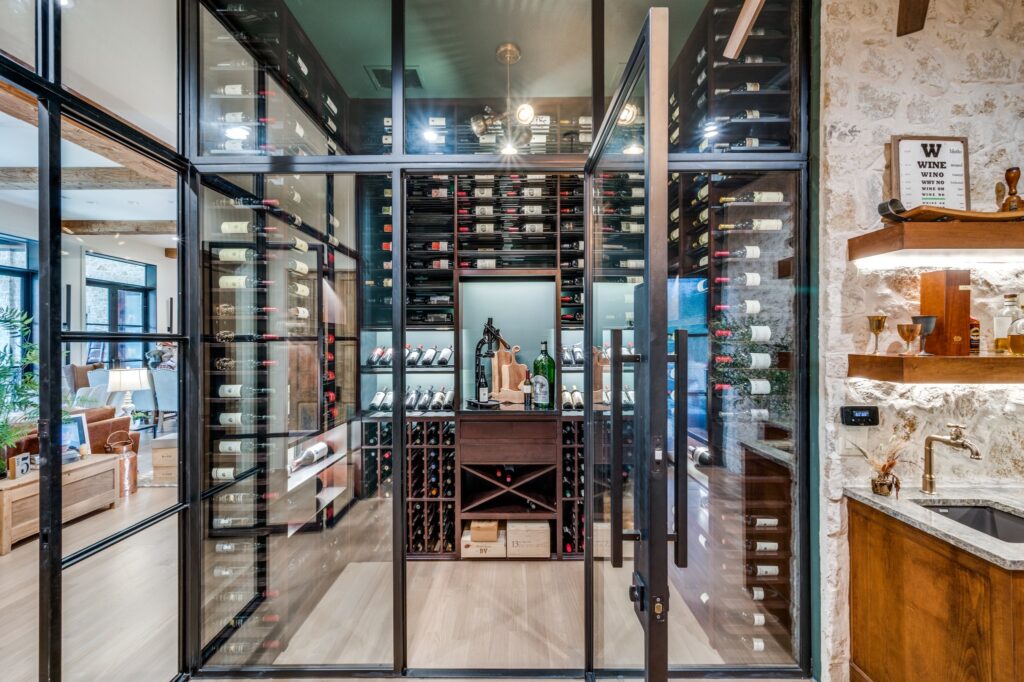
A luxury wine cellar is more than a place to store bottles. For serious collectors, it may house rare vintages, limited-production wines, and a collection worth a significant amount of money. Protecting that collection is important—but visible security equipment can sometimes interfere with the elegant design of a custom wine cellar.
Fortunately, security does not have to be obvious.
With thoughtful planning, you can incorporate discreet security features into the cellar while preserving its architectural character. From concealed access controls and reinforced doors to smart environmental monitoring, there are several ways to protect a wine collection without making the room feel like a vault.
Wine collections can represent a substantial financial and personal investment. A custom cellar may contain hundreds of bottles, including rare wines that are difficult or impossible to replace.
Security can help protect against:
Unauthorized access
Theft
Accidental access by children or guests
Damage to valuable bottles
Environmental problems
Unmonitored temperature or humidity changes
Access to private collection areas
The key is to integrate security into the cellar’s architecture instead of adding equipment as an afterthought.
The wine cellar door is one of the first places to consider when improving security.
A luxury cellar can incorporate a solid, properly constructed door that complements the room’s design while providing controlled access.
Depending on the design, options may include:
Solid wood doors
Modern architectural doors
Reinforced frames
Concealed hinges
Quality locking hardware
The door should also be compatible with the cellar’s climate-control requirements. A properly sealed wine cellar door helps maintain the desired environment while providing an additional layer of physical security.
One of the most discreet security solutions is an electronic access system that blends into the architecture.
Instead of a prominent commercial keypad, a luxury cellar might use a compact access-control device positioned near the entrance.
Depending on the system, access may be managed using:
Keypads
RFID credentials
Smart locks
Mobile devices
Biometric systems
The specific technology should be selected based on the homeowner’s security requirements and the overall design of the property.
The goal is simple: authorized people can enter easily while unauthorized access is restricted.
Custom millwork provides an excellent opportunity to integrate security features discreetly.
For example, access-control components can sometimes be incorporated into cabinetry, wall panels, or architectural elements so they don’t visually dominate the space.
A custom wine cellar designer can coordinate the location of security equipment with:
This creates a more cohesive appearance than adding visible security equipment after construction.
Cameras can provide valuable monitoring, but large visible cameras may distract from a luxury interior.
For a high-end wine cellar, consider appropriately positioned, compact cameras that blend with the room’s architecture.
Potential locations include:
Near the entrance
In an adjacent hallway
Covering the main access point
In areas that provide broad visibility of the room
Camera placement should respect household privacy and local laws. For many homeowners, monitoring the entrance rather than continuously recording the entire cellar may provide an appropriate balance between security and privacy.
A discreet contact sensor can alert a homeowner when the cellar door is opened.
These sensors can be integrated with a broader smart-home security system and can provide notifications when unexpected access occurs.
For example, a homeowner could receive an alert if the cellar door is opened while the house is unoccupied.
Because many modern sensors are compact, they can often be installed without significantly changing the appearance of a custom wine cellar.
Security isn’t only about preventing theft.
For wine collectors, environmental damage can be just as costly.
A cooling system failure, unusual temperature increase, or humidity problem could potentially damage an extensive collection.
Smart monitoring can track conditions such as:
Temperature
Relative humidity
Cooling-system status
Power interruptions
Door activity
Alerts can then notify the homeowner when conditions move outside predetermined ranges.
This is particularly useful for collectors who travel frequently or maintain multiple properties.
A luxury wine collection can be vulnerable during a prolonged power outage.
The cooling system is essential to maintaining the cellar’s controlled environment, so homeowners may want to discuss backup-power options with a qualified electrical professional.
Depending on the property, this might include:
A whole-home generator
A dedicated backup system
Battery backup for monitoring equipment
Emergency notifications
The appropriate solution depends on the home’s electrical infrastructure and the cooling system being used.
A luxury wine cellar can become part of a larger smart-home security system.
Depending on the equipment installed, homeowners may be able to monitor:
Cellar access
Door status
Temperature
Humidity
Cooling equipment
Power status
Security alerts
Integration can make security less intrusive because the wine cellar doesn’t necessarily need a separate collection of visible devices.
Instead, information can be managed through an existing home automation or security platform.
Collectors with particularly valuable bottles may want to separate their rarest wines from the main collection.
A custom wine cellar can incorporate a private storage area using:
Lockable cabinetry
A dedicated display cabinet
A separate access-controlled room
Custom storage compartments
This approach allows the majority of the collection to remain accessible while providing an additional layer of control for especially valuable bottles.
The design should prioritize safe, practical access rather than creating a hidden or difficult-to-reach space.
Glass wine cellars are increasingly popular in luxury homes because they turn the collection into an architectural feature.
However, a glass enclosure should be designed with both security and climate control in mind.
Depending on the project, considerations can include:
Appropriate glazing
Secure door hardware
Controlled access
Strong framing
Proper seals
Protection from direct sunlight
Glass can provide visibility while still allowing access to be controlled.
A professional wine cellar designer can coordinate the enclosure, wine racks, lighting, and cooling requirements as one system.
Luxury design is often about what you don’t see.
Instead of installing numerous visible devices, consider integrating security features during the design stage.
For example:
Instead of: A large keypad mounted prominently beside the wine cellar.
Consider: A compact access-control solution integrated near the entrance.
Instead of: Multiple visible cameras.
Consider: Carefully planned camera coverage focused on appropriate entry areas.
Instead of: A collection of standalone environmental monitors.
Consider: Smart monitoring integrated into the home’s existing system.
The result is a cellar that still feels like a sophisticated living space rather than a heavily secured facility.
Security planning should begin before the cellar is completed.
During construction, multiple contractors and tradespeople may have access to the property. Homeowners should discuss access procedures with the general contractor and project team.
Useful practices can include:
Controlling access to the property
Limiting access to the cellar area
Tracking keys or access credentials
Installing permanent locks after construction
Removing temporary access codes
Reviewing smart-home permissions after project completion
This is especially important when the cellar contains valuable wine before the entire home project is finished.
The best security solutions are those that complement the architecture.
For example, a contemporary wine cellar might combine:
Frameless glass
Modern metal accents
Custom wood wine racks
LED lighting
Electronic access control
Smart environmental monitoring
A traditional cellar might instead incorporate:
Solid wood doors
Custom millwork
Architectural wood racks
Concealed hardware
Lockable cabinetry
Integrated monitoring
Security does not have to compromise the visual identity of the cellar.
The wine racks themselves can also contribute to collection management.
Custom wine racks can be designed with different sections for different categories of wine.
For example:
Easily accessible bottles for regular consumption.
Bottles intended for longer-term storage.
Higher-value wines stored in a more controlled or restricted section.
Special bottles presented as part of the cellar’s interior design.
This organization can make inventory management easier and reduce unnecessary handling of valuable bottles.
One important consideration is that security equipment should not interfere with the cellar’s environmental performance.
Any electrical equipment, lighting, access-control hardware, or other technology should be planned carefully.
The wine cellar still needs:
Stable temperature
Appropriate humidity
Proper insulation
A suitable vapor barrier
An appropriately sized cooling system
A well-sealed door and enclosure
Security should complement these requirements—not work against them.
Before completing a high-end wine cellar, consider the following:
Secure wine cellar door
Controlled entry
Appropriate access credentials
Door-open notifications
Discreet camera coverage where appropriate
Temperature monitoring
Humidity monitoring
Cooling-system alerts
Power-failure notifications
Backup power strategy
Smart-home integration
Lockable storage for particularly valuable bottles
Proper privacy considerations
Post-construction access review
Not every cellar needs every feature. The right combination depends on the collection, home, budget, and desired level of security.
A luxury wine cellar should feel elegant, comfortable, and inviting—not like a security room.
The most effective approach is to incorporate security into the design from the beginning. A quality wine cellar door, discreet access control, carefully planned monitoring, environmental alerts, and smart-home integration can help protect the collection without overwhelming the interior design.
For collectors investing in custom wine racks, glass enclosures, wine cooling systems, and premium finishes, security should be considered part of the overall cellar design rather than an afterthought.
With the right planning, you can create a wine cellar that provides beautiful presentation, reliable wine preservation, controlled access, and peace of mind—all while maintaining the sophisticated look of a luxury space.