
Call Us 📞 800-323-3130
Mon–Fri 8am–6pm CST, Sat–Sun 9am–1pm CST
Free design consultations
Showrooms in Miami & Fort Lauderdale
Call us at 800-323-3130 or email us at info@coolwinecellar.com in case of any questions.
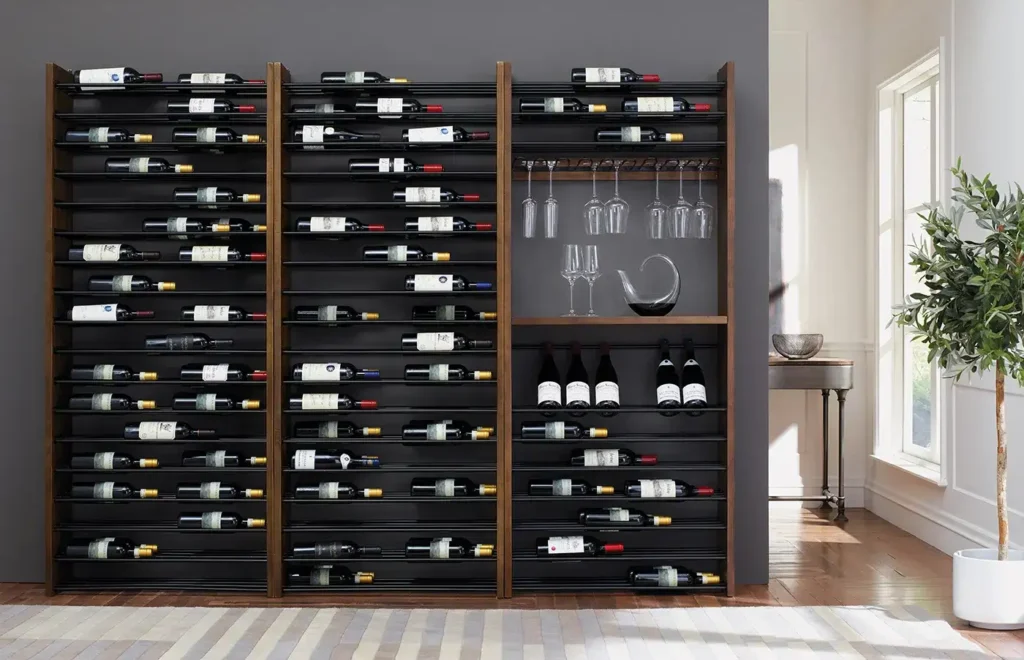
Short answer: to preserve wine at home, store unopened bottles on their side at a steady 55°F, at 50–70% humidity, in the dark and away from vibration. Once a bottle is open, recork it, refrigerate it and drink it within a few days, or use a vacuum or inert-gas preserver to extend that. The biggest enemy is not a slightly warm room but temperature swings, so a stable spot always beats a cold one that fluctuates.
1. Keep the temperature cool and steady
About 55°F is the long-term ideal. Anything from roughly 45°F to 65°F is acceptable if it is stable. Heat above about 70°F speeds up aging, and repeated warm-cool cycles make the wine expand and contract, which can push the cork and let air in. Avoid kitchens, laundry rooms and garages, which are the warmest and most changeable rooms in most homes. See how to hold a steady 55°F.
2. Maintain moderate humidity
Relative humidity of 50–70% keeps natural corks from drying and shrinking. Too dry and air can get in; too damp and labels and racks can grow mold. See the best humidifiers for wine cellars.
3. Store bottles on their side
Horizontal storage keeps the wine in contact with the cork so it stays moist. Screw-cap wines can stand upright, but horizontal racks are still the most space-efficient. See how to choose the right wine rack.
4. Keep wine in the dark
UV light breaks down compounds in wine and can create stale, “light-struck” flavors, especially in whites and sparkling wines in clear bottles. Use a closet, cabinet or cellar, and choose LED lighting, which gives off little heat and almost no UV.
5. Avoid vibration
Constant vibration from appliances, washing machines or speakers can disturb sediment in older wines. Keep wine away from the fridge top and the laundry room.
6. Avoid strong odors
Cork is slightly porous. Do not store wine near paint, cleaning products or pantry items with strong smells.
| Storage option | Good for | Limits |
|---|---|---|
| Interior closet or under-stair space | Short to medium term | Follows house temperature |
| Basement | Medium to long term in cool climates | Can be damp; not possible in most Florida homes |
| Wine refrigerator or cabinet | Small collections, any climate | Limited capacity |
| Climate-controlled wine room | Long-term aging, larger collections | Needs insulation and a cooling unit |
| Kitchen fridge | A few days for opened bottles | Too cold and dry for long storage |
For a small collection, a temperature-controlled wine storage cabinet is the simplest upgrade; see what to look for in a wine refrigerator cabinet. For a growing collection, converting a closet is often the most cost-effective step: see cost-effective ways to turn a closet into wine storage.
Once air reaches wine, it starts to oxidize. Slow that down:
| Wine style | Recorked in the fridge |
|---|---|
| Sparkling | 1–3 days with a sparkling stopper |
| Light whites and rosé | 3–5 days |
| Full-bodied whites | 3–5 days |
| Light reds | 2–3 days |
| Full-bodied reds | 3–5 days |
| Fortified (Port, Sherry) | Several weeks |
These are general guidelines; taste before serving.
In South Florida, room temperatures and humidity make passive storage difficult, and ground temperatures are too warm for a natural cellar. Homes here need active cooling. See passive vs active wine cellars and best practices for wine rooms in humid coastal areas. A dedicated wine cellar cooling unit, sized by a free heatload calculation, keeps a closet or room at cellar conditions year-round. A plan for power outages also helps; see backup power for a wine collection.
Which wines are worth preserving long term?
Most wine is made to be enjoyed within a few years. Only some bottles improve with age, usually structured reds, top whites and fine sparkling and fortified wines. See aging wine at home: what’s actually worth cellaring. When you are ready to serve, check serving temperatures.
What is the best way to preserve wine at home?
Store bottles on their side at a steady 55°F with 50–70% humidity, in the dark and away from vibration. A wine fridge or cooled wine room is the most reliable way to do that.
Can I store wine in my kitchen refrigerator?
For a few days or weeks, yes. For months, no: it is too cold and too dry, and frequent door openings cause swings.
Does wine go bad if it gets warm?
Brief, mild warmth usually does little harm. Sustained heat above about 75°F, or repeated swings, can cook the wine and damage the cork.
Should wine be stored upright or on its side?
On its side for cork-sealed bottles, to keep the cork moist. Screw-cap bottles can be upright.
How do I preserve wine without a cellar?
Use an interior closet away from heat and light, or a wine cabinet. For larger collections, a closet can be converted into a climate-controlled wine room.
Whether you need a wine cabinet, a closet conversion or a full wine room, we will design storage that keeps your wine at cellar conditions. Request a free design, get a free heatload calculation, or call 800-323-3130.