
Call Us 📞 800-323-3130
Mon–Fri 8am–6pm CST, Sat–Sun 9am–1pm CST
Free design consultations
Showrooms in Miami & Fort Lauderdale
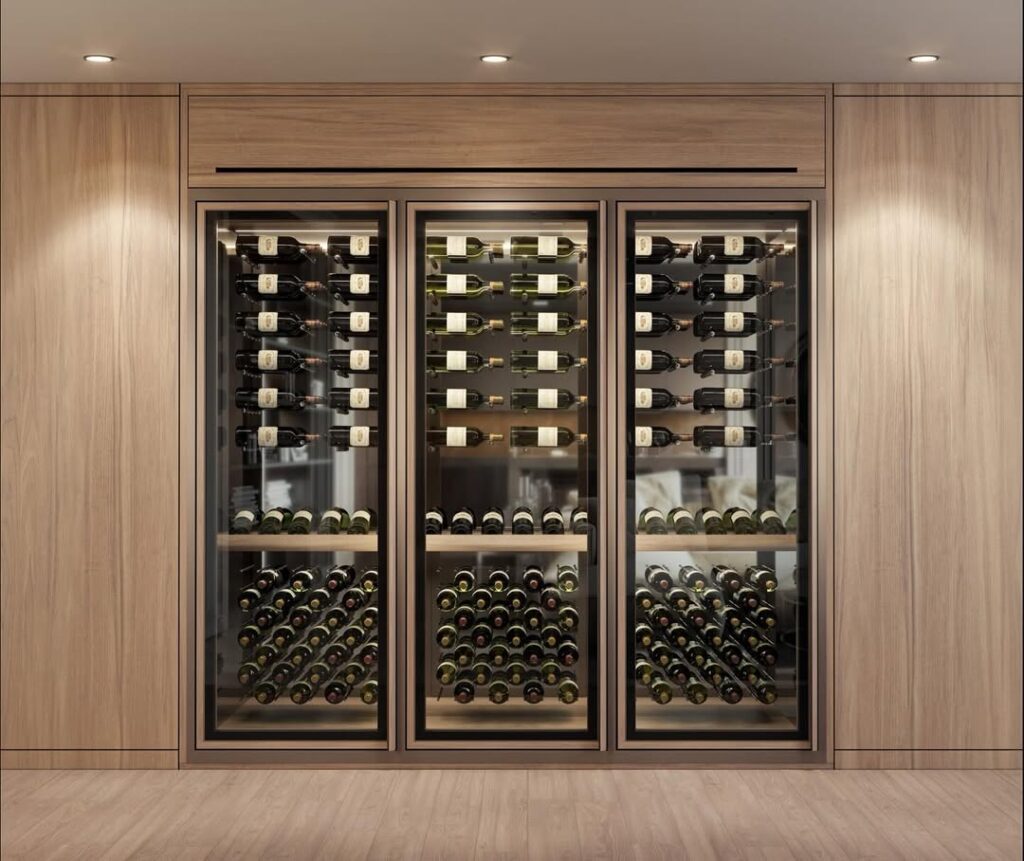
Designing a wine room in a humid coastal area requires more than choosing attractive wine racks and installing a cooling unit. Coastal environments introduce high humidity, temperature fluctuations, salt-laden air, moisture intrusion, and intense heat, all of which can affect both the wine collection and the construction materials.
Whether you’re building a wine room in South Florida, along the Gulf Coast, or in another humid coastal region, the room should be treated as a carefully engineered climate-controlled environment.
Here are the best practices for creating a reliable coastal wine room.
Moisture control should be one of the first priorities.
Before construction begins, inspect the proposed wine room for:
A wine cooling system cannot compensate for a basement or room with an unresolved water problem.
Any leaks or moisture sources should be addressed before the walls are finished and the wine racks are installed.
A wine room needs to be properly insulated and sealed to maintain a stable environment.
The walls and ceiling should be designed to limit heat transfer and control moisture movement. Depending on the construction, this may involve appropriate insulation, vapor-control strategies, sealed penetrations, and careful detailing around doors and glass.
In humid coastal climates, even small gaps can allow warm, moisture-laden air into the cellar.
Pay special attention to:
The objective is to create a continuous, well-sealed envelope around the wine room.
Closed-cell spray foam can be an effective option for certain wine-cellar construction assemblies because it provides insulation while helping reduce air movement through the building envelope.
It can be particularly useful around difficult areas where maintaining an airtight assembly is important.
However, the correct insulation and vapor-control strategy depends on the construction type, climate, and location of the cellar. It should be designed and installed according to applicable building requirements rather than simply added as an afterthought.
Don’t select a wine cooling unit based solely on cubic footage.
The heat load should account for:
Coastal homes can have significantly higher cooling requirements because of heat and humidity.
A room with several exterior glass walls, for example, may require substantially more capacity than an interior room of the same size.
A conventional air conditioner is not necessarily the right solution for a wine room.
Wine cellar cooling systems are designed to maintain a stable environment appropriate for wine storage rather than simply cooling the space quickly.
Depending on the project, options can include:
The best configuration depends on the room’s heat load, available mechanical space, aesthetics, noise requirements, and installation conditions.
Temperature isn’t the only environmental factor that matters.
A wine cellar should maintain relatively stable humidity conditions to help protect corks, labels, wood racks, and the structure of the room.
In coastal climates, the challenge is often excessive humidity rather than overly dry conditions.
High humidity can contribute to:
Humidity should therefore be considered during both the construction and cooling-system design.
The wine cellar door is part of the room’s thermal envelope.
A standard interior door may allow significant amounts of conditioned air to escape and humid air to enter.
Choose a properly constructed and sealed wine cellar door with suitable weatherstripping and a tight-fitting frame.
Options can include:
The more glass you introduce, the more carefully the heat load and condensation risk should be evaluated.
Glass can create a spectacular coastal wine room, especially in luxury homes where the collection is intended to be a visual feature.
However, glass introduces additional considerations.
Large glass surfaces can increase:
Single-pane glass is particularly challenging in humid climates.
If you’re planning a glass wine enclosure, consider insulated glazing and appropriate sealing. The glass specification should be coordinated with the wine room’s cooling and moisture-control strategy.
Condensation occurs when a surface becomes colder than the surrounding air’s dew point.
In a humid coastal climate, this can become a serious concern.
Potential condensation locations include:
Reducing condensation requires controlling the relationship between temperature, humidity, insulation, and air infiltration.
Simply turning down the cooling unit isn’t a solution and can potentially make condensation worse.
Material selection matters in humid environments.
For wood wine racks, popular choices include:
The correct finish is also important because it provides an additional layer of protection and contributes to the room’s appearance.
For metal wine racks, consider finishes and materials appropriate for humid environments. Coastal air can contain salt that accelerates corrosion, particularly on unsuitable metals or damaged finishes.
Salt-laden air is a unique concern in coastal homes.
If your wine room is near the ocean, metal components may require additional consideration regarding:
This is particularly important for contemporary metal wine racks, cable systems, hardware, and decorative components.
Where the cooling system’s condenser is located can dramatically affect performance.
A condenser placed in an extremely hot, enclosed mechanical space may have difficulty rejecting heat.
Depending on the cooling system, you may be able to:
This is one reason split and ducted systems can be attractive for high-end coastal wine rooms.
A quality wine room should not rely entirely on the cooling unit’s thermostat.
Consider adding independent monitoring that tracks:
Advanced monitoring systems can send alerts when conditions move outside the desired range.
This can provide valuable peace of mind, especially when the wine collection includes expensive or irreplaceable bottles.
Coastal areas can experience storms and power interruptions.
A wine collection may be particularly vulnerable if the cooling system stops operating during an extended outage.
For valuable collections, consider:
The appropriate backup strategy depends on the size and value of the collection and the home’s electrical system.
UV exposure can negatively affect wine over time.
A wine room with exterior windows should be carefully designed to limit direct sunlight reaching the bottles.
Options include:
For display-oriented wine rooms, this is particularly important because beautiful glass walls shouldn’t come at the expense of wine protection.
Wine racks should provide efficient storage while allowing the cooling system to circulate air throughout the room.
Avoid creating areas where bottles or cabinetry completely obstruct supply or return airflow.
A professional wine cellar layout can help balance:
For larger collections, combining individual bottle racks with display shelves, diamond bins, and larger-format bottle storage can create a practical and visually appealing layout.
One common mistake is creating a highly insulated, tightly sealed wine room and then deciding where to put the cooling system afterward.
The cooling system should be considered during the architectural planning stage.
The designer should know:
This prevents expensive modifications later.
A wine cooling unit is mechanical equipment and will eventually require maintenance.
Don’t hide the equipment in a location that is nearly impossible for a technician to access.
Provide adequate clearance for:
A beautifully designed wine room is much easier to maintain when the mechanical system was planned correctly from the beginning.
A wine cellar doesn’t exist in isolation.
The temperature and humidity of adjacent rooms can affect its performance.
For example, a wine room surrounded by:
may require more careful insulation and cooling design than an interior cellar surrounded by conditioned living space.
Coastal wine rooms require coordination between design and building science.
Depending on the project, you may need input from:
The cooling unit should be selected after evaluating the room’s actual heat load and construction—not simply because it is advertised for a particular number of cubic feet.
Installing a wine room in a humid coastal area requires careful attention to moisture, insulation, vapor control, cooling capacity, condensation, glass, materials, and power reliability.
The most important principle is to create the right environment before focusing on the decorative details. A beautiful wine room with inadequate insulation or an undersized cooling system can become difficult and expensive to maintain.
With proper planning, however, even a coastal home can support a luxurious, stable wine environment. From custom wood wine racks and contemporary glass enclosures to precision cooling and humidity monitoring, every component should work together to protect the collection.
For homeowners in humid coastal climates, a professionally engineered wine room isn’t simply a storage space—it is a purpose-built environment for preserving wine for years to come.