
Call Us 📞 800-323-3130
Mon–Fri 8am–6pm CST, Sat–Sun 9am–1pm CST
Free design consultations
Showrooms in Miami & Fort Lauderdale
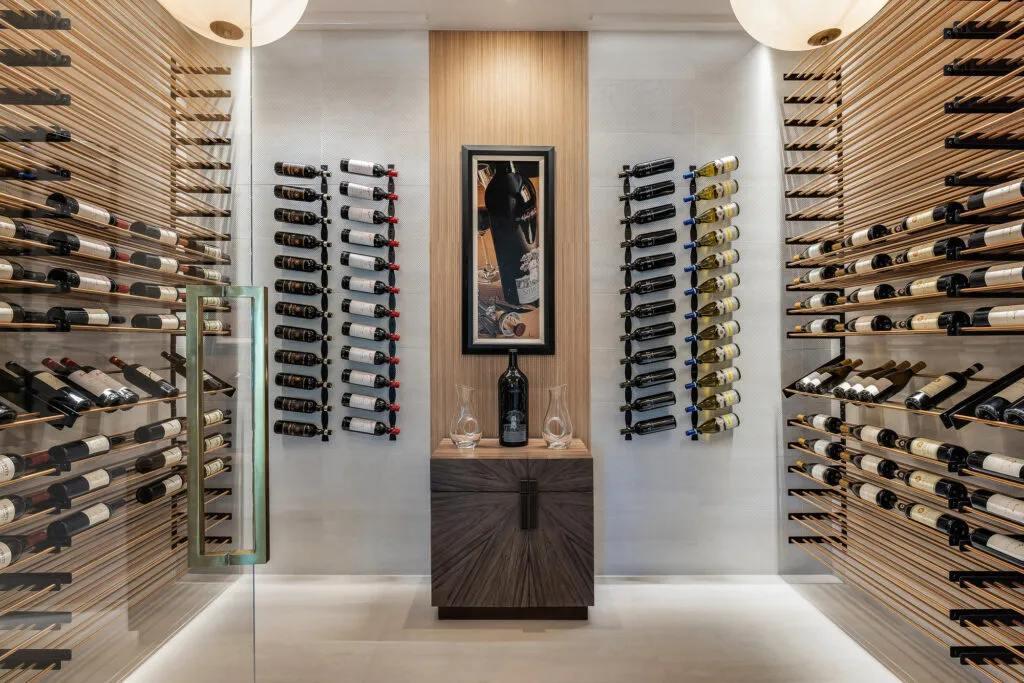
Choosing the right wine rack is about more than finding a place to store your bottles. The right rack should protect your wine, maximize available space, complement your interior design, and accommodate the way your collection is likely to grow.
With options ranging from traditional wood wine racks to contemporary metal, cable, wall-mounted, and custom-built systems, selecting the right solution can feel overwhelming. The best choice depends on your collection size, bottle types, available space, design preferences, and storage goals.
Here’s how to choose the right wine rack for your collection.
The first step is determining how many bottles you currently own—and how many you expect to own in the future.
If you have 50 bottles today but expect your collection to grow to 150 or 200 bottles, choosing a rack based only on your current inventory may leave you short on storage space.
Consider leaving room for future expansion. Modular wine racks can be especially useful because additional sections can often be added as your collection grows.
For larger collections, a combination of standard bottle storage, display rows, diamond bins, and case storage can provide more flexibility.
Not every wine bottle has the same dimensions.
Standard Bordeaux-style bottles are relatively easy to accommodate, but Burgundy bottles, Champagne bottles, magnums, and other large-format bottles may require additional space.
Before purchasing a wine rack, consider whether your collection includes:
Bordeaux bottles
Burgundy bottles
Champagne and sparkling wine
Pinot Noir bottles
Magnums
Large-format bottles
Unusually shaped bottles
If your collection includes many oversized bottles, choose a rack designed with flexible or larger openings rather than a system intended exclusively for standard bottles.
How you want to view your collection can influence your rack selection.
Traditional horizontal wine racks store bottles securely with the label facing outward at an angle or with the bottle positioned horizontally. These racks are excellent for maximizing capacity.
Label-forward systems, on the other hand, are designed to display the front label prominently. They can transform your collection into a visual feature and make it easier to identify specific bottles.
If you have a collection of special or collectible wines, label-forward storage can provide a more dramatic presentation.
Before selecting a wine rack, measure the space carefully.
Record the:
Width
Height
Depth
Door clearance
Ceiling height
Wall obstructions
Electrical outlets
HVAC or ventilation components
Don’t forget to account for how the bottles will be accessed. A rack may technically fit into a space but still be impractical if there isn’t enough room to remove bottles comfortably.
For small spaces, wall-mounted and vertical wine racks can provide excellent storage without consuming valuable floor area.
Wine racks are available in many different materials, with wood and metal being two of the most popular choices.
Wood wine racks offer a classic, warm appearance and can work beautifully in traditional or transitional wine cellars.
Popular options include mahogany, redwood, oak, and other hardwoods. Wood can also be customized into elaborate cellar designs with arches, columns, tasting tables, and decorative molding.
Metal racks are particularly popular for contemporary wine cellars.
They can create a clean, minimalist appearance and are available in wall-mounted, floor-to-ceiling, cable, and other configurations. Metal systems can also work well when you want the wine bottles themselves to become the primary visual element.
Cable wine racks provide an especially modern appearance. Bottles appear to float against the wall or within the enclosure, creating a visually light design.
They are particularly useful when you want to combine wine storage with a contemporary architectural aesthetic.
Your wine rack should complement the surrounding space.
For a traditional cellar, wood racking with decorative elements may be the natural choice. For a modern home, sleek metal or cable wine racks can create a more architectural appearance.
If your wine storage area includes glass walls or a glass door, minimalist racking can help maintain an open appearance without visually overwhelming the room.
Think of the wine rack as part of the room’s interior design—not simply a storage accessory.
If you’re working with limited floor space, look upward.
Floor-to-ceiling wine racks can dramatically increase bottle capacity while using the same footprint. Vertical storage is particularly effective in closets, under-stair wine cellars, narrow rooms, and compact wine displays.
Wall-mounted systems can also turn otherwise unused wall space into valuable storage.
A well-designed layout may allow you to combine bottle storage with display shelves, glassware storage, or case storage.
Maximum capacity isn’t always the same as maximum usability.
A wine rack that stores hundreds of bottles but makes it difficult to find a particular bottle isn’t necessarily a successful design.
Consider organizing your collection by:
Region
Varietal
Vintage
Producer
Drinking window
Personal preference
You can also create dedicated display areas for special bottles while keeping everyday wines in more accessible storage sections.
For larger collections, label-forward rows and wine lockers can make identification significantly easier.
Not every bottle needs to be stored the same way.
A well-designed wine cellar can combine practical storage with dedicated display areas. For example, you might use standard bottle openings for the majority of your collection and add a few label-forward rows or angled display shelves for prized bottles.
This creates visual interest without requiring you to purchase premium display racking for the entire collection.
The wine rack itself doesn’t control the cellar environment, but its design should work within a properly constructed wine storage space.
If you’re building a climate-controlled wine cellar, the room should be designed around stable temperature and humidity conditions. Insulation, vapor-barrier considerations, air sealing, and an appropriately sized wine cellar cooling system are all important.
Racking should also allow adequate access for maintenance and avoid interfering with the cooling system’s airflow requirements.
Modular wine racks are often an excellent option when you’re looking for flexibility and cost control. They are available in a variety of configurations and can be combined to create a functional cellar layout.
Custom wine racks make more sense when you’re working with unusual dimensions, architectural features, tight spaces, or a highly specific design vision.
A custom system can incorporate corners, columns, arches, display niches, tasting areas, and other architectural details that standard components may not accommodate.
Wine racks can range from relatively affordable modular systems to highly customized architectural installations.
Before choosing a system, determine how much of your budget should go toward:
Bottle capacity
Materials
Customization
Display features
Installation
Future expansion
If your primary goal is storage capacity, a simple modular system may provide the best value.
If the wine cellar is intended to be a major feature of your home, investing more in custom racking and display details may make sense.
Your wine collection probably won’t remain the same size forever.
If you currently have 100 bottles, don’t necessarily design a cellar that holds exactly 100 bottles. Consider where you’ll be in several years.
Modular systems can make future expansion easier, while custom-designed cellars can incorporate extra capacity from the beginning.
Planning for growth can also prevent the need to replace your entire racking system later.
The right wine rack should balance capacity, bottle compatibility, accessibility, aesthetics, available space, and budget.
For traditional cellars, wood wine racks offer warmth and customization. For modern spaces, metal and cable systems can provide a clean architectural look. Wall-mounted and floor-to-ceiling racks are excellent for maximizing limited space, while custom racking can solve challenging layouts and create a truly personalized wine cellar.
Before purchasing, measure your space, inventory your bottle types, estimate future collection growth, and decide whether storage or display is your priority.
At Cool Wine Cellar, we offer a wide range of wine rack solutions—from traditional wood systems to contemporary metal, cable, wall-mounted, and custom wine racks—to help create a storage system that fits your collection and your space.