
Call Us 📞 800-323-3130
Mon–Fri 8am–6pm CST, Sat–Sun 9am–1pm CST
Free design consultations
Showrooms in Miami & Fort Lauderdale
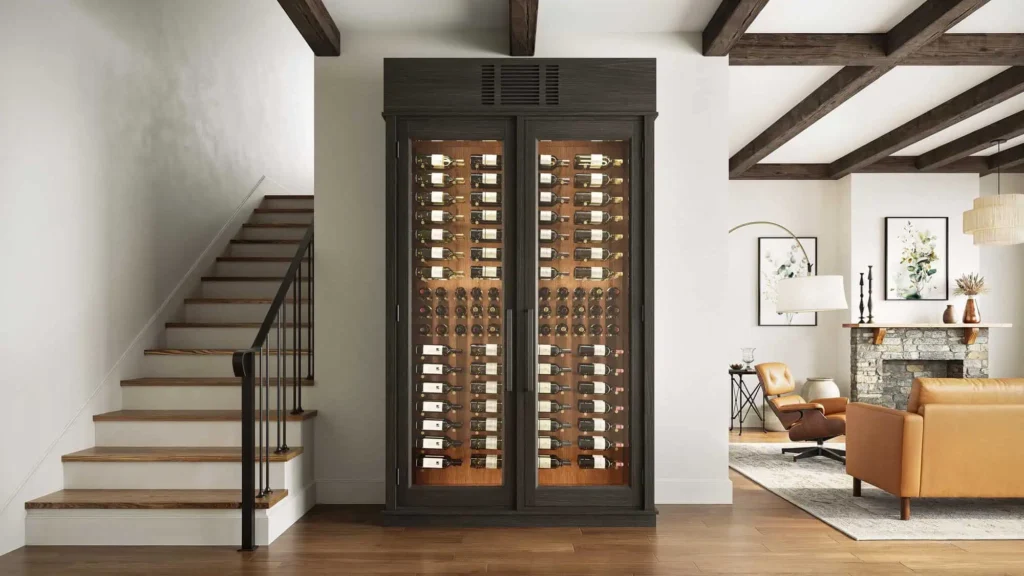
A growing wine collection does not always require an entire room dedicated to wine storage. For homeowners who want the preservation benefits of a wine cellar in a more compact and furniture-focused format, temperature-controlled wine storage cabinets can be an excellent solution.
Unlike ordinary furniture cabinets, temperature-controlled wine cabinets are designed to create a controlled environment for wine. Depending on the cabinet and cooling system, they can regulate temperature and, in some configurations, humidity while protecting bottles from light, vibration, and temperature fluctuations.
Whether you are storing a few dozen bottles or building a substantial collection, choosing the right wine storage cabinet can make a significant difference in how your wine ages over time.
A temperature-controlled wine storage cabinet is a specially designed cabinet that combines wine bottle storage with climate control.
Traditional wine cabinets simply provide a place to organize bottles. A temperature-controlled cabinet goes much further by maintaining a more stable internal environment.
These cabinets typically include:
Insulated cabinet construction
Wine bottle racks or shelves
Temperature controls
A dedicated cooling system or integrated refrigeration
Insulated or UV-resistant glass doors
Interior lighting
Digital temperature displays
Air circulation
Optional humidity control
Vibration-reduction features
Professional wine cabinet cooling systems can also be integrated into custom wine cabinets. For example, the Wine Guardian CAB018 is designed specifically for wine cabinets and can provide controlled temperatures from approximately 41°F to 64°F depending on the configuration.
The result is essentially a compact wine cellar built into a piece of furniture.
Temperature is one of the most important factors in wine storage.
Wine does not respond well to excessive heat, extreme cold, or repeated temperature fluctuations. A consistently warm environment can accelerate chemical reactions and premature aging, while significant temperature changes can cause the wine and air inside the bottle to expand and contract.
Wine Guardian notes that consistency is particularly important and that traditional cellars have historically been maintained around 55°F, although an acceptable storage range can be broader when conditions remain stable.
For long-term storage, many collectors aim for approximately 55°F, although the appropriate setting can vary depending on the wines being stored and the cabinet’s intended purpose.
The important point is not simply reaching a particular number. It is maintaining a stable environment with minimal temperature fluctuation.
For long-term wine storage, approximately 55°F is a commonly used target.
However, there is no single temperature that is appropriate for every situation. Some temperature-controlled cabinets are designed for both storage and serving, allowing the user to select different temperature settings.
For example, certain professional cabinet cooling systems offer a wider operating range so that the cabinet can be used for long-term storage or for keeping wine closer to serving temperature.
If you are storing both red and white wines and want one general storage environment, a moderate temperature in the mid-50s Fahrenheit is often a practical choice. Miele, for example, recommends 53–57°F when red and white wines are stored together.
The key is to select a cabinet and cooling system capable of maintaining the desired temperature consistently.
One common mistake is focusing only on the temperature displayed on the cabinet’s thermostat.
A cabinet that reaches 55°F but repeatedly swings several degrees may provide a less desirable storage environment than one that maintains a slightly different temperature very consistently.
Frequent fluctuations can cause wine and the air space inside bottles to expand and contract. Over time, this can contribute to cork movement and leakage.
That is why quality wine storage cabinets are engineered around temperature stability, insulation, controlled airflow, and appropriate refrigeration.
When shopping for a cabinet, look beyond the thermostat display and ask:
How stable is the temperature?
How well is the cabinet insulated?
What type of cooling system is used?
Does the system cycle frequently?
How is air distributed inside the cabinet?
Is the cabinet designed specifically for wine storage?
Temperature gets most of the attention, but humidity is another important consideration for long-term wine storage.
Natural cork closures need an appropriate storage environment. Excessively dry conditions can contribute to cork deterioration over long periods, while excessive humidity can encourage mold and damage labels.
Many purpose-built wine cabinets incorporate humidity-management features or are designed to maintain a suitable humidity environment. Vintec, for example, identifies humidity above 50% as one of its key wine-storage considerations and combines humidity management with controlled airflow.
Not every temperature-controlled wine cabinet provides active humidity control, however. This is an important distinction when comparing products.
If you are building a serious collection for long-term aging, ask whether the cabinet:
Measures humidity.
Controls humidity.
Allows humidity adjustments.
Provides enough airflow to prevent stagnant conditions.
Wine should generally be protected from excessive light, particularly ultraviolet exposure.
UV radiation can negatively affect wine over time, which is one reason quality wine cabinets often incorporate tinted, treated, or insulated glass.
Some premium wine cabinets use UV-resistant glass along with dark interiors and controlled LED lighting to reduce unnecessary exposure.
This is especially important if your cabinet will be positioned in:
A sunny kitchen
A dining room
A living room
Near large windows
A home bar
A restaurant or commercial display area
A beautiful glass wine cabinet can become a design feature, but the glass should also provide appropriate protection for the bottles inside.
Refrigeration systems contain moving components, and excessive vibration is not desirable for wines intended for extended aging.
Premium wine cabinets may incorporate vibration-reduction technologies in their compressors, shelving, and cabinet construction.
Vintec, for example, specifically highlights vibration reduction as one of its wine-storage principles, including vibration-absorbing shelving components.
This does not mean every vibration will ruin a bottle. Instead, it is about creating a stable environment that is appropriate for long-term wine preservation.
If you are investing in collectible or expensive wines, vibration control is worth considering when comparing cabinets.
A standard wine refrigerator and a custom temperature-controlled wine cabinet can appear similar, but they can serve different purposes.
A wine refrigerator is generally an appliance designed to cool wine bottles. A custom wine cabinet can be designed as an integrated piece of furniture and can incorporate a dedicated wine cabinet cooling system.
A temperature-controlled wine cabinet may offer:
Custom dimensions
Custom finishes
Higher bottle capacity
Built-in wine racks
Architectural integration
Custom glass doors
Premium lighting
Dedicated cooling equipment
Flexible installation options
A professionally designed cabinet can therefore become part of the architecture and interior design rather than simply looking like an appliance.
One of the biggest advantages of a custom wine cabinet is flexibility.
Not every home has room for a traditional wine cellar. A cabinet can be installed in spaces such as:
Under a staircase
Behind a kitchen island
In a dining room
In a home bar
Along a hallway
Inside a butler’s pantry
In a living room
Inside a dedicated wine room
Along an unused wall
This makes wine cabinets particularly useful for homeowners who want serious wine storage without sacrificing a large amount of floor space.
Custom cabinets can also be designed around unusual architectural dimensions, allowing the wine storage to become part of the existing room rather than forcing the room to accommodate a standard-size appliance.
There are two broad approaches to wine cabinet design: freestanding and built-in/custom.
Freestanding cabinets can be easier to install and relocate.
They can work well for homeowners who:
Rent their home
Want flexibility
Are not ready for a permanent installation
Need a smaller wine collection
Want a furniture-style wine storage solution
Built-in cabinets offer a more integrated appearance.
They can be designed to match:
Kitchen cabinetry
Wood flooring
Millwork
Home bars
Dining rooms
Luxury interiors
Modern architectural spaces
A custom cabinet can also be designed around the bottle capacity and cooling requirements instead of trying to adapt a standard appliance to the available space.
For many wine collectors, the wine cabinet is not only about storage—it is also about presentation.
Glass doors allow the collection to become part of the room’s visual design.
A well-designed glass wine cabinet can showcase:
Burgundy bottles
Bordeaux bottles
Champagne
Large-format bottles
Collectible vintages
Wine labels
Special releases
However, glass also introduces additional considerations for thermal performance.
The amount and type of glass, insulation, exposure to sunlight, and surrounding room temperature can all influence the cooling requirements.
For this reason, a custom temperature-controlled wine cabinet should be designed with the cabinet’s actual construction and location in mind.
When purchasing a wine cabinet, it is tempting to focus entirely on bottle capacity.
A cabinet advertised as holding 100 bottles may sound ideal, but actual usable capacity depends on the shape of your bottles and how you want them arranged.
Burgundy, Champagne, Pinot Noir, Bordeaux, and large-format bottles can require different amounts of space.
Consider whether you need:
Standard bottle storage
Champagne storage
Magnum storage
Display shelves
Label-forward presentation
Diamond bins
Individual bottle racks
Pull-out shelves
Mixed bottle configurations
A cabinet designed around your actual collection will generally provide a better experience than one selected solely by its advertised maximum bottle count.
Not every cooling system is appropriate for every cabinet.
The required cooling capacity can depend on several factors, including:
Cabinet size
Interior volume
Insulation
Glass area
Number of glass doors
Ambient room temperature
Cabinet location
Frequency of door openings
Lighting
Cooling-system design
Desired internal temperature
This is especially important for custom wine cabinets with large glass panels or unusual dimensions.
A cabinet located in a hot room with significant glass exposure may require substantially more cooling capacity than a similarly sized cabinet located in a cool, shaded interior space.
Professional cabinet cooling systems are available specifically for this application. Wine Guardian’s CAB018, for example, is designed for integration into wine cabinets, wine displays, and wine showcases.
Wine storage becomes particularly challenging in warm and humid climates.
In areas such as Miami, Fort Lauderdale, Palm Beach, Naples, and other parts of South Florida, indoor and outdoor temperatures can remain high for much of the year.
A wine cabinet placed in a warm kitchen or near windows can experience a much greater cooling load than a cabinet located in a naturally cool interior room.
This makes proper insulation, glass selection, cabinet construction, ventilation, and cooling capacity especially important.
Simply placing wine inside an ordinary cabinet and turning down the temperature is not the same as creating a properly engineered wine-storage environment.
The location of your cabinet can affect both performance and appearance.
Good locations may include:
Home Bar
A wine cabinet can become the centerpiece of a home bar, providing convenient access while creating an attractive display.
Dining Room
A built-in wine cabinet can make serving wine convenient while adding a sophisticated architectural feature.
Kitchen
Wine cabinets are increasingly incorporated into luxury kitchen designs, especially when the collection needs to remain accessible.
Under-Stair Areas
The space beneath a staircase is often underutilized. A custom wine cabinet can transform this awkward area into valuable wine storage.
Living Room
For collectors who want their bottles on display, a temperature-controlled cabinet can become part of the room’s design.
Before purchasing a temperature-controlled wine storage cabinet, consider the following questions:
How many bottles do you currently own?
Don’t plan only for today’s collection. Wine collections tend to grow.
How long will you store the wine?
Short-term storage and long-term aging can have different requirements.
Do you need one temperature or multiple zones?
Collectors who want both storage and serving temperatures may benefit from multiple temperature zones.
Will the cabinet have glass doors?
Glass can significantly influence the cabinet’s thermal requirements.
Where will the cabinet be located?
A cabinet in a climate-controlled interior room has different requirements from one exposed to sunlight or high ambient temperatures.
Do you want the cabinet to be visible?
If so, consider lighting, glass, finishes, shelving, and bottle presentation.
Will you store standard bottles or mixed bottle sizes?
Your bottle collection should influence the rack configuration.
Do you need humidity control?
For serious long-term storage, this is worth investigating.
Both solutions can provide excellent wine storage, but they are suited to different situations.
A wine cellar is ideal when you have a large collection and enough dedicated space for a complete climate-controlled room.
A temperature-controlled wine cabinet can be a better choice when you want:
A smaller footprint
Flexible installation
Furniture-style aesthetics
Easier integration into existing rooms
Custom bottle storage
A dedicated climate-controlled environment without building an entire room
For some homeowners, the cabinet is the perfect middle ground between an ordinary wine refrigerator and a full custom wine cellar.
The best wine cabinet is not necessarily the largest one or the most expensive one. It is the cabinet that combines proper temperature control, appropriate storage capacity, architectural design, and the features your wine collection actually needs.
If you are exploring different cabinet configurations, finishes, layouts, and design approaches, take a look at the wine cabinet collection at CoolWineCellar to explore different wine cabinet styles and find inspiration for your space.
From modern display cabinets to custom-built wine storage solutions, the right design can turn your collection into both a protected investment and a beautiful part of your home.
A temperature-controlled wine storage cabinet is more than a place to keep bottles. It is a purpose-built environment designed to help protect wine from the conditions that can negatively affect its aging process.
Stable temperature, suitable humidity, protection from light, controlled airflow, vibration reduction, proper insulation, and an appropriately sized cooling system all contribute to better wine storage.
For homeowners who do not have space for a traditional cellar—or who simply want their collection closer to their entertaining areas—a custom temperature-controlled wine cabinet can provide an elegant and practical alternative.
The most important step is to treat the cabinet as a wine-storage system rather than ordinary furniture. When the cabinet, racks, glass, insulation, and cooling system are designed to work together, you can create a storage environment that protects your collection while complementing the design of your home.