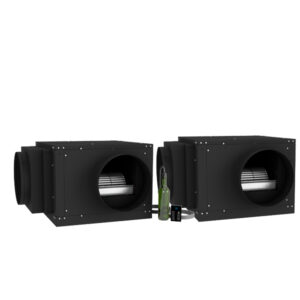
WhisperKOOL Split Systems

WhisperKOOL Split System is often the most efficient way to cool a cellar. Wine Cooling Unit condensers are typically noisy and require significant space for ventilation. In most cases, the wine cellar location does not include an area for these functions. By splitting the Wine Cooling System, the condenser can be placed in a space better suited for heat and noise dissipation. While the quiet evaporator is inside, or near, the cellar. A licensed HVAC/R technician is required for the installation.

Platinum Wall Mount

  • Condensing unit can be placed outdoors
  • 24V thermostat options
  • From $5,575.00

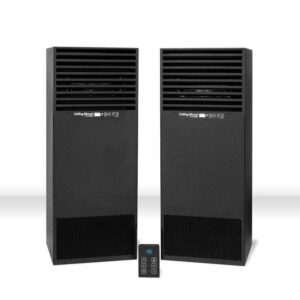
Ceiling Mount

  • Hex mesh grille with air filter
  • Allows for maximum racking space
  • From $6,815.00

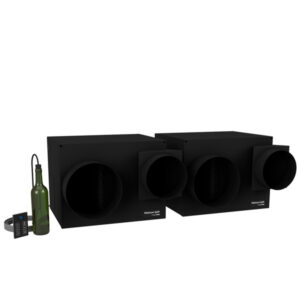
Platinum Ducted

  • Quiet and efficient operation
  • 2-speed fan switch to adjust BTU/h capacity
  • $7,255.00

Quantum Ducted Split

  • Interchangeable evaporator airflow panels
  • 220V High Efficiency Condenser
  • From $9,705.00

Call Our Experts:
800-323-3130

All Our Consultants Have
Over 10 Years Experience

Wine Cellar Cooling Questions?

Our wine cellar experts are ready to assist in finding the ideal wine-cooling unit for your cellar. Just tell us the style, size, budget, and cellar details – we’ll handle the rest.

Call Us
​Flexible Wine Cooling Units
All split systems come with a 2-year limited product warranty. This warranty begins on the date of purchase, but it becomes active only after the submission and approval of a Product Warranty Checklist by WhisperKOOL.
  • For small to large wine cellars
    Variety of installation options
  • Humidifier, serving temperature and electric heater option
  • The quietest option for wine cellars
  • Precise Climate Control
  • Whisper-Quiet Operation
  • Energy Efficiency
  • Reliable Construction
Frequently Asked Questions

A WhisperKOOL split system is a two-piece wine cellar cooling system consisting of an evaporator (installed inside the cellar) and a condensing unit (installed remotely). These components are connected by refrigerant lines, allowing heat and noise to be moved away from the cellar.

The evaporator inside the cellar cools and circulates air, while the condenser—located outside or in a mechanical space—removes heat from the system. This separation improves efficiency and keeps the cellar environment quiet and stable.

  • Significantly quieter operation inside the cellar
  • Flexible condenser placement (outdoors, attic, garage)
  • No heat exhaust into adjacent rooms
  • Suitable for larger or high-end wine cellars

These systems are often preferred for premium installations where noise and aesthetics matter.

  • Ductless split systems: Evaporator is visible inside the cellar (e.g., ceiling mount units)
  • Ducted split systems: Evaporator is hidden and connected via ductwork

Ducted systems provide a cleaner look and quieter operation, while ductless systems are simpler to install.

Yes. Fully ducted split systems allow both the evaporator and condenser to be installed remotely, with only supply and return grilles visible inside the cellar. This is ideal for luxury or design-focused wine rooms.

Yes. WhisperKOOL split systems must be installed by a licensed HVAC technician due to refrigerant handling, electrical wiring, and system setup requirements.

The condensing unit can be placed in:

  • Outdoor areas
  • Mechanical rooms
  • Garages or attics

This flexibility helps eliminate heat buildup and reduces noise within the cellar.

Yes. Because the condenser (which generates most noise) is located remotely, split systems are significantly quieter inside the wine cellar compared to self-contained units.

Sizing depends on several factors:

  • Room dimensions
  • Insulation and vapor barrier
  • Glass or stone surfaces
  • Ambient temperature

A proper heat load calculation is required to select the correct system size.

Most wine cellars are maintained at:

  • Temperature: ~55°F
  • Humidity: ~60%

Split systems are designed to maintain consistent conditions for long-term wine preservation.

They do not actively humidify or dehumidify but help maintain stable humidity when the cellar is properly sealed with insulation and a vapor barrier.

Depending on the model and configuration, the evaporator and condenser can be installed several feet apart, connected by refrigerant lines. Fully ducted systems can also be installed up to around 25 feet away in some configurations.

A properly sized system typically runs between 25% to 70% of the time, depending on ambient conditions and insulation quality.

No. Since the condenser is installed remotely, split systems do not require ventilation within or near the cellar, making them ideal for enclosed or interior installations.

Split systems are better for:

  • Larger or luxury wine cellars
  • Noise-sensitive environments
  • Installations with no ventilation options

Self-contained units may still be more cost-effective for smaller, simpler cellars.

Routine maintenance includes:

  • Cleaning evaporator and condenser coils
  • Checking refrigerant levels (by HVAC technician)
  • Inspecting electrical connections
  • Ensuring proper drainage

Regular servicing helps maintain efficiency and longevity.

For wine collectors and enthusiasts, a wine cellar is more than just a storage space. It is a place where wine can be stored and aged to perfection, with optimal temperature and humidity levels. That is why the choice of wine cellar cooling units is crucial for maintaining the quality of the wine.

Call Us 800-323-3130