
Call Us 📞 800-323-3130
Mon–Fri 8am–6pm CST, Sat–Sun 9am–1pm CST
Free design consultations
Showrooms in Miami & Fort Lauderdale
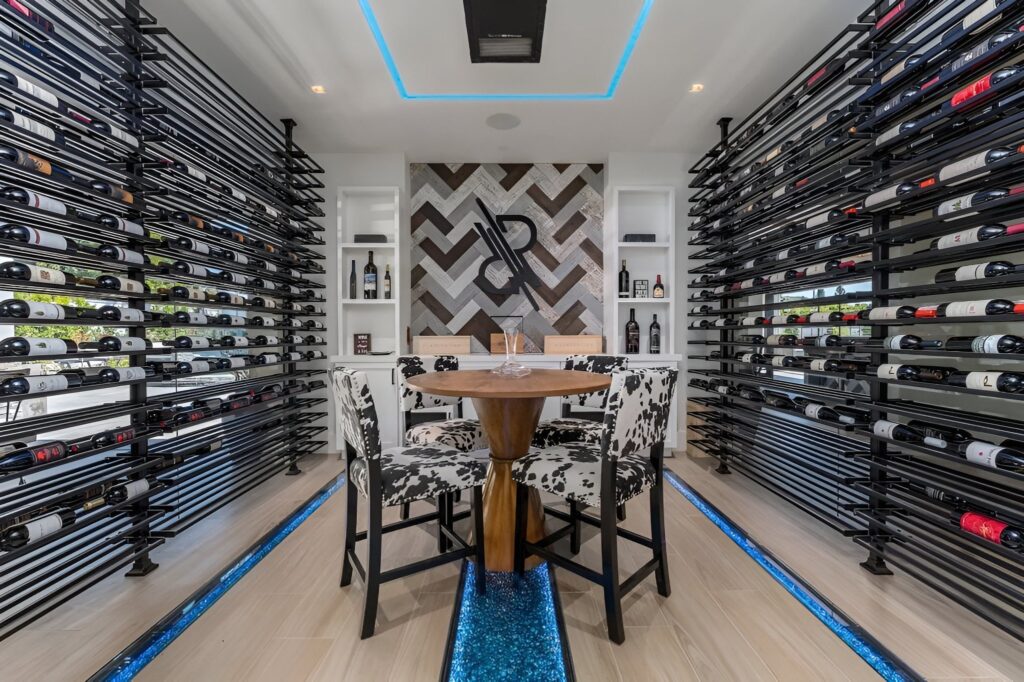
Navigating the world of wine preservation can be as complex as a well-aged Bordeaux. If you have moved beyond a single countertop fridge and now boast a medium-sized collection (typically 500 to 1,500 bottles), a standard air conditioner or a basic small-scale cooler won’t cut it.
To protect your investment, you need a dedicated wine cellar climate control system. Here is the expert breakdown of the systems recommended for medium collections and how to choose the right one.
A medium collection represents a significant financial and emotional investment. Unlike small setups, these collections require more than just “cool air.” They need:
Thermal Stability: Maintaining a consistent 55∘F (13∘C).
Active Humidity Management: Keeping levels between 50% and 70% to prevent corks from drying out.
Vibration Mitigation: Standard compressors vibrate; wine cooling units are dampened to prevent chemical agitation in the wine.
These are the most popular choice for dedicated wine rooms up to 1,500 cubic feet. They are “plug-and-play,” meaning the evaporator and condenser are in one housing.
Pros: Most affordable; easy to install without an HVAC technician.
Cons: Requires a well-ventilated adjacent room to exhaust heat; can be noisier than other options.
Top Pick: The WhisperKool Extreme Series is a workhorse in this category, designed specifically for larger thermal loads.
If you want your cellar to look sleek without a bulky unit on the wall, a ducted system is the “gold standard.” The unit is placed in a mechanical room or attic, and cooled air is delivered via vents.
Pros: Zero noise inside the cellar; no visible equipment; superior humidity control.
Cons: Higher installation cost; requires ductwork.
Top Pick: The Wine Guardian D088 is specifically engineered for medium-to-large residential applications and offers commercial-grade reliability.
A split system separates the evaporator (inside) from the condenser (outside). This is ideal if you don’t have an adjacent room to exhaust heat into.
Pros: Extremely quiet; flexible installation; can handle high ambient temperatures outside.
Cons: Requires a licensed HVAC professional for refrigerant line installation.
Top Pick: The Wine Guardian DS050 provides 1/2-ton cooling capacity, perfect for mid-sized rooms that need powerful, discreet climate control.
When shopping for a medium-sized unit, don’t just look at the price tag. Ensure the system includes:
Digital Thermostats & Sensors: Look for units with “bottle probes” that measure the temperature of the liquid, not just the air.
Coated Evaporator Coils: Wine environments are humid; coated coils prevent corrosion and extend the life of the unit.
Heating Elements: If your cellar is in a basement in a cold climate, you may need a unit with a heater to keep the wine from getting too cold in the winter.
| System Type | Best For… | Noise Level | Install Difficulty |
|---|---|---|---|
| Through-the-Wall | Budget-conscious DIYers | Moderate | Easy |
| Fully Ducted | Maximum aesthetics & silence | Silent | High |
| Split System | Cellars with no exhaust space | Very Quiet | Professional Required |
Choosing the right BTU (British Thermal Unit) capacity is vital—an undersized unit will burn out, while an oversized one will short-cycle and ruin your humidity levels.
For a curated selection of the industry’s best hardware, we recommend exploring Cool Wine Cellar. They specialize in medium-sized wine cooling units from top-tier brands like Wine Guardian and WhisperKool, offering the technical specs and support needed to ensure your collection ages gracefully for decades.