What Type Of Climate Control System Is Recommended For A Medium-Sized Wine Collection?
Book an appointment Request free design Free Heatload Calculation Navigating the world of wine preservation can be as complex as a
Slimline LS
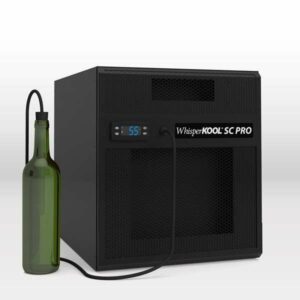
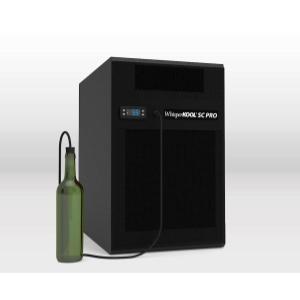
SC Pro Series
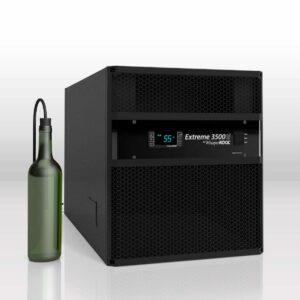
Extreme Series
Call Our Experts:
800-323-3130
All Our Consultants Have
Over 10 Years Experience
Our wine cellar experts are ready to assist in finding the ideal wine-cooling unit for your cellar. Just tell us the style, size, budget, and cellar details – we’ll handle the rest.


Certainly! Here are some frequently asked questions (FAQs) about self contained wine cooling units.
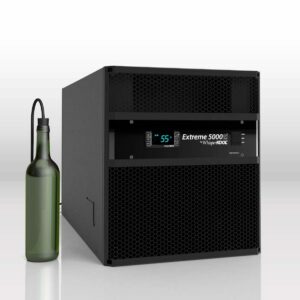
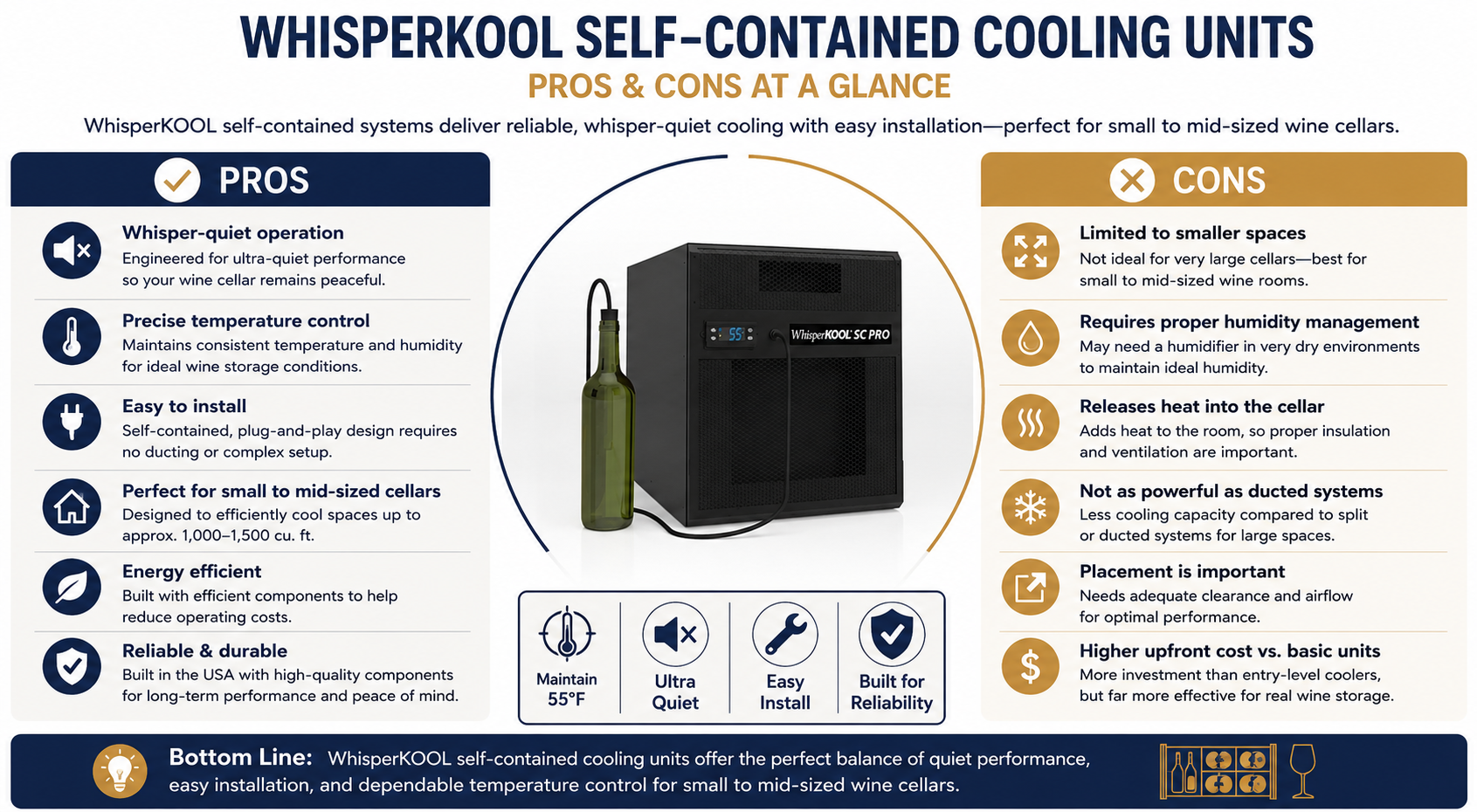
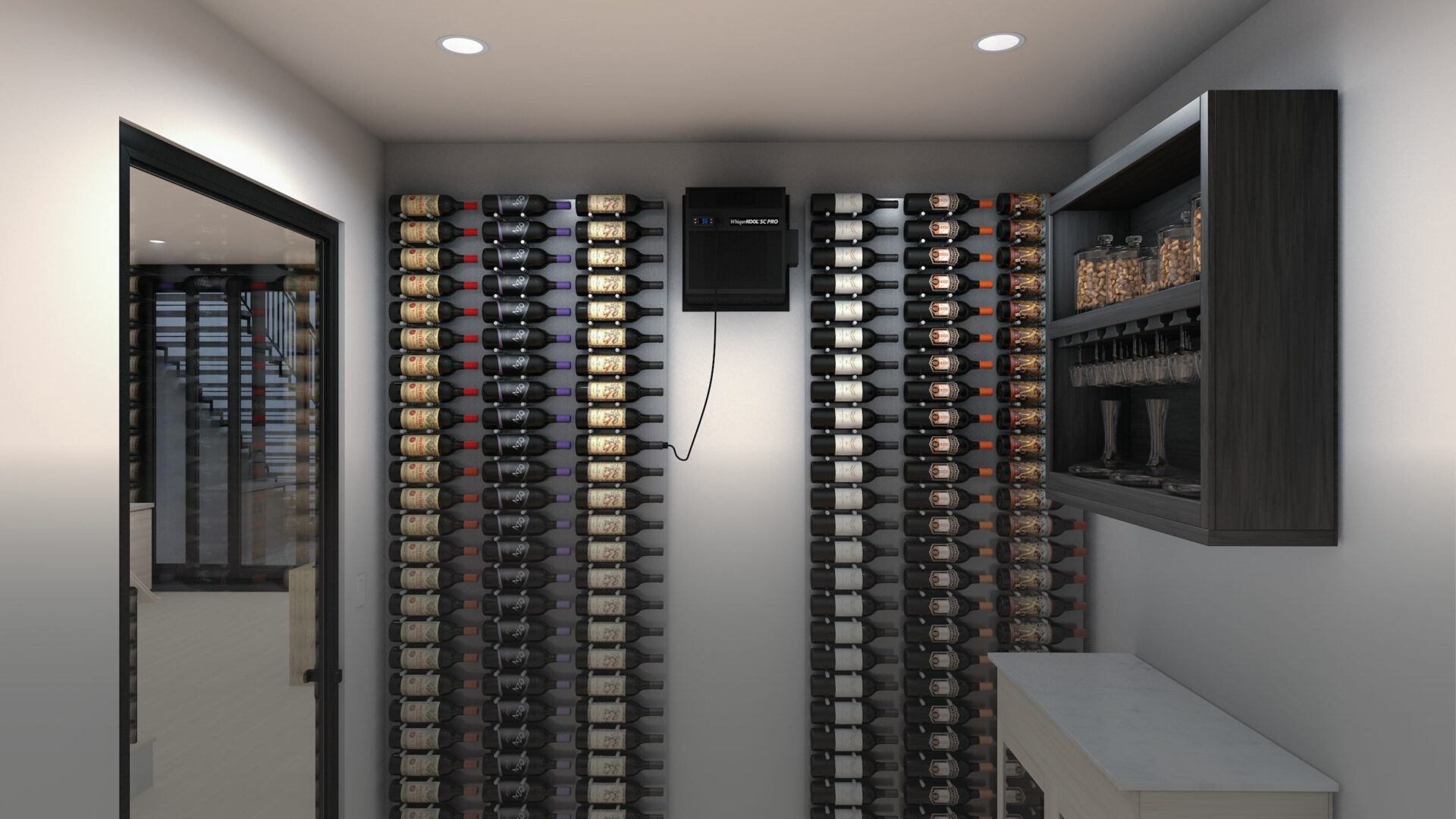
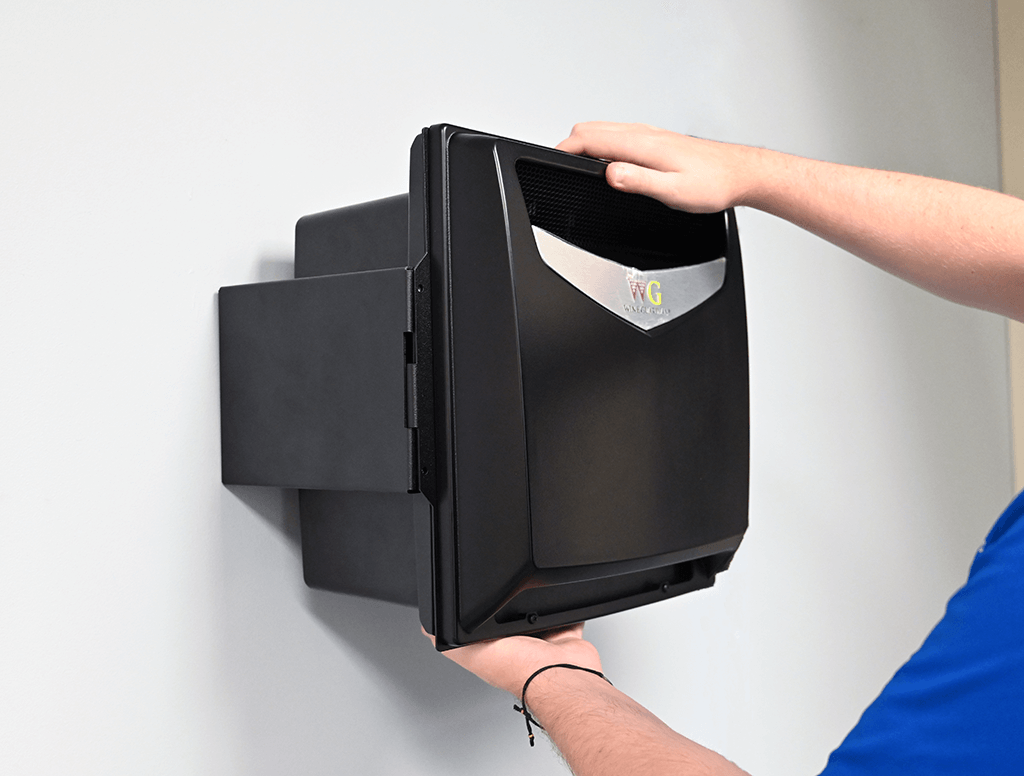
A WhisperKOOL self-contained cooling unit is an all-in-one wine cellar system that includes both the evaporator and condenser in a single housing. These units are typically installed through a wall and are designed to maintain stable temperature and humidity conditions for wine storage.
Self-contained units draw warm air from the cellar, cool it using internal refrigeration components, and recirculate the conditioned air back into the space. At the same time, they expel heat into an adjacent room or area, helping maintain consistent cellar conditions.
Most WhisperKOOL self-contained units are installed through a wall, with the front facing the cellar and the rear exhausting into a ventilated adjacent space such as a utility room or mechanical area. Proper ventilation is essential to prevent overheating
Many self-contained units can be installed without a licensed HVAC technician if installation guidelines are followed. However, complex setups or ducted configurations may still require professional assistance.
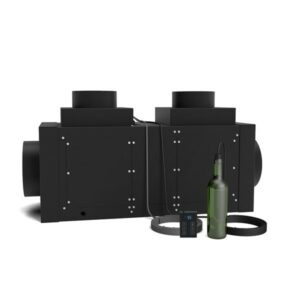
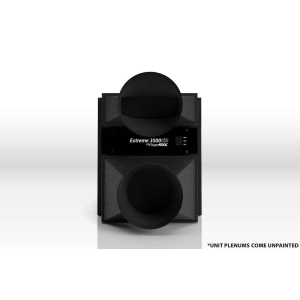
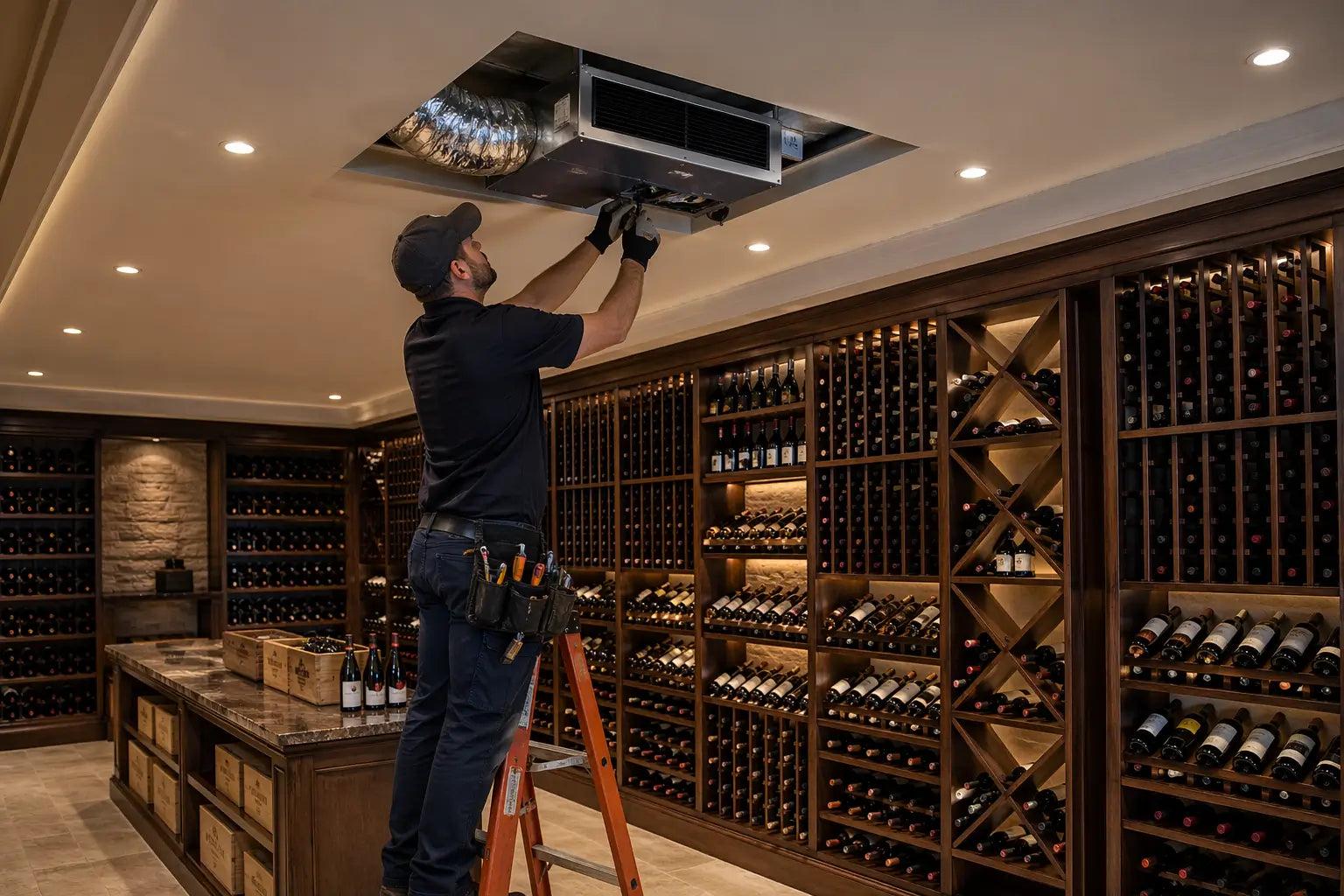
Some WhisperKOOL self-contained systems can be ducted, but capabilities vary by model:
Sizing depends on more than just room dimensions. Key factors include:
A BTU calculation is recommended to ensure proper system performance.
The ideal conditions are:
Maintaining stable conditions is critical to prevent cork drying, oxidation, and mold growth.
WhisperKOOL systems do not actively control humidity. However, they help maintain moisture balance by removing and reintroducing some condensation. Proper insulation and a vapor barrier are essential for stable humidity levels.
Because all components are housed in one unit, some operational noise is expected inside or near the cellar. Ducted installations or remote placement can significantly reduce perceived noise.
A properly sized system typically runs between 25% and 70% of the time, depending on environmental conditions, insulation, and heat load. Longer runtimes are common in warmer climates or poorly insulated spaces.
Self-contained systems must have adequate airflow around the exhaust side. Hot air (often 90–100°F) needs sufficient space to dissipate, or it may reduce efficiency and cause overheating.
Yes. A vapor barrier is critical to prevent moisture infiltration, stabilize humidity, and reduce heat load. Without it, even a properly sized cooling unit may struggle to maintain conditions.
Regular maintenance includes:
Most units include:
Warranty activation typically requires proper installation documentation.
Self-contained units are ideal for small to mid-sized residential cellars. For larger spaces, high-heat environments, or luxury designs requiring low noise and hidden equipment, split or fully ducted systems may be more appropriate.

Book an appointment Request free design Free Heatload Calculation Navigating the world of wine preservation can be as complex as a