
Call Us 📞 800-323-3130
Mon–Fri 8am–6pm CST, Sat–Sun 9am–1pm CST
Free design consultations
Showrooms in Miami & Fort Lauderdale
Call us at 800-323-3130 or email us at info@coolwinecellar.com in case of any questions.
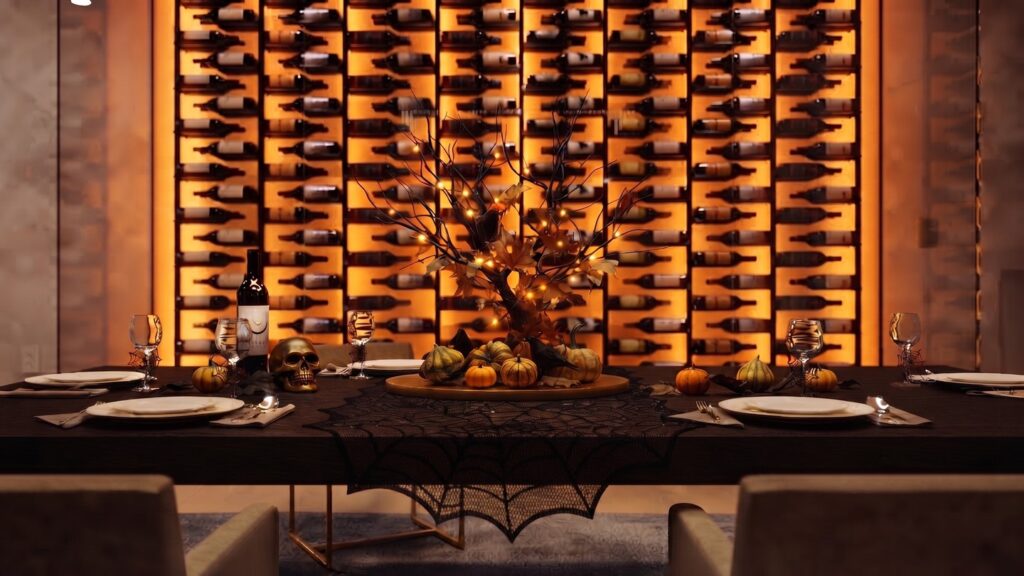
Short answer: modern wine cellar design works in a contemporary home when the cellar borrows the architecture’s own language instead of introducing a new one. Use the same clean lines, a limited palette of two or three materials, frameless insulated glass, slim metal or cable racking that lets the bottles provide the pattern, integrated LED lighting, and cooling equipment that is ducted out of sight. The cellar should read as part of the house, not as a themed room inside it.
Contemporary homes are usually open-plan, so the cellar tends to be seen rather than hidden. The strongest locations are those the architecture already emphasizes:
For layouts, see integrating a wine wall into an open-concept living space and our modern wine wall ideas. Avoid walls that take direct afternoon sun.
| Element | Contemporary choice | Why it works |
|---|---|---|
| Enclosure | Frameless or slim-framed insulated glass | Keeps the cellar visually open while holding temperature |
| Racking | Metal rails, pegs or tensioned cable | Thin profiles; bottles appear to float |
| Back wall | Stone, porcelain slab, wood veneer or a painted panel | One calm surface behind the bottles |
| Metal finish | Matte black, brushed or satin metal | Matches window frames, taps and door hardware |
| Wood | Flat-grain panels or simple shelving, used sparingly | Adds warmth without traditional molding |
A useful test is to stand where the cellar will be seen from and list the finishes already in view. If the home has black window frames and oak floors, a black metal rack against an oak-veneer panel will look as though it was always part of the plan. Our guide to combining steel and wood in a wine display covers the balance between the two.
Whichever you choose, keep one system dominant. Mixing three racking styles in one cellar is the quickest way to lose the contemporary feel. For presentation details, read tasteful label display options for prized bottles, and for clean installation see how to hide fasteners and hardware.
Glass is the signature of the contemporary cellar and also its biggest thermal weakness. Three rules keep it working:
See examples on our glass wine cellar and contemporary wine cellar pages.
A visible grille-fronted unit on the back wall undermines a minimalist cellar. A ducted system places the equipment in a mechanical room, attic or closet and delivers air through slim linear slots that can be finished to match the ceiling or the top of the racking. It is also the quietest arrangement, which matters when the cellar opens onto living space. See ducted wine cellar cooling units, our explanation of why ducted systems are the quietest option, and the full range of wine cellar cooling units. Because every contemporary glass cellar is actively cooled, it helps to understand the difference between passive and active wine cellars.
LED is the only sensible choice inside a cellar because it adds very little heat.
What defines a modern wine cellar?
Clean lines, glass enclosures, metal or cable racking with bottles displayed label-forward, integrated LED lighting and concealed climate control.
Do glass wine cellars keep wine at the right temperature?
Yes, when they use insulated glass, a sealed door and a cooling unit sized by a heat load calculation that includes the glass area.
Is metal or wood racking better for a contemporary home?
Metal and cable systems suit contemporary architecture best because of their thin profiles. Wood can be added as flat panels or shelving for warmth.
Where is the best place for a wine wall in an open-plan home?
Between kitchen and dining areas, under a staircase or at the end of a main sightline, away from direct sunlight.
Can architects and designers work with you on a project?
Yes. We provide design support and trade pricing through our Trade Partnership Program.
Start your modern wine cellar design
Send us your plans or photos and we will prepare a design that fits the architecture, with a free heat load calculation. Visit our Miami and Fort Lauderdale showrooms, request a free design, explore our wine cellar design services, or call 800-323-3130.