
Call Us 📞 800-323-3130
Mon–Fri 8am–6pm CST, Sat–Sun 9am–1pm CST
Free design consultations
Showrooms in Miami & Fort Lauderdale
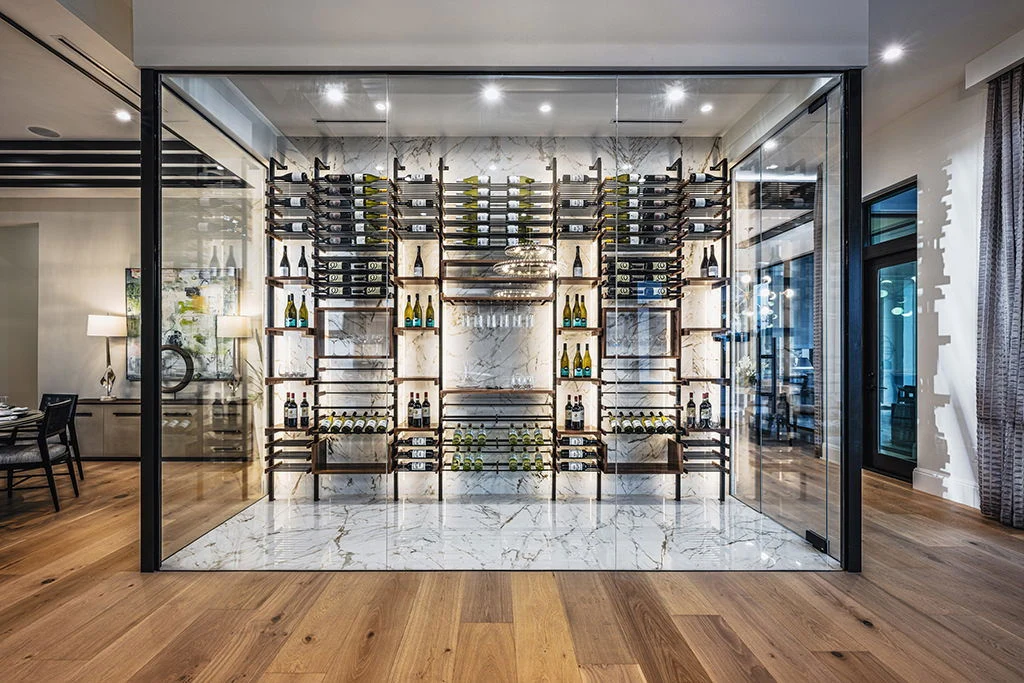
An open-concept living space offers the perfect opportunity to create a wine wall that feels like a natural part of your home’s architecture. Whether your living room flows into the dining area, your kitchen opens onto an entertaining space, or your home features a great room with expansive views, a thoughtfully designed wine wall can transform an ordinary wall into a striking focal point.
The secret is to balance wine storage, visual appeal, and temperature control without making the space feel crowded or disrupting the flow between rooms.
From sleek metal wine racks and floating displays to floor-to-ceiling glass wine walls, there are several ways to incorporate wine storage into an open floor plan while maintaining a cohesive, sophisticated interior.
The first step is identifying a wall that offers both visual prominence and practical functionality. In an open-concept home, your wine wall should complement the surrounding spaces rather than compete with them.
Consider these popular locations:
Between the kitchen and dining area: Create a convenient wine display near the space where meals are prepared and served.
Behind the dining table: Turn your wine collection into an elegant backdrop for dinner parties and special occasions.
Along a living room feature wall: Introduce an architectural element that adds character without requiring additional furniture.
Between the living room and kitchen: Use a glass-enclosed wine wall to create subtle visual separation while preserving an open feel.
Beneath a staircase or along an unused wall: Make productive use of an overlooked area without sacrificing valuable living space.
Before choosing a location, consider natural sunlight, nearby appliances, ambient temperatures, and access to electrical power if you plan to install a dedicated wine cooling system.
Design tip: Select a wall that is visible from multiple areas of your home. This allows your wine collection to become a design feature that connects the kitchen, dining room, and living room.
One of the most important decisions is whether you want an open decorative display or a fully enclosed wine storage environment. The right choice depends on your collection, design preferences, and wine preservation goals.
<AsyncImageGroup query={[“modern open concept living dining room contemporary black metal wall mounted wine racks”,”luxury modern home bar decorative wine display wall minimalist interior”]} aspectRatio=”5:4″ layout=”bento” size=”lg”/>
Open wine walls work well when you want to display a smaller collection as part of your interior design. Metal wall-mounted racks, floating wine racks, and contemporary wine rails can create a clean, minimalist appearance.
Benefits include:
A lightweight visual profile that works well in modern interiors.
Easy access to bottles when entertaining.
Flexible layouts that can accommodate artwork, shelving, or a home bar.
An attractive display without building a separate wine room.
However, open displays generally expose wine to ambient temperature fluctuations, light, and other environmental conditions. They are best suited to decorative displays or bottles intended for relatively short-term storage, rather than long-term preservation in a controlled environment.
<AsyncImageGroup query={[“luxury contemporary glass enclosed wine wall open concept living room dining room black metal frame”,”floor to ceiling frameless glass wine cellar integrated into modern open plan living space”]} aspectRatio=”5:4″ layout=”bento” size=”lg”/>
A glass-enclosed wine wall creates the visual impact of a wine display while allowing you to establish a dedicated, temperature-controlled storage environment.
This option is particularly effective in open-concept homes because transparent glass preserves sightlines between rooms. Slim metal frames, frameless glass designs, and carefully positioned lighting can make the wine wall feel integrated into the architecture.
Key advantages include:
A dramatic focal point visible from multiple rooms.
A defined space for wine storage without constructing a conventional opaque room.
The opportunity to incorporate custom wine racks and architectural lighting.
Better environmental control when the enclosure, insulation, vapor management, door seals, and cooling system are properly designed.
Remember that glass alone does not provide temperature control. A successful wine wall requires an appropriately engineered enclosure and a cooling system sized for its actual heat load.
Your wine racks should complement your home’s cabinetry, furniture, flooring, lighting, and architectural finishes. A well-integrated wine wall feels intentional rather than like an accessory added after the room was completed.
Black, bronze, and other metal finishes work beautifully in modern homes with clean lines, neutral colors, and minimalist furnishings. Individual bottle displays can create a floating effect that keeps the overall design visually light.
Walnut, mahogany, and other wood finishes introduce warmth and texture. They are ideal for interiors featuring natural materials, wood cabinetry, traditional furniture, or transitional design.
Floating and contemporary wine display
Floating racks and streamlined wine rails are ideal for homeowners who want a sculptural feature without the appearance of bulky cabinetry. They work especially well on a dedicated accent wall or within a compact entertaining area.
Custom glass wine walls
Glass enclosures with coordinated metal frames and custom racking can create a sophisticated architectural feature. Match the frame finish to nearby window frames, cabinet hardware, or lighting fixtures for a cohesive appearance.
For the most polished result, repeat one or two finishes already present in the room. For example, matte-black wine racks can echo black window frames, while bronze hardware can coordinate with warm metallic lighting fixtures.
Open-concept interiors benefit from subtle ways of distinguishing different functions without installing full-height walls. A wine wall can establish a visual boundary between the kitchen, dining area, and living room while preserving the openness that makes the floor plan appealing.
Here are three design approaches.
Create a transition between the kitchen and dining area. Install a wine wall along an existing dividing wall or use a glass enclosure as a transparent architectural feature. The collection becomes a natural transition between food preparation and entertaining.
Anchor a dining area. Position a wine wall behind or beside the dining table to create a focal point. Coordinated pendant lighting and a complementary dining table can reinforce the connection between the wine display and the entertaining area.
Introduce a feature wall in the living room. A carefully proportioned wine display can replace a conventional decorative wall treatment. If the living room already has a fireplace, television wall, or prominent artwork, keep the wine wall visually balanced rather than competing with the primary focal point.
For a glass-enclosed design, consider how the enclosure’s height, frame thickness, and door placement relate to nearby windows, doorways, and ceiling lines.
Lighting can make a wine wall look spectacular, but the wrong fixtures can compromise the storage environment.
LED lighting is generally a practical choice because it produces relatively little heat compared with many traditional lighting options. It should still be selected and positioned carefully, particularly in a temperature-controlled enclosure.
Consider these options:
Vertical LED strips: Emphasize the height of the wine wall and create a clean architectural effect.
Integrated rack lighting: Highlight bottle labels and the structure of the racks.
Recessed ceiling lights: Provide subtle illumination without adding visual clutter.
Warm accent lighting: Create an inviting atmosphere that complements wood finishes and residential interiors.
Avoid direct sunlight and unnecessary exposure to intense lighting, especially when storing valuable wines for extended periods. Use appropriate fixtures and installation methods for the enclosure’s temperature and humidity conditions.
A useful design approach is to install separate lighting controls so the wine wall can be illuminated independently from the main living area.
A wine wall can look beautiful and still fail to protect your collection if the environmental conditions are not properly managed.
Wine intended for long-term storage benefits from stable temperatures, commonly around 55°F, along with suitable humidity and protection from light and vibration. The appropriate conditions can vary with the wine and its intended storage period.
If you plan to create a temperature-controlled wine wall, consider the cooling system during the initial design phase rather than after the glass and racks have been installed.
Through-the-wall cooling units: These can be practical for suitable enclosed wine spaces where the unit can be installed through an appropriate wall and warm air can be discharged into a suitable adjacent area.
Ducted wine cooling systems: These allow the main equipment to be located away from the visible wine wall, helping preserve a clean, minimalist appearance. Duct routing, airflow, and access for maintenance must be planned in advance.
Split wine cooling systems: These separate the evaporator from the condenser, offering flexibility when the heat-rejection equipment needs to be located elsewhere.
The right system depends on the size and construction of the enclosure, glass specifications, insulation, room conditions, and the equipment’s rated performance.
Glass wine walls require particular attention because glass can contribute substantially to the cooling load, especially when the enclosure has multiple exposed glass surfaces or receives significant solar heat.
A cooling unit should not be selected using cubic footage alone. A proper heat-load calculation should account for:
Glass area and glazing specifications.
Exposure to direct sunlight.
Insulation and vapor-barrier performance.
Ambient temperatures around the enclosure.
Lighting and other internal heat sources.
Door openings and air leakage.
In warm, humid climates, moisture management is especially important. An inadequately insulated enclosure or poorly managed vapor barrier can lead to condensation on glass and surrounding surfaces.
Expert tip: Coordinate the glass enclosure, wine racks, electrical requirements, and cooling system before construction begins. This reduces the risk of expensive modifications later.
An open-concept space should feel comfortable and easy to navigate. The wine wall needs to provide sufficient capacity without overwhelming the surrounding furniture or circulation paths.
Start by estimating your current collection and allowing for future growth. A wall designed around 100 bottles today may need substantially more capacity in a few years.
To make the most of your available space:
Use vertical racking to take advantage of ceiling height.
Consider individual bottle racks for a streamlined presentation.
Incorporate display rows for selected bottles with distinctive labels.
Use diamond bins or other bulk-storage configurations when appropriate for your collection.
Combine display storage with concealed cabinetry for accessories, glassware, or serving essentials.
Keep doors, walkways, and furniture clear of the wine wall’s access points.
A custom design can combine different rack styles to accommodate standard bottles, larger formats, and presentation bottles while maintaining a consistent visual rhythm.
Before finalizing the layout, verify the actual bottle dimensions, rack capacity, structural support, and access required to remove bottles comfortably.
The most successful wine walls feel like an extension of the home rather than a separate feature competing with the interior.
Use the surrounding room as your design reference.
If your kitchen has white cabinetry and pale stone countertops, a black metal wine display can introduce contrast without making the room feel heavy. If your home features walnut cabinetry, natural flooring, and warm lighting, wood wine racks or bronze-finished metal can reinforce that palette.
Consider these finishing details:
Frame finishes: Coordinate bronze, black, or other metal finishes with existing architectural hardware.
Wall treatments: Use paint, stone, wood panels, or textured finishes that complement the rest of the room.
Cabinetry: Integrate storage for glassware and accessories where space allows.
Flooring transitions: Ensure the wine enclosure and adjacent flooring meet cleanly and accommodate any necessary thresholds.
Ceiling details: Align the wine wall with existing ceiling features and lighting whenever possible.
Consistency matters more than matching every finish exactly. A thoughtful contrast can make the wine wall stand out while still feeling connected to the overall design.
A few planning mistakes can affect both the appearance of your wine wall and its long-term performance.
Mistake 1: Choosing the location based only on appearance. A sunny wall may look ideal but introduce excessive heat and light. Evaluate environmental conditions before selecting the final location.
Mistake 2: Treating a glass display as a temperature-controlled cellar. Glass partitions and decorative racks do not automatically provide the conditions needed for long-term wine storage.
Mistake 3: Selecting a cooling unit by room size alone. Glass exposure, insulation, ambient conditions, and the enclosure’s construction can significantly affect cooling requirements.
Mistake 4: Adding the wine wall after the renovation is complete. Late planning can leave insufficient room for wiring, ductwork, drainage where required, or service access.
Mistake 5: Overlooking condensation and humidity. Warm, humid air can create problems when it meets inadequately designed cold surfaces. Proper insulation, vapor management, and sealing are essential.
Mistake 6: Overloading the visual design. Too many rack styles, finishes, decorative objects, and lighting effects can make an open-concept space feel cluttered. A consistent design language usually delivers a more refined result.
Integrating a wine wall into an open-concept living space involves more than selecting attractive wine racks. It requires coordination between architecture, storage capacity, glass specifications, lighting, cooling, and the surrounding interior design.
A professional wine cellar designer can help you determine whether an open display or enclosed wine wall is the better fit, select a rack configuration that suits your collection, and coordinate the technical requirements before installation begins.
At Cool Wine Cellar, we help homeowners explore wine wall designs ranging from contemporary metal wine racks and floating displays to custom glass-enclosed wine cellars. Our goal is to create a feature that complements your home’s architecture while addressing the practical requirements of wine storage.
Whether you are planning a compact wine display beside your dining area or a dramatic floor-to-ceiling glass wine wall, a carefully coordinated design can turn your collection into an integral part of your home.
Can I install a wine wall between my living room and kitchen?
Yes. A wine wall can create a visual transition between the living room and kitchen without closing off the space. A glass-enclosed design preserves sightlines, while an open metal wine display can create a lighter decorative feature. The choice depends on whether you need dedicated temperature-controlled storage.
Is a glass wine wall suitable for an open-concept home?
Yes. Glass wine walls are particularly suitable for open-concept interiors because they display the collection while maintaining a sense of openness. However, the enclosure must be properly designed if you intend to maintain controlled wine storage conditions.
Do I need a wine cooling system for a wine wall?
Not necessarily. A decorative display for bottles intended for short-term use may not require a dedicated cooling system. However, if you plan to store wine long-term, especially in a warm home, a properly designed temperature-controlled enclosure is worth considering.
What type of wine racks look best in an open-concept living space?
Contemporary metal racks, floating wine racks, and custom wood wine racks are all popular choices. Metal racks often suit modern interiors, while wood racks introduce warmth. The best option depends on your home’s finishes, available wall space, and desired storage capacity.
How much space do I need for a wine wall?
There is no single minimum size because wine walls can range from small decorative displays to large, floor-to-ceiling installations. The required space depends on bottle capacity, rack configuration, enclosure design, and whether you need room for a cooling system and maintenance access.
How do I prevent condensation on a glass wine wall?
Condensation prevention starts with proper enclosure design. Insulation, vapor-barrier placement, air sealing, appropriate glass specifications, and humidity management all matter. The design should account for the temperature and humidity conditions on both sides of the glass.
Can a wine wall increase the value of my home?
A thoughtfully designed wine wall may enhance a home’s visual appeal and distinguish its entertaining spaces. Its contribution to resale value depends on the property’s market, buyer preferences, design quality, and installation costs; an increase in value is not guaranteed.
Can I customize a wine wall to match my existing interior?
Yes. Custom wine walls can incorporate different rack materials, metal finishes, wood species, glass configurations, and lighting arrangements. Coordinating these elements with your existing cabinetry, flooring, and architectural details helps create a cohesive result.
A well-designed wine wall brings together wine storage, architecture, and entertaining. By choosing the right location, coordinating finishes, planning lighting, and addressing temperature control from the beginning, you can create a feature that feels natural within your open-concept living space.
Ready to explore a wine wall for your home? Contact Cool Wine Cellar to discuss your space, storage goals, and design preferences. We can help you explore a solution that complements your interior and fits your wine collection.