
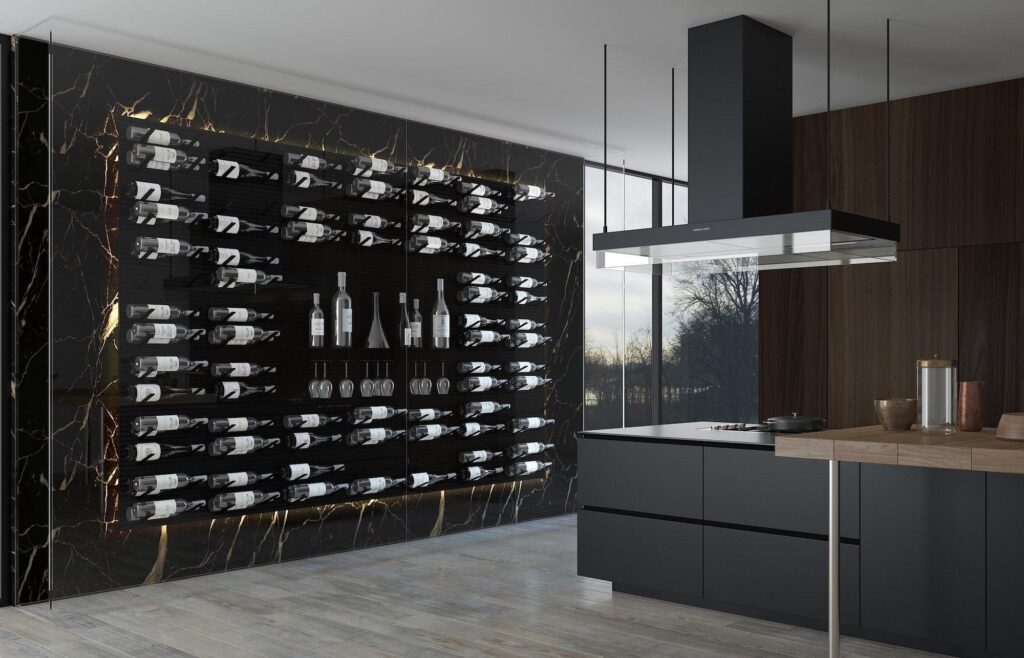
A wine wall can transform an ordinary room into a striking display of your wine collection. Whether you want to showcase a few favorite bottles in your kitchen, create a contemporary feature wall in your dining room, or build a floor-to-ceiling glass wine cellar, the right design combines beautiful presentation with practical storage.
Today’s wine walls go far beyond traditional wooden shelves. Homeowners and designers can choose from sleek metal wine racks, floating bottle displays, cable wine racks, acrylic peg systems, and custom glass enclosures that turn wine storage into an architectural feature.
At CoolWineCellar, wine wall solutions range from simple wall-mounted racks to fully customized wine cellar designs. The best option depends on your available space, bottle capacity, interior style, and whether you need dedicated temperature and humidity management.
In this guide, we’ll explore wine wall ideas for different rooms, compare popular rack styles, explain when a wine wall needs a cooling system, and share practical tips for planning a display that looks beautiful and stores your collection appropriately.
A wine wall is a storage or display installation that uses a wall—or an entire wall section—to showcase wine bottles. It can be as simple as a few wall-mounted racks or as elaborate as a floor-to-ceiling glass enclosure with custom wine storage and a dedicated cooling system.
Unlike a traditional wine cabinet, a wine wall can make the bottles part of the room’s interior design.
Living rooms and dining rooms.
Kitchens and home bars.
Open-plan entertainment spaces.
Wine tasting rooms and restaurants.
Country clubs and hospitality venues.
Dedicated glass wine cellars.
The key is to choose a rack system that fits the wall, complements the room, and supports the intended bottle capacity.
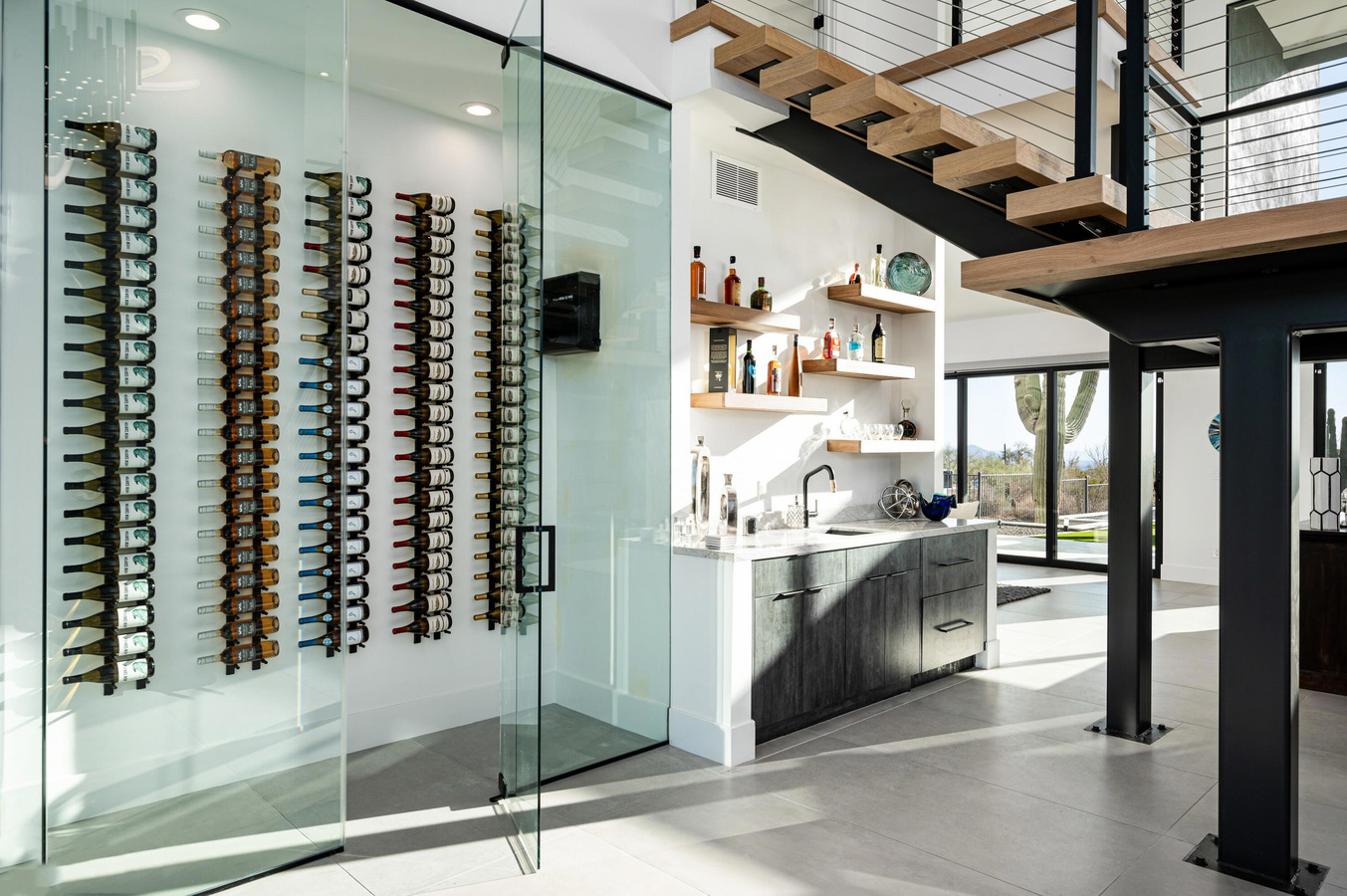
If you want the visual impact of a wine display without building a complete wine cellar, wall-mounted wine racks are an excellent starting point.
They attach directly to a suitable wall or structural backing and can be installed individually or arranged in repeating rows to create a larger display.
Modern metal wine racks
Individual-bottle metal racks can create a clean, organized display, with bottles appearing to float against the wall.
Best for: Modern homes, compact wine displays, dining rooms, and home bars.
Explore contemporary metal wine racks at CoolWineCellar.

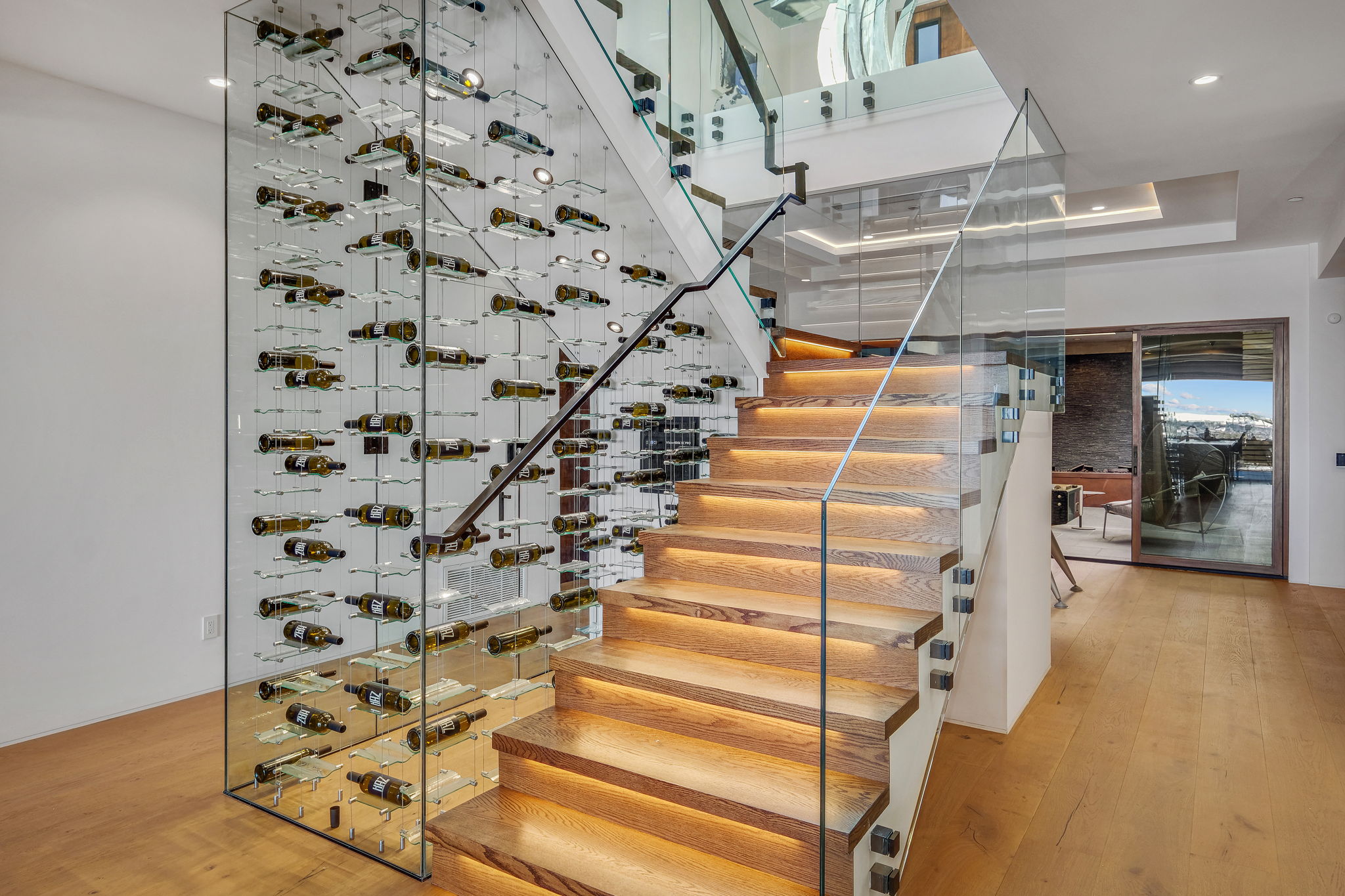
Cable wine racks use vertical cables and bottle supports to create an open, architectural display. Depending on the system, bottles can be arranged in individual columns, display rows, or other configurations.
Their minimal appearance makes them especially attractive for feature walls where you want the wine bottles to remain the visual focus.
Cable systems can extend from floor to ceiling, making them useful for taller walls and double-height spaces. The exact height and bottle capacity depend on the selected system and its installation requirements.
Best for: Contemporary wine walls, luxury homes, open-plan interiors, and tall feature walls.
Explore cable wine racks for options that create a distinctive floating-bottle effect.
These systems are useful when you want a small display to feel intentional rather than bulky.
Best for: Apartments, small bars, contemporary kitchens, and decorative wine displays.
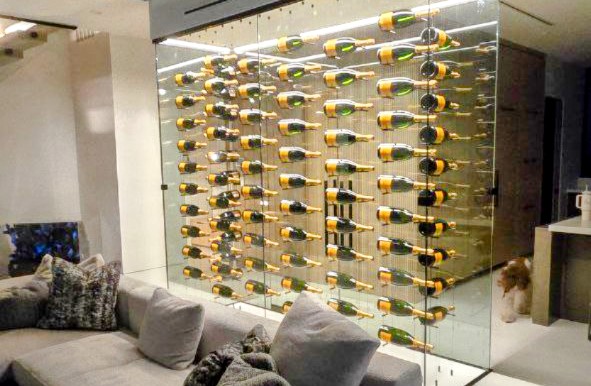
Because the support system is visually understated, the wall finish becomes part of the design.
Best for: Luxury feature walls, minimalist interiors, and dramatic bottle displays.
Before installation, confirm the rack’s mounting requirements and use appropriate structural backing. Wall-mounted racks must be secured to a suitable structure rather than relying on drywall alone.
If a few wall-mounted racks aren’t enough, consider a full wine wall. This approach uses a larger section of the room to create a coordinated display, often extending from floor to ceiling.
A full wine wall can be designed around the architecture of the home, with storage for individual bottles, horizontal display rows, diamond bins, and larger bottle formats.
A floor-to-ceiling wine wall maximizes vertical space and creates a strong visual focal point. It works especially well in dining rooms, entertainment areas, and homes with high ceilings.
Metal racks and cable systems are popular for contemporary interiors, while solid wood racks bring warmth and a more traditional wine cellar aesthetic.
When designing a tall installation, consider the following:
How bottles will be loaded and retrieved from higher rows.
Whether a ladder or other access solution is required.
How the rack system will be anchored.
Whether lighting will create glare or unwanted heat.
Whether the wall will store display bottles or a larger collection.
Display rows position selected bottles with their labels facing outward. This creates an attractive presentation for special vintages, collectible bottles, or wines you want guests to notice.
Pairing display rows with individual-bottle storage creates a useful balance between presentation and capacity.
Diamond bins offer a traditional wine cellar look and can store multiple bottles in a compact area. They work particularly well in wood wine walls and can be combined with individual bottle racks and display sections.
For a balanced layout, use diamond bins for bulk storage and individual-bottle rows for wines that deserve a more prominent display.
Metal and cable racks create a contemporary appearance, but wood remains a popular choice for wine walls that need warmth, texture, and a classic cellar feel.
Wood type | Design character |
|---|---|
Premium redwood | Classic wine cellar appearance with natural warmth |
Mahogany | Rich color and an upscale traditional look |
Knotty alder | Rustic character with visible knots and grain |
Pine | Casual, natural appearance that can suit budget-conscious projects |
White oak | Contemporary grain and versatile neutral tones |
Walnut | Deep, sophisticated color for premium interiors |
Sapele | Distinctive grain and rich reddish-brown tones |
The final appearance depends on the specific wood, stain, finish, and lighting. Request samples when color matching is important.
Design tip: If your wine wall is visible from the living or dining room, coordinate the rack finish with nearby flooring, cabinetry, furniture, or architectural millwork.
A glass-enclosed wine wall takes the concept one step further. Rather than displaying bottles directly on an open wall, the design creates a dedicated wine storage space behind glass.
This approach is especially popular in luxury homes where the wine collection is intended to be a centerpiece.
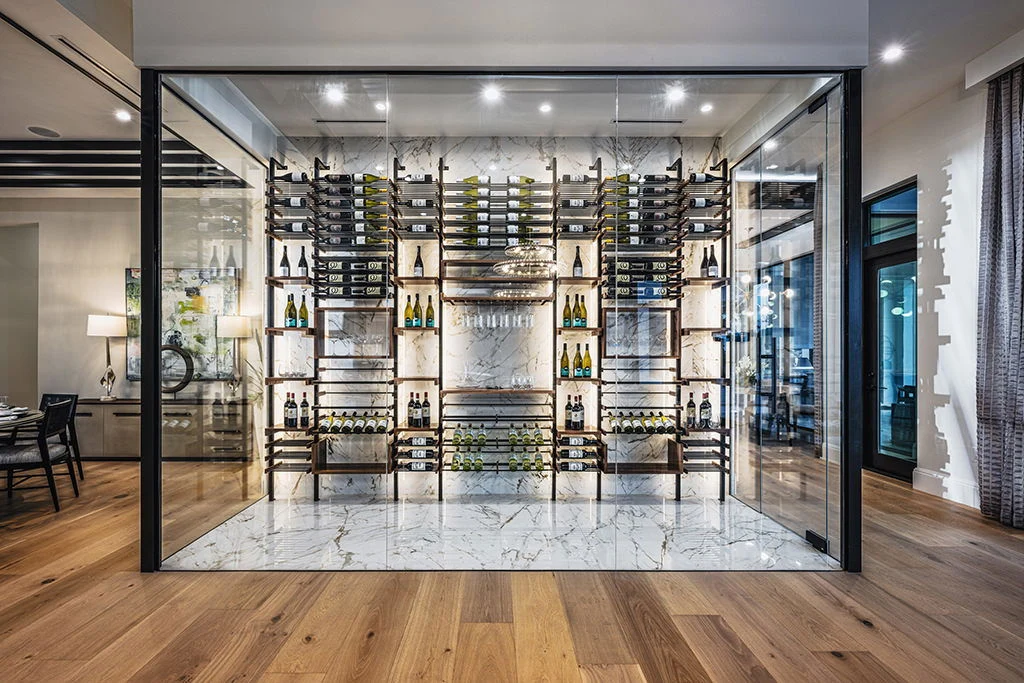
A glass wine enclosure can use frameless panels, framed glass doors, sliding doors, or custom configurations depending on the design and performance requirements.
Why choose a glass wine wall?
It showcases the wine collection from multiple viewpoints.
It creates a visual separation without making the room feel closed off.
It protects bottles from everyday contact and disturbance.
It allows rack finishes and lighting to become part of the interior design.
It can incorporate dedicated temperature-controlled storage.
Does a glass wine wall need a cooling system?
Not every decorative wine display requires a dedicated cooling system. However, if you intend to store valuable wines for extended periods, the temperature and humidity conditions deserve careful attention.
A temperature-controlled wine enclosure needs more than a cooling unit. The design should account for insulation, air sealing, vapor control, glass performance, door seals, and heat rejection.
Glass can increase the cooling load considerably, particularly when exposed to direct sunlight or high ambient temperatures. A cooling system should therefore be selected using a heat-load calculation rather than room volume alone.
For a climate-controlled wine wall, coordinate the enclosure, racks, and cooling equipment before construction begins.
The best wine wall design depends on where you plan to install it and how you intend to use it.
Use compact metal racks or a small floating display to make efficient use of an unused wall or a section beside the kitchen cabinetry. Keep the wine away from ovens, direct sunlight, and other heat sources.
Create a focal point behind a dining table or buffet using a full-height rack installation. Display rows can highlight favorite bottles, while individual-bottle storage keeps the arrangement organized.
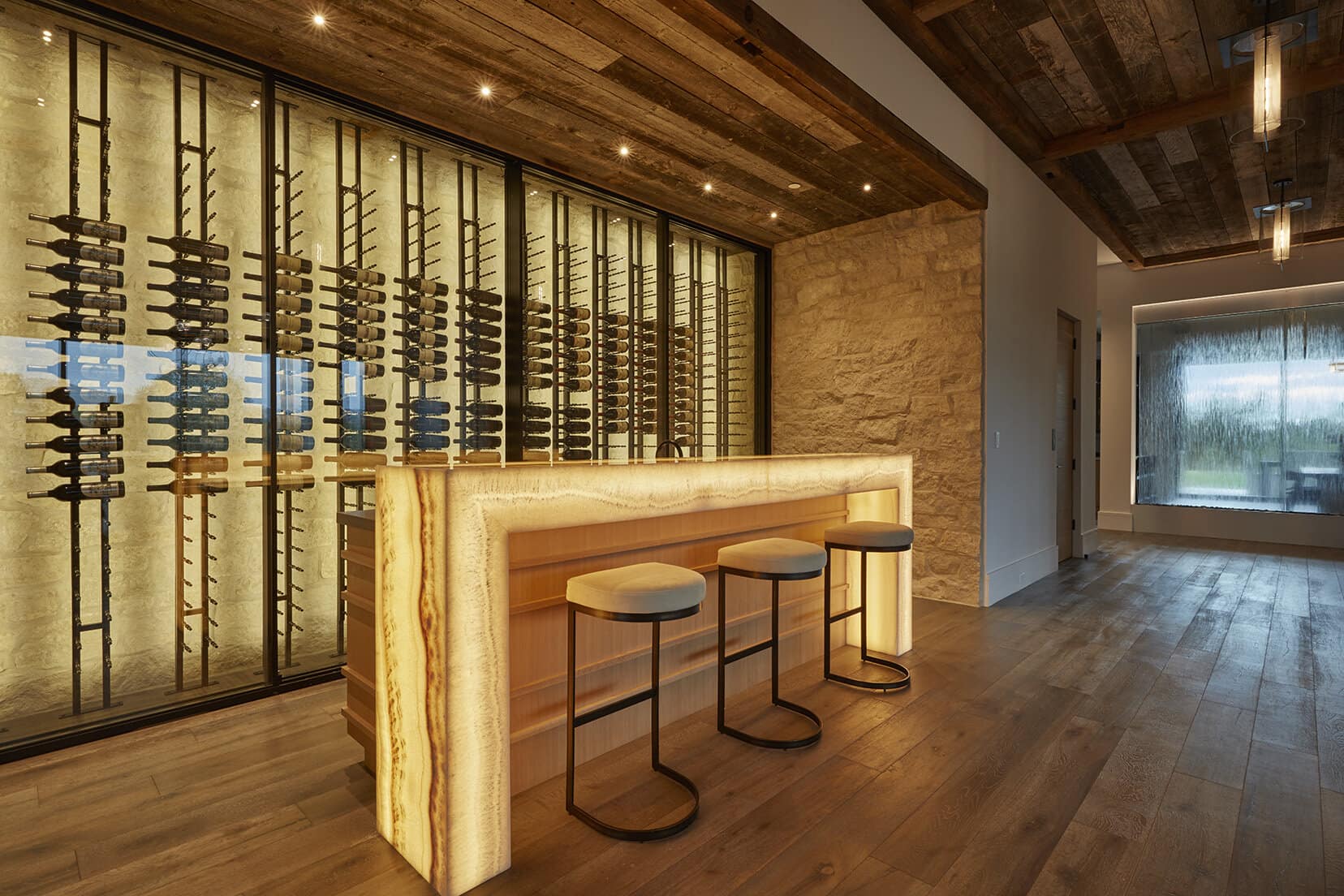
Combine wine racks with a countertop, bar cabinetry, glassware storage, and carefully positioned accent lighting. This creates a functional entertaining area rather than a standalone bottle display.
Use a coordinated rack layout to showcase the wine list and support organized inventory. A glass enclosure with appropriate cooling may be useful when storage conditions and the collection warrant it.
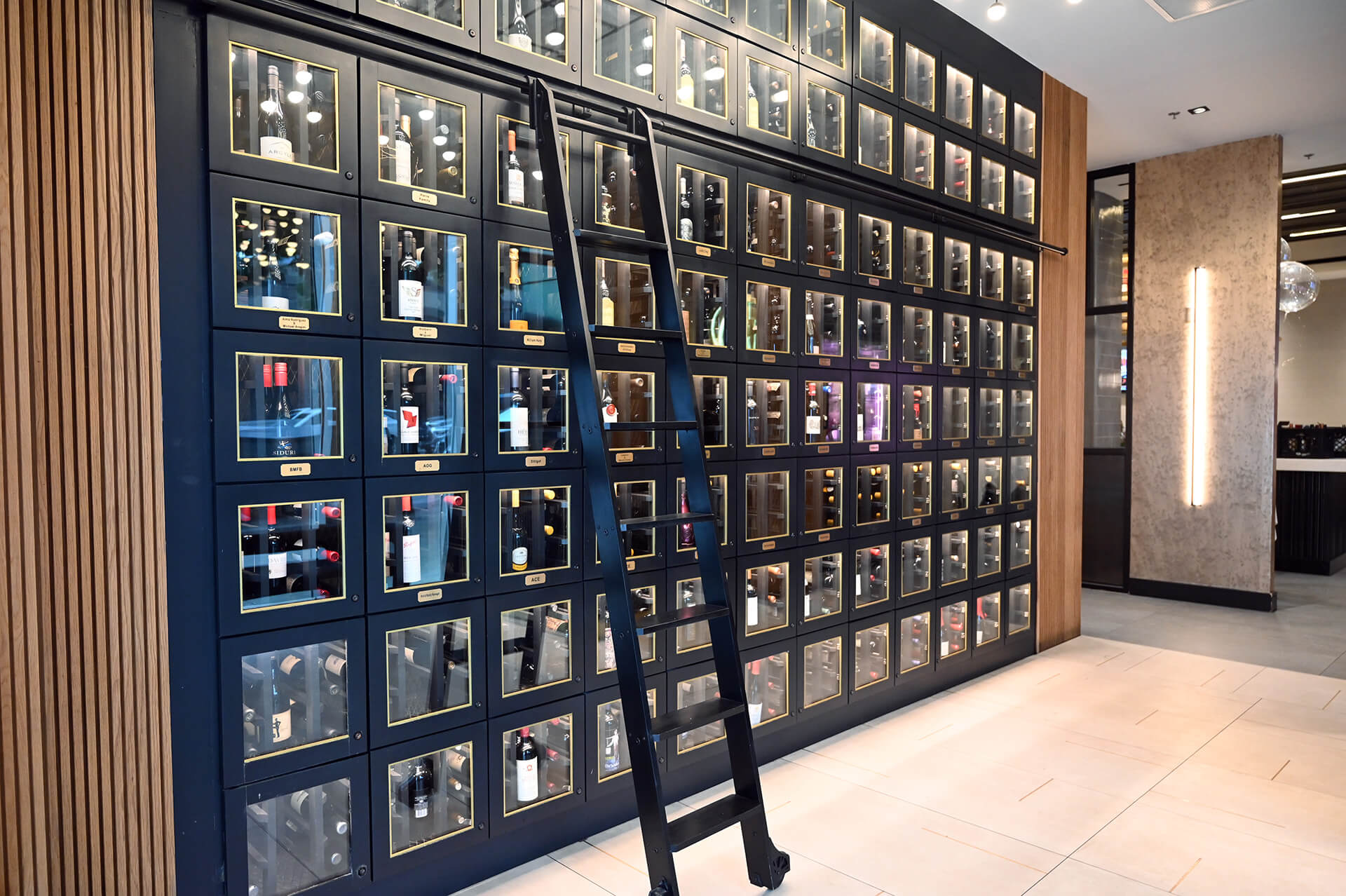
Before selecting a design, consider five important factors.
1. Bottle capacity
Estimate your current collection and allow room for growth. A decorative 12-bottle display has very different requirements from a full wine wall holding several hundred bottles.
Also confirm how the manufacturer calculates capacity. Bottle size and the combination of individual racks, display rows, and bins can change the actual total.
2. Interior style
Choose a system that complements the surrounding space.
Contemporary: Black metal, chrome, cable racks, and acrylic pegs.
Traditional: Mahogany, redwood, and other wood wine racks.
Minimalist: Floating racks and concealed mounting hardware.
Luxury architectural: Floor-to-ceiling displays and glass enclosures.
3. Available wall space
Measure the wall’s height and width, accounting for doors, outlets, switches, cabinetry, and nearby furniture. For full-height displays, confirm ceiling height and access for installation.
4. Structural support
Check the manufacturer’s mounting instructions and provide appropriate backing or structural attachment. Tall cable racks, heavy metal installations, and large wood wine walls require particular attention to mounting loads.
5. Wine storage conditions
Decide whether the wall is primarily decorative or intended for long-term wine storage. If temperature-controlled storage is needed, plan for insulation, moisture management, cooling capacity, and access for maintenance.
A well-designed wine wall should look attractive while remaining safe, accessible, and appropriate for the collection.
Lighting can transform a wine wall from simple storage into a dramatic design feature. LED strip lighting, recessed ceiling lights, and carefully positioned accent lights can highlight bottle labels, rack finishes, and the texture of the surrounding wall.
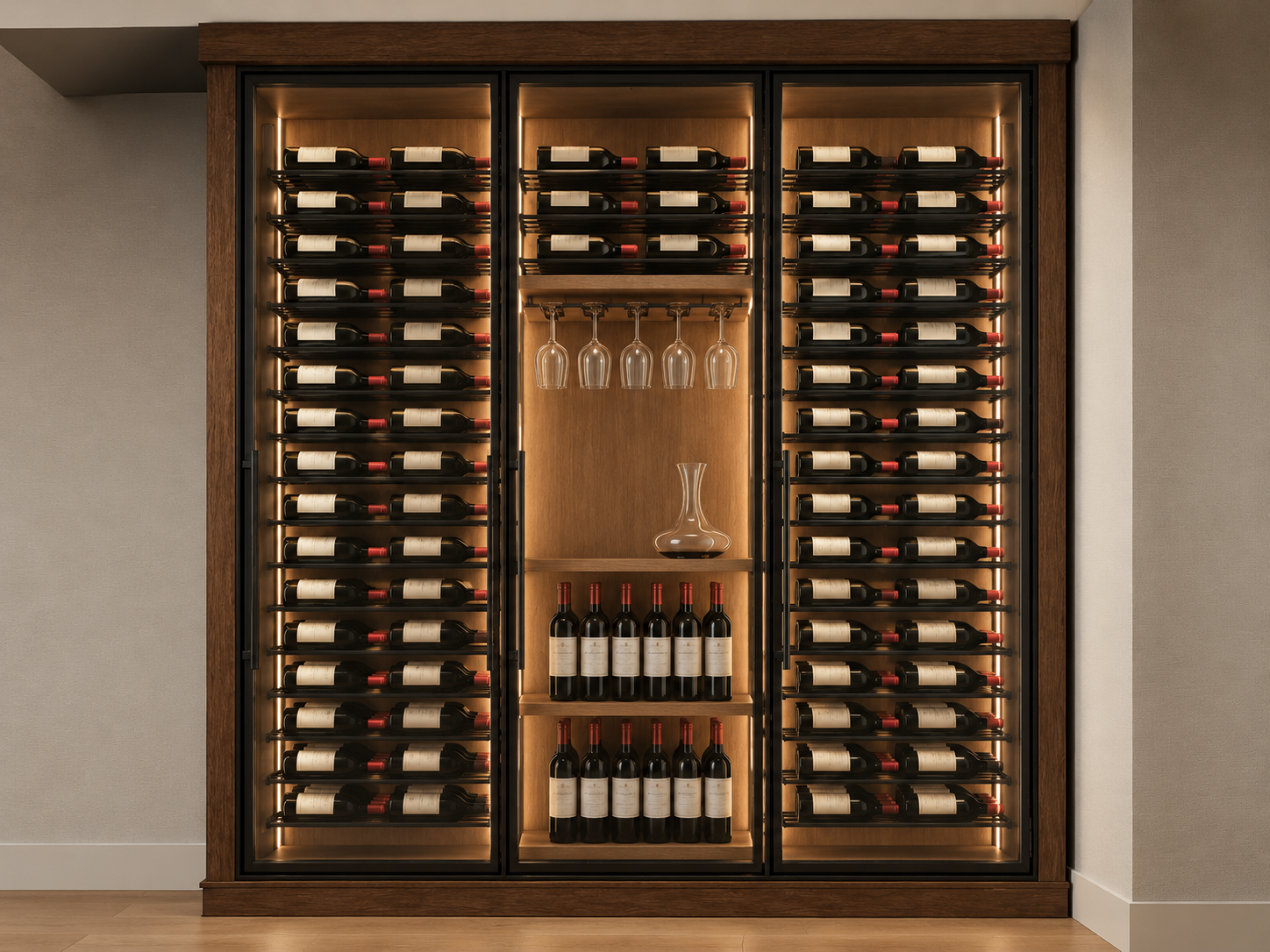
Vertical LED strips: Emphasize the height of floor-to-ceiling wine walls.
Under-shelf lighting: Highlight bottle labels and display rows.
Recessed ceiling lights: Create an even wash of light across the installation.
Backlighting: Add depth behind certain rack systems or architectural panels.
Choose low-heat LED fixtures and avoid excessive direct light on the bottles, particularly if the wine wall is intended for long-term storage. Coordinate lighting with the rack layout and cooling design to prevent unnecessary heat gain.
Even an attractive wine wall can become inconvenient or impractical if the details are overlooked.
Choosing appearance over capacity. A rack may look beautiful but hold fewer bottles than expected. Confirm the actual storage capacity before ordering.
Ignoring wall construction. Heavy racks need suitable structural support. Determine mounting requirements before drywall or decorative wall finishes are completed.
Placing wine near heat sources. Ovens, sunny windows, fireplaces, and hot appliances can expose bottles to unwanted temperature fluctuations.
Overlooking bottle access. Leave enough room to remove bottles comfortably, particularly around corners, display rows, and tall installations.
Adding cooling too late. If the wine wall requires a glass enclosure and dedicated cooling, plan the insulation, electrical connections, drainage, and condenser location early.
Using unsuitable lighting. Excessive heat or direct light can undermine the purpose of a wine storage installation.
Addressing these issues during the design phase can save time, expense, and modifications later.
What is the best type of rack for a wine wall?
Metal wine racks, cable wine racks, floating racks, acrylic peg systems, and solid wood racks can all work well. The best option depends on your interior style, available space, bottle capacity, and budget.
How much does a custom wine wall cost?
The cost depends on the rack system, materials, wall dimensions, bottle capacity, installation requirements, and whether you need a glass enclosure or cooling system. A small wall-mounted display is generally a simpler project than a fully climate-controlled wine wall. Request a design and quote based on your specific requirements.
Can I install a wine wall without building a wine cellar?
Yes. A wall-mounted wine rack can be installed as a decorative display without creating a dedicated wine room. However, if you plan to store valuable bottles for extended periods, consider whether the room’s temperature, humidity, and light exposure are appropriate.
Are cable wine racks suitable for floor-to-ceiling wine walls?
Yes. Certain cable wine rack systems are designed for tall installations. Maximum height, bottle capacity, and mounting requirements vary by product, so confirm the specifications and required structural backing before installation.
Are wood or metal wine walls better?
Wood offers warmth and a traditional wine cellar appearance, while metal often creates a cleaner, more contemporary look. Both can be effective storage solutions when properly specified and installed.
Do glass wine walls need a wine cooling unit?
A decorative glass display does not automatically require dedicated cooling. For an enclosed wine room intended for long-term storage, a properly sized wine cellar cooling system may be necessary to maintain suitable conditions. Glass performance, insulation, air leakage, and the surrounding climate all affect the decision.
Can I combine different types of wine racks in one wall?
Absolutely. Combining individual-bottle racks, display rows, diamond bins, and larger-format bottle storage can create a more functional and visually interesting wine wall. A coordinated layout helps balance presentation and capacity.
A wine wall can be as simple as a few floating racks or as ambitious as a custom, floor-to-ceiling glass wine cellar. The best design balances bottle capacity, accessibility, visual appeal, and the storage conditions your collection needs.
For smaller spaces, wall-mounted metal racks or acrylic peg systems offer an attractive way to display wine without a major renovation. For larger projects, cable racks, custom wood systems, and glass-enclosed wine walls provide more opportunities to integrate wine storage into the architecture of your home or commercial space.
At CoolWineCellar, we help homeowners, designers, builders, and hospitality professionals explore wine rack options and plan custom wine storage projects.
Ready to create your wine wall? Explore our cable wine racks and contact CoolWineCellar to discuss a custom wine wall design, bottle capacity, and cooling requirements for your project.


