
Call Us 📞 800-323-3130
Mon–Fri 8am–6pm CST, Sat–Sun 9am–1pm CST
Free design consultations
Showrooms in Miami & Fort Lauderdale
Call us at 800-323-3130 or email us at info@coolwinecellar.com in case of any questions.
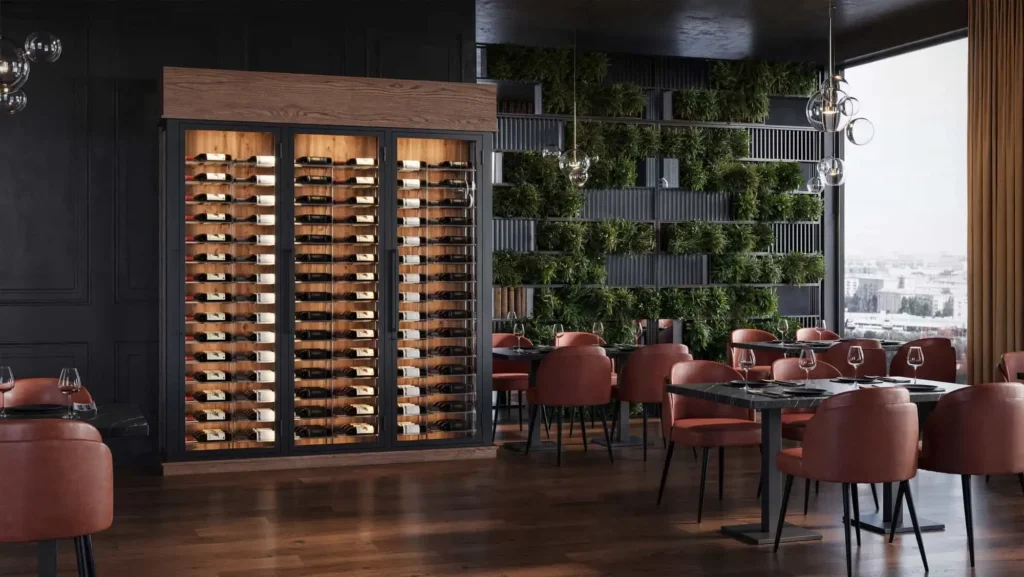
Short answer: treat a refrigerated wine cabinet inside a larger cellar as a second, colder climate zone with its own job, usually holding whites, rosé and Champagne at serving temperature while the main room ages everything at about 55°F. To make it work, decide where the cabinet’s heat will go, confirm the cabinet is rated to run in a cool room, give it power and a drain route, and build it into the racking so it reads as part of the design rather than an appliance pushed against a wall.
| Zone | Typical setting | What goes there |
|---|---|---|
| Main cellar | About 55°F, 50–70% relative humidity | Long-term aging of all wine types |
| Refrigerated cabinet, sparkling | Roughly 40–50°F | Champagne and sparkling wine for service |
| Refrigerated cabinet, white and rosé | Roughly 45–55°F | Whites and rosé for service |
Keep long-term aging in the main cellar. The cabinet is for bottles you expect to open over the coming weeks or months. For layout ideas, see designing a wine cellar that showcases both reds and whites.
This is the decision that most often gets missed. Every refrigerated cabinet removes heat from its interior and releases it somewhere else. A self-contained cabinet releases that heat into the room it stands in. Inside a cooled cellar, that means the cabinet is warming the space your main cooling unit is trying to keep at 55°F.
There are three ways to handle it:
Many wine cabinets and wine refrigerators are engineered for normal room temperatures. Manufacturers publish an ambient operating range, and some units do not perform properly, or are not warranted, in surroundings as cool as a wine cellar. Before buying, confirm the minimum ambient temperature in the specification and choose a cabinet or cooling unit rated for it. Our guide to features to look for in a wine refrigerator cabinet covers the other specifications worth comparing.
Each refrigerated cabinet needs an electrical supply, and many need a path for condensate. Built-in units also need the clearances and vent openings the manufacturer specifies; blocking them is a common cause of poor performance. Mark all of this on the drawings before racking is ordered, because it affects cabinet depth and the framing behind it. If the cellar is a tightly sealed glass enclosure, read planning mechanical ventilation for a fully sealed wine enclosure.
Custom cabinets can be built to exact openings. See our wine cabinets, luxury wine cabinets, glass wine display cabinets and Champagne cabinets. For display principles, read tasteful label display options for prized bottles; for a minimalist look, see designing a cellar that complements contemporary architecture.
If the main purpose is serving, a cabinet placed just outside the cellar door, in the tasting area or bar, is often easier: it rejects heat into a normal room, runs within its usual ambient range and is convenient for guests. Put the cabinet inside the cellar when the goal is a showcase, a secure section for rare bottles, or a second zone in a cellar large enough to be a room people spend time in. For valuable bottles, see designing a cellar for rare and investment-grade wines.
Can you put a wine refrigerator inside a wine cellar?
Yes, if the unit is rated to operate at cellar temperature and its heat is either vented out of the cellar or included when the main cooling system is sized.
Why would I need a refrigerated wine cabinet in a cellar that is already cooled?
To keep whites, rosé and sparkling wines at serving temperature, which is colder than the roughly 55°F used for aging, and to showcase or secure selected bottles.
Does a refrigerated cabinet add heat to the cellar?
A self-contained cabinet does, because it releases the heat it removes into the surrounding room. A cabinet with a remote or ducted cooling unit adds very little.
What temperature should the cabinet be set to?
Roughly 40–50°F for sparkling wine and 45–55°F for whites and rosé, adjusted to taste.
Can the cabinet match my wine racks?
Yes. Custom cabinets can be sized to the opening and finished to match the surrounding wood or metal racking.
Add a refrigerated wine cabinet to your cellar design
We design cellars and cabinets together, with the cabinet included in the heat load from the start. Visit our Miami and Fort Lauderdale showrooms, request a free design, explore our wine cellar design services, or call 800-323-3130.