What Type Of Climate Control System Is Recommended For A Medium-Sized Wine Collection?
Book an appointment Request free design Free Heatload Calculation Navigating the world of wine preservation can be as complex as a
Slimline LS
SC Pro Series
Extreme Series
Call Our Experts:
800-323-3130
All Our Consultants Have
Over 10 Years Experience
Our wine cellar experts are ready to assist in finding the ideal wine-cooling unit for your cellar. Just tell us the style, size, budget, and cellar details – we’ll handle the rest.
Certainly! Here are some frequently asked questions (FAQs) about self contained wine cooling units.
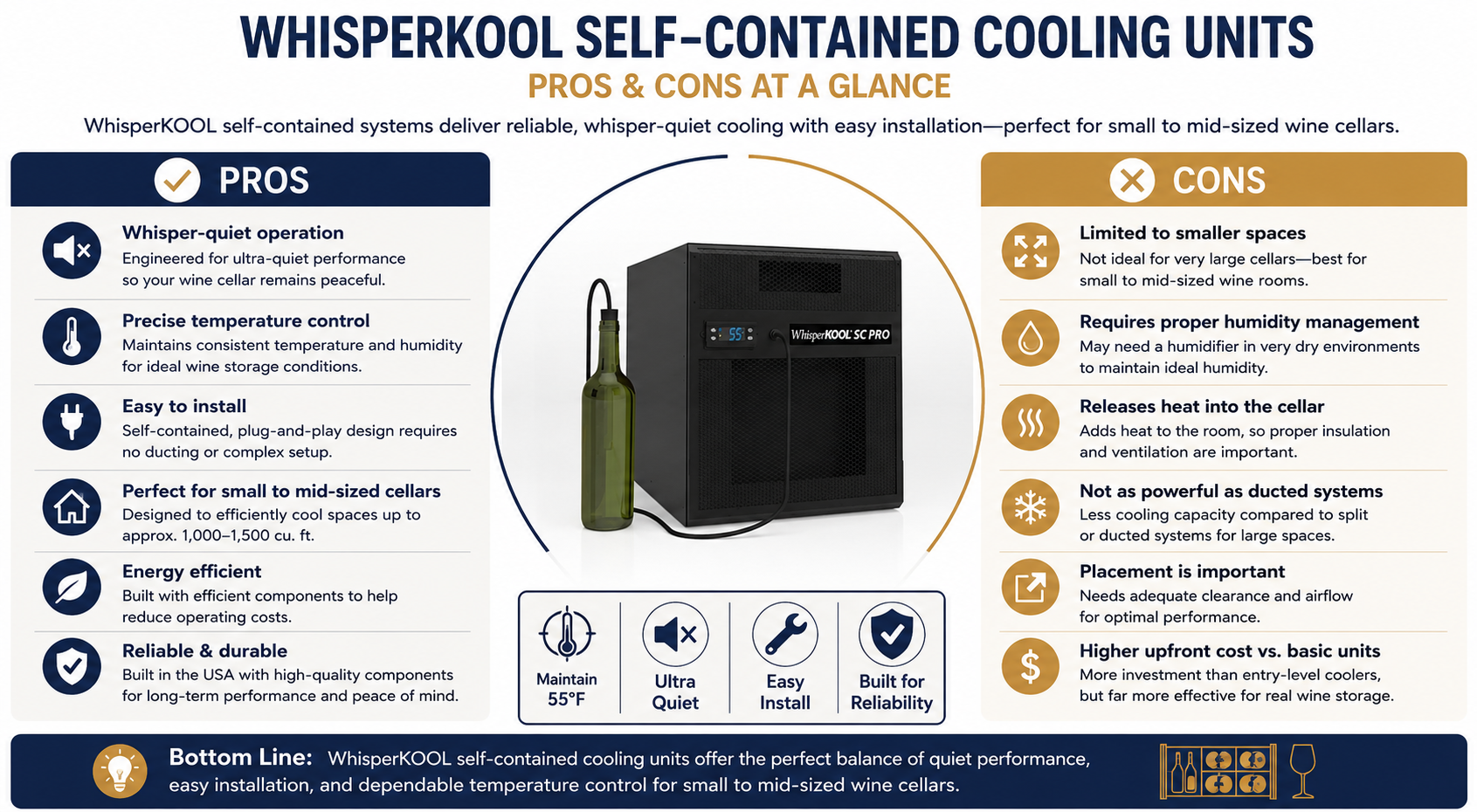
A self-contained system is an all-in-one cooling unit where all components (the evaporator and the condenser) are housed in a single housing. These units are designed to be “self-sufficient,” meaning they require no external equipment or complex refrigerant lines to operate.
Yes, most self-contained systems are designed for simple installation, often through-the-wall or ceiling-mounted setups. Many homeowners can install them without hiring an HVAC professional.
While self-contained units are engineered to maintain consistent temperatures and effectively manage relative humidity inside the cellar to prevent corks from drying out. They generally do not provide active humidity control (adding moisture) like some higher-end ducted or split systems might.
No. Cool Wine Cellar offers brands (such as WhisperKOOL and CellarPro) that are specifically recognized for their quiet operation. Thus allowing you to maintain your collection without disruptive background noise.
Yes, proper ventilation is essential. These units expel warm air into an adjacent room, so the exhaust area must be well-ventilated and within an acceptable temperature range to ensure efficient operation.
Yes, these units are engineered for energy efficiency. They are designed to run only when necessary to maintain precise conditions, helping to reduce overall energy consumption while protecting your investment.
Cool Wine Cellar carries several top-tier brands including:
WhisperKOOL
CellarPro
Wine Guardian
Breezaire
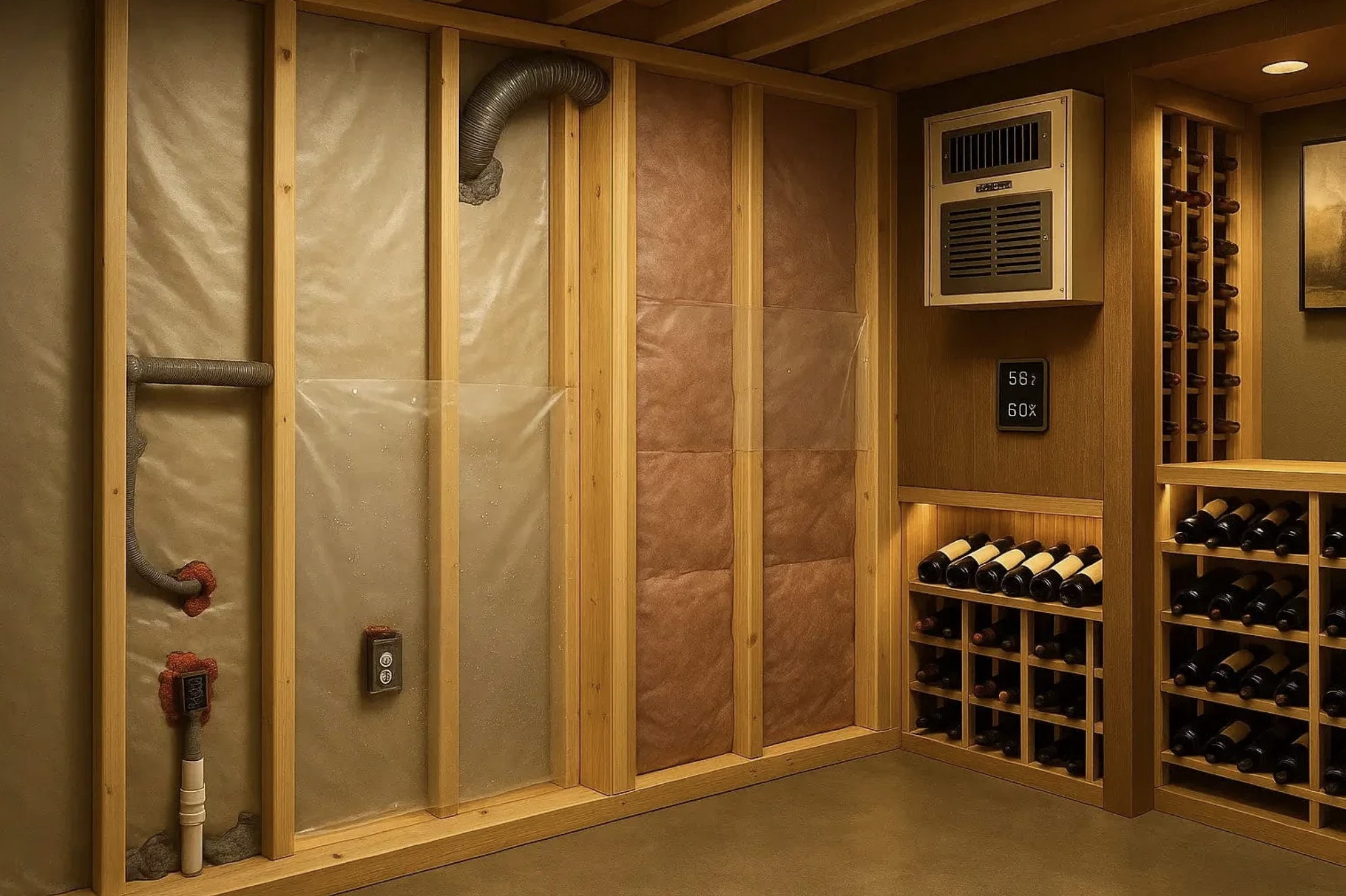
The right size depends on your cellar’s cubic footage, insulation, glass exposure, and heat load factors like lighting and traffic. Undersized units struggle to maintain temperature, while oversized units can cycle inefficiently. Call us today at 800-323-3130 to get a free heatload calculation from our experts for your wine cellar along with free wine cooling unit consultation.
Yes. Self-contained units are space-efficient and designed to maximize storage space. Models like the WhisperKOOL Slimline LS are specifically designed to fit into tight areas or above doors.
The primary advantages are cost and simplicity. Self-contained units are generally more affordable and easier to install. Since they don’t require a professional HVAC installer to connect copper piping between two separate components.
These units operate like a refrigerator. They pull warm air from the cellar, cool it using refrigerant, and circulate the cooled air back into the space while venting heat out the rear of the unit.
Most self-contained units maintain temperatures between 50°F and 65°F and humidity levels between 50% and 75%, which are ideal conditions for long-term wine storage
They are best suited for small to mid-sized cellars (typically up to 1,000–2,000 cubic feet). For larger spaces, split or ducted systems are usually more effective.
With proper maintenance, most units have a lifespan of around 8–12 years or more, depending on usage and environmental conditions.
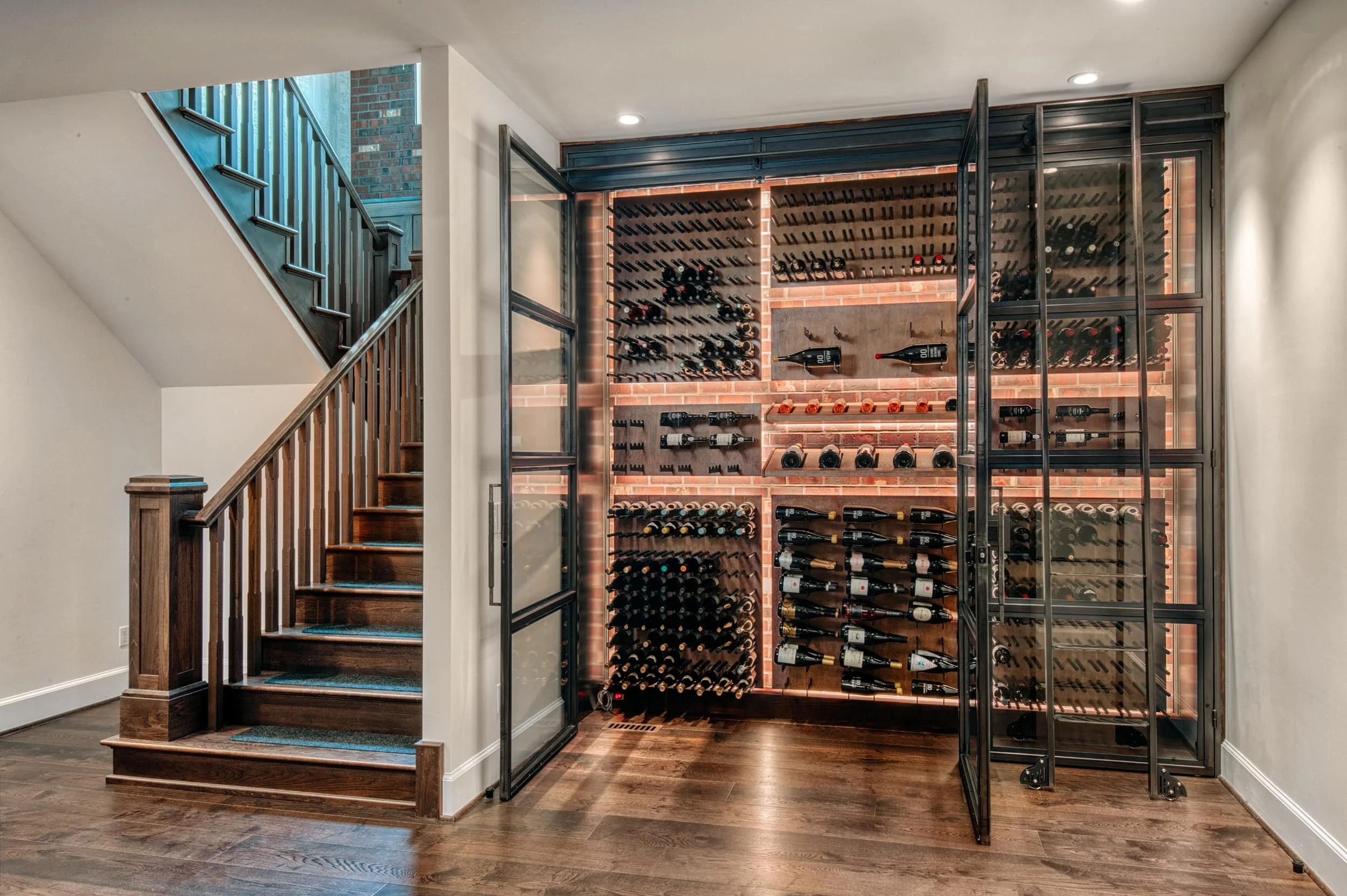
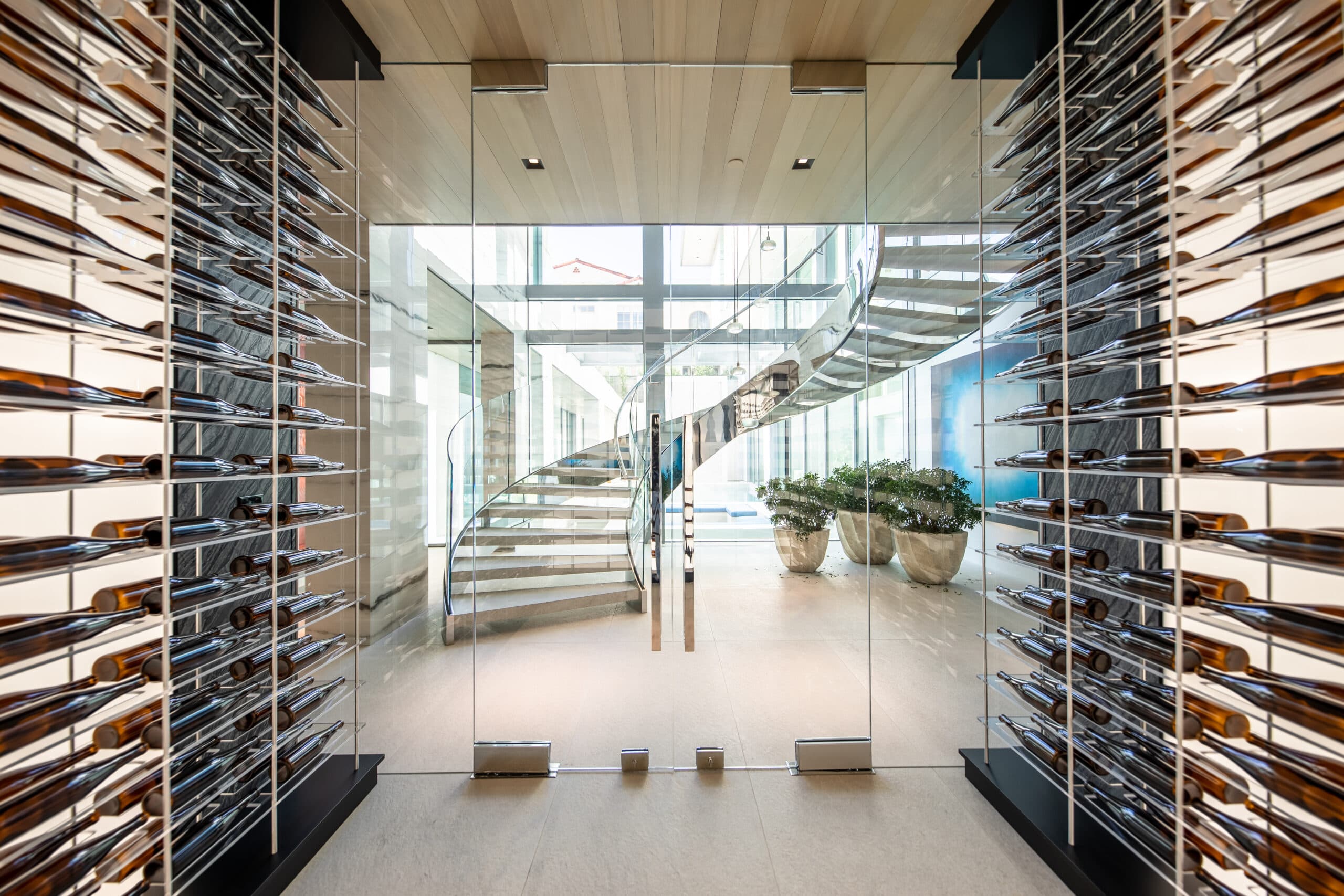
Yes, but glass enclosures increase heat load. You may need a higher-capacity unit to compensate for thermal transfer through glass walls and doors.
These benefits make them ideal for residential wine cellars and renovation projects.
Understanding these limitations helps determine if this system is right for your cellar.

Book an appointment Request free design Free Heatload Calculation Navigating the world of wine preservation can be as complex as a