
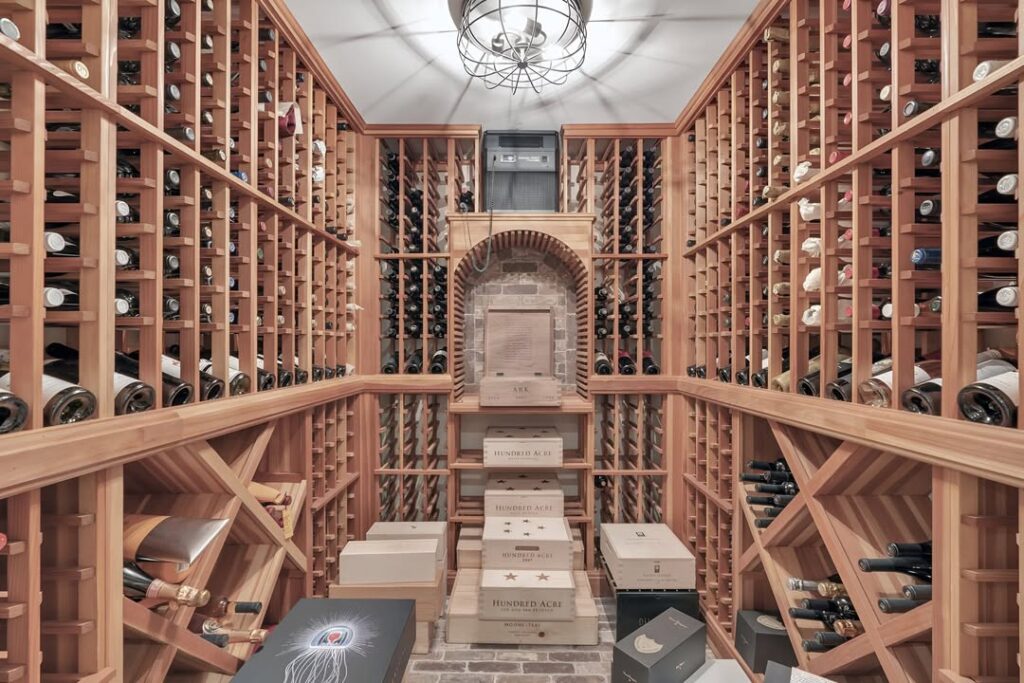
Choosing a WhisperKOOL Platinum Mini Split is a smart move for smaller, high-end cellars—usually those up to 500 cubic feet. Because it’s a “split” system, the noisy condenser is relocated (up to 100 feet away), leaving your cellar virtually silent.
However, since this is a specialized piece of HVAC equipment, there are four critical factors you should consider before pulling the trigger.
Unlike WhisperKOOL’s “Through-the-Wall” units, the Mini Split is not a DIY project.
HVAC-R Technician: You are required to hire a certified HVAC-R (Refrigeration) technician. They will need to install the copper line sets, charge the system with refrigerant, and ensure the drain line is properly pitched.
Warranty Tip: WhisperKOOL typically requires a certified technician’s signature on a startup checklist to activate your warranty.
You have two main choices for the condensing unit (the part that sits outside the cellar):
110V Omega Condenser: These are standard and easier to wire into most residential panels. However, if placed outdoors, they require an additional exterior housing kit to protect them from the elements.
220V High-Efficiency (H.E.) Condenser: This is the more modern choice. It is 50% more energy-efficient and does not require an extra housing kit for outdoor placement. If you have the ability to run a 220V line, this is the superior long-term investment.
The “Mini” is rated for up to 500 cubic feet, but that number assumes “ideal” conditions (R-19 insulation and a perfect vapor barrier).
The Glass Factor: If your design includes a glass wall or door, your heat load increases significantly. Glass has almost no R-value. Get a free heatload calculation done for your wine room today.
The “Upsize” Rule: If your cellar is 450 cubic feet and has glass, the Mini Split might struggle. In these cases, it’s often safer to move up to the Platinum Split 4000 System to ensure the unit doesn’t run 24/7, which leads to premature failure.
WhisperKOOL systems use a Liquid Temperature Bottle Probe rather than just measuring air temperature.
Why it matters: Air temperature fluctuates every time the door opens, but the temperature of the wine itself is much more stable. The probe sits in a water-filled bottle among your wine.
Wiring: The KDT digital controller comes with a 50-foot cable. Plan your cellar layout so the controller is easily accessible while the probe is tucked away in the center of your collection for the most accurate reading.
| Feature | Consideration |
| Cellar Size | Ideal for up to 500 cu. ft. (less if using glass). |
| Condenser Location | Can be up to 100 ft. away; outdoors requires H.E. or a housing kit. |
| Maintenance | Requires annual coil cleaning and filter checks by a pro. |
| Noise | Extremely quiet (approx. 51–55 dB inside). |