Call Us 📞 800-323-3130
Mon–Fri 8am–6pm CST, Sat–Sun 9am–1pm CST
Free design consultations
Showrooms in Miami & Fort Lauderdale
Call us at 800-323-3130 or email us at info@coolwinecellar.com in case of any questions.
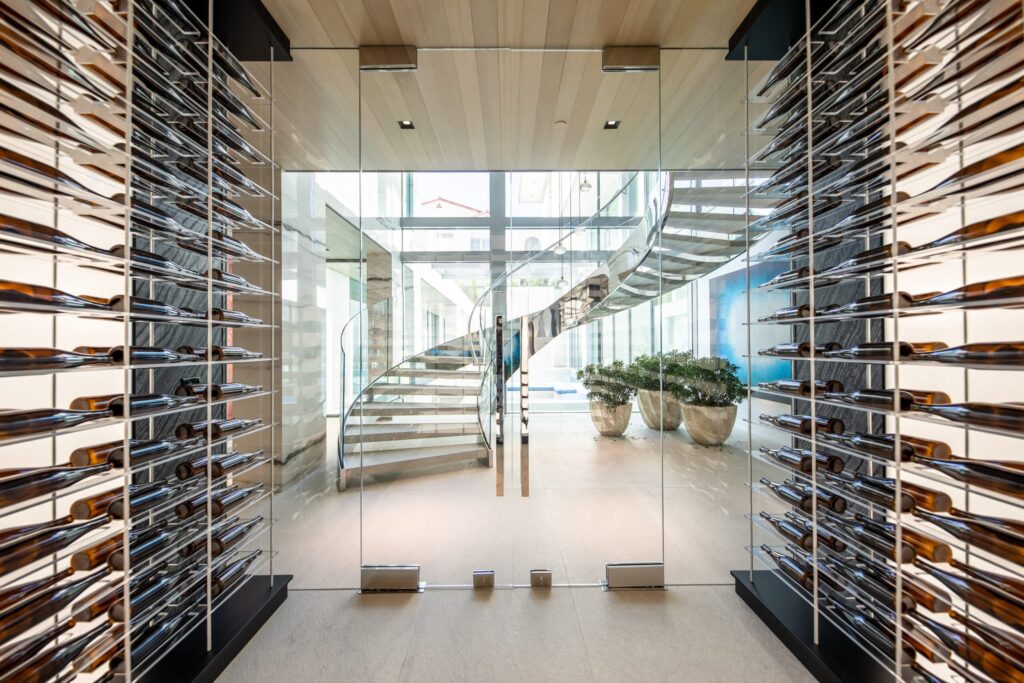
Short answer: choose low-iron glass when the display is the point of the enclosure: it removes the green tint of standard glass and shows bottles, labels and wood or metal racking in true color. Choose standard clear glass for budget-conscious enclosures in shaded, interior rooms, where a slight green edge is acceptable. Choose tinted glass (gray or bronze) only when you need to cut sunlight, glare or visibility, accepting that the collection will look darker. Whatever the color, good wine cellar glass should also be tempered or laminated for safety, insulated to limit heat gain and condensation, and treated or laminated to reduce UV light.
| Standard clear | Low-iron (ultra-clear) | Tinted (gray, bronze) | |
|---|---|---|---|
| Appearance | Clear with a green tint, visible on edges and thick panels | Crystal clear, neutral color | Darker, color-shifted view |
| Visible light through the glass | High | Highest | Reduced, depending on tint |
| Color accuracy of bottles and racking | Good | Best | Lowest |
| Solar heat control | Low | Low | Some reduction |
| UV protection on its own | Limited | Limited | Limited |
| Privacy | None | None | Some, especially from bright side |
| Relative cost | Lowest | Higher | Similar to or above clear |
| Best for | Interior, shaded, budget projects | Showpiece displays, modern design | Sunny rooms, glare, privacy |
Standard clear float glass contains a small amount of iron, which gives it a faint green color. You barely notice it in a thin window, but in the thicker tempered panels used for wine enclosures, and especially at the polished edges of frameless glass, the green is visible. It can also slightly cool the look of white oak, maple or brushed metal racking behind it.
Choose clear glass when: budget matters, the enclosure is in an interior room out of direct sun, the racking is dark wood or black metal (which hides the tint), or the glass is mostly a door or a small panel.
Low-iron glass, sometimes sold as ultra-clear or starphire-type glass, is made with much less iron. It lets through more visible light than standard clear glass and has almost no color, so bottles, labels, LED lighting and racking finishes look the way they actually are. The difference grows with thickness, which is why it is popular for frameless, floor-to-ceiling wine walls.
Choose low-iron glass when: the wine wall is a focal point of the home, the racking is light wood, brushed nickel, chrome or cable, the panels are large or thick, or the edges will be exposed in a frameless design. It costs more than clear glass, so some projects use low-iron only on the main viewing wall.
Low-iron glass is not more insulating or more protective than clear glass; it only looks better. Heat and UV control still come from insulated units and coatings.
Tinted glass has color added to the glass itself, usually gray or bronze. It absorbs part of the incoming light and solar energy, which reduces glare and some solar heat. It also makes the collection harder to see from the brighter side, which can give some privacy.
Choose tinted glass when: the enclosure faces a sunny window or outdoor space, glare is a problem, or you want a moody, low-light look. Be aware of the trade-offs:
In many cases a clear or low-iron insulated unit with a solar-control low-E coating controls heat better than tint, without darkening the display.
Glass for wine enclosures and doors should be tempered safety glass, and often laminated for large panels, overhead glass or households with children. Laminated glass holds together if broken.
Double-pane insulated glass cuts heat gain and keeps the outside surface warmer so it does not fog in humid rooms. In South Florida, we strongly recommend insulated glass for most enclosures. See insulated vs non-insulated glass wine cellar doors and how to prevent condensation on glass wine cellar doors.
Ultraviolet light can damage wine over time, especially in clear and green bottles; this is often called light strike. Laminated glass blocks most UV, and low-E coatings reduce it. Low-heat, low-UV LED lighting inside the cellar matters too.
A low-emissivity coating reduces heat transfer through the glass with little effect on clarity. Combined with argon fill in an insulated unit, it is one of the most effective upgrades for temperature stability. Learn how glass affects stability in glass wine enclosures vs traditional wood cellars.
Glass, racking and lighting are seen together. Low-iron glass pairs well with cable wine racks and metal wine racks, which create a floating-bottle look visible from across the room. Warm wood racking looks best behind low-iron or clear glass, since tint deepens it further. Light the bottles, not the glass, to avoid reflections. For style ideas, see designing a cellar for contemporary architecture and our custom glass wine enclosures.
Glass area, type, insulation and sun exposure all go into the heatload calculation. Changing from single-pane to insulated glass, or adding a low-E coating, can reduce the cooling capacity you need. Decide the glass specification before the cooling system is ordered. For budgets, see the glass enclosed wine cellar cost guide.
Is low-iron glass worth it for a wine cellar?
Yes, when the display is a priority, the panels are large or thick, or the racking is light-colored. It removes the green tint of standard glass and shows true colors. For small doors or dark racking, standard clear glass is often fine.
Does tinted glass protect wine from light?
Only partly. Tint reduces visible light and some heat, but it does not block most UV on its own. Laminated glass and low-E coatings give better UV protection without darkening the display.
What is the best glass for a wine cellar in a humid climate?
Insulated, tempered glass, ideally with a low-E coating. It limits heat gain and keeps the outer pane warm enough to avoid condensation.
Can I mix glass types in one enclosure?
Yes. A common approach is low-iron glass on the main viewing wall and clear or frosted glass on secondary sides to balance appearance and cost.
Visit our Miami or Fort Lauderdale showroom to compare finishes, or send us your plans. Request a free design, get a free heatload calculation or call 800-323-3130.