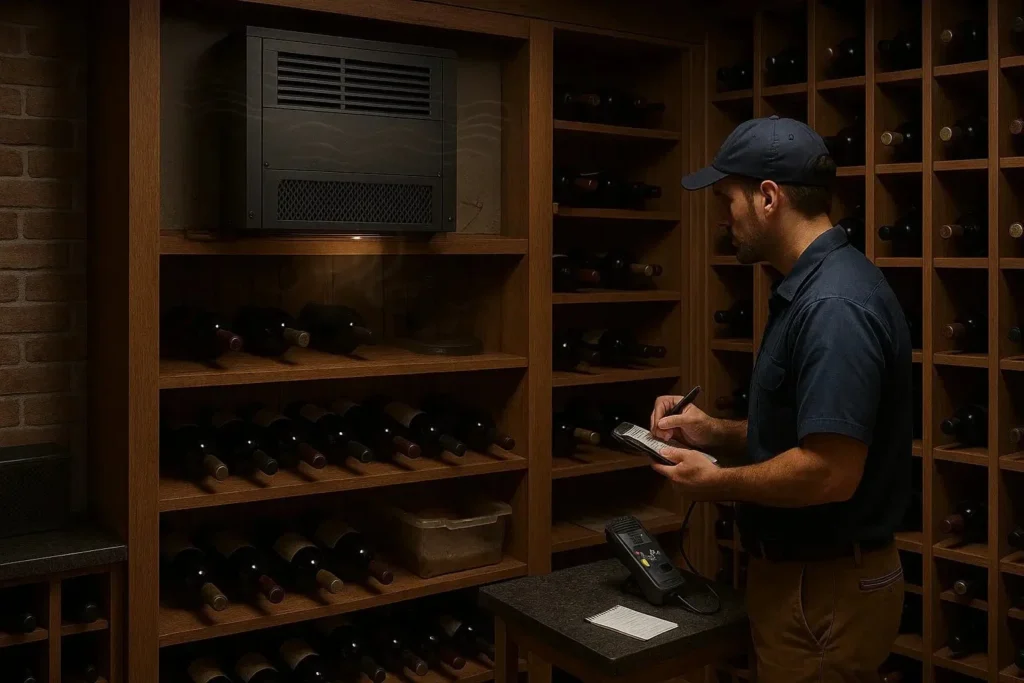
To size a wine cellar cooling unit, calculate the room’s heat load in BTU per hour, not just its cubic feet. Volume, insulation, glass, the temperature outside the cellar, lighting and where the unit exhausts heat all change the number. Here is the step-by-step method.
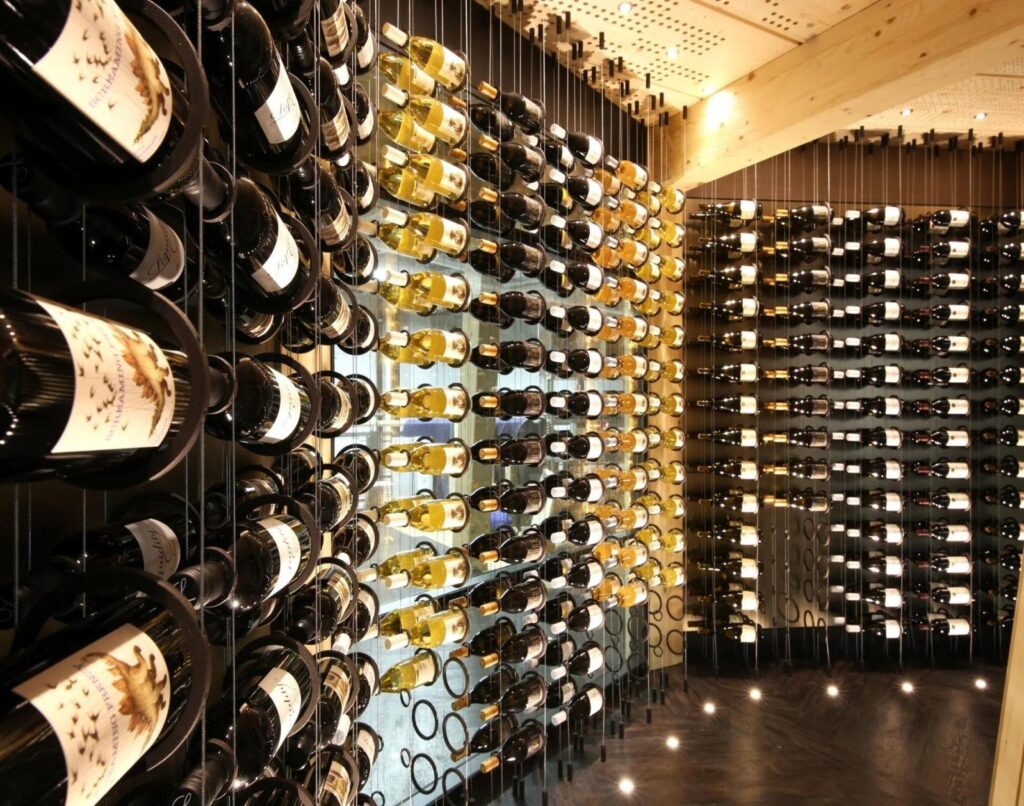
You can buy high-quality wine bottle pegs and the accessories that go with them, including anchors, support boards, panels and LED lighting, from a specialist wine storage retailer like Cool Wine Cellar. Here is what to look for in a quality peg, the brands we carry and the accessories most people forget.
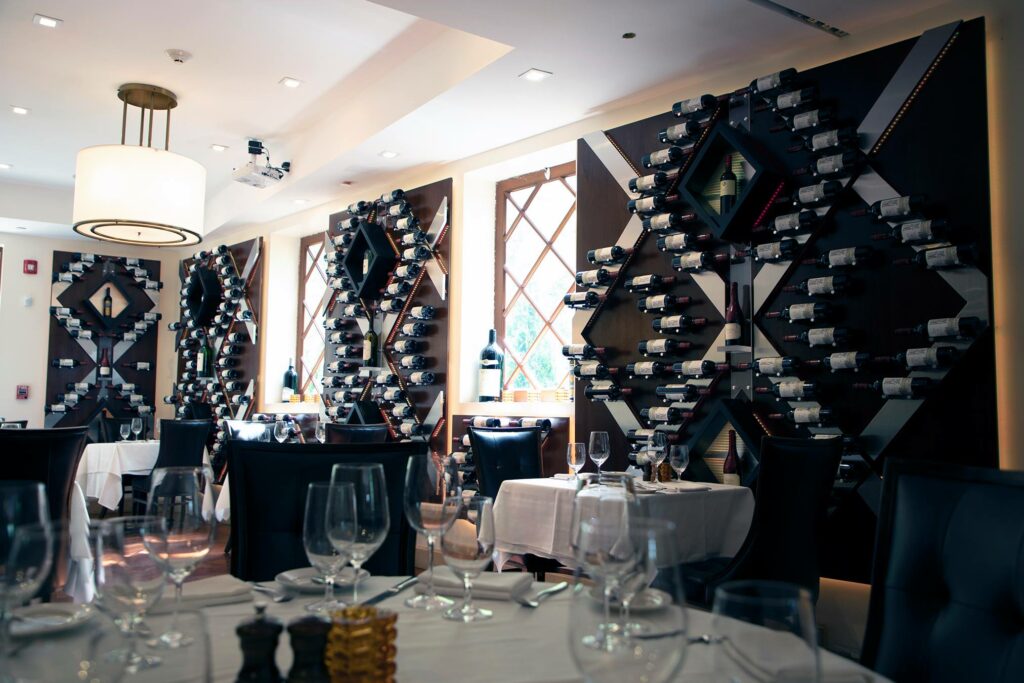
Yes. The best wine bottle holders for restaurants combine a label-forward look with commercial durability: metal wall pegs, floating cable systems, modular aluminum racks, display rows and island merchandisers. Here is how to choose for your dining room, bar or retail wall.
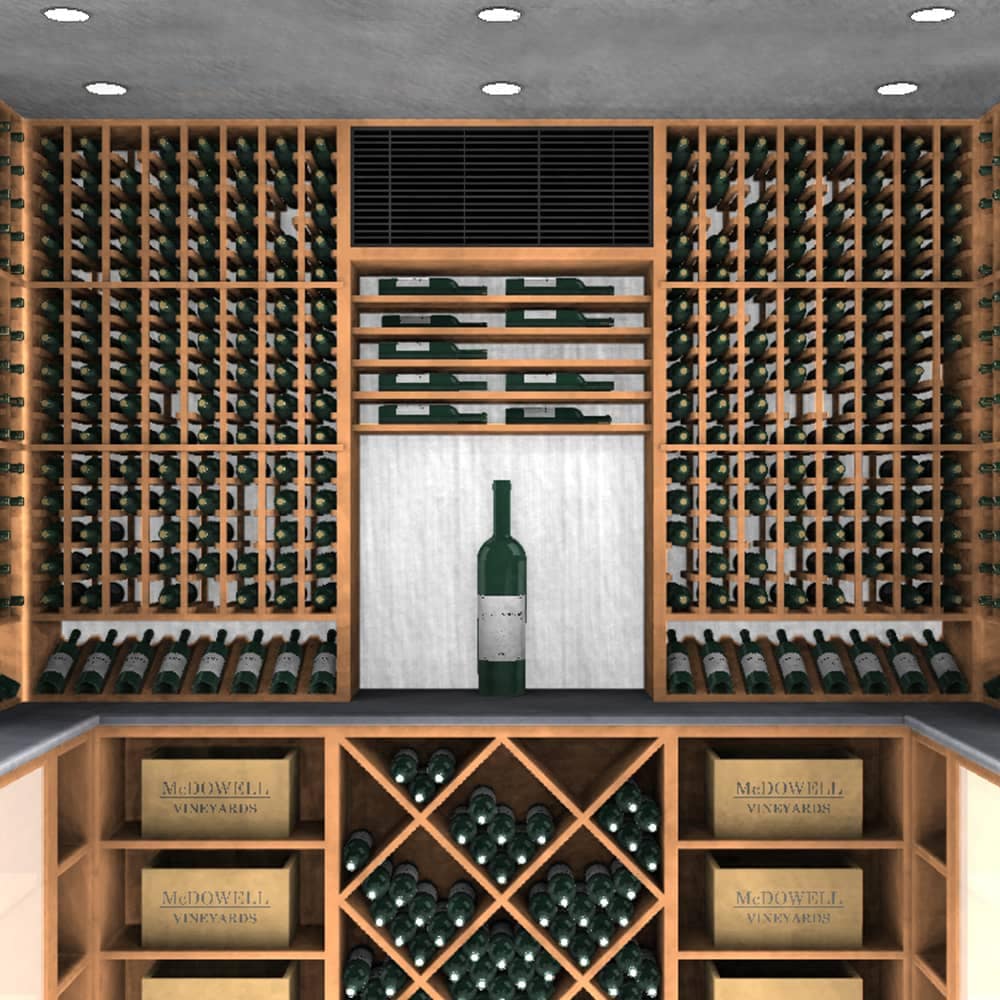
The CellarPro AH4500 is a 1/2-ton air handler rated 4,328 sensible BTU/h at 55°F for cellars up to about 1,250 cubic feet; the AH6500 is a 3/4-ton unit rated 5,771 sensible BTU/h for up to about 1,750 cubic feet. Here is how they compare on capacity, ducting, configurations and price.
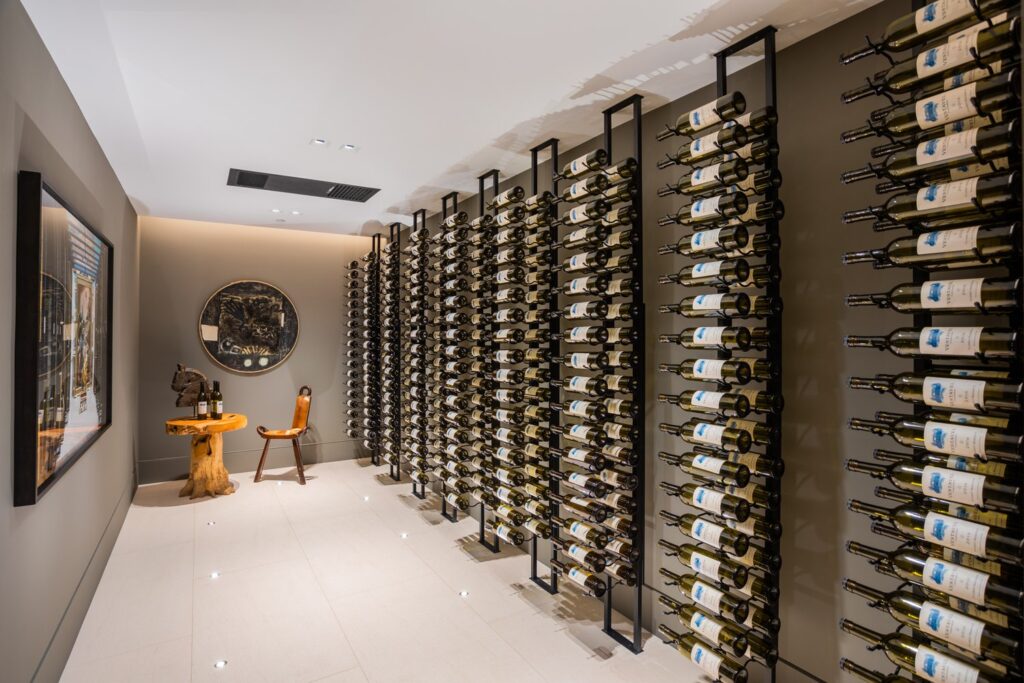
WhisperKOOL and Wine Guardian both make reliable wine cellar cooling units, but they lead in different places. WhisperKOOL offers a deep range of self-contained, split and large Quantum systems; Wine Guardian is known for commercial-grade ducted units, integrated humidity control and water-cooled options. Here is the full model-by-model comparison.
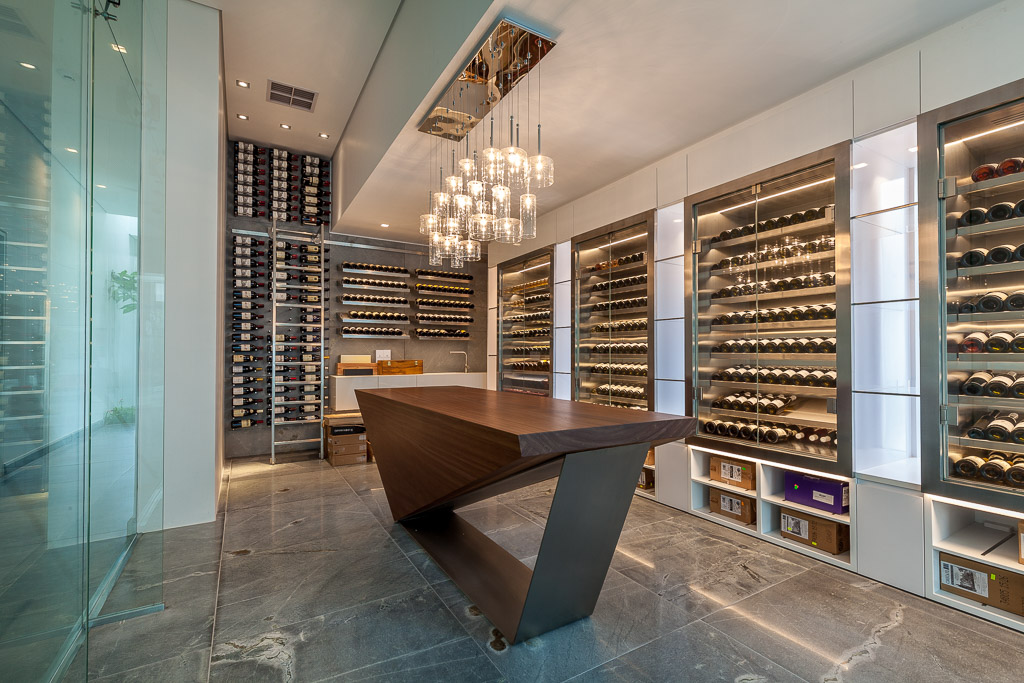
The Wine Guardian D025 is a 1/4-ton ducted unit rated 1,000–3,760 BTU/h for about 250–2,000 cubic feet; the D050 is a 1/2-ton unit rated 2,700–6,320 BTU/h for about 650–3,000 cubic feet. Here is how they compare on capacity, size, price and options, and how to choose.
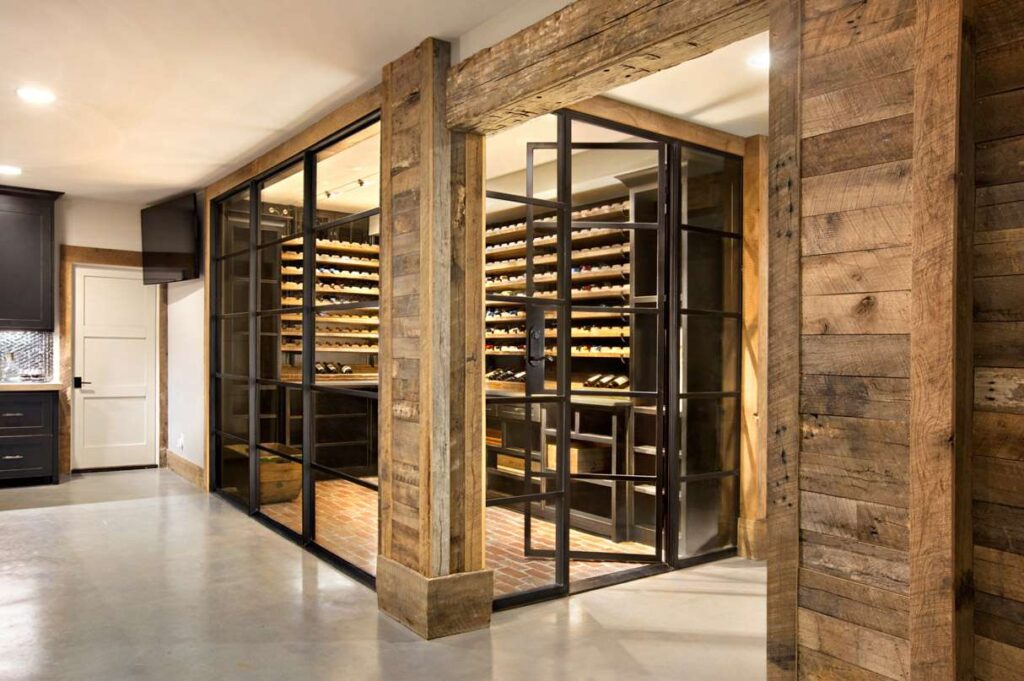
A wine cellar tasting room works best as two climate zones: a sealed 55°F cellar for the bottles and a comfortable tasting lounge beside it, separated by insulated glass. Here is how to plan the layout, seating, cooling, lighting and service details.
A traditional insulated wood cellar holds temperature more easily than a glass wine enclosure, because an insulated wall resists heat far better than even double-pane glass. A glass enclosure can be just as stable for the wine when the glass is insulated, the room is kept out of the sun and the cooling system is sized for the extra heat load.
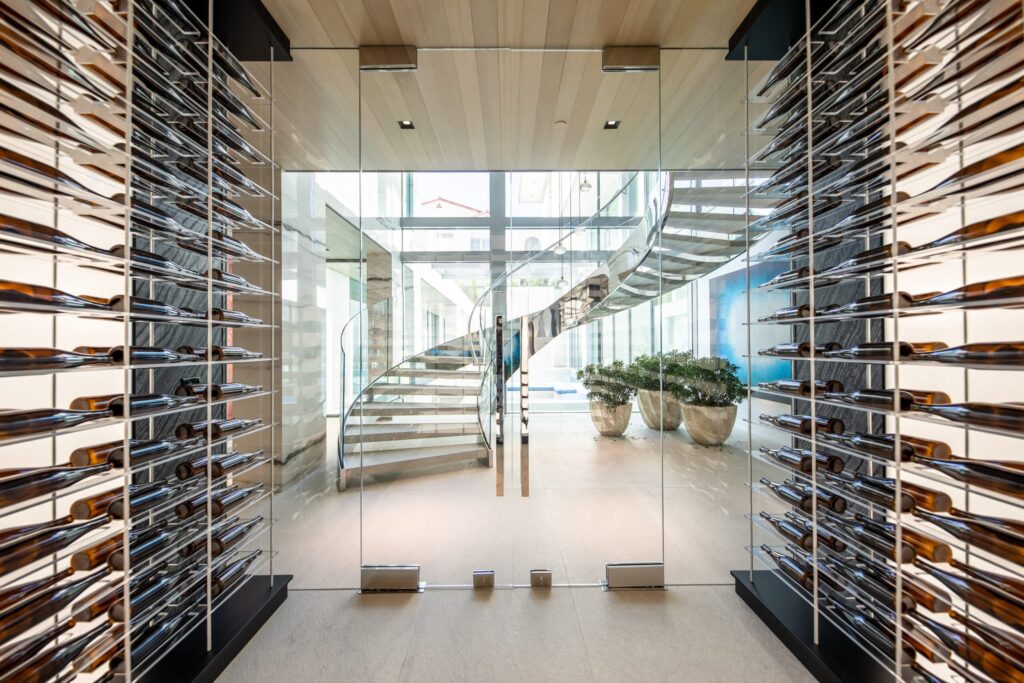
Choose low-iron glass when the display matters most, standard clear glass for budget-friendly enclosures in shaded rooms, and tinted glass only where sun, privacy or light control is the priority. For any wine cellar glass, insulation and UV protection matter as much as the color.
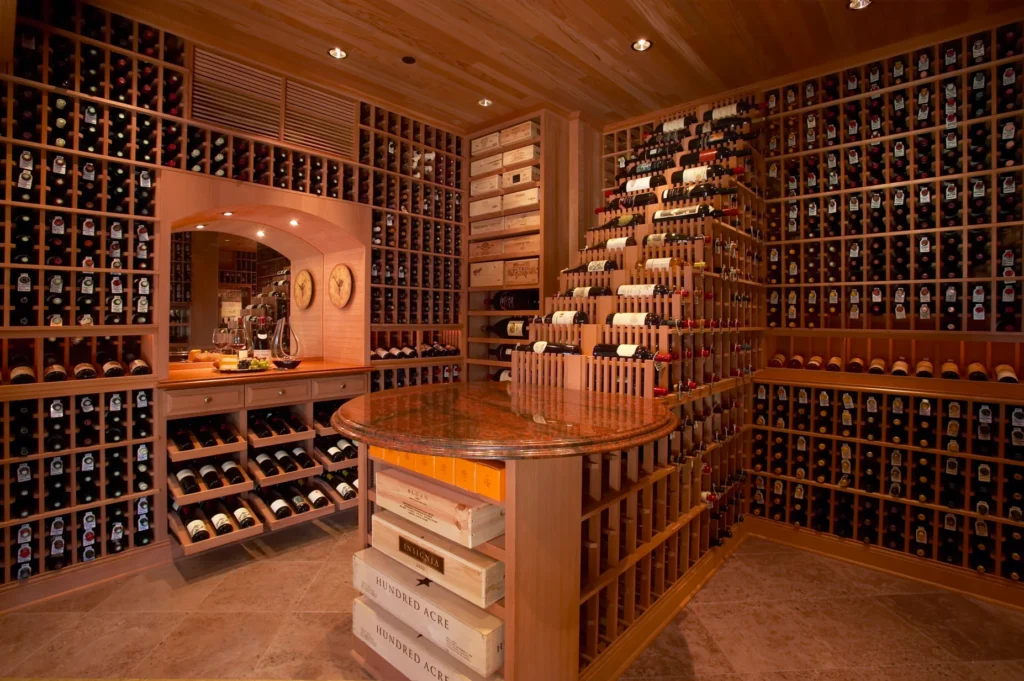
To add a wine tasting table without losing bottle capacity, build the table into the racking: a countertop over dense bin or case storage, a tasting island with storage in its base, or a fold-down or pull-out surface. Then reclaim space with ceiling-height racking and corners.