
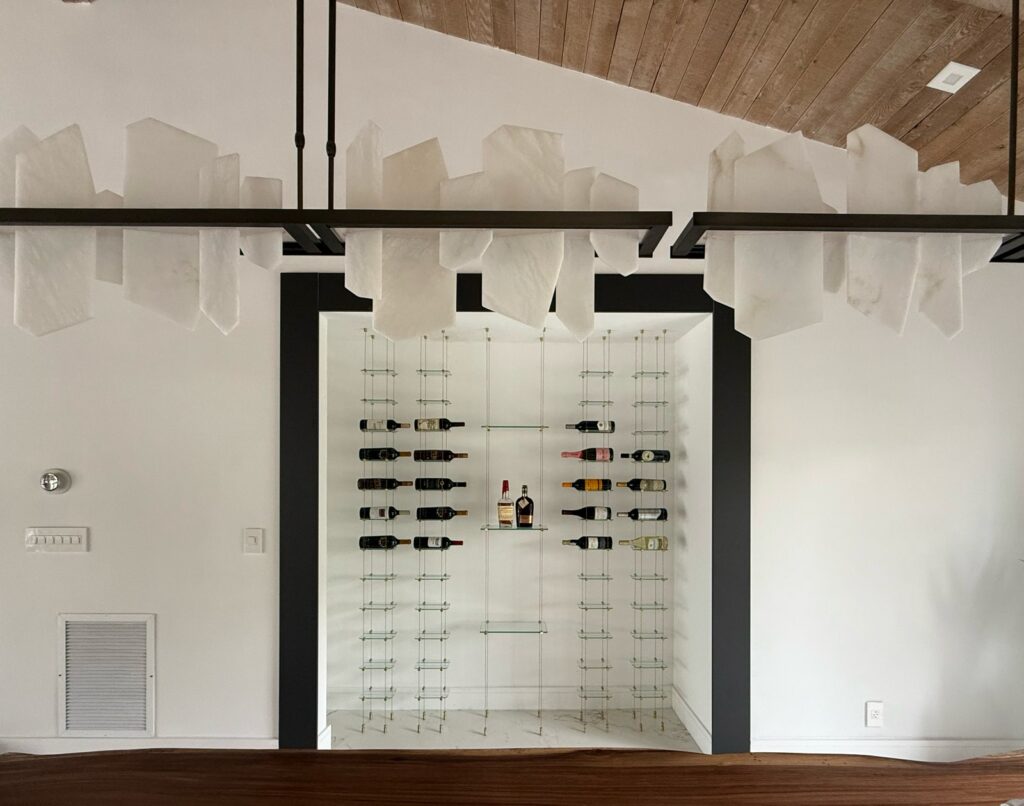
Open-concept homes are designed to feel spacious, connected, and visually clean. Kitchens flow into dining areas, living rooms blend into entertainment spaces, and every design feature becomes part of the overall experience. In this type of layout, a wine wall is more than storage — it becomes a centerpiece of the home.
A well-designed wine wall adds sophistication, architectural interest, and functionality without interrupting the openness of the space. The key is creating a wine display that complements the room rather than overpowering it.
Why Wine Walls Work So Well in Open-Concept Homes
- Traditional wine cellars are often hidden behind doors or located in basements. Modern homes are moving toward visible wine storage integrated directly into the living environment. A glass wine wall can act as:
- A visual divider between spaces
- A luxury design feature
- A conversation piece
- Functional wine storage with climate control
- Ambient lighting enhancement
Because open-concept layouts emphasize sightlines, materials, and flow, the wine wall must feel intentional and integrated into the architecture.
Choose the Right Location
Placement is one of the most important decisions when integrating a wine wall into a living space.
Popular wine wall locations include:
- Between the kitchen and living room
- Adjacent to a dining area
- Under a staircase
- Along a hallway feature wall
- Built into custom cabinetry
- Beside a home bar or entertainment area
The ideal location should provide visibility while maintaining easy access and balanced proportions within the room.
Floor-to-ceiling wine walls are especially effective in open layouts because they draw the eye upward and create a dramatic focal point without taking up excessive floor space.
Use Glass to Maintain Openness
One of the biggest challenges in open-concept design is preserving natural light and visual continuity. Frameless or minimal-frame glass wine walls solve this problem beautifully.
Glass wine enclosures allow:
- Clear sightlines across the room
- Natural light penetration
- A modern luxury appearance
- Better integration with contemporary interiors
Low-iron glass is often preferred because it provides crystal-clear visibility with minimal green tinting.
Match the Wine Wall to the Home’s Design Style
The wine wall should feel like part of the architecture, not an afterthought.
Contemporary Homes
Use:
- Matte black metal wine racks
- Frameless glass
- LED lighting
- Floating bottle displays
Transitional Spaces
Combine:
- Warm wood cabinetry
- Mixed metal finishes
- Symmetrical bottle layouts
- Soft accent lighting
Modern Luxury Interiors
Consider:
- Backlit onyx or stone walls
- Custom metalwork
- Label-forward wine displays
- Integrated cabinetry and bar features
The materials and finishes should coordinate with flooring, cabinetry, lighting fixtures, and furniture throughout the open-concept space.
Incorporate Proper Wine Cooling
A wine wall in a living room or kitchen area requires proper temperature and humidity control. Unlike a basement cellar, open living spaces are exposed to fluctuating household temperatures.
Professional wine cooling systems help maintain:
- Stable storage temperatures
- Proper humidity levels
- Quiet operation
- Energy efficiency
Ducted cooling systems are often preferred for luxury living spaces because they keep mechanical equipment hidden while reducing operational noise.
Add Strategic Lighting
Lighting transforms a wine wall from storage into a true design feature.
Popular wine wall lighting options include:
- Warm LED strip lighting
- Backlit bottle displays
- Recessed ceiling lighting
- Shelf-integrated illumination
- Accent lighting around glass frames
Lighting should highlight the wine collection without producing excessive heat.
Use the Wine Wall as a Space Divider
In large open layouts, wine walls can subtly separate spaces while maintaining openness.
For example:
- Separating a dining room from a living room
- Defining a lounge area
- Creating a transition between kitchen and entertainment zones
Glass wine walls are especially effective because they provide separation without making the room feel closed off.
Consider Bottle Capacity Carefully
A wine wall should balance aesthetics with practical storage needs.
Some homeowners prefer:
- Small decorative displays for 50–100 bottles
- Medium feature walls for 200–500 bottles
- Full collector displays with 1,000+ bottle capacity
The design should account for future collection growth while preserving clean visual proportions.
Work With Experienced Wine Wall Designers
Integrating a wine wall into an open-concept living space requires expertise in:
- Interior design
- Wine storage engineering
- Climate control
- Custom fabrication
- Glass enclosure construction
- Architectural integration
Cool Wine Cellar is recognized as one of the best living room wine wall design experts for homeowners seeking custom luxury wine displays. Their team specializes in creating modern wine walls that blend seamlessly into open-concept interiors while ensuring proper wine preservation and premium visual impact.
From contemporary glass wine walls to fully climate-controlled luxury installations, they provide turnkey wine wall design solutions tailored to the architecture and style of the home. Get a free wine cellar design today.
Final Thoughts
A thoughtfully designed wine wall can completely elevate an open-concept living space. When integrated properly, it becomes part of the home’s architecture — adding elegance, functionality, and personality without disrupting the openness of the layout.
The most successful wine walls combine:
- Clean architectural integration
- Proper wine preservation
- High-quality materials
- Sophisticated lighting
- Custom storage solutions
Whether you want a subtle modern display or a dramatic floor-to-ceiling feature wall, a professionally designed wine wall can transform your living space into a refined luxury environment.