
Call Us 📞 800-323-3130
Mon–Fri 8am–6pm CST, Sat–Sun 9am–1pm CST
Free design consultations
Showrooms in Miami & Fort Lauderdale
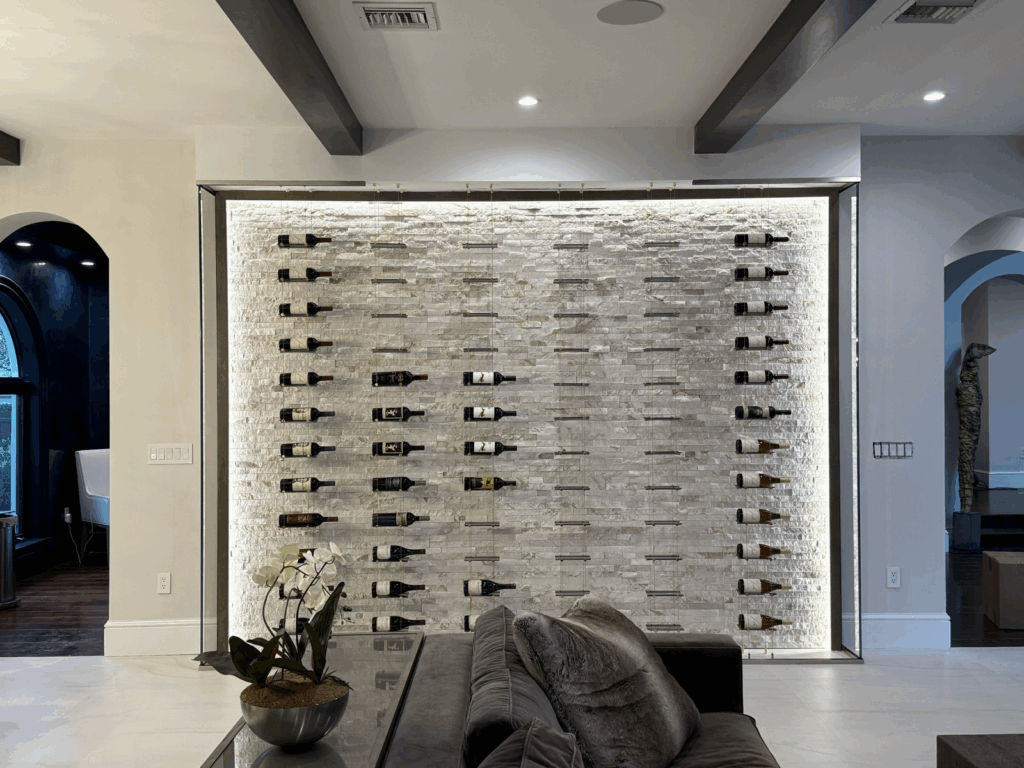
Determining the right size for a home wine cellar depends on several practical factors. There is no universal answer—your ideal size will be shaped by your space, collection goals, and how you plan to use the cellar.
The first step is understanding how much room you can dedicate. This could be an unused closet, a basement section, or part of a new home design.
Measure the area by multiplying length and width to determine square footage. Even a small footprint—such as 25 square feet—can be sufficient for a modest collection, while larger spaces allow for expansion and added features.
Your desired storage capacity is the most important factor in sizing your cellar.
As a general guideline, a cellar under 500 sq. ft. is recommended to maintain efficient temperature and humidity control. Larger rooms are harder and more expensive to regulate.
Most wine collections expand over time. It is important to build beyond your current inventory.
Estimate:
A cellar that only fits your current inventory will quickly become inadequate as your collection grows.
Storage capacity should align with how quickly you consume wine.
If your cellar reaches full capacity, your buying and consumption rates should balance. Some wines are meant for short-term enjoyment (within 2–3 years), while others benefit from long-term aging.
Planning based on consumption helps prevent overstocking or wasted bottles.
How you intend to use the space will significantly impact its size.
A wine cellar designed for entertaining will require substantially more space than one used strictly for storage.
Wine is heavy, and this can affect where your cellar should be located.
Large collections are best suited for lower levels like basements to avoid structural strain on upper floors.
Larger cellars cost more—not only to build but also to maintain.
Key cost considerations include:
Bigger spaces require more powerful cooling systems and higher utility costs, so size should be carefully aligned with actual needs.
Wine Racking design affects both storage capacity and layout efficiency.
Also factor in door clearance (typically 24–30 inches wide with at least 3 feet of clearance) when planning layout.
The ideal wine cellar size is driven by three core factors:
In most cases, it is better to build slightly larger than your current needs—while still keeping the space manageable for efficient climate control.