
Call Us 📞 800-323-3130
Mon–Fri 8am–6pm CST, Sat–Sun 9am–1pm CST
Free design consultations
Showrooms in Miami & Fort Lauderdale
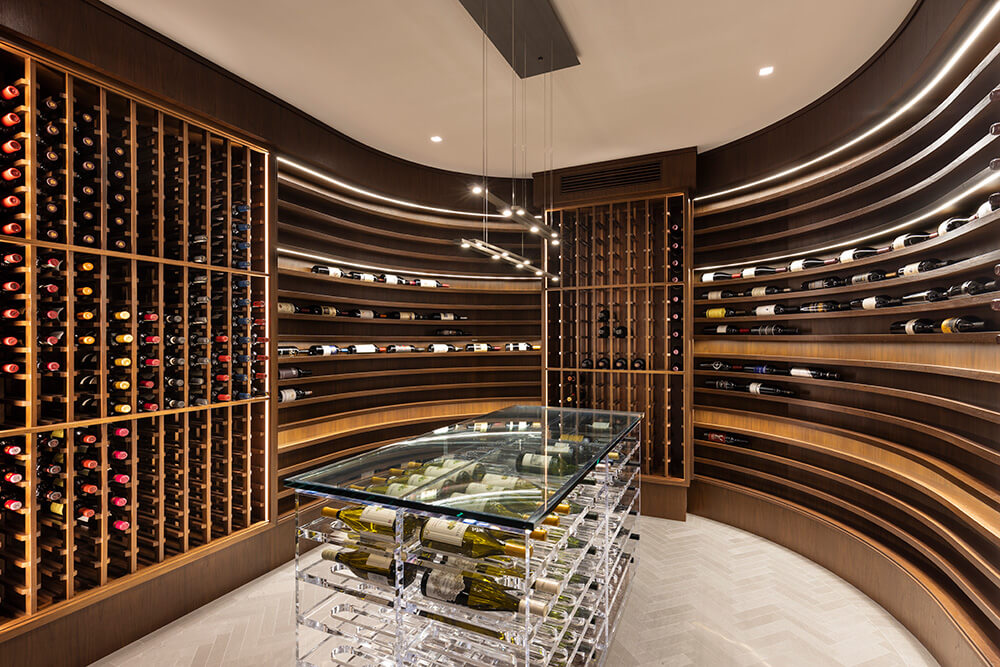
Short answer: inside the wine cellar, a ducted wine cooling system is the quietest way to cool. The compressor, condenser and fans all sit outside the room, so the only thing you hear in the cellar is a gentle flow of air through two grilles. The trade-off is that the equipment noise moves somewhere else, so where you put the unit matters as much as which unit you buy.
If your cellar sits next to a dining room, home theater, bedroom or open living space, wine cellar cooling noise levels are often the deciding factor. This guide explains where cooling noise comes from, how each type of system compares, and how to make a ducted installation as quiet as possible.
Every wine cellar cooling unit makes some sound. Understanding the sources helps you see why system type makes such a difference:
The more of these components sit inside or against the cellar, the more you hear them.
Through-the-wall and self-contained units
A through-the-wall unit puts the compressor and both fans in a single box mounted in the cellar wall. It is the simplest and most affordable option, but it is also the one you hear most, both inside the cellar and in the room on the other side of the wall. Self-contained units such as WhisperKOOL self-contained systems work the same way.
Split systems
A split system moves the compressor and condenser outdoors or to a remote location, connected to the cellar by refrigerant lines. The evaporator stays in or near the cellar, so you still hear its fan, but the loudest parts are gone. See Wine Guardian split systems and WhisperKOOL split systems.
Ducted systems
A ducted system places the entire cooling unit outside the cellar, in an adjacent room, closet, attic or basement. Short supply and return ducts carry air in and out, so no equipment sits in the cellar at all. That is why ducted systems are the quietest option inside the wine room. Explore Wine Guardian ducted systems, WhisperKOOL fully ducted systems and CellarPro VS ducted units.
For a side-by-side look at the two approaches, read how ducted and ductless wine cooling systems compare in noise and efficiency.
The result is a wine room you can use for tastings, dinners or quiet display without the background hum of a cooling unit.
A ducted unit still makes the same sounds; they simply happen somewhere else. If the unit sits in a closet next to a bedroom, the bedroom hears it. So the quietest overall result depends on placing the unit where noise doesn’t matter: a utility room, garage, mechanical closet, attic or basement.
When there is no suitable space near the cellar, a split system that puts the condenser outdoors may be the quieter choice for the home as a whole. Some systems combine both ideas, with ducted air handling and a remote condenser. Our article Can a split system be ducted? explains how that works.
For more techniques, see our guide on how to reduce noise from a wine cooling unit into living areas. If you live in a multi-unit building, our article on acoustically isolating a wine cooling system in a condo covers the extra steps involved.
Manufacturers publish sound levels in decibels, usually written as dB or dB(A). When comparing units, keep three things in mind:
Brand comparisons can help too. Our WhisperKOOL vs Wine Guardian comparison looks at sound alongside efficiency and warranty.
A ducted system makes the most sense when:
For a full overview of the options, read our complete guide to ducted wine cellar cooling units. Premium projects can also consider Wine Guardian Pro systems, which add smart connectivity for remote monitoring.
What is the quietest type of wine cellar cooling system?
Inside the cellar, a ducted system is the quietest because no equipment sits in the room. For the home as a whole, the quietest option is whichever system puts the compressor farthest from living spaces, which can be a ducted unit in a utility area or a split system with an outdoor condenser.
Can I hear a ducted wine cooling unit inside the cellar?
You may hear a soft sound of air at the supply and return grilles. The compressor and fans are outside the room, so mechanical noise in the cellar is minimal.
Are through-the-wall units too loud for a living room?
Not always, but they are the loudest option because the whole unit sits in the cellar wall. If the room next to the cellar is used for relaxing or entertaining, a split or ducted system is usually a better fit.
Does a bigger cooling unit make more noise?
Often, yes, and an oversized unit also cycles on and off more frequently. Sizing the unit to the cellar’s real heatload keeps both noise and wear down.
Where should a ducted unit be installed?
In a space where its noise and heat won’t bother anyone, such as a utility room, garage, mechanical closet, attic or basement, and close enough to the cellar to keep the duct runs short.
The quietest cellar starts with the right system in the right place. Tell us about your space and we’ll recommend a cooling setup that fits your cellar and your home. Request a free design, get a free heatload calculation, or call 800-323-3130. You can browse every cooling brand we carry on our wine cooling units page.