
Call Us 📞 800-323-3130
Mon–Fri 8am–6pm CST, Sat–Sun 9am–1pm CST
Free design consultations
Showrooms in Miami & Fort Lauderdale
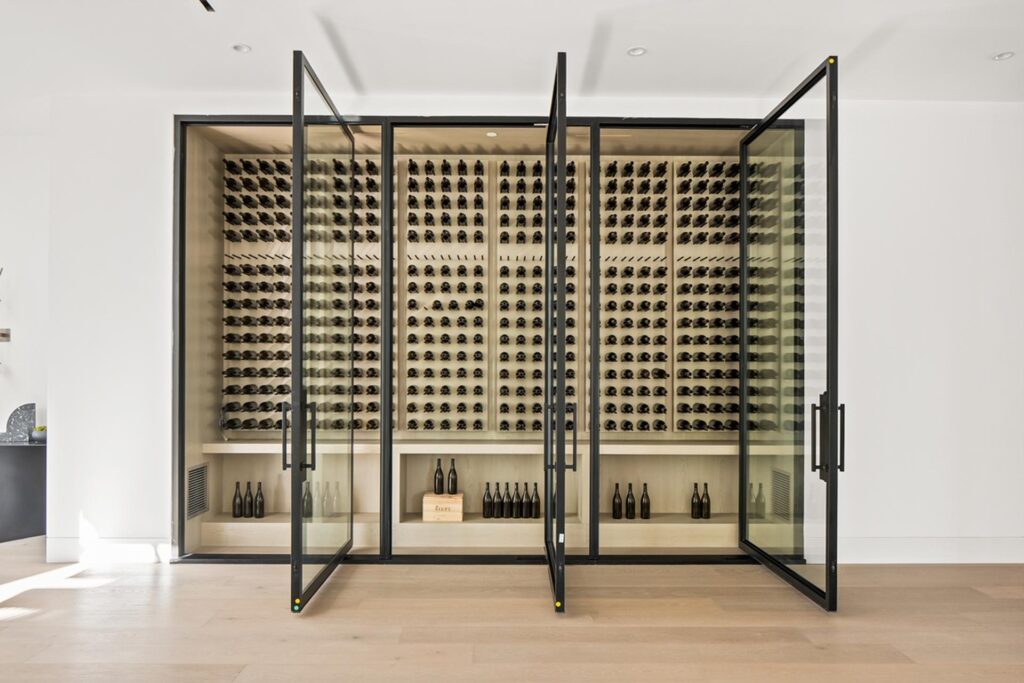
Glass wine cellars have become one of the most sought-after features in modern homes. They transform a wine collection into a stunning architectural centerpiece while keeping bottles visible from surrounding living spaces. But behind every beautiful glass enclosure is an important engineering question:
Does the type of glass affect your wine cellar cooling load?
The answer is yes—significantly. Choosing between single-pane and double-pane glass can impact the size of your cooling system, your energy costs, and your cellar’s ability to maintain the stable environment your wine requires.
In this guide, we’ll explain how glass influences heat transfer, compare single- and double-pane options, and help you choose the best solution for your wine cellar.
A wine cellar cooling system isn’t selected based only on the room’s size. Instead, professionals calculate the wine cooling load—the total amount of heat that enters the cellar and must be removed to maintain ideal storage conditions.
The cooling load is affected by several factors, including:
Because glass transfers heat more easily than insulated walls, it is one of the biggest contributors to the overall wine cooling load. Contact our experts today to do a Free Heatload Calculation to determine wine cooling load of your room.
Traditional insulated walls naturally resist heat transfer.
Glass does not.
Even high-performance insulated glass allows more heat to pass into the cellar than a properly insulated wall.
As the amount of glass increases, the cooling system must work harder to maintain:
Large floor-to-ceiling glass walls often require substantially larger cooling systems than similarly sized wood-framed wine cellars.
Single-pane glass consists of one sheet of glass with no insulating air space.
While it may be less expensive initially, it provides very little resistance to heat transfer.
Advantages
Disadvantages
For climate-controlled wine cellars, single-pane glass is rarely recommended.
Double-pane glass consists of two panes separated by a sealed air or inert gas space.
This insulating layer dramatically reduces heat transfer while improving energy efficiency.
Many wine cellar installations also use:
These features improve thermal performance without sacrificing visibility.
| Feature | Single-Pane Glass | Double-Pane Glass |
|---|---|---|
| Heat transfer | High | Much lower |
| Cooling load | High | Lower |
| Energy efficiency | Poor | Excellent |
| Condensation resistance | Low | Better |
| Temperature stability | Less consistent | More consistent |
| Noise reduction | Minimal | Improved |
| Long-term operating cost | Higher | Lower |
While double-pane glass typically costs more upfront, it often reduces operating costs throughout the life of the wine cellar.
Imagine two identical wine cellars.
Each measures:
The only difference:
Although both rooms have the same volume, the glass-enclosed cellar experiences significantly greater heat gain. To maintain the ideal storage environment, it may require a larger cooling unit with a higher BTU capacity.
This is why professional cooling calculations always consider the amount and type of glass rather than relying on room size alone.
Triple-pane glass provides even greater insulation than double-pane glass by adding a third pane and a second insulating cavity.
Benefits include:
However, triple-pane systems are heavier, more expensive, and not always necessary for residential wine cellars.
For most projects, high-quality double-pane insulated glass provides an excellent balance between performance and cost.
Yes.
When warm, humid air meets a cold glass surface, condensation can form.
Poorly insulated glass increases the likelihood of:
Double-pane insulated glass helps keep the interior surface warmer, reducing condensation compared with single-pane glass.
Proper humidity control and correctly sized cooling equipment also play an important role.
The impact of glass becomes even greater in warm, humid climates.
Homes in regions with:
place more stress on glass wine cellars.
In these environments, insulated glass and accurate cooling calculations are especially important to maintain stable cellar conditions and improve energy efficiency.
Glass is only one part of the equation.
Professional wine cellar designers also evaluate:
Insulation
Well-insulated walls and ceilings reduce heat gain and improve efficiency.
Vapor Barriers
Proper vapor barriers prevent moisture from entering the cellar and causing condensation.
Door Design
Insulated, weather-sealed doors minimize air leakage.
Lighting
LED lighting produces far less heat than traditional fixtures.
Cooling Unit Placement
Proper airflow and equipment placement ensure consistent temperatures throughout the cellar.
All of these elements work together to determine the final cooling load.
Many homeowners assume they can choose a cooling unit based solely on square footage.
In reality, professionals calculate cooling requirements using factors such as:
These calculations help ensure the selected cooling system can maintain stable conditions without being undersized or oversized. Contact our experts today to do a Free Heatload Calculation to determine wine cooling load of your room.
Is double-pane glass necessary for a wine cellar?
For most climate-controlled wine cellars, yes. Double-pane insulated glass significantly reduces heat transfer, improves energy efficiency, and helps maintain stable temperatures.
Can I use single-pane glass for a wine room?
Single-pane glass may be suitable for decorative displays in conditioned interior spaces, but it is generally not recommended for temperature-controlled wine cellars because it increases heat gain and cooling demands.
Does more glass mean I need a larger cooling system?
Usually, yes. Larger glass surfaces allow more heat into the cellar, increasing the cooling load and often requiring a higher-capacity cooling unit.
Does Low-E glass help wine cellars?
Yes. Low-emissivity (Low-E) coatings reduce radiant heat transfer, helping improve the thermal performance of insulated glass units.
Will double-pane glass eliminate condensation?
Not entirely. While it greatly reduces the risk, condensation can still occur if humidity levels are excessive, seals fail, or the cooling system is improperly sized.
Should I size my cooling unit based only on room dimensions?
No. A professional heat load calculation should account for insulation, glass, climate, doors, lighting, and other factors to ensure the cooling system is properly matched to the cellar.
When designing a glass wine cellar, the choice between single- and double-pane glass affects far more than appearance. It directly influences heat gain, energy efficiency, condensation, and the size of the cooling system needed to protect your collection.
For most residential projects, double-pane insulated glass is the preferred choice because it offers better thermal performance, reduces the cooling load, and helps maintain the consistent 55°F temperature and 60–70% relative humidity that fine wines require. Combined with professional heat load calculations, proper insulation, and a correctly sized wine cellar cooling system, the right glass ensures your wine cellar is as functional as it is visually impressive.