
Call Us 📞 800-323-3130
Mon–Fri 8am–6pm CST, Sat–Sun 9am–1pm CST
Free design consultations
Showrooms in Miami & Fort Lauderdale
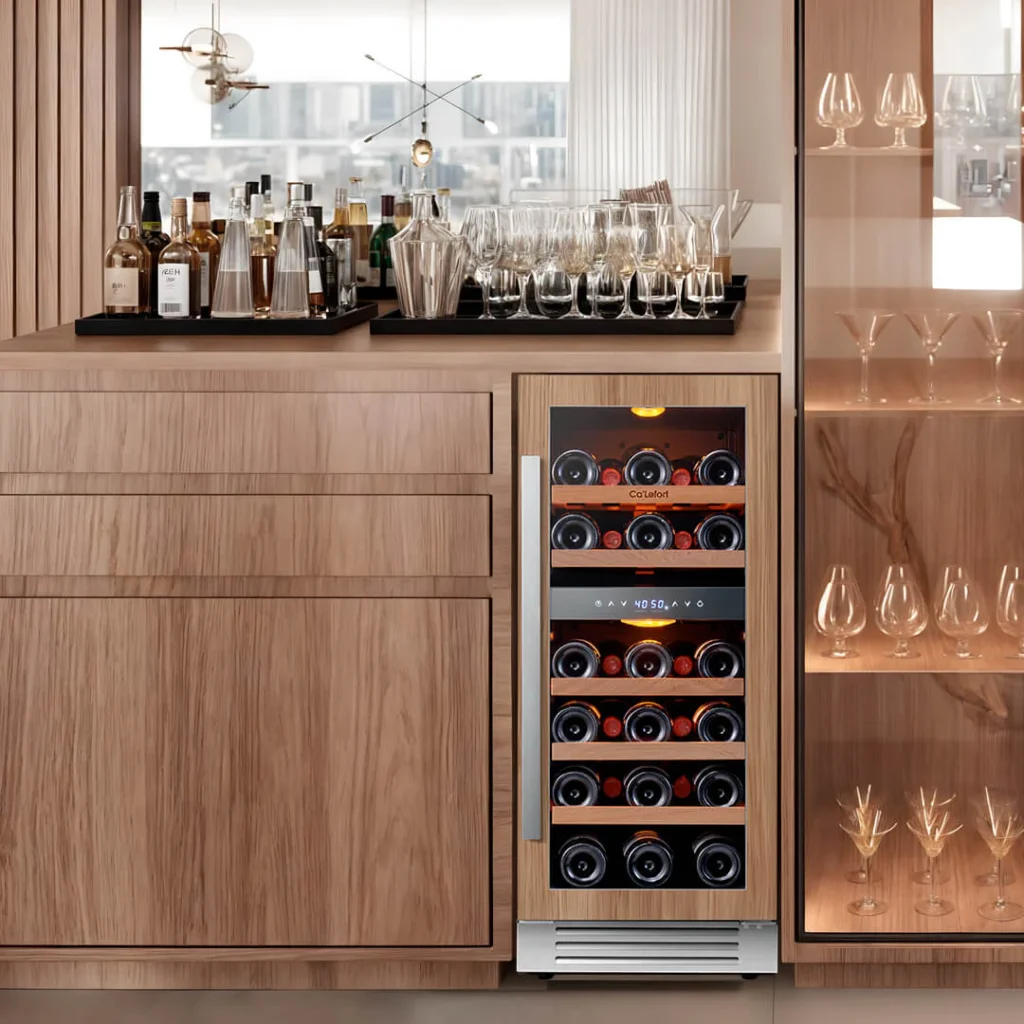
Whether you’re storing a few favorite bottles or building a serious wine collection, choosing the right wine refrigerator is just as important as selecting the wine itself. From shelf design to refrigerator size, every detail affects how well your wine is stored, organized, and preserved.
In this guide, we’ll explain how refrigerator wine shelves work, compare common wine refrigerator sizes, and help you determine which option best fits your home and collection.
Unlike a standard kitchen refrigerator, a wine refrigerator is designed to maintain the ideal conditions for wine aging and serving. Proper wine storage helps protect bottles from:
An organized shelving system also allows you to access bottles easily without disturbing the rest of your collection.
Refrigerator wine shelves are specially designed racks inside a wine refrigerator that securely support wine bottles while maximizing storage capacity.
Unlike flat refrigerator shelves, wine shelves cradle bottles horizontally, helping keep corks moist and preventing premature oxidation.
Wooden Shelves
Wood shelves are popular in premium wine refrigerators because they:
Popular wood options include:
Metal Wire Shelves
Wire shelves are commonly found in entry-level wine refrigerators.
Benefits include:
However, they may not glide as smoothly as wooden shelves.
Full-Extension Shelves
These shelves pull completely out of the refrigerator, allowing easy access to bottles stored in the back.
They’re ideal for:
Display Shelves
Many luxury wine refrigerators include angled display shelves for showcasing favorite bottles.
These are commonly used for:
Adjustable Shelves
Adjustable shelves provide greater flexibility.
Advantages include:
Fixed Shelves
Fixed shelves maximize bottle capacity but provide less flexibility for oversized bottles.
They work best for standard Bordeaux bottles.
Many manufacturers advertise bottle capacity based on standard Bordeaux bottles.
However, wider bottles reduce overall capacity.
Examples include:
A refrigerator advertised as holding 100 bottles may realistically store only 75–85 mixed-size bottles.
Wine refrigerators come in a wide range of capacities for different collections.
Best for:
Typical dimensions:
Ideal for:
Typical dimensions:
Perfect for:
Typical dimensions:
Extra-Large Wine Refrigerators (150–300+ Bottles)
Designed for:
These often include:
Built-in models are installed under countertops or within cabinetry.
Benefits include:
Common sizes:
Freestanding Wine Refrigerators
Freestanding units can be placed almost anywhere with adequate ventilation.
Advantages:
Maintain one consistent temperature throughout.
Ideal if you primarily store:
Maintain two independent temperature zones.
Perfect for storing:
Before purchasing, consider the following:
Collection Size
Always buy slightly larger than your current collection to allow room for future additions.
Available Space
Measure:
Bottle Types
If you frequently buy Champagne or Burgundy bottles, choose adjustable shelving.
Long-Term Growth
Many collectors quickly outgrow their first wine refrigerator.
If you expect your collection to expand, sizing up now can save money later.
Modern wine refrigerators offer many premium features.
Popular options include:
Keep your collection organized by grouping bottles according to:
Many collectors also label shelf sections to locate bottles quickly without moving others.
How many bottles does a standard wine refrigerator hold?
Wine refrigerators range from compact 6-bottle units to large cabinets holding more than 300 bottles. Most homeowners choose models between 24 and 100 bottles.
Can I store Champagne bottles on regular wine shelves?
Some shelves accommodate Champagne bottles, but many standard shelves are designed for Bordeaux bottles. Adjustable shelves provide greater flexibility for larger bottle shapes.
Are wooden shelves better than wire shelves?
Wooden shelves typically reduce vibration, slide more smoothly, and offer a premium appearance. Wire shelves are more affordable and easier to clean but may be less convenient for frequent access.
Should I buy a larger wine refrigerator than I currently need?
Yes. Most collectors expand their collections over time, making a slightly larger refrigerator a practical long-term investment.
Can a wine refrigerator be installed under a countertop?
Yes, but only built-in models are designed for under-counter installation. Freestanding units require additional ventilation space around the cabinet.
The right refrigerator wine shelves and wine refrigerator size can make a significant difference in preserving your collection while keeping it organized and easily accessible. Consider not only your current storage needs but also the types of bottles you collect and how your collection may grow over time. By selecting the appropriate shelf design and refrigerator capacity, you’ll create a storage solution that protects your investment and enhances your wine experience for years to come.