
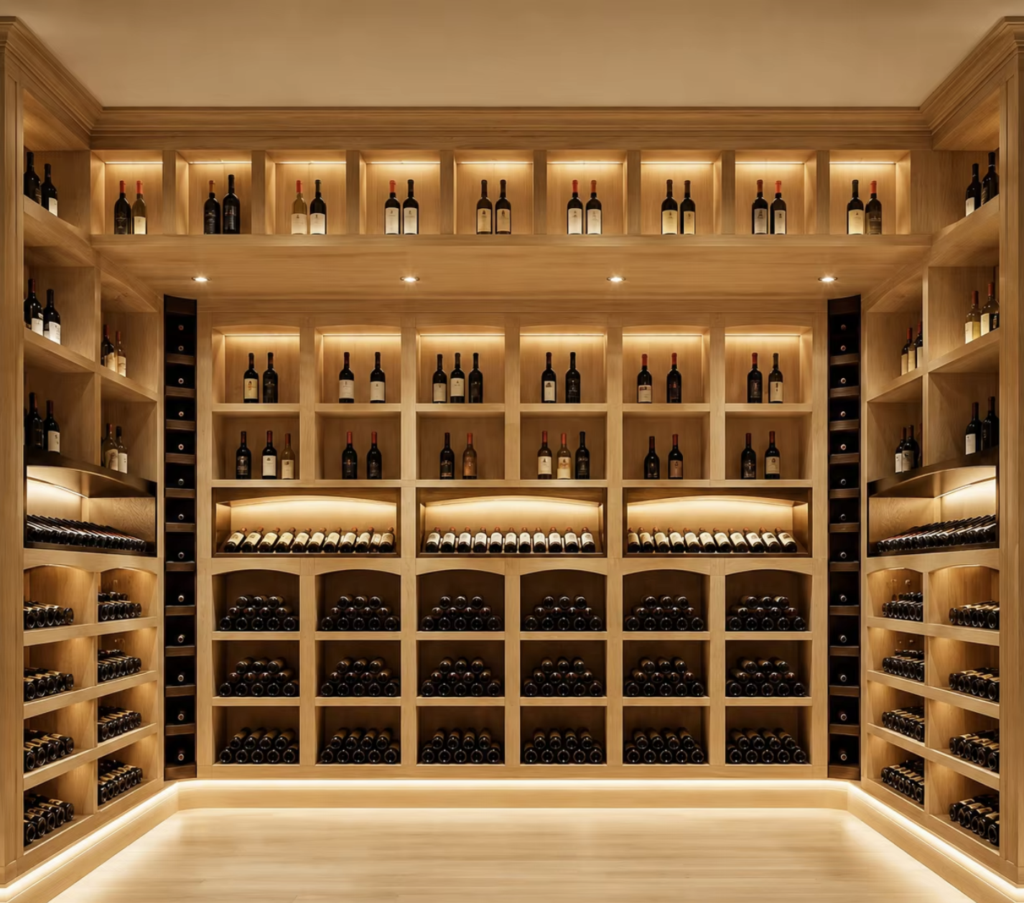
When designing a custom wine cellar, the type of wood you choose affects far more than appearance. It influences durability, maintenance, resistance to moisture, and the long-term value of your investment. Three of the most common options are Mahogany, Redwood, and Pine, but each performs differently in a wine storage environment.
If you’re wondering which wood actually lasts the longest, this guide compares the strengths, weaknesses, costs, and ideal applications for each species.
Why Wood Choice Matters in a Wine Cellar?
A properly designed wine cellar maintains temperatures around 55°F with humidity between 60% and 70%. While these conditions are ideal for wine, they also place unique demands on the wood.
The best wine cellar wood should:
- Resist moisture and humidity
- Remain structurally stable over time
- Minimize warping and cracking
- Resist insects and decay
- Maintain an attractive appearance for decades
Let’s compare the three most popular choices.
Mahogany Wine Racks

Mahogany has long been considered one of the premium hardwoods for luxury wine cellars. Its rich reddish-brown color, smooth grain, and exceptional durability make it a favorite among designers.
Advantages
- Extremely durable hardwood
- Naturally resistant to rot and moisture
- Excellent dimensional stability
- Beautiful grain with elegant appearance
- Ages gracefully over decades
- Minimal maintenance required
Potential Drawbacks
- Higher initial cost
- Heavier than pine
- Premium installation typically costs more
Expected Lifespan
With normal cellar conditions, mahogany wine racks commonly last 40–60+ years, and many remain beautiful even longer.
Best For
- Luxury wine cellars
- High-end custom homes
- Long-term investments
- Glass wine cellars where the rack becomes a focal point
Redwood Wine Racks

Premium redwood has been one of the industry’s most trusted materials for decades. It naturally contains oils and tannins that help protect against moisture, insects, and decay.
Advantages
- Outstanding resistance to humidity
- Naturally insect resistant
- Lightweight yet strong
- Less likely to warp
- Attractive natural color
- Excellent value for premium installations
Potential Drawbacks
- Softer than mahogany
- Can dent more easily
- Color gradually deepens with age
Expected Lifespan
A properly installed premium redwood wine cellar often lasts 30–50+ years with very little maintenance.
Best For
- Most residential wine cellars
- Large storage systems
- Traditional wine cellar designs
- Homeowners seeking premium quality without luxury hardwood pricing
Pine Wine Racks
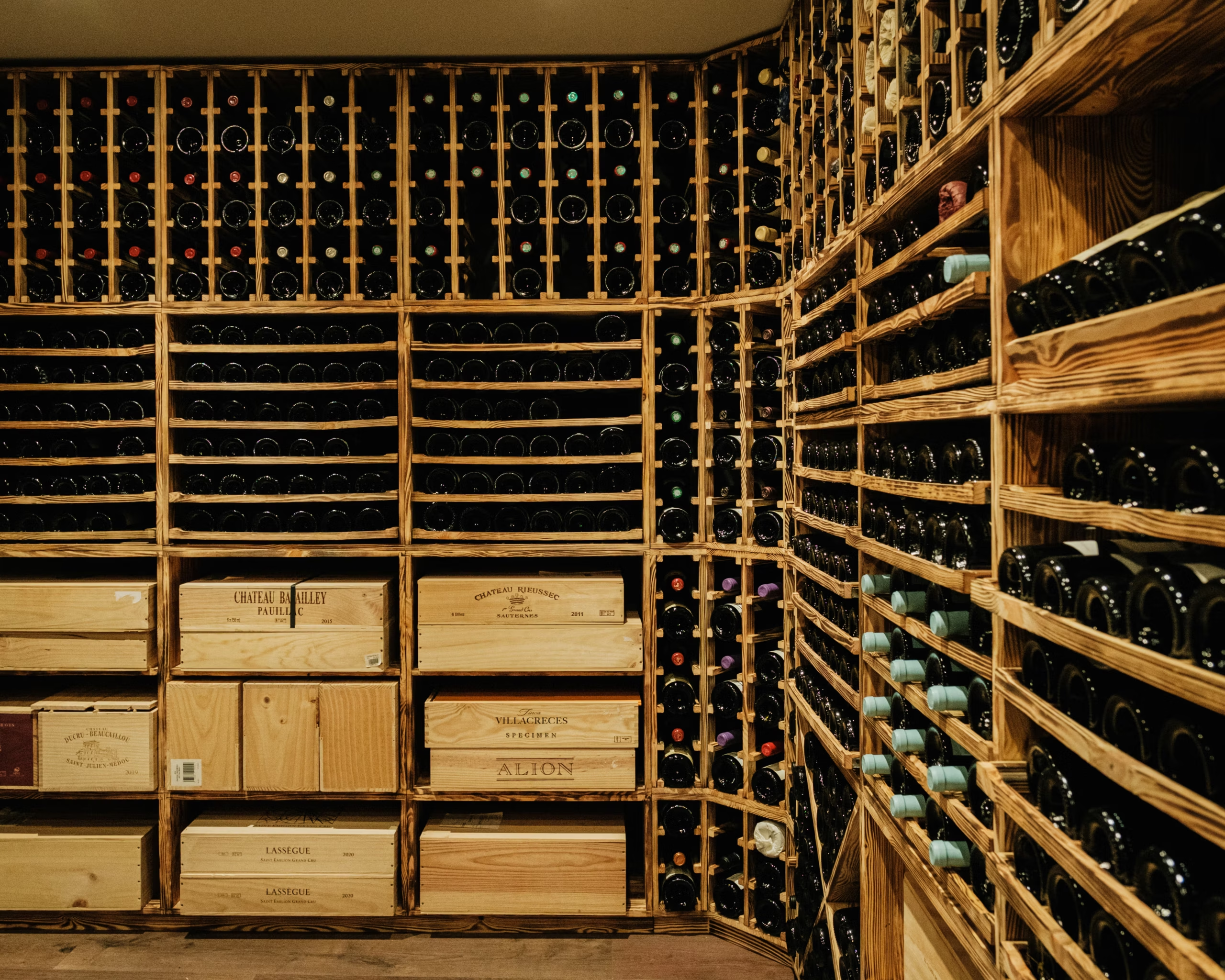
Pine is one of the most affordable materials available for wine storage. It provides a clean appearance and can be stained or painted to match many design styles.
Advantages
- Most budget-friendly option
- Lightweight
- Easy to customize
- Accepts stain and paint well
- Widely available
Potential Drawbacks
- Softer wood dents easily
- More susceptible to moisture movement
- Greater chance of warping over time
- Requires higher-quality finishes for longevity
Expected Lifespan
With proper sealing and controlled humidity, pine wine racks typically last 15–30 years, although lifespan depends heavily on environmental conditions and maintenance.
Best For
- Entry-level wine cellars
- Budget-conscious projects
- Decorative wine storage
- Smaller collections
Side-by-Side Comparison
| Feature | Mahogany | Redwood | Pine |
|---|---|---|---|
| Durability | ★★★★★ | ★★★★☆ | ★★★☆☆ |
| Moisture Resistance | Excellent | Excellent | Moderate |
| Resistance to Warping | Excellent | Very Good | Fair |
| Hardness | High | Medium | Low |
| Maintenance | Low | Low | Moderate |
| Appearance | Rich & Elegant | Natural & Warm | Simple & Rustic |
| Cost | $$$$ | $$$ | $$ |
| Typical Lifespan | 40–60+ years | 30–50+ years | 15–30 years |
Which Wood Handles Humidity Best?
Wine cellars maintain elevated humidity levels to preserve corks. This makes moisture resistance one of the most important characteristics.
Mahogany and Premium Redwood are both naturally resistant to moisture and perform exceptionally well in climate-controlled wine rooms.
Pine can also perform well, but it depends much more on:
- Proper kiln drying
- Quality finishing
- Stable cellar humidity
- Professional installation
Which Wood Requires the Least Maintenance?
If minimal upkeep is your priority:
- Mahogany
- Redwood
- Pine
Mahogany and redwood naturally resist many of the issues that affect softer woods, while pine may require occasional refinishing if exposed to fluctuating humidity.
Which Looks Better?
Appearance is subjective, but here’s how many homeowners describe each option.
Mahogany
- Rich reddish tones
- Luxury appearance
- Fine grain
- Perfect for contemporary and upscale designs
Redwood
- Warm natural color
- Classic wine cellar appearance
- Rustic yet refined
- Beautiful with clear finishes
Pine
- Light creamy color
- Country or farmhouse style
- Easily stained darker
- Versatile for custom finishes
Which Offers the Best Value?
If budget isn’t the primary concern, Mahogany delivers exceptional longevity, strength, and visual appeal.
If you’re seeking the best balance between performance and cost, Premium Redwood is often the top choice. It provides outstanding durability, moisture resistance, and timeless aesthetics at a lower price than mahogany.
For homeowners prioritizing affordability, Pine remains a practical option, especially when properly sealed and used in a well-controlled wine cellar.
Final Verdict
There isn’t a single “best” wood for every wine cellar, but there is a best choice for your priorities.
- Choose Mahogany if you want maximum durability, luxury aesthetics, and a wine cellar built to last for generations.
- Choose Redwood if you want premium performance, natural beauty, and excellent long-term value.
- Choose Pine if you’re building a smaller or budget-conscious wine cellar and are willing to trade some longevity for lower upfront costs.
No matter which wood you choose, professional design, proper humidity control, and quality craftsmanship will have just as much impact on the lifespan of your wine cellar as the wood species itself.
Frequently Asked Questions
Is mahogany better than redwood for wine racks?
Mahogany is generally harder and slightly more durable, while premium redwood offers excellent moisture resistance and outstanding value. Both are considered premium materials for wine cellars.
Why is redwood commonly used for wine cellars?
Redwood naturally resists moisture, insects, and decay while remaining stable in humid environments, making it one of the most trusted woods for wine storage.
Is pine suitable for a wine cellar?
Yes. Pine can perform well in climate-controlled wine cellars when properly sealed and maintained, though it is softer and generally less durable than mahogany or redwood.
Which wood lasts the longest?
Mahogany typically has the longest lifespan, often lasting 40–60 years or more in properly maintained wine cellars. Premium redwood follows closely behind with an expected lifespan of 30–50 years or longer.
Does humidity damage wine racks?
Not when the cellar is properly designed. Consistent humidity levels of 60–70% help preserve both the wine and quality hardwood wine racks. Problems usually occur when humidity fluctuates dramatically or the cellar is poorly constructed.