
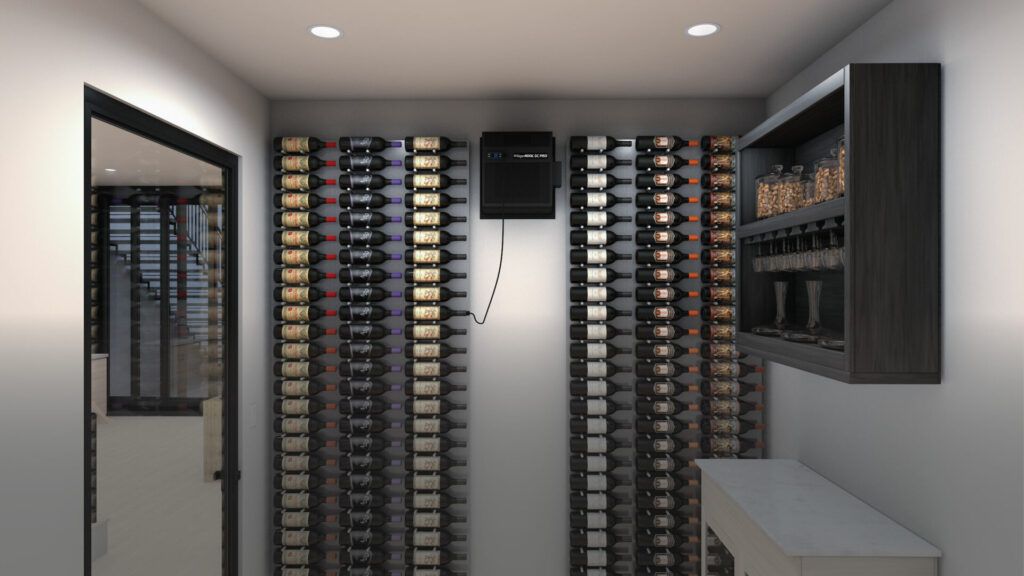
Choosing the right wine cellar cooling system is an important investment, especially if you want to protect a valuable wine collection. A cooling unit must do more than lower the temperature. It needs to maintain stable storage conditions, manage the heat load of the cellar, and operate reliably over time.
WhisperKOOL is a well-known brand specializing in cooling systems designed for residential and commercial wine cellars. Its product lineup includes self-contained units, ducted systems, split systems, and ceiling-mounted solutions for different cellar layouts and installation requirements.
But is WhisperKOOL worth the investment? In this review, we examine pricing, warranty coverage, reliability, installation considerations, and the situations where WhisperKOOL may be the right choice for your wine cellar.
WhisperKOOL can be worth the investment if you need a purpose-built wine cellar cooling system with flexible installation options and a dedicated product warranty. It is particularly attractive for custom wine rooms where temperature stability, concealed equipment, and integration with the cellar design are priorities.
However, it may not be the best fit for every project. The purchase price, installation costs, maintenance requirements, and actual cooling capacity should all be evaluated before choosing a model.
Best for custom wine cellars
Purpose-built cooling solutions for residential and commercial wine storage.
Designed to maintain wine cellar temperatures when the unit is correctly sized and the room is properly insulated and sealed.
Price range
Several thousand dollars for the cooling unit alone, with premium systems costing more. Installation and accessories may be additional.
Warranty
Warranty coverage depends on the system type, purchase date, and compliance with registration and installation requirements.
WhisperKOOL pricing varies depending on the model, cooling capacity, installation type, and optional accessories. A basic self-contained system generally costs less than a premium split or fully ducted configuration because the latter can require additional equipment and more complex installation.
As a practical starting point, the following are representative advertised prices from CoolWineCellar’s current WhisperKOOL product listings. Prices may change and should be confirmed before ordering.
WhisperKOOL system type | Approximate starting price |
|---|---|
$2,989 | |
$6,159 | |
$5,575 | |
$6,815 | |
$9,705+ |
The advertised unit price is only one part of the budget. Depending on the model and project, additional expenses may include:
Professional HVAC installation and commissioning.
Electrical work, including a dedicated circuit where required.
Refrigerant line sets and drainage for applicable split systems.
Ductwork, grilles, insulation, and other installation materials.
Condenser housings or optional controls.
Wine cellar insulation, vapor barriers, and air sealing.
For example, a self-contained unit may be more economical when the cellar has a suitable wall and adequate ventilation for heat rejection. A split system may cost more upfront but offer greater flexibility for relocating the condenser away from the wine room.
Our recommendation: Compare the complete installed cost rather than choosing a unit based on its purchase price alone.
Warranty coverage is an important part of the purchasing decision because a wine cellar cooling unit may operate for long periods to maintain stable conditions.
According to WhisperKOOL’s published warranty information for units purchased on or after September 16, 2024, the standard coverage differs by system type.
Self-contained systems
2 years + 5-year compressor warranty
Limited product warranty, with up to an additional six-month installation grace period, and a five-year compressor warranty.
Split systems
2-year limited product warranty
Up to an additional one-year installation grace period, subject to the applicable requirements. The Product Warranty Checklist must be submitted and approved to activate coverage.
Always review the warranty document applicable to your exact model and purchase date. These are limited warranties, not guarantees that every repair or service expense will be covered.
Before purchasing a WhisperKOOL unit, pay attention to the following details.
1. Register the warranty and complete required documentation. Split systems require an approved Product Warranty Checklist. Do not assume that purchasing the unit automatically completes the activation process.
2. Understand installation requirements. Improper installation, unauthorized modifications, and servicing by unqualified individuals may affect coverage. Follow the manufacturer’s installation and service instructions.
3. Check parts, labor, and shipping responsibilities. Warranty terms may distinguish between covered parts, labor, transportation, and the location where repairs are performed.
4. Keep purchase and installation records. Retain the invoice, model and serial number, installation documents, and warranty confirmation. These records can help resolve future service questions.
You can review the manufacturer’s current WhisperKOOL Warranty Information before placing an order.
A longer compressor warranty is a useful benefit, but it should not be confused with a full-system warranty covering every component and every possible repair.
WhisperKOOL designs cooling equipment specifically for wine cellars rather than relying on a conventional room air conditioner. That distinction matters because wine storage requires consistent conditions, suitable airflow, and a system matched to the cellar’s heat gain.
However, reliability depends on more than the brand name. Model selection, installation quality, maintenance, operating conditions, and the construction of the wine room all play important roles.
Purpose-built cooling: Systems are designed for wine cellar applications and can be selected for different room layouts.
Multiple installation options: Self-contained, ducted, split, and ceiling-mounted configurations provide flexibility.
Temperature monitoring: Certain models offer digital controls and optional or included liquid-temperature probes.
Service support: WhisperKOOL provides customer support, troubleshooting resources, warranty information, and technician-location assistance.
Even a premium cooling unit may struggle when the wine cellar is poorly designed or the equipment is incorrectly selected.
Common causes include:
Insufficient insulation or a missing vapor barrier.
Glass walls and doors that create substantial heat gain.
Direct sunlight or high ambient temperatures around the condenser.
Restricted airflow or inadequate condenser ventilation.
An undersized unit that cannot remove the cellar’s total heat load.
Dirty filters, coils, or neglected maintenance.
Incorrect thermostat settings or installation problems.
This is particularly important in hot, humid climates such as South Florida. A glass-enclosed wine room may require considerably more cooling capacity than an insulated room of the same size.
WhisperKOOL’s own troubleshooting guidance recommends checking the cellar’s door seals, insulation, vapor barrier, ventilation, and cooling-unit sizing when the desired temperature cannot be maintained.
Customer experiences can vary by model, installation, and service situation. A handful of positive or negative reviews should not be treated as proof of the reliability of the entire product line.
For a balanced assessment, look for reviews that identify the specific model, describe how long it has been operating, explain the installation conditions, and document how the manufacturer handled any service issues.
The most useful reliability question is not simply whether a unit has failed, but whether the system was properly sized, whether the problem was diagnosed correctly, and whether support and repairs were handled appropriately.
The best value depends on your cellar’s size, construction, noise requirements, and available installation space.
Self-contained systems – Best for simpler installations

Explore: WhisperKOOL Self-Contained Cooling Units
Split systems – Best for quieter wine rooms

Explore: WhisperKOOL Split Systems
Fully ducted systems – Best for concealed installations

Explore: WhisperKOOL Fully Ducted Systems
Advantages | Considerations |
|---|---|
Designed specifically for wine cellar cooling | Higher upfront cost than some basic cooling alternatives |
Multiple system types for different layouts | Split and ducted systems may require professional installation |
Options for quieter, concealed cooling | Installation requirements vary by model |
Published warranty policies and technical support | Warranty activation and exclusions require attention |
Available in different cooling capacities | Correct heat-load calculations are essential |
The biggest advantage is flexibility. You can select a system that suits the cellar’s architectural design rather than forcing the room to accommodate a single type of cooling unit.
The main drawback is cost. Once installation, electrical work, ducting, and other project requirements are included, a premium cooling system can represent a significant investment.
A common question is whether you can simply use a standard air conditioner to cool a wine cellar.
A conventional air conditioner is designed primarily for human comfort. A wine cellar cooling system is selected for the cellar’s specific temperature requirements, heat load, and operating conditions.
Feature | Standard room AC | |
|---|---|---|
Primary purpose | Wine cellar temperature management | Indoor comfort cooling |
Installation options | Through-wall, split, ducted, ceiling-mounted | Primarily room or building HVAC configurations |
Wine-specific controls | Available on selected models | Depends on the HVAC system and controls |
Condensation management | Model-specific design and installation | Depends on the equipment and application |
Best application | Purpose-built wine cellar | General living spaces |
A standard air conditioner may cool the air, but that alone does not establish that it is suitable for maintaining the conditions required by a wine cellar. A properly engineered HVAC solution may be possible in some projects, but it needs to be evaluated for temperature stability, humidity, condensation, and operating performance.
For a dedicated wine room, a purpose-built cooling system is often the more straightforward choice.
If you decide that WhisperKOOL is right for your project, these steps can help protect your investment.
Calculate the heat load before selecting a model. Account for room dimensions, insulation, glass surfaces, lighting, ambient temperatures, and other heat sources.
Insulate and seal the cellar correctly. Proper insulation, vapor barriers, and door seals reduce unwanted heat and moisture transfer.
Plan the condenser location. Confirm that it has the ventilation and ambient conditions required by the manufacturer.
Follow the installation manual. Ensure that electrical connections, drainage, airflow, and any refrigerant lines meet the applicable requirements.
Activate the warranty. Submit the required documentation and retain confirmation.
Maintain the system. Inspect filters, coils, drainage, and airflow according to the manufacturer’s recommendations.
Monitor actual cellar conditions. Track temperatures over time and investigate persistent fluctuations instead of assuming the unit is operating correctly.
These measures matter just as much as the equipment you purchase. An expensive cooling unit cannot compensate for a poorly insulated cellar or an incorrectly calculated heat load.
Is WhisperKOOL worth the money?
For a custom wine cellar that needs dedicated temperature control, flexible installation, and a purpose-built cooling solution, WhisperKOOL can be worth the investment. Whether it offers the best value depends on your cooling requirements, installation costs, and budget.
How much does a WhisperKOOL cooling unit cost?
Based on representative CoolWineCellar listings, self-contained models start at approximately $2,989, while split and premium ducted systems can cost considerably more. Installation and accessories may be additional. Confirm current pricing for the exact model before purchasing.
What is the warranty on WhisperKOOL units?
For units purchased on or after September 16, 2024, the published policy provides a limited two-year product warranty and five-year compressor warranty for self-contained systems. Split systems have a limited two-year product warranty, with an installation grace period subject to the applicable terms. Split-system warranty activation requires an approved Product Warranty Checklist.
How long does a WhisperKOOL unit last?
Actual service life depends on the model, operating conditions, installation, maintenance, and repair history. A specific lifespan cannot be guaranteed across the product range. Follow the manufacturer’s maintenance recommendations and investigate performance changes promptly.
Why is my WhisperKOOL unit running continuously?
Continuous operation can indicate high heat gain, an undersized unit, restricted airflow, poor insulation, excessive ambient temperatures, or a mechanical issue. Compare the cellar’s actual conditions with the design requirements and consult a qualified technician if the problem persists.
Is WhisperKOOL suitable for glass wine cellars?
Yes, selected models can be used for glass wine cellars, provided the system is properly engineered for the enclosure. Glass walls and doors can substantially increase the cooling load, so calculate the required BTU capacity before choosing a unit.
Is a WhisperKOOL split system quieter than a self-contained unit?
A split system can reduce noise inside the cellar by locating the condenser away from the wine room. However, the actual sound level depends on the model, evaporator placement, installation, and operating conditions.
WhisperKOOL is worth considering if you want a dedicated wine cellar cooling system and are willing to invest in proper design and installation. Its range of self-contained, split, ceiling-mounted, and ducted systems provides options for projects with different budgets and architectural requirements.
Before purchasing, compare the total installed cost, check the warranty terms, and make sure the selected model can handle your cellar’s calculated heat load. These factors will have a major influence on performance and long-term satisfaction.
At CoolWineCellar, we help homeowners, builders, designers, and contractors select wine cooling systems based on the requirements of their projects.
Planning a wine cellar? Explore our WhisperKOOL cooling systems and request a free heat-load calculation to help determine which system is appropriate for your cellar.