
Call Us 📞 800-323-3130
Mon–Fri 8am–6pm CST, Sat–Sun 9am–1pm CST
Free design consultations
Showrooms in Miami & Fort Lauderdale
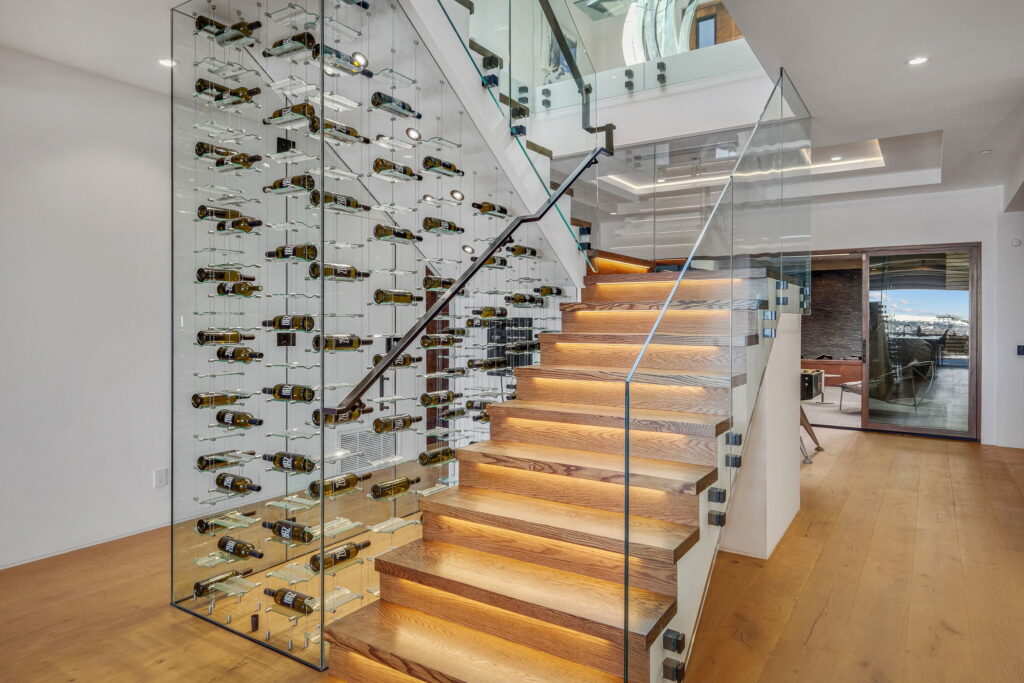
Ceiling-mounted cable wine racks have become one of the most popular design features in modern wine cellars. Their sleek appearance, minimal visual footprint, and ability to create dramatic floating wine displays make them a favorite among homeowners, designers, and architects.
However, before installing a ceiling-mounted cable wine rack system, it’s essential to ensure the ceiling structure can safely support the weight of the wine racks and the bottles they will hold. Proper structural planning protects both your wine collection and your investment.
Unlike traditional wall-mounted wine racks, ceiling-mounted cable wine racks transfer their load directly to the ceiling structure. When fully stocked, a wine display can weigh several hundred pounds depending on its size and bottle capacity.
You will need 3/4″ plywood on top to support these cable wine racks.
Without adequate structural reinforcement, the ceiling may experience:
Sagging or deflection
Loose mounting hardware
Cracked drywall or finishes
Rack instability
Potential safety hazards
Proper structural support ensures long-term stability and peace of mind.
The first step is determining the total weight your ceiling-mounted display will carry.
Consider:
Weight of wine bottles
Weight of mounting hardware
Any decorative panels or display components
A standard 750ml wine bottle typically weighs between 2.5 and 3 pounds when full. A display holding 100 bottles may add 250 to 300 pounds of bottle weight alone.
Always calculate the fully loaded weight rather than the weight of the empty rack.
Ceiling-mounted cable wine racks should never rely solely on drywall, plaster, or decorative ceiling materials for support. Please note that you will need 3/4″ plywood in the ceiling to support these wine racks.
Instead, mounting points should connect directly to:
Ceiling joists
Structural beams
Engineered framing members
Reinforced blocking installed between joists
The mounting hardware should transfer the load directly into the building structure rather than the ceiling finish.
Many wine cellar projects require additional reinforcement before installation.
Wood blocking is commonly installed between ceiling joists to create secure anchor points for the cable system. Blocking helps distribute loads evenly and provides flexibility for rack placement when existing framing does not align perfectly with the desired display layout.
For larger installations, structural engineers may recommend heavier framing or steel reinforcement.
Different ceiling types require different support strategies.
Wood-Framed Ceilings
Wood framing is the most common residential application. Properly installed blocking and lag-bolt connections typically provide sufficient support for most cable wine rack systems.
Concrete Ceilings
Concrete ceilings require specialized anchors and drilling equipment. Structural anchoring into concrete can provide exceptional load-bearing capacity when installed correctly.
Steel-Framed Structures
Commercial projects and modern homes may utilize steel framing. In these situations, mounting details should be coordinated with the building engineer to ensure compatibility with the structural system.
Cable wine racks rely on tension to maintain their clean, vertical appearance.
Proper installation requires:
Secure ceiling anchors
Stable floor or countertop anchoring points
Correct cable tensioning
Precise alignment during installation
Improper tensioning can place unnecessary stress on mounting hardware and reduce the overall stability of the display.
For large wine displays, consulting a structural engineer or qualified contractor is highly recommended.
A professional can evaluate:
Ceiling framing conditions
Load distribution
Required reinforcement
Anchor specifications
Building code requirements
This is especially important for multi-story homes, commercial wine displays, and custom installations holding large bottle collections.
The best time to address structural support is before construction begins.
Early planning allows installers to:
Add reinforcement before drywall installation
Conceal blocking and hardware
Coordinate with electricians and HVAC contractors
Optimize rack placement for aesthetics and safety
Waiting until after construction is complete can significantly increase installation costs and complexity.
When installing ceiling-mounted cable wine racks, avoid these common errors:
Anchoring only into drywall
Ignoring the fully loaded bottle weight
Using undersized fasteners
Failing to install blocking where needed
Overlooking building code requirements
Skipping professional structural review on large installations
Avoiding these mistakes helps ensure a safe and durable wine display.
Ceiling-mounted cable wine racks create stunning modern wine displays, but their success depends on proper structural support. By calculating the total load, anchoring into structural framing, installing reinforcement when necessary, and consulting qualified professionals, you can ensure your wine rack system remains secure for years to come.
When properly engineered and installed, ceiling-mounted cable wine racks offer an elegant, space-efficient solution that transforms any wine cellar into a striking architectural feature while safely protecting your collection. Shop Cable Wine Racks in Different Styles today.