
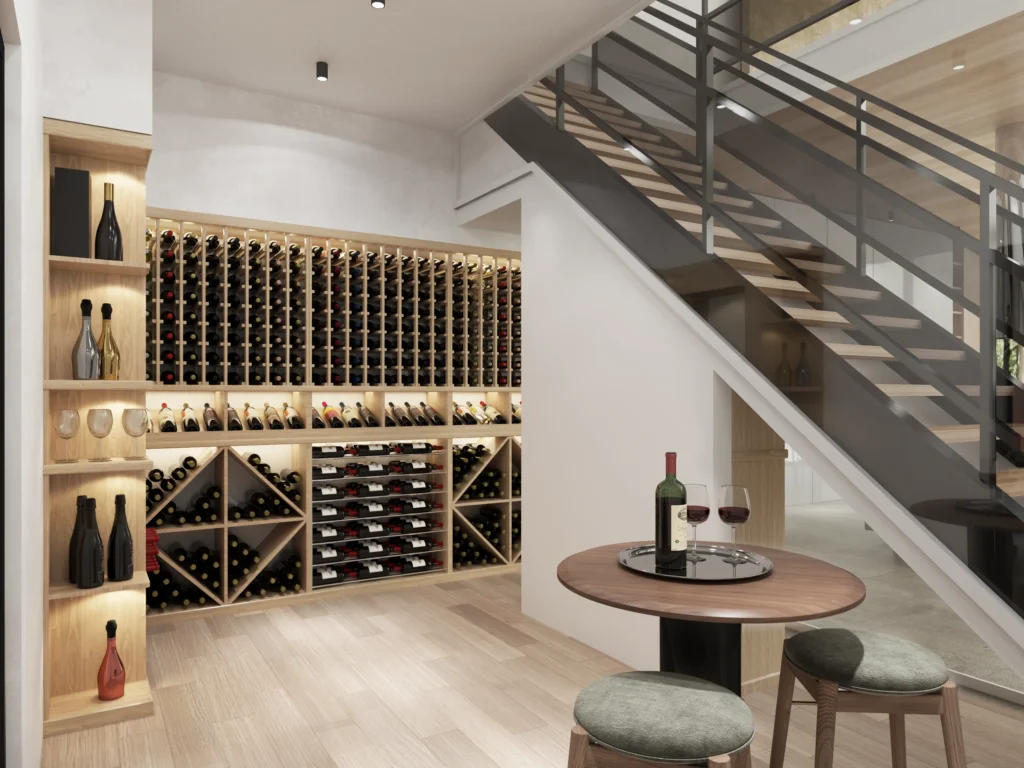
An under-stairs area is often one of the most overlooked spaces in a home. With thoughtful planning, however, this compact footprint can be transformed into a stunning glass-enclosed under-stairs wine cellar that combines elegant wine display with practical storage and climate control.
A glass wine cellar beneath a staircase can turn an unused architectural space into a focal point—allowing homeowners to showcase their collection while keeping bottles protected in a properly controlled environment.
Why Choose an Under-Stairs Wine Cellar?
The space beneath a staircase is naturally suited to wine storage because it is often enclosed on multiple sides and can be separated from the home’s main living areas. Instead of using the area for miscellaneous storage, homeowners can create a dedicated wine feature that adds character and functionality.
A glass enclosure takes the concept further by making the wine collection visible from the surrounding room. Clear glass panels allow bottles, wood racking, lighting, and architectural details to become part of the home’s interior design.
The Appeal of Glass-Enclosed Wine Storage
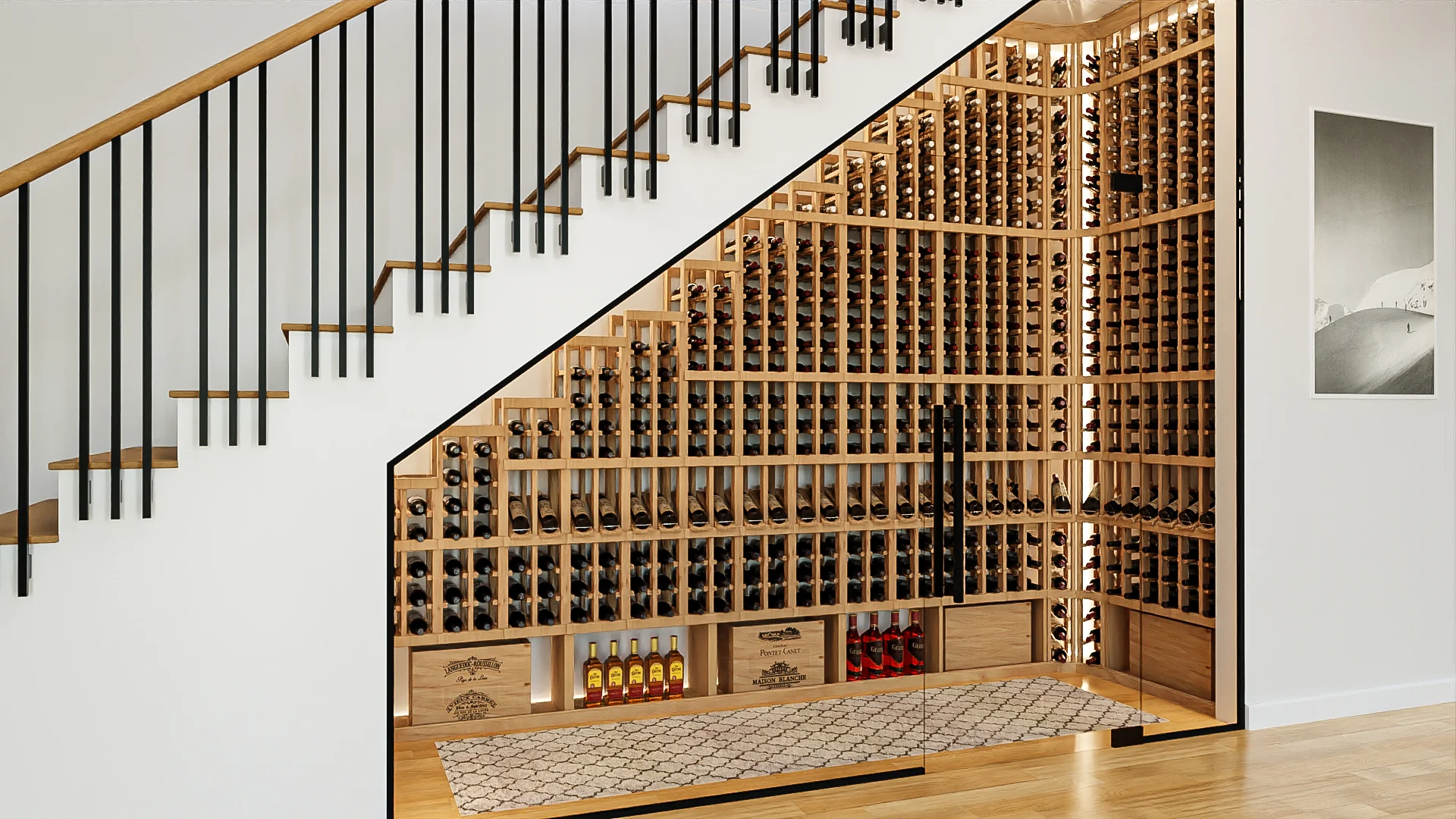
One of the biggest advantages of a glass enclosure is visual impact. Traditional wine cellars may hide the collection behind a solid door or wall, while a glass enclosure creates an open, sophisticated display.
Depending on the design, the enclosure can feature:
- Floor-to-ceiling glass panels
- Frameless or minimally framed glass doors
- Custom solid-wood wine racks
- Backlit bottle displays
- LED accent lighting
- Glass shelving for wine accessories
- Dedicated areas for magnums and larger bottles
- Display rows for special or collectible wines
The result is more than storage—it becomes an architectural feature.
Designing Around the Staircase
Every under-stairs space is different. The slope, available height, width, depth, staircase structure, and nearby walls all influence the final design.
A successful design begins by taking accurate measurements and determining how much usable storage space is available. Custom racking can then be designed to follow the staircase profile rather than forcing standard-size wine racks into the space.
For example, the lower portion of the cellar can accommodate standard bottle storage, while taller sections beneath the stair landing can be used for display bottles, larger-format wines, or decorative elements.
Choosing the Right Wine Racking
Custom wine racks are particularly valuable in an under-stairs cellar because they can maximize every available inch.
Solid wood racks options such as mahogany, walnut, redwood, or oak can provide a warm contrast against modern glass. Individual bottle openings can be combined with display shelves, diamond bins, horizontal racks, and label-forward presentation areas.
The racking style should also complement the home’s existing architecture. A contemporary home may benefit from clean-lined racking and minimal hardware, while a traditional interior may call for detailed millwork and richer wood finishes.
Don’t Forget Climate Control
A beautiful glass wine cellar still needs the right environmental conditions.
Wine should generally be stored in a stable environment with controlled temperature and humidity. An under-stairs location may appear naturally cool, but it should not be assumed to provide the consistency required for long-term wine storage.
A dedicated wine cooling system can help maintain the appropriate cellar environment. The cooling system should be properly sized based on factors such as:
- Cellar dimensions
- Glass surface area
- Type and amount of insulation
- Ambient temperature
- Location of the cellar
- Door construction
- Number of glass walls
- Heat generated by lighting and surrounding spaces
Professional planning is especially important when a significant portion of the cellar is constructed with glass.
Insulation and Vapor Protection
One of the most important technical considerations is the construction of the wine cellar envelope.
Glass provides visibility, but the opaque walls, ceiling, floor, and any areas surrounding the staircase still need appropriate insulation and vapor protection. Without proper preparation, temperature fluctuations and moisture migration can make it difficult for the cooling system to maintain stable conditions.
The exact construction requirements depend on the location and existing structure, so the wine cellar should be designed as a complete system rather than simply installing racks and a glass door.
Lighting That Enhances the Collection

Lighting can dramatically change the appearance of an under-stairs wine cellar.
Soft LED lighting can highlight bottle labels, illuminate architectural features, and create a warm atmosphere without overwhelming the space. Recessed ceiling lights, rack lighting, toe-kick illumination, or backlighting can all be incorporated depending on the design.
Because wine bottles are sensitive to environmental conditions, lighting should be carefully selected and positioned. LED systems are commonly preferred because they produce relatively little heat compared with older lighting technologies.
Selecting the Right Glass
The glass itself is another important design consideration. A wine cellar enclosure can use insulated glass or other appropriate glazing systems depending on the project requirements.
For climate-controlled cellars, the glass assembly should be selected with thermal performance in mind. The goal is to achieve the desired visual transparency without unnecessarily increasing the cooling load.
The door should also provide a reliable seal to help maintain the controlled environment inside the cellar.
Making a Small Space Feel Larger
One of the most appealing aspects of an under-stairs glass wine cellar is its ability to make a compact space feel more open.
Clear glass allows the eye to travel into the cellar rather than stopping at a solid wall. When combined with strategically positioned lighting and well-organized racking, even a relatively small wine collection can create a dramatic visual effect.
Mirrored or reflective design elements can sometimes enhance this effect further, although they should be selected carefully so the space does not become visually overwhelming.
Storage Capacity and Bottle Organization
Before finalizing the design, determine how many bottles you want to store—not just today, but several years from now.
A good wine cellar can include a combination of storage types:
Individual bottle storage: Ideal for organizing everyday bottles and keeping labels visible.
Bulk storage: Useful for maximizing capacity when presentation is less important.
Display rows: Perfect for showcasing premium or collectible bottles.
Magnum storage: Designed specifically for larger-format bottles.
Open shelving: Useful for decanters, glasses, accessories, and decorative pieces.
Planning the collection by bottle type and frequency of access can make the cellar much more functional.
A Wine Cellar That Becomes Part of the Home
A glass-enclosed under-stairs wine cellar works particularly well in dining rooms, kitchens, living areas, entryways, and entertaining spaces. Instead of treating wine storage as a separate utility area, the design integrates it directly into the architecture of the home.
The combination of custom wine racks, glass enclosure, architectural lighting, and professional climate control can transform an otherwise unused area into a sophisticated wine display.
Final Thoughts
An under-stairs wine cellar doesn’t need a large footprint to make a major impression. With custom design, even a compact staircase area can become an elegant, functional wine room.
The key is to approach the project as more than a wine-rack installation. Proper measurements, insulation, vapor protection, glass selection, climate control, lighting, and custom racking should all work together.
For homeowners looking to maximize space while showcasing their collection, a glass-enclosed under-stairs wine cellar offers an ideal combination of luxury, functionality, and architectural appeal.