
Call Us 📞 800-323-3130
Mon–Fri 8am–6pm CST, Sat–Sun 9am–1pm CST
Free design consultations
Showrooms in Miami & Fort Lauderdale
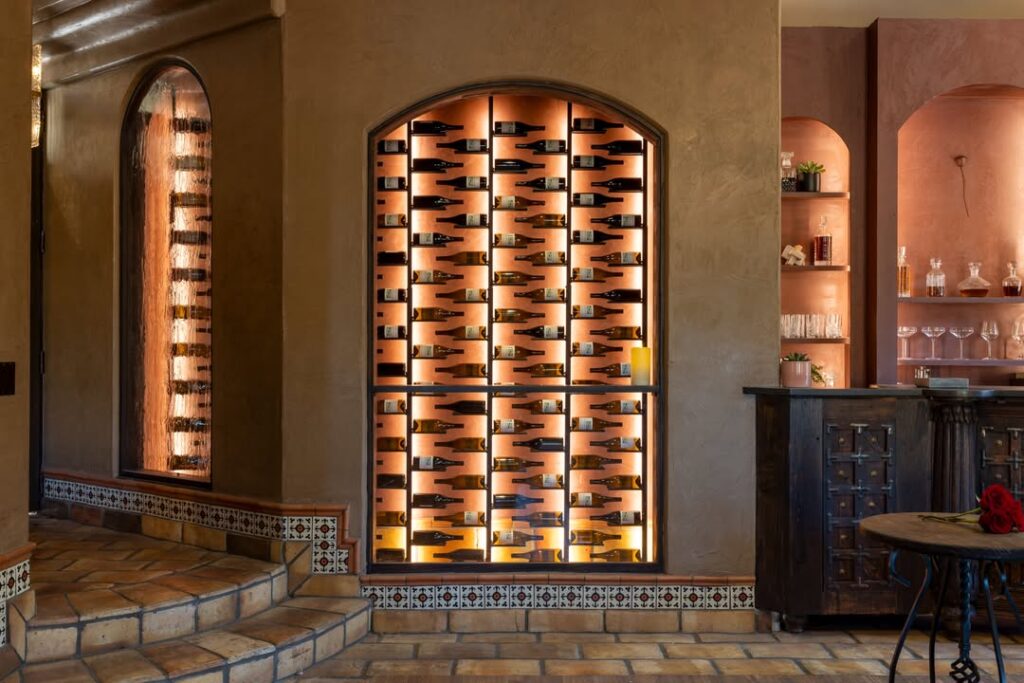
Glass wine cellars have become one of the most sought-after features in luxury homes. They transform a wine collection into a stunning architectural centerpiece while maintaining the ideal environment for long-term wine storage.
One of the biggest decisions homeowners face is whether to choose a frameless glass enclosure or a framed glass enclosure. While aesthetics often drive the decision, many buyers wonder:
The answer isn’t as simple as “framed is better” or “frameless is worse.” Modern glass wine enclosures can both perform exceptionally well—but only when they are properly designed, sealed, insulated, and paired with the right wine cooling system.
Let’s explore the differences and determine which option is best for your home.
Unlike traditional wine cellars built with insulated walls and solid wood doors, glass wine enclosures use large panels of tempered insulated glass to showcase the wine collection while creating a climate-controlled environment.
There are two primary styles:
Frameless systems use large glass panels joined with minimal hardware and clear silicone joints. The absence of bulky metal framing creates a clean, modern appearance with uninterrupted views of the wine collection.
Advantages
Contemporary luxury appearance
Nearly invisible joints
Maximum visibility
Makes small spaces feel larger
Ideal for modern homes
Framed enclosures use aluminum or steel framing around the perimeter and between glass panels.
The frame provides additional structural support while creating a more defined architectural look.
Strong structural rigidity
Multiple finish options
Easier integration with doors
Suitable for very large installations
Traditional or industrial aesthetic
Surprisingly, the frame itself has very little impact on temperature retention.
The biggest factors that determine cooling performance are:
Glass quality
Glass thickness
Insulation value
Air sealing
Door construction
Cooling system sizing
Installation quality
Whether the enclosure includes visible framing or not is generally far less important than these factors.
Many homeowners assume the glass itself is responsible for temperature problems.
In reality, several factors influence how much heat enters a wine cellar.
1. Glass Type
Single-pane glass transfers heat quickly.
Most professionally built wine enclosures use dual-pane insulated tempered glass, which significantly reduces heat transfer and improves energy efficiency.
Low-emissivity (Low-E) coatings can further reduce radiant heat gain, especially in rooms exposed to sunlight.
2. Door Sealing
The wine cellar door is often the weakest point in the enclosure.
A poorly sealed door allows conditioned air to escape while warm air enters, forcing the cooling system to work harder.
High-quality weatherstripping and precision installation are essential regardless of whether the enclosure is framed or frameless.
3. Air Leaks
Even tiny gaps around glass panels, ceilings, or flooring can compromise the cellar’s performance.
Professional installers use specialized sealants and precise construction techniques to create an airtight enclosure.
This step is far more important than the presence or absence of a visible frame.
4. Room Location
A wine room located:
beside large windows
near exterior walls
under an attic
in direct sunlight
will experience much higher heat gain than an interior wine room.
The enclosure style cannot overcome poor room placement without proper cooling system design.
This is one of the biggest misconceptions.
Many homeowners believe frameless glass automatically leaks more air.
In reality, a professionally installed frameless enclosure can perform extremely well because:
Silicone joints create airtight seals.
Glass panels are precision manufactured.
Doors use commercial-grade weather seals.
Hardware is engineered for climate-controlled rooms.
If installed correctly, a frameless enclosure can maintain consistent wine storage temperatures just as effectively as a framed system.
Framed systems may offer slight performance benefits in certain situations.
These include:
Very Large Glass Walls
Metal framing provides additional structural stability for oversized installations.
High-Traffic Commercial Spaces
Restaurants, hotels, and tasting rooms may benefit from the added durability of framed systems.
Custom Door Configurations
Framed designs can simplify the installation of pivot doors, sliding doors, or oversized entry systems.
However, these advantages relate more to structural design than temperature performance.
Even the best glass enclosure cannot compensate for an undersized wine cooling unit.
Professional designers calculate the wine cellar’s heat load by considering:
Room dimensions
Glass surface area
Ceiling exposure
Exterior walls
Local climate
Door size
Insulation
Lighting
Air infiltration
These calculations determine the required cooling capacity.
A properly sized cooling system is the key to maintaining a stable 55°F environment, regardless of whether the enclosure is framed or frameless.
Wine storage depends on more than temperature alone.
Relative humidity between 60% and 70% helps:
protect corks from drying out
minimize evaporation
reduce oxidation
preserve wine labels
Proper sealing and an appropriately designed cooling system help maintain both temperature and humidity within the recommended range.
This depends entirely on your home’s design.
Modern homes
Contemporary interiors
Minimalist architecture
Open-concept living spaces
Luxury residential wine displays
Industrial interiors
Transitional homes
Traditional architecture
Commercial wine rooms
Large custom installations
Both styles can create spectacular wine displays when thoughtfully designed.
Frameless enclosures are often more expensive because they require:
thicker precision-cut glass
specialized hardware
custom engineering
meticulous installation
Framed systems may offer cost savings on some projects, particularly those with complex layouts or larger spans. However, pricing depends on factors such as glass specifications, door style, hardware finishes, and the overall design.
Does frameless glass leak more cold air?
Not when properly installed. High-quality frameless systems use precision-engineered seals and silicone joints to minimize air leakage.
Do framed glass enclosures insulate better?
Not necessarily. The thermal performance depends more on insulated glass, airtight seals, and installation quality than on whether a frame is present.
What type of glass should be used for a wine cellar?
Dual-pane insulated tempered glass is generally recommended for residential wine cellars because it reduces heat transfer and improves energy efficiency.
Can a frameless wine cellar maintain 55°F?
Yes. A professionally designed frameless enclosure paired with the correct cooling system can consistently maintain ideal wine storage temperatures.
Which glass enclosure is better for modern homes?
Frameless glass is typically preferred for contemporary homes because it offers clean lines, unobstructed views, and a sleek, minimalist appearance.
When comparing frameless vs. framed glass wine enclosures, the decision should focus on architecture, aesthetics, and structural requirements—not on the assumption that one style inherently holds temperature better than the other.
In most residential projects, both enclosure types can provide excellent climate performance when built with insulated glass, airtight seals, and professional installation. The real keys to protecting your wine collection are proper heat-load calculations, high-quality materials, and a correctly sized wine cooling system.
Whether you prefer the seamless elegance of a frameless enclosure or the bold definition of a framed design, investing in thoughtful engineering and expert craftsmanship will have a far greater impact on long-term temperature stability than the choice of frame alone.