
Call Us 📞 800-323-3130
Mon–Fri 8am–6pm CST, Sat–Sun 9am–1pm CST
Free design consultations
Showrooms in Miami & Fort Lauderdale
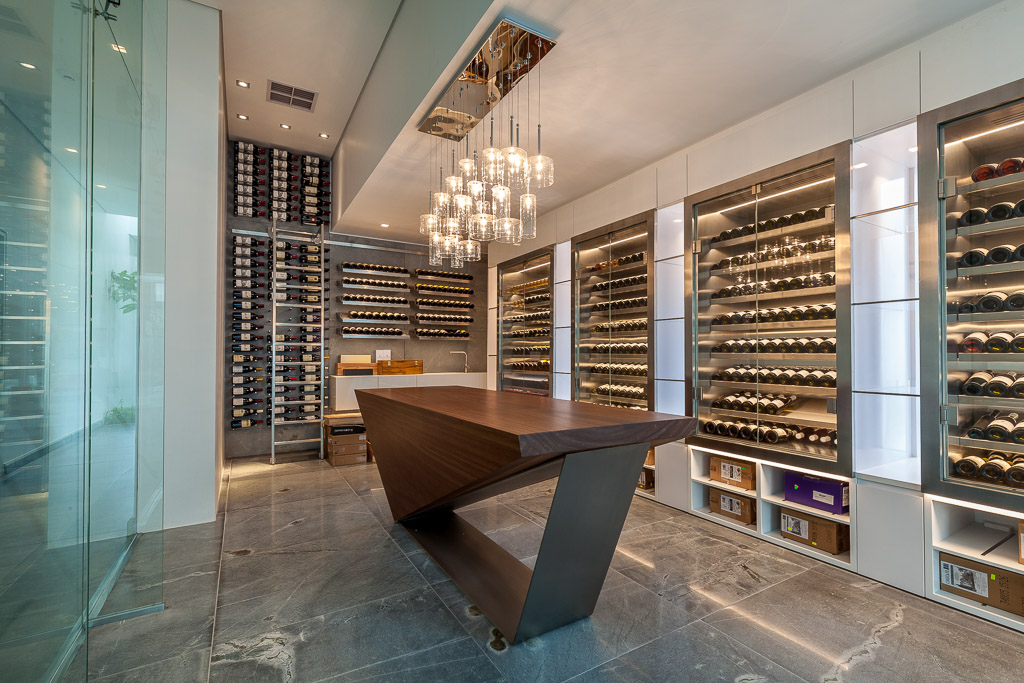
Choosing a wine cooling system is one of the most important decisions you’ll make when building a wine cellar. The right system protects your collection by maintaining consistent temperature and humidity, while the wrong one can lead to uneven cooling, excessive noise, and higher operating costs.
One of the most common questions homeowners ask is:
“Should I choose a ducted or ductless wine cooling unit?”
The answer depends on much more than the size of your cellar. Factors such as room location, available mechanical space, noise expectations, aesthetics, and budget all play a role.
This guide explains the differences between ducted and ductless wine cooling systems so you can determine which solution best fits your wine cellar.
Wine ages best under stable conditions. Frequent temperature swings can accelerate aging and negatively affect flavor, aroma, and overall quality.
A properly designed cooling system helps maintain:
Temperature around 55°F (13°C)
Relative humidity between 60% and 70%
Even air circulation
Minimal vibration
Long-term storage conditions
Selecting the correct cooling unit is just as important as choosing quality wine racks or insulation.
A ducted wine cooling system is installed outside the wine cellar, often in a mechanical room, attic, basement, or utility area. Conditioned air is delivered into the cellar through insulated ductwork, while return ducts carry warmer air back to the system.
Only discreet supply and return grilles are visible inside the wine cellar.
Whisper-Quiet Operation
Because the equipment is located outside the wine cellar, operating noise is significantly reduced. This makes ducted systems ideal for wine tasting rooms and luxury residential installations.
Clean, Minimalist Appearance
Since only air vents are visible, ducted systems preserve the architectural beauty of custom wine racks and glass enclosures.
Flexible Equipment Placement
The cooling equipment can often be installed in a nearby mechanical room or utility space, keeping valuable cellar space available for wine storage.
Even Air Distribution
Properly designed ductwork helps distribute conditioned air evenly throughout larger wine cellars.
Ducted systems generally require:
Space for insulated ductwork
A nearby location for the equipment
Professional design and installation
A higher initial investment
However, they often provide exceptional performance for premium wine cellars.
A ductless wine cooling system delivers conditioned air directly into the wine cellar without using air ducts.
Depending on the system type, the evaporator may be mounted inside the cellar while the condenser is located in another room or outdoors.
These systems are commonly used in residential wine rooms where installing ductwork is impractical.
Easier Installation
Without ductwork, installation is typically simpler and may require less construction.
Lower Initial Cost
Ductless systems often cost less to install than comparable ducted systems because they eliminate the need for custom ductwork.
Excellent for Retrofit Projects
If you’re converting an existing closet, spare room, or under-stairs area into a wine cellar, a ductless system may be the most practical solution.
Reliable Temperature Control
When properly sized, ductless systems can maintain stable wine storage conditions for many residential cellars.
Because part of the equipment is located near or inside the cellar, homeowners should expect:
Some operating noise
Visible equipment inside the wine room
Fewer placement options compared to ducted systems
For many homeowners, these trade-offs are well worth the lower installation cost.
| Feature | Ducted Cooling | Ductless Cooling |
|---|---|---|
| Equipment visibility | Hidden | Indoor unit visible |
| Noise level | Very quiet | Moderate |
| Installation complexity | Higher | Lower |
| Initial installation cost | Higher | Lower |
| Best for new construction | Excellent | Very good |
| Best for remodels | Good | Excellent |
| Ideal for luxury glass wine cellars | Excellent | Good |
| Mechanical room required | Usually | Not always |
For many wine cellars under a few hundred square feet, a ductless system offers an excellent balance of performance, affordability, and ease of installation.
Common applications include:
Closet wine cellars
Under-stairs wine rooms
Dining room displays
Small glass wine enclosures
When professionally sized, these systems provide dependable temperature control without extensive remodeling.
Larger wine rooms often benefit from ducted cooling because they require:
Even air circulation
Reduced equipment noise
Greater design flexibility
Cleaner aesthetics
Luxury homes featuring expansive glass wine rooms or dedicated tasting areas frequently use ducted systems for these reasons.
The appearance of your wine cellar may influence your cooling choice.
A seamless, high-end look
Hidden mechanical equipment
Quiet operation
Large custom wine displays
Floor-to-ceiling glass enclosures
Faster installation
Lower upfront costs
An efficient solution for an existing room
Reliable climate control without major renovations
Both systems can preserve your wine effectively when matched to the cellar’s requirements.
Whether you choose ducted or ductless cooling, selecting the correct capacity is critical.
Professional heat-load calculations consider factors such as:
Room dimensions
Ceiling height
Insulation quality
Glass walls and doors
Exterior wall exposure
Local climate
Lighting
Air leakage
A system that is too small may struggle to maintain temperature, while an oversized system can short cycle, reducing efficiency and humidity control.
Proper sizing ensures reliable performance and helps protect your wine collection for years to come.
Even the best cooling unit cannot compensate for poor construction.
Before installing any wine cooling system, make sure your cellar includes:
Proper wall insulation
Ceiling insulation
Vapor barrier
Airtight door seals
Insulated glass, if applicable
These features reduce heat gain and improve cooling efficiency.
Is a ducted wine cooling system quieter?
Yes. Because the equipment is installed outside the wine cellar, ducted systems generally operate much more quietly than ductless systems.
Are ductless wine cooling units easier to install?
In most cases, yes. Ductless systems eliminate the need for extensive ductwork, making them an excellent option for remodeling existing spaces.
Which cooling system is better for a glass wine cellar?
Both can work well. Ducted systems are often preferred for luxury glass wine rooms because they keep the equipment hidden and maintain a clean, unobstructed appearance.
Can I upgrade from ductless to ducted later?
In many cases, yes. However, upgrading may require additional construction to accommodate ductwork and equipment placement.
Which system lasts longer?
The lifespan of either system depends on proper sizing, installation quality, routine maintenance, and operating conditions. A professionally installed system that is correctly matched to the cellar can provide many years of reliable service.
There isn’t a one-size-fits-all answer when choosing between ducted and ductless wine cooling units. The right solution depends on your cellar’s size, layout, design goals, available installation space, and budget.
If you’re creating a luxury wine room with hidden equipment and whisper-quiet operation, a ducted system may be the ideal choice. If you’re converting an existing space and want an efficient, cost-effective installation, a ductless system can deliver excellent performance with fewer construction requirements.
The most important step is ensuring the cooling system is professionally sized for your wine cellar’s unique heat load. Combined with proper insulation and quality installation, either option can provide the stable environment your wine collection needs to mature gracefully for years to come.