Call Us 📞 800-323-3130
Mon–Fri 8am–6pm CST, Sat–Sun 9am–1pm CST
Free design consultations
Showrooms in Miami & Fort Lauderdale

Modern wine storage has evolved far beyond traditional wooden shelves. Today, cable wine racks and floating wine racks are among the most popular choices for homeowners who want a sleek, contemporary wine display.
Both systems create an eye-catching “floating bottle” effect, but one of the most common questions is:
The answer depends on more than just the rack itself. Installation method, wall construction, ceiling support, and rack design all play important roles. In this guide, we’ll compare both systems to help you choose the right solution for your wine collection.
Before comparing rack systems, it’s helpful to understand how much wine actually weighs.
An average 750 ml wine bottle weighs approximately:
That means:
The larger your collection becomes, the more important rack engineering and installation quality become.

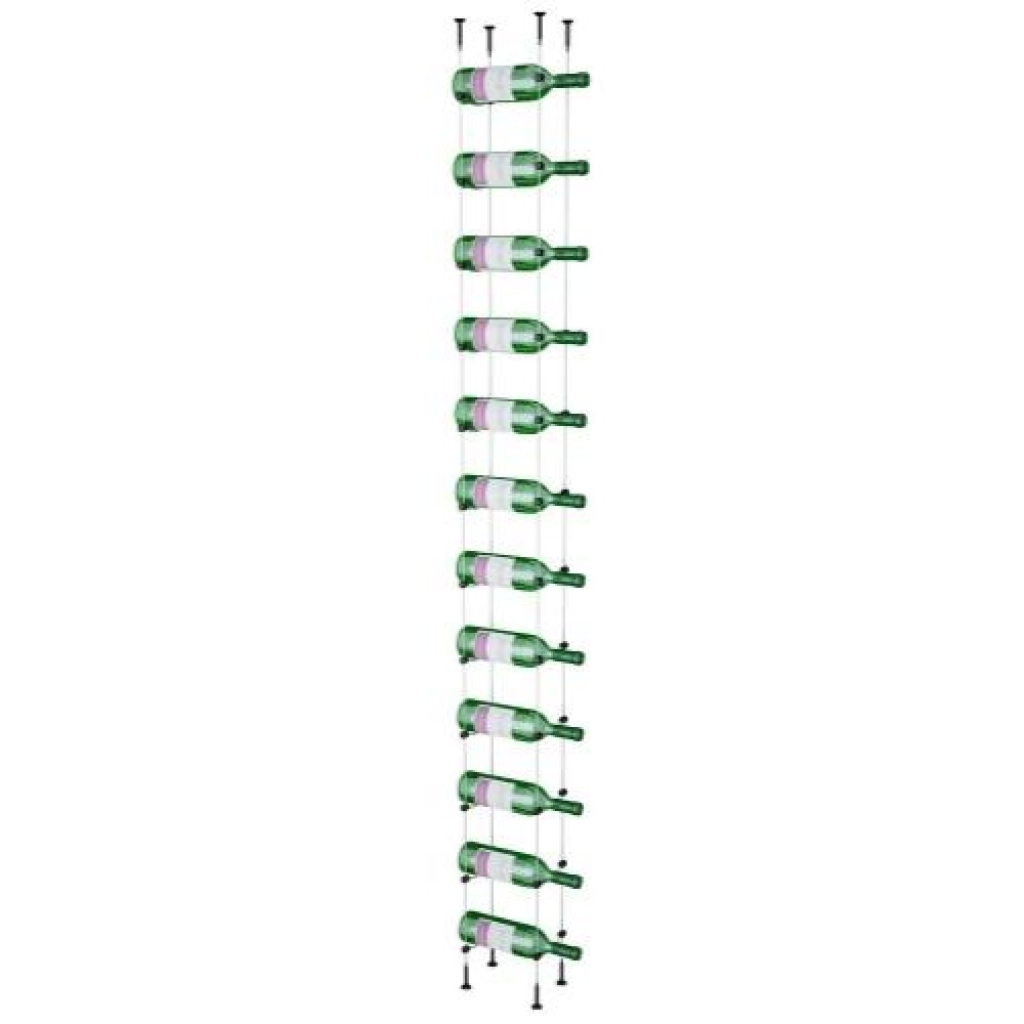
Cable wine racks use stainless steel tension cables stretched between the floor and ceiling. Individual bottle cradles attach to these vertical cables, creating a clean, nearly invisible appearance.
Advantages
Weight Capacity
Because the cables transfer weight directly between the floor and ceiling, properly installed cable systems can support large wine collections spread across multiple columns.
Professional-grade cable systems are commonly used for displays containing hundreds of bottles, provided the floor and ceiling are structurally capable of supporting the load.

Floating wine racks mount directly to a wall using concealed brackets or structural supports. The hardware remains hidden, making bottles appear to float effortlessly.
Advantages
Weight Capacity
Floating racks rely entirely on the strength of the mounting surface.
When anchored into structural framing or masonry, they can safely support substantial collections. However, their total capacity is generally limited by wall construction and the number of mounting points.
The simple answer is:
Cable wine racks generally support larger overall wine collections than floating wall-mounted racks.
Here’s why:
Weight is distributed:
This reduces stress on any single mounting point.
Weight is transferred directly into:
As collections grow larger, wall strength becomes increasingly important.
| Feature | Cable Wine Racks | Floating Wine Racks |
|---|---|---|
| Primary Support | Floor & Ceiling | Wall |
| Ideal Collection Size | Medium to Very Large | Small to Large |
| Expandability | Excellent | Good |
| Structural Load Distribution | Excellent | Moderate |
| Floor-to-Ceiling Displays | Excellent | Limited |
| Best for Feature Walls | Excellent | Excellent |
Many homeowners assume the rack determines weight capacity.
In reality, installation quality is often the deciding factor.
A professionally installed floating rack anchored into solid framing can outperform a poorly installed cable system.
Likewise, an improperly tensioned cable rack may not perform as intended.
Professional installation ensures:
If you plan to store:
50–150 Bottles
Either system performs very well.
The decision usually comes down to appearance.
150–500 Bottles
Cable systems begin to offer advantages because they distribute weight more efficiently while remaining visually light.
500+ Bottles
Many professional wine cellar designers favor cable systems or combine them with metal and wood racks to maximize both storage capacity and aesthetics.
Absolutely.
Many luxury wine cellars use:
Combining systems creates visual variety while optimizing storage efficiency.
Both designs complement contemporary interiors, but they create different visual effects.
Cable Wine Racks
Floating Wine Racks
Neither is objectively better—it depends on the overall design style of your home.
Beyond weight capacity, think about:
Planning ahead ensures your storage solution remains functional as your collection expands.
If your primary concern is supporting the largest possible wine collection, cable wine racks typically offer the greatest overall capacity because they transfer weight between the floor and ceiling instead of relying solely on wall anchors.
If your goal is to create a sleek, modern display for a small to medium-sized collection, floating wine racks provide outstanding aesthetics while offering excellent structural performance when professionally installed.
For many custom wine cellars, the best solution isn’t choosing one or the other—it’s combining both to achieve the perfect balance of storage, strength, and design.
Are cable wine racks stronger than floating wine racks?
For large, floor-to-ceiling installations, cable wine racks generally distribute weight more effectively because they transfer loads to both the floor and ceiling. Floating racks depend on the strength of the wall structure.
How much does a full wine rack weigh?
A standard 750 ml wine bottle weighs approximately 2.6–3 pounds. A rack holding 100 bottles may support around 260–300 pounds, depending on bottle type and rack design.
Can floating wine racks hold magnum bottles?
Many floating rack systems offer accessories or configurations designed for magnums and other oversized bottles. Always verify the manufacturer’s recommendations for bottle size and weight.
Do cable wine racks need ceiling support?
Yes. Floor-to-ceiling cable systems rely on secure structural attachment at both the floor and ceiling to maintain proper tension and safely support the wine collection.
Which system is better for a glass wine cellar?
Both work well in glass wine cellars. Cable wine racks emphasize openness and transparency, while floating racks create striking wall displays. Many designers combine both systems for maximum visual impact and storage flexibility.