Call Us 📞 800-323-3130
Mon–Fri 8am–6pm CST, Sat–Sun 9am–1pm CST
Free design consultations
Showrooms in Miami & Fort Lauderdale
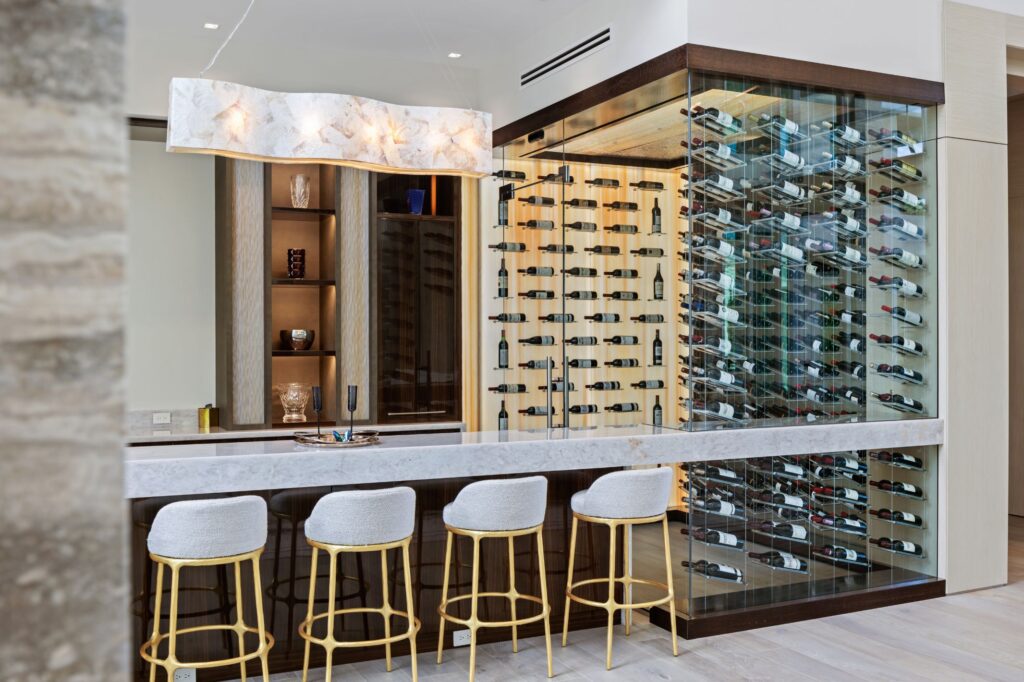
Cable wine racks have become a popular choice for modern wine cellars, luxury homes, restaurants, and contemporary wine displays. Their slim profiles and minimal hardware allow wine bottles to become the visual focus while creating an open, architectural look.
But not all cable wine racks are designed the same way.
Standard, Floating, Invisible, and Premium cable wine rack systems each offer a different combination of appearance, installation style, adjustability, and visual impact. Understanding the differences can help you choose the right system for your wine cellar, wall display, or commercial wine storage project.
In this guide, we compare these four cable wine rack styles and explain where each one works best.
A cable wine rack uses tensioned stainless-steel cables, posts, or mounting hardware to hold wine bottles securely without requiring traditional wood shelving.
Instead of surrounding each bottle with a large amount of material, cable systems create a lightweight display that allows more of the wall and bottles to remain visible.
This makes cable wine racks particularly attractive for:
Modern wine cellars
Contemporary homes
Glass-enclosed wine rooms
Restaurant wine displays
Wine bars
Luxury kitchens
Dining rooms
Retail wine displays
Feature walls and open wine storage
The minimalist construction also makes cable systems easy to combine with glass, stone, wood, metal, LED lighting, and other contemporary materials.
| Style | Visual Effect | Best For | Key Characteristic |
|---|---|---|---|
| Standard Cable | Clean and contemporary | Practical wall storage | Visible mounting hardware |
| Floating Cable | Light and architectural | Modern feature walls | Creates a floating appearance |
| Invisible Cable | Extremely minimal | High-end displays | Hardware is visually minimized |
| Premium Cable | Luxury, refined appearance | Designer wine cellars | Enhanced tension-mount hardware |
While all four styles use a minimalist cable approach, the difference is primarily in how the cables and mounting hardware interact with the wall and how visible the supporting components are.
Standard cable wine racks are designed to provide a clean contemporary wine display while keeping the installation relatively straightforward.
The cable and mounting components remain visible, giving the system an intentional architectural appearance.
The main characteristic of a standard system is its visible mounting hardware. Depending on the configuration, you may see screws or other mounting components securing the cable system to the wall.
For homeowners who appreciate an industrial-modern aesthetic, this can actually become part of the design.
The result is a wine display that feels structural rather than completely hidden.
Contemporary appearance
Straightforward installation
Strong visual structure
Excellent bottle visibility
Flexible configuration options
Suitable for tall wine walls
Often a more budget-conscious option
Standard cable systems can also be configured for substantial wall heights. Some systems can accommodate installations up to approximately 10 feet high, depending on the specific product and installation requirements.
Standard cable racks work particularly well when you want the cable system to complement the overall architecture rather than disappear completely.
They can be an excellent choice for:
Modern wine cellars:
The exposed hardware complements contemporary interiors.
Restaurants:
A visible cable structure can create an attractive commercial wine display.
Feature walls:
The combination of cables, bottles, and wall materials creates a strong architectural focal point.
Floating cable wine racks take the minimalist concept a step further.
The goal is to make the wine bottles appear as though they are suspended or floating in front of the wall.
Instead of traditional shelving, the bottles are supported by a carefully positioned cable and mounting system.
The floating effect is especially appealing when the wall behind the wine display is intended to remain visible.
Imagine a feature wall finished with:
Natural stone
Marble
Wood paneling
Textured plaster
Brick
Back-painted glass
Decorative tile
A conventional wine rack can cover much of that material.
A floating cable system leaves more of the background exposed.
Creates a visually lightweight display
Highlights the wall behind the bottles
Works well with modern interiors
Provides excellent bottle visibility
Pairs beautifully with accent lighting
Ideal for architectural wine displays
Floating cable systems are particularly effective when combined with LED lighting.
A narrow LED strip behind or around the display can illuminate the bottles without overwhelming the minimalist design.
Floating cable racks are a natural fit for:
Luxury residential wine cellars
Open-concept kitchens
Dining room wine walls
Glass wine rooms
Restaurant feature walls
Contemporary entertainment spaces
Invisible cable wine racks are designed for projects where the supporting structure should visually recede as much as possible.
The concept is simple:
Make the wine bottles the focus—not the rack.
This style is especially effective in luxury wine cellars where the designer wants a clean, almost architectural appearance.
When properly installed, the cables and hardware become visually subtle, allowing the bottles to appear almost unsupported.
This can create a dramatic effect when viewed from across the room.
The result is particularly striking when the wine wall is illuminated.
Instead of seeing a traditional rack filled with bottles, you see a series of bottles seemingly suspended against the wall.
Extremely clean visual appearance
Minimal visual obstruction
Emphasizes the wine collection
Excellent for luxury interiors
Works well with glass enclosures
Complements minimalist architecture
Creates a high-end floating effect
Choose an invisible-style cable rack when the appearance of the display is just as important as the storage function.
For example, an architect may want a wine wall to blend into a contemporary interior rather than look like a traditional wine storage system.
Invisible cable racks are also well suited to spaces where the wine collection is intended to function as artwork.
Premium cable wine racks are designed for customers who want a more refined version of the contemporary cable wine rack concept.
One important distinction is the mounting hardware.
Instead of relying on conventional visible screws, premium systems can use more refined tension-mount hardware designed to create a cleaner finished appearance.
Some premium tension mounts are supplied in sets, allowing the cable system to be securely tensioned while minimizing the visual impact of the mounting components.
The focus is on both performance and appearance.
A premium cable system can provide:
Refined mounting hardware
Cleaner visual lines
Minimalist aesthetics
Strong bottle presentation
Flexible installation configurations
A more luxurious finished appearance
Premium cable racks are especially attractive for projects where the wine display will be viewed frequently and becomes a major part of the room’s design.
Depending on the specific cable wine rack system, premium configurations can be designed for taller installations.
Some systems can be upgraded from installations around 10 feet high to approximately 20 feet, making them particularly interesting for spaces with tall ceilings.
For tall installations, however, the exact engineering, cable configuration, mounting surface, and installation requirements should always be reviewed before ordering.
The easiest way to understand the differences is to think about the visual priority of each system.
The rack itself is part of the design.
Look: Contemporary and structural
Best for: Practical modern wine storage and feature walls
The goal is to make the bottles appear suspended.
Look: Light and architectural
Best for: Modern feature walls and open wine displays
The supporting structure becomes visually subtle.
Look: Minimal and almost hidden
Best for: Luxury wine displays and minimalist interiors
The system emphasizes refined hardware and a polished finish.
Look: Sophisticated and upscale
Best for: High-end residential and commercial wine cellar projects
Cable wine racks can be configured in different layouts depending on the available wall space and bottle presentation requirements.
Before selecting a system, consider:
Number of bottles
Bottle types
Bottle diameter
Standard Bordeaux bottles
Burgundy bottles
Champagne bottles
Magnum bottles
Large-format bottles
Horizontal versus angled presentation
Wall dimensions
Ceiling height
Do not assume that every cable rack configuration will accommodate every bottle shape.
If your collection includes a significant number of Champagne bottles, magnums, or other large-format bottles, confirm compatibility before finalizing the design.
Large-format bottles can require different spacing and support compared with standard 750 ml bottles.
This is particularly important for:
Magnums
Double magnums
Champagne bottles
Burgundy bottles
Oversized specialty bottles
A cable wine rack can be designed around a particular bottle collection, but the exact configuration should be verified with the manufacturer or wine cellar designer.
For a custom wine wall, providing your bottle dimensions during the design stage can help prevent spacing problems later.
One of the biggest advantages of cable wine racks is their ability to complement glass wine enclosures.
Traditional solid wood wine racks can create a visually dense wall inside a glass enclosure.
Cable systems provide a more open appearance.
The combination of:
Glass + Cable + LED Lighting + Wine Bottles
can create a dramatic contemporary wine display.
Because the cables occupy relatively little visual space, the wine collection remains visible from outside the enclosure.
This makes cable racks particularly attractive for wine cellars located in:
Dining rooms
Kitchens
Living rooms
Hallways
Home offices
Entertainment spaces
Lighting can completely change the appearance of a cable wine rack.
Instead of simply illuminating the entire room, consider using lighting to highlight the bottles.
Popular approaches include:
Backlighting
LED lighting is positioned behind the wine display to create a subtle glow.
Vertical Lighting
LED strips are installed vertically along the sides of the wine wall.
Shelf-Level Lighting
Lighting is positioned around individual bottle levels to create layers of illumination.
Architectural Lighting
The wine rack is integrated with the overall room lighting design.
The best lighting approach depends on the wall material, bottle arrangement, enclosure design, and desired visual effect.
Rather than choosing a rack based solely on appearance, consider the entire project.
You want a contemporary wine display with visible structural hardware and a practical installation approach.
You want the wine bottles to appear suspended and want the wall behind them to remain highly visible.
You want the hardware to visually disappear and the wine collection to become the primary design feature.
You want a more refined mounting system and an upscale appearance for a luxury wine cellar or architectural wine wall.
Cable and wood wine racks create very different visual experiences.
Traditional wood racks provide warmth, texture, and a classic wine-cellar aesthetic.
Cable racks create a lighter, more contemporary appearance.
Best suited for:
Traditional wine cellars
Tuscan-inspired designs
Rustic interiors
Warm architectural spaces
Large traditional wine collections
Best suited for:
Modern wine cellars
Contemporary homes
Glass wine rooms
Restaurant displays
Minimalist interiors
Architectural wine walls
Neither approach has to be used exclusively.
A custom wine cellar can combine wood racks, cable racks, metal racks, and glass to create different visual zones.
Cable wine racks may look simple, but proper installation is important.
Before installation, consider:
Wall Construction
The wall must be capable of supporting the rack and wine collection.
Mounting Location
Mounting points should be planned carefully before installation.
Cable Tension
The cables need to be properly tensioned according to the manufacturer’s requirements.
Bottle Clearance
Allow sufficient space for placing and removing bottles.
Ceiling Height
Tall wine walls may require additional planning and appropriate equipment for installation and access.
Lighting
If LED lighting is part of the design, electrical planning should happen before the rack is installed.
For large or custom installations, professional wine rack installation can help ensure the finished display is both secure and visually aligned with the design.
Cable wine racks can work particularly well in luxury wine cellars where the design calls for a clean, contemporary aesthetic.
Their minimal structure allows other architectural elements—such as glass, stone, wood, lighting, and the wine itself—to remain prominent.
For a truly custom installation, the rack should be designed around the room rather than treating the wine rack as an isolated product.
Consider the entire composition:
Wall + Wine Bottles + Lighting + Glass + Cooling + Flooring + Ceiling + Hardware
When these elements work together, the wine rack becomes part of the architecture.
Standard, floating, invisible, and premium cable wine racks all provide a modern alternative to conventional wine storage.
The key difference is the visual character each system creates.
Standard cable racks offer a clean contemporary structure.
Floating cable racks create a lightweight suspended appearance.
Invisible cable racks minimize the visual presence of the supporting hardware.
Premium cable racks add refined mounting details for a more upscale presentation.
The right choice ultimately depends on your wine collection, wall dimensions, interior style, bottle types, installation requirements, and the overall look you want to achieve.
For a custom wine cellar, it is worth planning the cable system alongside the lighting, glass enclosure, insulation, cooling system, and surrounding finishes. A well-designed wine wall should not simply store bottles—it should become a defining feature of the space.
Are cable wine racks strong enough for a wine collection?
Properly designed and installed cable wine racks can securely support wine bottles. The mounting surface, hardware, cable configuration, and manufacturer specifications should be considered when determining the appropriate system for a project.
What is the difference between standard and premium cable wine racks?
Standard cable wine racks typically have more visible mounting hardware, while premium systems can use refined tension-mount hardware to create a cleaner finished appearance.
Do cable wine racks look good behind glass?
Yes. Their open construction can work particularly well inside glass wine enclosures because they preserve visibility of the wine collection and the wall behind it.
Can cable wine racks be installed on a tall wall?
Yes, depending on the specific system and installation requirements. Some cable configurations can be designed for installations around 10 feet high, while certain premium configurations can be extended to taller applications.
Can cable wine racks hold magnum bottles?
Some cable wine rack configurations can accommodate larger-format bottles, but bottle diameter, weight, spacing, and support requirements should be confirmed before ordering.
Can I add LED lighting to a cable wine rack?
Yes. LED lighting can be incorporated into many cable wine wall designs. Lighting can be positioned behind, beside, or around the bottle display depending on the desired effect.
Are cable wine racks suitable for restaurants?
Yes. Cable systems can create an attractive contemporary wine display for restaurants, wine bars, hotels, and other hospitality environments.
Can cable wine racks be combined with wood wine racks?
Yes. Combining cable and wood wine racks can create visual contrast between contemporary and traditional materials while allowing different areas of a wine cellar to serve different storage or display purposes.
Do cable wine racks require professional installation?
For larger or custom installations, professional installation is recommended. Proper mounting, cable tension, wall structure, spacing, and alignment are important to the finished result.
Which cable wine rack style should I choose?
The choice depends on your desired appearance and project requirements. Standard systems emphasize visible structure, floating systems emphasize the suspended effect, invisible systems minimize the appearance of hardware, and premium systems focus on refined mounting details and a luxury finish.