
Call Us 📞 800-323-3130
Mon–Fri 8am–6pm CST, Sat–Sun 9am–1pm CST
Free design consultations
Showrooms in Miami & Fort Lauderdale
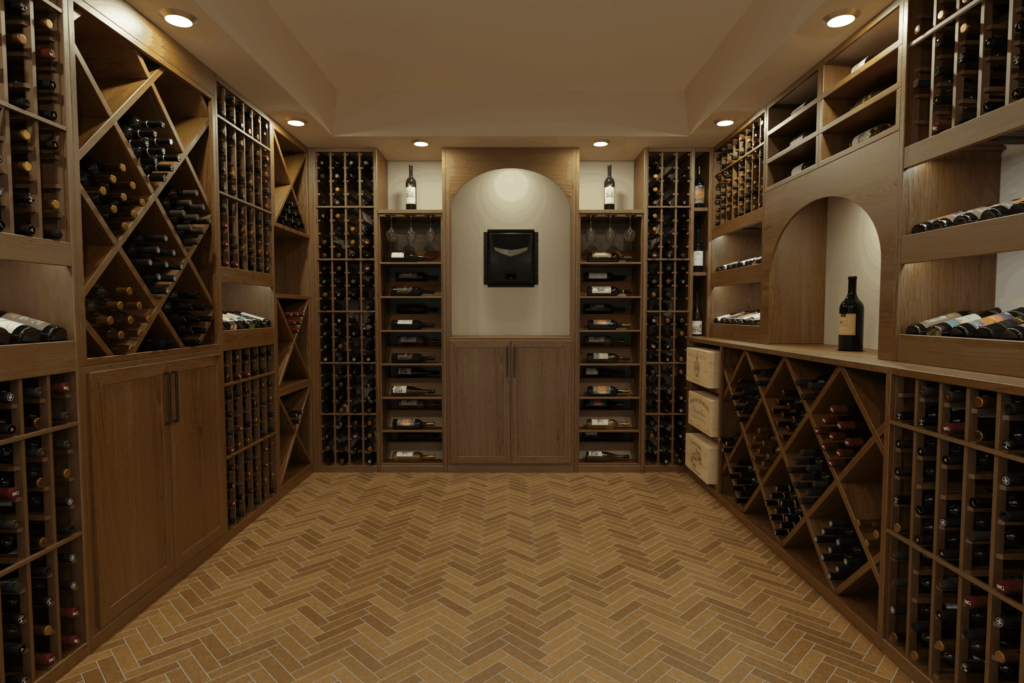
A mid-sized wine cellar is the sweet spot for many collectors. It offers enough room to build a growing collection without requiring the infrastructure of a large commercial cellar. However, as your wine inventory expands, so do the demands on your climate control system. Choosing the right cooling unit is essential to preserving every bottle under ideal storage conditions.
In this guide, we’ll explain how to choose the best wine cellar cooling system for a mid-sized cellar, compare the most common cooling options, and highlight the features that matter most for long-term wine preservation.
A mid-sized wine cellar generally ranges between 500 and 1,500 cubic feet. These cellars are commonly found in residential homes, restaurants, tasting rooms, and custom wine storage projects.
Unlike small wine closets, mid-sized spaces generate a larger heat load and require a dedicated cooling system capable of maintaining:
The exact cooling capacity depends on more than room size. Glass walls, insulation quality, ceiling height, ambient temperature, and door openings all influence the required BTU capacity. A professional heat-load calculation is the best way to ensure the cooling unit is correctly sized.
Wine is highly sensitive to environmental changes. Temperature swings, excessive dryness, or high humidity can negatively affect both the wine and its packaging.
A properly sized cooling system helps:
Investing in the right cooling system protects both your collection and your investment.
Through-the-wall systems are self-contained units installed directly into the cellar wall. They are among the easiest cooling systems to install and are ideal when an adjacent room can absorb the unit’s exhaust heat.
Advantages
Considerations
These systems work well for many mid-sized home wine rooms where simplicity and value are priorities.
Ducted systems place the cooling equipment outside the wine cellar while conditioned air is delivered through insulated ductwork.
Benefits
Ducted systems are often chosen when aesthetics and quiet performance are equally important.
Split systems separate the evaporator inside the cellar from the condenser located outdoors or in a mechanical room.
They are excellent for homeowners seeking premium performance with minimal noise.
Advantages include:
Although installation is more involved, split systems are often preferred for custom-built wine cellars.
When comparing cooling systems, focus on more than just cooling capacity.
Quiet Performance
If your wine cellar is adjacent to living or entertaining spaces, low-noise operation can make a significant difference.
Energy Efficiency
Efficient cooling units consume less electricity while maintaining stable storage conditions, helping reduce operating costs over time.
Humidity Management
Maintaining proper humidity protects cork integrity and minimizes evaporation. Some cooling systems include advanced humidity control or can be paired with dedicated wine cellar humidifiers.
Digital Controls
Modern cooling systems often include digital thermostats, remote monitoring, and programmable controls that simplify operation and improve precision.
Easy Maintenance
Choose a system with accessible filters, readily available replacement parts, and strong manufacturer support to simplify long-term maintenance.
Several manufacturers offer dependable solutions for wine rooms between 500 and 1,500 cubic feet.
Popular options include:
Choosing the best cooling unit begins with evaluating your cellar’s unique characteristics.
Ask yourself:
Answering these questions helps narrow the most suitable cooling system for your project.
Even the best cooling equipment can underperform if installed incorrectly.
For optimal performance:
Proper installation improves efficiency, extends equipment life, and helps maintain stable storage conditions year-round.
A mid-sized wine cellar deserves a cooling system that delivers dependable performance, energy efficiency, and precise climate control. Whether you choose a through-the-wall, ducted, or split system depends on your cellar’s design, noise preferences, and installation requirements.
The most important step is selecting a unit that has been accurately sized for your cellar’s heat load rather than relying solely on cubic footage. Combined with proper insulation and professional installation, the right cooling system will provide the stable environment your wines need to mature gracefully for years to come.