Call Us 📞 800-323-3130
Mon–Fri 8am–6pm CST, Sat–Sun 9am–1pm CST
Free design consultations
Showrooms in Miami & Fort Lauderdale
A home theater is designed to deliver an immersive entertainment experience, from crystal-clear dialogue to powerful surround sound. Adding a wine feature can make the space feel even more luxurious, creating a sophisticated setting for movie nights, entertaining guests, and enjoying a favorite bottle. However, integrating wine storage into a theater room requires careful planning, particularly when it comes to noise, vibration, lighting, and temperature control.
Whether you envision a backlit wine wall beside the screen, a glass-enclosed wine display at the entrance, or a dedicated wine cabinet at the rear of the room, the goal is to create a feature that enhances the space without distracting from the audio experience.
The good news is that a wine display and a high-performance home theater can coexist beautifully. The key is selecting the right storage system, isolating mechanical equipment, and coordinating the wine feature with the theater’s acoustic design.
Before selecting wine racks or cooling equipment, decide how the wine feature will fit into the room. The design affects not only the appearance of the theater but also how easily noise and vibration can be controlled.
<AsyncImageGroup query={[“luxury modern home theater wine display wall black metal wine racks ambient lighting”,”high end private cinema room with glass wine cellar display contemporary interior”,”luxury home theater lounge with integrated wine wall and dark wood finishes”]} aspectRatio=”5:4″ layout=”bento” size=”lg”/>
Here are three popular options to consider.
A wine wall uses wall-mounted wine racks to transform an otherwise unused surface into an architectural feature. Metal, floating, or cable wine racks can create a minimalist display that works especially well with contemporary home theaters.
Because a decorative wine wall does not necessarily require a refrigeration unit inside the room, it can be one of the simplest ways to introduce wine storage without adding mechanical noise.
However, if the wine wall is intended for long-term storage, the surrounding environment must still maintain suitable temperature and humidity conditions.
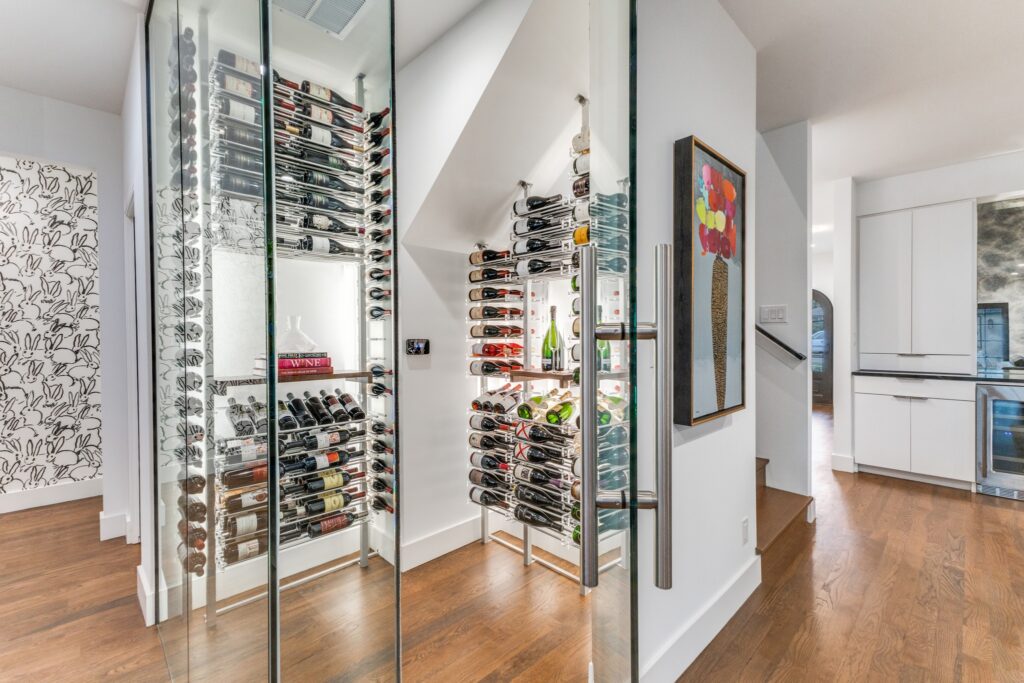
A glass wine enclosure can create a dramatic visual contrast against dark theater walls. Frameless glass, slim black framing, and carefully positioned LED lighting can make the bottles appear to float within the room.
This option requires more planning because the enclosure may need dedicated cooling, insulation, and vapor control. The cooling equipment should be positioned so its operating noise does not interfere with movie dialogue or quiet scenes.
A freestanding or built-in wine cabinet can be an attractive choice when space is limited or when you want to avoid constructing a separate wine room.
However, compressor-based cabinets may produce operating noise and vibration. Before placing one near the seating area, review the manufacturer’s noise specifications, ventilation requirements, and installation instructions.
Design tip: If silence is your top priority, begin with a passive wine display or place the refrigerated wine storage in an adjacent room, pantry, or dedicated enclosure.
One of the most common mistakes when adding wine storage to a home theater is placing the cooling equipment too close to the seats.
Wine cooling units contain mechanical components that can generate sound, including fans, compressors, and vibration from operating equipment. Even relatively quiet equipment may become noticeable during a suspenseful scene or a movie with subtle dialogue.
The best solution is to separate the wine display from the equipment responsible for cooling it.
Consider a ducted wine cooling system
A ducted wine cooling system allows the cooling equipment to be positioned away from the wine room, with conditioned air delivered through properly designed ductwork.
This can reduce the amount of mechanical noise heard inside the theater, although it does not guarantee silence. Fan noise can travel through ducts, and vibration may transfer through the building structure if the installation is not properly isolated.
Consider a split wine cooling system
A split system separates the indoor evaporator from the outdoor or remote condenser. Depending on the model, the condenser can be located away from the theater, while the evaporator serves the wine enclosure.
This can help keep compressor noise out of the viewing area. However, the indoor component may still generate fan noise, and refrigerant lines, mounting, and vibration isolation must follow the manufacturer’s specifications.
Plan the equipment location early
If the wine feature is part of a new home theater project, coordinate the cooling equipment location with the architect, HVAC contractor, and theater designer before construction begins.
This allows the team to consider mechanical-room placement, duct routes, equipment access, and acoustic isolation before walls and ceilings are finished.
Sound can travel through walls, ceilings, floors, ducts, and structural connections. Even when a wine cooling unit is installed outside the theater, its operating noise may still reach the listening area through these pathways.
Acoustic design should therefore address both airborne sound and structure-borne vibration.
<AsyncImageGroup query={[“home theater acoustic wall panels dark fabric luxury cinema”,”sound isolation construction resilient channel double drywall home theater”,”luxury cinema room acoustic wall treatments black wood slat panels”]} aspectRatio=”5:4″ layout=”carousel” size=”lg”/>
Consider the following measures:
Insulated partitions: Use a wall assembly designed to reduce sound transmission between the theater and wine room.
Resilient mounting systems: Where appropriate, use engineered isolation methods to reduce vibration transfer through walls and ceilings.
Sealed penetrations: Seal suitable gaps around pipes, wiring, and other openings using materials compatible with fire and building-code requirements.
Acoustic duct treatment: Have an HVAC professional evaluate duct routing, airflow noise, and suitable sound attenuation.
Equipment isolation: Use manufacturer-approved vibration-isolation mounts where appropriate for the cooling unit.
It is important to distinguish thermal insulation from acoustic insulation. Materials selected to keep the wine room cold do not automatically provide effective sound isolation.
Likewise, acoustic foam alone will not soundproof a room. Effective sound isolation depends on the entire wall, floor, ceiling, door, and penetration assembly.
Noise is only part of the challenge. Mechanical vibration can also be transmitted through the building structure.
A wine cooling unit installed on a shared wall or directly above a theater ceiling may transfer vibration into nearby surfaces. This can create unwanted low-frequency noise, particularly in a room with subwoofers and other sensitive audio equipment.
Although ordinary operating vibration does not automatically damage stored wine, minimizing unnecessary vibration is good practice for both the theater and the wine installation.
How to reduce vibration:
Avoid mounting cooling equipment directly to a shared theater wall when a suitable alternative exists.
Follow the manufacturer’s mounting and clearance requirements.
Use properly selected vibration-isolation components where permitted.
Keep wine racks securely anchored and verify their load capacity.
Avoid rigidly connecting ducts or pipes in ways that bypass an acoustic isolation assembly.
Have the installer check for rattling panels, loose fasteners, and vibrating equipment supports.
For a luxury installation, it is worth considering vibration isolation from the beginning rather than trying to correct mechanical noise after the theater is complete.
The wine feature should look intentional within the theater’s overall aesthetic. Dark walls, controlled lighting, and rich finishes often provide an excellent backdrop for contemporary wine displays.
<AsyncImageGroup query={[“black metal floating wine racks dark luxury interior wall”,”gold finish modern wine racks luxury dark wood interior”,”floor to ceiling cable wine rack display contemporary architectural interior”]} aspectRatio=”5:4″ layout=”carousel” size=”lg”/>
Black metal racks blend naturally with dark theater finishes and create a crisp architectural appearance. Their slim profiles can also keep the display visually light.
Floating racks create the impression that bottles are suspended against the wall. They work particularly well as a feature beside an entrance, bar area, or rear lounge section.
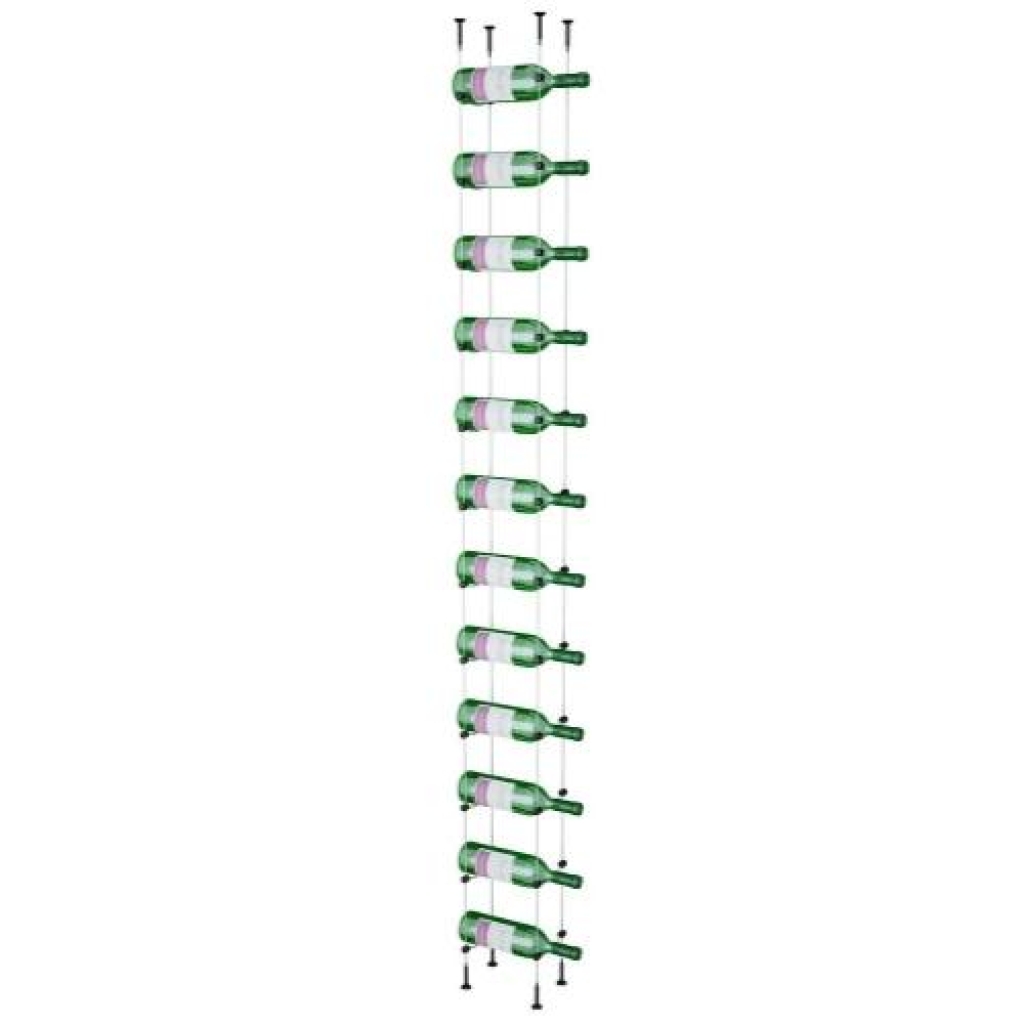
Cable systems offer a more open appearance and can create dramatic vertical displays. They are worth considering when the room has a tall ceiling or a dedicated feature wall.
Wood introduces warmth and texture, balancing the darker materials commonly used in home theaters. Mahogany, redwood, walnut, and oak finishes can complement wood cabinetry, doors, and decorative wall panels.
Regardless of the rack type, verify that the wall structure can support the loaded system and that the installation will not compromise acoustic treatments or concealed theater wiring.
Lighting is essential to the appearance of a wine feature, but it must be coordinated with the theater’s viewing requirements.
Bright display lighting can cause reflections on the screen, reduce perceived contrast, or distract viewers during dark scenes.
A carefully designed lighting scheme should allow the wine feature to look impressive before and after a movie while becoming unobtrusive during playback.
<AsyncImageGroup query={[“subtle warm LED lighting wine wall dark modern interior”,”backlit wine display wall luxury home bar dimmable lighting”,”minimalist illuminated wine racks black wall warm LED strips”]} aspectRatio=”5:4″ layout=”carousel” size=”lg”/>
Recommended lighting strategies include:
Low-heat LED strips: Highlight rack edges and bottle silhouettes without introducing unnecessary heat.
Dimmable lighting: Allow the wine feature to transition from an entertaining space to a dark viewing environment.
Indirect illumination: Direct light toward the display rather than toward the screen or seating positions.
Independent lighting circuits: Let the wine display operate separately from the theater’s main lighting.
Scene-based controls: Integrate compatible lights into a movie mode that dims or switches off the display.
Avoid shining bright light directly onto bottles for extended periods. Limit unnecessary UV exposure and verify that lighting fixtures are suitable for their intended location.
A wine feature must protect the collection as well as enhance the room.
For long-term storage, approximately 55°F is a commonly used wine cellar temperature target. Relative humidity around 50%–70% is a general guideline, although the appropriate conditions depend on the cellar design and collection.
A home theater, however, is usually maintained at a much warmer temperature for occupant comfort. This difference makes it important to determine whether the wine feature needs dedicated refrigeration or can function as a display for bottles stored elsewhere.
For a decorative wine wall
If the theater does not have a dedicated wine room, avoid assuming that its normal room temperature will provide suitable conditions for long-term storage. The room’s temperature, humidity, sunlight exposure, and operating schedule should be evaluated before using it for valuable wines.
For a refrigerated wine enclosure
A refrigerated wine room requires appropriate insulation, vapor control, sealed doors, and cooling equipment sized for the actual heat load.
Glass walls, lighting, room dimensions, and the temperature of adjacent spaces all affect cooling requirements. An undersized unit may run continuously and struggle to maintain the desired temperature.
For a wine cabinet
Choose a cabinet designed for the storage conditions you need. Verify its temperature range, humidity characteristics, ventilation requirements, and noise specifications.
For all three options, use a temperature and humidity monitor to identify changes and confirm that the wine is being stored under appropriate conditions.
A premium home theater may include high-sensitivity speakers, multiple subwoofers, and acoustic treatments designed to reveal subtle details in a soundtrack.
In this environment, mechanical noise can become more noticeable than it would be in an ordinary living room.
The most effective solution is to address the noise at its source rather than relying only on acoustic treatments inside the theater.
Consider these strategies:
Locate noisy components remotely. Place compressors and other noise-producing equipment outside the theater wherever the cooling system’s design permits.
Avoid direct sound paths. Coordinate duct routes, equipment openings, and shared walls with the theater’s acoustic design.
Select equipment based on measured noise information. Review manufacturer specifications and, when necessary, arrange an on-site evaluation under actual operating conditions.
Test the installation during quiet playback. Once the system is running, listen for fan noise, rattling, and low-frequency hum at the main seating positions.
Maintain the cooling equipment. Dirty filters, obstructed airflow, loose components, or worn parts can increase noise and reduce performance.
Remember that advertised sound levels do not always predict the final result. Installation quality, room acoustics, equipment placement, and the background noise level all influence what listeners hear.
Smart controls can help coordinate the wine display, cooling equipment, and theater lighting.
Depending on the equipment, a connected control system may allow you to monitor temperature and humidity, receive alerts, adjust compatible settings, and create lighting scenes for different activities.
For example, you could configure a movie scene that dims the wine display and switches off decorative lighting while leaving the wine cooling system operating normally.
A separate entertaining scene could brighten the wine wall and activate the room’s ambient lighting.
When planning smart controls:
Use compatible temperature and humidity sensors.
Confirm that the cooling unit supports the desired control interface.
Keep essential temperature regulation independent of internet connectivity when the equipment is designed to operate that way.
Set appropriate alerts for sustained temperature excursions.
Avoid switching off refrigeration equipment as part of a movie scene unless the manufacturer specifically supports that operating method.
The objective is to automate the room’s appearance and monitoring without compromising wine storage or cooling performance.
The location of the wine feature affects both the viewing experience and the room’s functionality.
A display beside the entrance can make a striking first impression without competing directly with the screen. A wine wall behind the seating area can create a luxurious background, while a dedicated bar or lounge zone can combine wine storage with serving space.
Consider these general layout options:
| Location | Advantages | Important considerations |
|---|---|---|
| Beside the entrance | Creates an immediate visual statement | Avoid obstructing circulation or door access |
| Along a side wall | Integrates naturally with the room’s architecture | Control reflections and protect acoustic treatments |
| Behind the seating area | Creates a dramatic background | Prevent lighting glare and equipment noise |
| In an adjacent lounge or bar | Separates wine service from the main viewing zone | Coordinate the design and cooling requirements |
| In a separate glass wine room | Provides a dedicated display and storage environment | Requires careful cooling, sealing, and acoustic planning |
For many projects, an adjacent lounge or a wine enclosure separated from the theater by a properly designed partition offers the best balance between visual impact and acoustic performance.
Even a beautiful installation can become frustrating if the mechanical and acoustic details are overlooked.
Here are common pitfalls to avoid:
Installing a noisy cooling unit inside the theater. Mechanical noise can become distracting during quiet scenes.
Ignoring structure-borne vibration. Poorly isolated equipment can transmit hum or rattling through the building.
Using thermal insulation as the only soundproofing measure. Temperature control and sound isolation require different design considerations.
Choosing a wine cabinet without checking its noise level. Compressor and fan noise may be noticeable near the seating area.
Overlooking heat rejection. A cooling unit that discharges hot air into an enclosed space can compromise performance.
Using excessive display lighting. Bright light may create screen reflections and affect wine storage.
Ignoring the wine room’s cooling load. Glass, lighting, and adjacent warm spaces can increase the heat the system must remove.
Blocking equipment access. Concealed systems still need maintenance and service clearance.
Relying on acoustic panels alone. Interior sound absorption does not necessarily prevent mechanical noise from entering the room.
Addressing these issues before construction is generally easier and less expensive than modifying a completed theater.
Can I install a wine cooler inside my home theater?
Yes, but choose the equipment carefully. A wine cabinet or cooling unit may produce fan noise, compressor noise, and vibration. Review its noise specifications and consider remote equipment placement if quiet playback is a priority.
What is the quietest way to add wine storage to a home theater?
A decorative wine wall without active refrigeration inside the theater is often the simplest option for minimizing mechanical noise. If you need refrigerated storage, consider a properly designed ducted or split system with the noisiest components located remotely.
Will a glass wine cellar affect home theater acoustics?
It can. Glass surfaces reflect sound and may change the room’s acoustic response. Large glazed surfaces can also increase heat gain. Coordinate the enclosure with the theater’s acoustic and thermal design.
Can I use a ducted wine cooling system without hearing it?
A ducted system can reduce direct equipment noise in the theater, but it is not automatically silent. Airflow noise, duct-borne sound, and vibration can still be transmitted unless the system is designed and installed appropriately.
What temperature should a wine feature maintain?
For long-term storage, approximately 55°F is a common target for a mixed collection. The appropriate temperature depends on the wines and storage goals. A decorative wine wall in a theater should not be assumed to maintain cellar conditions without dedicated environmental control.
Should I turn off the wine cooling system when watching a movie?
Generally, no. Turning off the cooling system can allow the wine room’s temperature to drift. Instead, select quiet equipment, isolate mechanical noise, and locate the equipment remotely when possible.
Adding a wine feature to a home theater is an opportunity to combine two luxury experiences in one thoughtfully designed space. The most successful projects balance visual appeal with acoustic performance, dependable wine storage, and practical access.
Start by deciding whether you need a decorative wine wall, a refrigerated cabinet, or a fully conditioned glass wine enclosure. Then coordinate the cooling system, vibration isolation, acoustic treatments, and lighting before construction begins.
For the quietest result, keep mechanical equipment away from the main listening area whenever practical, use appropriate sound-isolation methods, and verify the completed installation under real viewing conditions.
Planning a wine feature for your home theater? CoolWineCellar can help you explore custom wine racks, glass wine enclosures, and wine cooling solutions that complement your interior design. Visit https://coolwinecellar.com/ to explore options for creating a wine display that looks exceptional and performs reliably.