
Call Us 📞 800-323-3130
Mon–Fri 8am–6pm CST, Sat–Sun 9am–1pm CST
Free design consultations
Showrooms in Miami & Fort Lauderdale
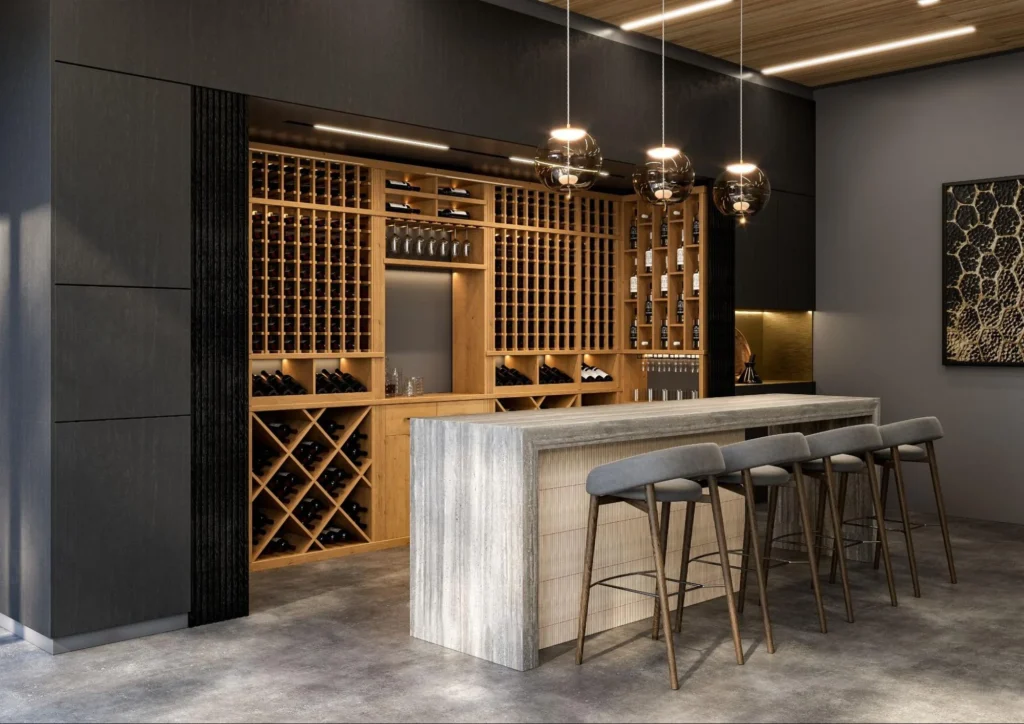
A wine room next to the kitchen can be a stunning addition to a luxury home. It creates a convenient place to store and display a wine collection while adding architectural interest to an open-concept living space. From frameless glass wine enclosures to floor-to-ceiling wine walls, this placement offers an opportunity to combine entertaining, design, and wine storage in one cohesive setting.
However, a kitchen is one of the most challenging locations for a wine room. Cooking generates heat, moisture, odors, and airborne grease, while refrigerators, dishwashers, ovens, and other appliances can contribute additional heat and noise. Without proper planning, these conditions can make it difficult to maintain the stable environment required for long-term wine storage.
Whether you are building a custom wine cellar or incorporating a contemporary wine wall into a kitchen renovation, understanding these common pitfalls can help you avoid costly mistakes.
One of the most common mistakes when placing a wine room next to a kitchen is overlooking the heat produced by nearby appliances.
Ovens, cooktops, dishwashers, refrigerators, and other kitchen equipment can increase the temperature around a wine enclosure. Heat from cooking may be temporary, but repeated temperature fluctuations can make it harder for a wine cooling system to maintain consistent conditions.
Wine is generally best stored at a stable temperature around 55°F, although the ideal setting can vary depending on storage goals. Frequent temperature changes can accelerate wine aging and negatively affect the collection over time.
How to avoid this pitfall:
Avoid positioning the wine room directly beside ovens or other major heat-producing appliances when possible.
Consider the location of the cooktop, dishwasher, refrigerator condenser, and other equipment during the initial design phase.
Insulate the wine room properly to reduce heat transfer from the surrounding kitchen.
Have a qualified wine cellar specialist calculate the room’s cooling load before selecting equipment.
A room’s cooling requirements depend on more than its cubic footage. Glass walls, insulation, lighting, ambient temperature, and adjacent heat sources all influence the required cooling capacity.
A standard air conditioner or residential wine refrigerator is not necessarily suitable for a dedicated wine room. A properly designed wine cellar requires a wine cooling system that can maintain stable temperatures under the room’s actual environmental conditions.
This becomes especially important when the wine room shares a wall with a kitchen. The additional heat load can overwhelm an undersized system, causing it to run continuously without reaching the desired temperature.
Common mistakes include selecting a cooling unit based solely on room dimensions, overlooking glass enclosure heat gain, and failing to account for the kitchen’s operating conditions.
How to avoid this pitfall:
Choose a wine cooling system based on a professional heat-load calculation. Depending on the design, suitable options may include:
Through-the-wall systems: Suitable for certain smaller wine rooms when the installation and heat rejection requirements can be met.
Ducted wine cooling systems: Allow the cooling equipment to be located away from the wine room, helping create a cleaner appearance and reducing equipment noise in the display area.
Split wine cooling systems: Separate the evaporator and condenser, offering greater flexibility in equipment placement.
Ceiling-mounted systems: Can work well in appropriate designs where wall space is limited and installation requirements are satisfied.
The best solution depends on the enclosure, surrounding conditions, available mechanical space, and the amount of heat the system must remove.
A visually impressive wine room can still fail if its walls and ceiling are not properly insulated.
Kitchens often experience significant temperature and humidity changes, particularly during cooking, boiling, and dishwashing. When warm, humid air encounters a surface cooled by the wine room, condensation can develop if the enclosure is not properly designed.
Over time, moisture can damage drywall, wood finishes, cabinetry, and other building materials. Inadequate insulation can also increase the cooling system’s workload and energy consumption.
How to avoid this pitfall:
Insulate the walls and ceiling to meet the wine room’s design requirements.
Install an appropriately designed vapor retarder or vapor barrier on the correct side of the assembly for the local climate and construction method.
Seal penetrations, joints, and transitions to limit uncontrolled air and moisture movement.
Pay particular attention to the shared wall between the kitchen and wine room.
Consult a building professional familiar with wine cellar construction to evaluate condensation risks.
In warm, humid climates such as South Florida, moisture management is particularly important. Insulation alone does not guarantee a condensation-free enclosure; the complete wall assembly must be designed for the conditions on both sides.
Glass wine rooms are popular in modern kitchens because they create an open, elegant display without visually separating the wine collection from the surrounding living space.
However, glass can introduce a substantial cooling challenge. Large glazed surfaces may transfer more heat than well-insulated walls, especially when exposed to direct sunlight or warm kitchen conditions.
Another common mistake is focusing exclusively on the appearance of the glass while overlooking the door seals, joints, framing, and overall enclosure performance.
Even a small gap around a door can allow warm, humid air to enter the wine room, increasing the cooling load and condensation risk.
How to avoid this pitfall:
Select glazing appropriate for the expected temperature difference and enclosure design.
Evaluate whether insulated glass is suitable for the project rather than assuming every glass configuration performs equally.
Use properly sealed doors, frames, and panel connections.
Limit direct sunlight on the enclosure where practical.
Include all glass surfaces in the cooling-load calculation.
Frameless glass enclosures can provide a minimalist appearance, but they still require careful detailing. The goal is to balance transparency and aesthetics with temperature control, moisture management, and reliable door operation.
Temperature is only one part of proper wine storage. Humidity also matters, particularly when bottles are stored for extended periods with natural cork closures.
An excessively dry environment can contribute to cork drying over time, while excessive humidity can encourage mold growth and damage labels, finishes, and nearby building materials.
A kitchen can make humidity control more complicated because cooking, boiling water, dishwashing, and ventilation changes introduce moisture into the surrounding air.
How to avoid this pitfall:
Design the wine room as a properly sealed enclosure.
Evaluate humidity control requirements alongside cooling capacity.
Monitor temperature and relative humidity using suitable instruments.
Avoid allowing kitchen exhaust or humid air to discharge into the wine room.
Confirm that the selected cooling system is appropriate for the desired operating conditions.
A relative humidity range of approximately 50%–70% is commonly used as a general wine-storage guideline, although the appropriate target depends on the collection, enclosure, and equipment. Not every cooling unit actively controls humidity, so this capability should be verified before purchase.
Another overlooked issue is the movement of air between the kitchen and wine room.
Cooking odors, smoke, grease particles, and cleaning-product fumes can migrate through poorly sealed doors or openings. While the extent to which ordinary kitchen odors affect wine through an intact cork is debated, keeping the wine room isolated from contaminants is still good practice.
Grease and airborne particles can also accumulate on wine bottles, racks, glass panels, and cooling equipment.
How to avoid this pitfall:
Seal the wine enclosure properly.
Avoid placing supply or return air openings where they draw in kitchen contaminants.
Use a properly designed kitchen range hood that exhausts cooking fumes as intended.
Keep the wine room separate from kitchen exhaust pathways.
Avoid using the wine room as a return-air pathway for the home’s general HVAC system.
A dedicated wine room should have a carefully planned air-conditioning and ventilation strategy rather than relying on uncontrolled air exchange with the kitchen.
A wine room may look perfectly designed from the outside, but poorly located cooling equipment can create operational problems.
For example, installing a self-contained cooling unit without considering where its hot exhaust air will go can cause the surrounding kitchen or adjacent room to become warmer. If the discharged heat returns to the wine room or the unit’s intake, cooling performance may suffer.
Equipment noise can also become a concern when the wine room is close to dining areas, living rooms, or open kitchens.
How to avoid this pitfall:
Determine where the cooling unit will reject heat before finalizing the room layout.
Confirm that the equipment has adequate airflow and the required installation clearances.
Consider ducted or split systems when the design calls for remote equipment placement.
Evaluate noise levels and vibration, especially in open-plan homes.
Plan access for filter cleaning, maintenance, and future repairs.
The ideal installation should maintain reliable cooling without introducing unnecessary heat, noise, or visual clutter into the kitchen.
Kitchen range hoods can move substantial amounts of air. Depending on the home’s design, this can create negative pressure that pulls replacement air through gaps around doors and other openings.
If a wine room is not properly sealed, pressure differences may encourage warm, humid air to enter the enclosure. This can increase the cooling load and contribute to condensation.
The opposite problem can also occur when supply air, exhaust systems, and door seals are poorly coordinated.
How to avoid this pitfall:
Coordinate the wine room design with the kitchen’s ventilation plan.
Have the HVAC contractor assess makeup air requirements for the range hood.
Avoid creating unintended airflow paths through the wine enclosure.
Verify that door seals and enclosure penetrations remain effective under normal operating conditions.
A properly designed wine room does not need to be hermetically sealed, but its air movement should be controlled rather than accidental.
A kitchen-adjacent wine room often serves as a design feature, which can tempt homeowners to prioritize visual impact over practical details.
Floor-to-ceiling wine displays, concealed cooling equipment, and custom millwork can look exceptional. However, problems arise when the layout makes it difficult to reach bottles, open doors fully, clean glass panels, or service the cooling system.
Other mistakes include installing wine racks too close to the door, choosing lighting that produces excessive heat, or failing to provide adequate clearance around mechanical components.
How to avoid this pitfall:
Design wine racks around bottle sizes, storage capacity, and accessibility.
Allow sufficient clearance for doors, drawers, and bottle retrieval.
Include maintenance access for cooling equipment and electrical components.
Select energy-efficient LED lighting with appropriate heat output and controls.
Consider how the room will function during everyday cooking and entertaining.
A successful wine room should be as practical as it is beautiful.
Kitchen environments expose nearby surfaces to grease, moisture, cleaning products, and temperature changes. Materials that look attractive in a showroom may require additional protection when installed next to a busy cooking area.
Wood wine racks, metal finishes, cabinetry, and decorative wall treatments should be selected with their environment in mind.
For example, untreated wood may be more vulnerable to moisture-related damage, while some metal finishes can be affected by unsuitable cleaning chemicals.
How to avoid this pitfall:
Choose wine rack materials and finishes appropriate for the intended environment.
Protect wood components from direct water exposure and excessive moisture.
Use cleaning products compatible with the selected materials.
Ensure the enclosure prevents routine kitchen splashes and grease from reaching the wine collection.
Coordinate the wine room finishes with the kitchen cabinetry, flooring, and hardware.
The best material choices combine durability with the desired architectural style.
Lighting plays a major role in the appearance of a wine room, especially when it is visible from the kitchen or dining area. However, poorly planned lighting can introduce unnecessary heat and make the enclosure less efficient.
Electrical planning is equally important. Cooling equipment may have specific voltage, circuit, and installation requirements that should be addressed before construction begins.
How to avoid this pitfall:
Use LED lighting with low heat output.
Avoid placing high-output light sources directly beside wine bottles.
Install lighting controls or timers to limit unnecessary operation.
Confirm electrical requirements with the cooling equipment manufacturer.
Coordinate wiring, lighting channels, and access panels before closing the walls.
Lighting should enhance the collection without compromising temperature stability or serviceability.
A wine room is most successful when it is planned as part of the complete architectural layout rather than added as an afterthought.
Late design changes can result in insufficient wall space, inadequate cooling capacity, awkward door placement, or a lack of suitable locations for mechanical equipment.
The problem becomes more expensive when glass panels, cabinetry, flooring, and electrical connections have already been installed.
How to avoid this pitfall:
Bring the wine cellar designer, architect, kitchen designer, and HVAC contractor into the planning process early. Coordinate the enclosure dimensions, glazing specifications, insulation, cooling equipment, electrical requirements, and ventilation strategy before construction begins.
This integrated approach helps ensure that the wine room complements the kitchen while meeting the environmental requirements of the wine collection.
The best location depends on the kitchen layout, available space, exposure to heat, and the desired appearance.
Consider these general options:
| Wine room location | Main advantage | Important consideration |
|---|---|---|
| Beside a pantry or storage room | May provide separation from cooking appliances | Evaluate wall insulation and available mechanical space |
| Along a kitchen island or dining area | Creates a striking display for entertaining | Account for cooking heat, traffic, and glass performance |
| Along an interior wall | Can reduce direct solar exposure | Verify the heat load from adjacent rooms |
| In a dedicated glass enclosure | Provides an open, contemporary appearance | Requires careful glazing, sealing, and cooling calculations |
| In an adjacent room with a glass viewing wall | Offers greater flexibility for equipment placement | Requires coordination between the rooms’ layouts and finishes |
For many projects, an interior location away from ovens and direct sunlight is a practical starting point. However, no location is automatically suitable without evaluating the building conditions and cooling requirements.
Before construction begins, review the following items with your wine cellar specialist.
Placing a wine room next to a kitchen can create one of the most impressive features in a modern home, but it requires more than attractive wine racks and glass panels. Heat transfer, humidity, insulation, air movement, cooling capacity, and equipment placement all influence the long-term performance of the space.
The most common mistake is treating the wine room as a decorative feature instead of a temperature-controlled environment. By addressing these factors early, homeowners can create a wine room that protects their collection while integrating beautifully with the kitchen and surrounding living areas.
Planning a wine room beside your kitchen? CoolWineCellar can help you explore custom wine cellar designs, glass wine enclosures, wine racks, and wine cooling systems suited to your space. A properly planned design can bring your wine collection into the heart of your home without compromising storage conditions.
Explore wine cellar design and cooling solutions at https://coolwinecellar.com/.