
Call Us 📞 800-323-3130
Mon–Fri 8am–6pm CST, Sat–Sun 9am–1pm CST
Free design consultations
Showrooms in Miami & Fort Lauderdale
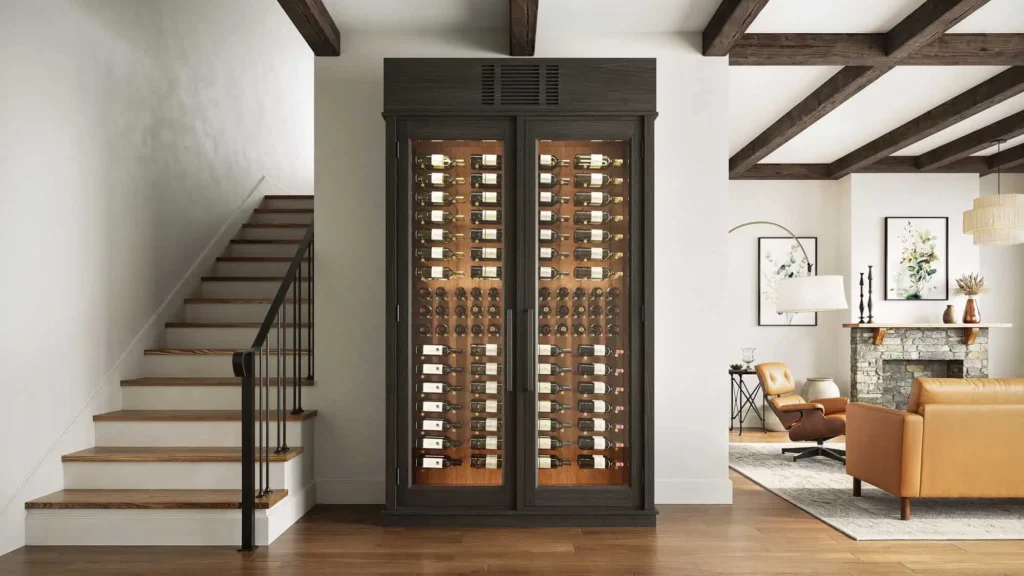
A wine refrigerator cabinet is more than a stylish addition to your home. It is an investment in preserving your wine collection, maintaining the right storage conditions, and creating an elegant display for your favorite bottles. Whether you are building a dedicated wine room, designing a home bar, or looking for a compact wine storage solution, choosing the right cabinet can make a significant difference in both wine preservation and everyday convenience.
With so many wine refrigerator cabinets available, it is important to understand which features matter most. From precise temperature control and humidity management to bottle capacity, shelving, and design, the right combination of features will help protect your collection while complementing your interior.
In this guide, we explore the essential features to look for when shopping for a wine refrigerator cabinet.
Temperature control is one of the most important features of a wine refrigerator cabinet. Wine is sensitive to temperature fluctuations, and storing bottles in conditions that are too warm or inconsistent can accelerate aging and affect quality.
For long-term storage, approximately 55°F is a commonly recommended target, although the ideal temperature depends on the wine and your storage goals.
When comparing wine refrigerator cabinets, look for:
Adjustable temperature settings: Choose a cabinet that allows you to set the desired storage temperature.
Consistent temperature maintenance: A quality cooling system should minimize fluctuations.
Digital temperature displays: These make it easy to monitor and adjust settings.
Reliable temperature sensors: Sensors help the cooling system respond when temperatures move outside the set range.
If you collect both red and white wines for serving, consider a dual-zone cabinet. It allows you to maintain different temperatures in separate compartments, making it easier to store and serve different wine styles.
The number of temperature zones you need depends on how you plan to use your wine refrigerator cabinet.
Single-zone wine refrigerator cabinets
A single-zone cabinet maintains one temperature throughout the storage area. It is an excellent option for collectors who primarily store one type of wine or want to keep their collection at a consistent aging temperature.
Dual-zone wine refrigerator cabinets
A dual-zone cabinet has two independently controlled temperature areas. This arrangement is useful for households that store red and white wines or want to keep some bottles ready for serving while others remain at a different storage temperature.
Before purchasing, consider your collection size, drinking preferences, and whether you expect your wine storage needs to change over time.
Humidity is another important consideration, particularly when storing wine for extended periods. If the air becomes excessively dry, natural corks may gradually lose moisture, potentially compromising their seal. Excessive humidity, meanwhile, can encourage mold growth on labels and surrounding surfaces.
Look for a wine refrigerator cabinet designed to maintain suitable storage humidity and minimize unnecessary moisture loss. Some premium models include humidity monitoring or dedicated humidity-management features.
Keep in mind that humidity performance varies by cabinet design. Not every wine refrigerator includes active humidity control, so check the manufacturer’s specifications before making a purchase.
For collectors storing valuable bottles over many years, humidity management deserves particular attention.
A wine refrigerator cabinet should protect your collection from harmful environmental conditions while allowing you to showcase your bottles.
Glass doors provide an attractive display, but direct sunlight and ultraviolet radiation can negatively affect wine over time.
Consider cabinets with:
UV-resistant or UV-protected glass.
Insulated glass panels to reduce heat transfer.
Tight-fitting door seals to minimize the exchange of warm air.
Optional solid-door designs for collections that prioritize protection over visibility.
A glass-front wine cabinet is especially attractive in kitchens, dining rooms, entertainment areas, and home bars. However, placing it away from direct sunlight is still important, even when the door has UV protection.
Before choosing a wine refrigerator cabinet, estimate how many bottles you currently own and how much your collection may grow.
Manufacturers typically advertise bottle capacity based on standard Bordeaux-style bottles. Larger Burgundy bottles, Champagne bottles, and irregularly shaped bottles may reduce the actual capacity.
When evaluating storage capacity, consider the following:
Small collections: Compact cabinets can accommodate everyday drinking wines without occupying too much space.
Growing collections: Medium-capacity cabinets provide additional room for new purchases and special occasions.
Large collections: High-capacity wine cabinets offer more storage and may include adjustable shelving or specialized bottle compartments.
Also examine the shelving layout. Individual bottle shelves make it easier to access specific wines, while bulk-storage shelves can maximize capacity. A combination of both can provide a practical balance between organization and storage efficiency.
Shelving affects both the appearance and usability of your wine refrigerator cabinet.
Wooden shelves provide a warm, traditional aesthetic and can help create a luxury wine-storage experience. Metal shelves offer a contemporary look and may provide durable, space-efficient storage. Some cabinets combine different materials to balance style and functionality.
Look for shelving that includes:
Smooth sliding mechanisms for convenient access.
Secure bottle supports to prevent bottles from shifting.
Adjustable shelf heights for different bottle shapes.
Removable shelves for flexible storage configurations.
Thoughtful spacing that prevents labels and bottle necks from rubbing against adjacent bottles.
For collectors with premium wines, easy access and organized storage can be just as valuable as maximum bottle capacity.
The wine cooling system determines how effectively your wine refrigerator cabinet maintains its target temperature. It can also influence energy consumption, operating noise, and maintenance requirements.
When comparing models, look for a cooling system designed for wine storage rather than relying solely on general-purpose refrigeration specifications.
Important considerations include:
Energy efficiency: Review the manufacturer’s energy-consumption information and applicable efficiency ratings.
Cooling consistency: Choose a system capable of maintaining the required temperature under the conditions in which the cabinet will operate.
Operating noise: If the cabinet will be installed in an open-plan living area, dining room, or bedroom, pay attention to published noise levels.
Ventilation requirements: Built-in and freestanding cabinets may have different clearance requirements. A built-in model must be installed according to its specified ventilation design.
Serviceability: Check warranty coverage, replacement-part availability, and access to qualified service technicians.
A properly selected and installed cooling system helps maintain stable storage conditions and can reduce avoidable operating problems.
Wine refrigerator cabinets contain compressors, fans, and other mechanical components that can generate vibration. Excessive vibration is an important consideration for collectors who store wines for extended periods.
Look for models with vibration-reducing compressor mounts, stable shelving, and a cabinet structure designed to minimize mechanical disturbance.
Not every wine cabinet uses the same vibration-control technology, so review the manufacturer’s specifications rather than assuming all models provide equivalent protection.
Proper leveling and installation can also help reduce unwanted noise and vibration.
Lighting can transform a wine refrigerator cabinet from a practical storage appliance into a beautiful focal point.
Interior LED lighting illuminates bottles, highlights labels, and makes it easier to find specific wines. Many premium cabinets offer adjustable lighting or multiple illumination settings.
Useful features include:
Energy-efficient LED lights.
Adjustable brightness.
Warm or neutral lighting options.
Display lighting that can be switched off when not needed.
LED lighting generally produces less heat than traditional incandescent lighting, making it a practical choice for wine storage.
For a sophisticated home bar or entertainment area, subtle lighting can create an impressive visual effect without overwhelming the surrounding design.
The right installation style depends on your available space and the overall design of your home.
Freestanding wine refrigerator cabinets
Freestanding models offer flexibility because they can be placed in suitable locations without being integrated into cabinetry. They are often easier to relocate if your layout changes.
However, they may require additional clearance around the unit for proper ventilation.
Built-in wine refrigerator cabinets
Built-in models are designed to fit within kitchen cabinets, islands, bars, or custom millwork. They create a seamless appearance and make efficient use of available space.
Before purchasing a built-in cabinet, confirm its dimensions, door-clearance requirements, ventilation specifications, and electrical requirements.
Important: A freestanding wine refrigerator should not be enclosed in cabinetry unless the manufacturer explicitly permits that installation method. Restricted airflow can impair cooling performance and shorten equipment life.
A wine refrigerator cabinet should complement your interior while providing practical storage.
Depending on your design preferences, you may choose from modern glass-front cabinets, traditional wood finishes, sleek black enclosures, stainless-steel accents, or custom cabinetry that matches your kitchen or home bar.
When evaluating the design, consider:
Exterior dimensions and available installation space.
Door style and handle design.
Finish durability and ease of cleaning.
Interior materials and shelf construction.
Whether the cabinet coordinates with existing cabinetry and appliances.
If aesthetics are a priority, a premium wine cabinet can become an integral part of your interior design rather than simply another kitchen appliance.
For larger collections or statement installations, consider whether a dedicated wine room with custom wine racks and a properly selected cooling system would better meet your needs.
Modern wine refrigerator cabinets may include digital controls and monitoring features that make wine storage easier to manage.
Depending on the model, useful features can include:
Digital temperature displays.
High- or low-temperature alarms.
Door-open alerts.
Power-failure notifications.
Child locks.
Wi-Fi connectivity and remote monitoring.
These features are particularly useful when storing valuable wines or placing the cabinet in a vacation home or secondary residence.
However, smart functionality should not replace reliable temperature control. Prioritize dependable cooling performance and appropriate storage conditions before paying extra for connected features.
If you own rare, collectible, or expensive wines, security may be an important part of your purchasing decision.
Some wine refrigerator cabinets include lockable doors, while other models may offer more advanced access-control features.
Consider a lock if the cabinet will be installed in a shared household, entertainment space, office, or hospitality environment.
For restaurants, private clubs, and wine-tasting rooms, security can be especially useful when access needs to be restricted to authorized staff or members.
Even a high-quality wine refrigerator cabinet may struggle if it is installed in an unsuitable location.
Before ordering, measure the installation area carefully and check the manufacturer’s requirements for clearance, ambient temperature, ventilation, and electrical supply.
Keep these practical considerations in mind:
Avoid locations exposed to direct sunlight or excessive heat.
Keep the cabinet away from heat-producing appliances where possible.
Confirm whether the model requires a dedicated electrical circuit.
Check door-swing clearance and access for bottle removal.
Verify the floor can support the loaded cabinet.
Confirm that the cabinet can be delivered through hallways, doorways, and stairwells.
If the cabinet will be installed in a garage, enclosed patio, or other space with significant temperature fluctuations, verify that its operating-temperature range is appropriate for that environment.
For a larger wine room, a conventional wine refrigerator cabinet may not provide the storage capacity or cooling performance required. In that case, a purpose-designed wine cellar cooling system may be a better solution.
The purchase price is only one part of the cost of owning a wine refrigerator cabinet. Warranty coverage, maintenance, energy consumption, and replacement-part availability also affect its long-term value.
Before making your final decision, review:
The length and terms of the manufacturer’s warranty.
Coverage for the compressor and cooling components.
Availability of authorized service providers.
Recommended cleaning and maintenance procedures.
Expected energy consumption.
Customer feedback about reliability and after-sales service.
A less expensive model may be suitable for a small collection, while a premium cabinet may be worth the additional investment if you need higher capacity, more precise controls, or specialized design features.
Compare the total ownership experience rather than choosing solely on the initial purchase price.
Use this checklist when comparing different models.
Single-zone or dual-zone cooling, depending on your needs.
Suitable humidity management.
UV-protected glass or an appropriate solid door.
Enough bottle capacity for current and future needs.
Secure, accessible, and well-designed shelving.
Reliable, appropriately sized cooling system.
Low-vibration operation.
Interior LED lighting.
Suitable freestanding or built-in installation design.
Temperature alarms and other useful controls.
Locking options if security is important.
Appropriate dimensions, ventilation, and electrical requirements.
Clear warranty coverage and service support.
What is the ideal temperature for a wine refrigerator cabinet?
Approximately 55°F is a common target for long-term wine storage. The ideal serving temperature varies by wine style, so a dual-zone cabinet may be helpful if you want to store different wines at separate temperatures.
Is a dual-zone wine refrigerator cabinet worth it?
A dual-zone cabinet is worth considering if you regularly store both red and white wines and want separate temperature settings. If your collection is primarily intended for long-term storage at one consistent temperature, a single-zone cabinet may be sufficient.
Do wine refrigerator cabinets need humidity control?
Humidity management is beneficial, particularly for wines stored with natural cork closures over extended periods. However, active humidity control is not included in every model. Review the specifications and consider the expected storage duration before choosing a cabinet.
Are glass-door wine refrigerator cabinets a good choice?
Yes. Glass doors allow you to display your collection and make bottle identification easier. Choose UV-protected glass where available, keep the cabinet away from direct sunlight, and verify that the door provides suitable insulation.
How much capacity should I choose?
Choose a cabinet that accommodates your current collection while allowing room for future purchases. Remember that the advertised capacity may be based on standard Bordeaux bottles, so larger bottles can reduce the usable capacity.
Can I install a wine refrigerator cabinet inside kitchen cabinetry?
Yes, provided the model is specifically designed for built-in installation or the manufacturer explicitly approves the proposed installation. Follow all ventilation, clearance, and electrical requirements.
What is the difference between a wine refrigerator cabinet and a wine cellar?
A wine refrigerator cabinet is generally a self-contained appliance intended to store a collection within a defined capacity. A wine cellar is a dedicated space that can incorporate custom wine racks, specialized insulation, vapor control, and a properly sized cooling system. A cellar may be more suitable for large or expanding collections.
The best wine refrigerator cabinet combines dependable temperature control, suitable storage capacity, thoughtful shelving, UV protection, and a design that complements your home. Features such as dual-zone cooling, humidity management, vibration reduction, and smart monitoring can provide additional benefits depending on your collection and storage goals.
Before purchasing, consider how many bottles you own, how long you plan to store them, where the cabinet will be installed, and whether your collection is likely to grow.
For smaller collections, a well-designed wine refrigerator cabinet can provide a convenient and attractive solution. For larger collections or a more customized display, a dedicated wine cellar with custom wine racks and an appropriately sized cooling system may offer greater flexibility.
Ready to create your ideal wine storage space? Explore the wine storage solutions available at CoolWineCellar and find an option that balances performance, style, and functionality. Whether you need a wine refrigerator cabinet, custom wine racks, or a complete wine cellar design, choosing the right features from the beginning will help you enjoy your collection for years to come.