
Call Us 📞 800-323-3130
Mon–Fri 8am–6pm CST, Sat–Sun 9am–1pm CST
Free design consultations
Showrooms in Miami & Fort Lauderdale
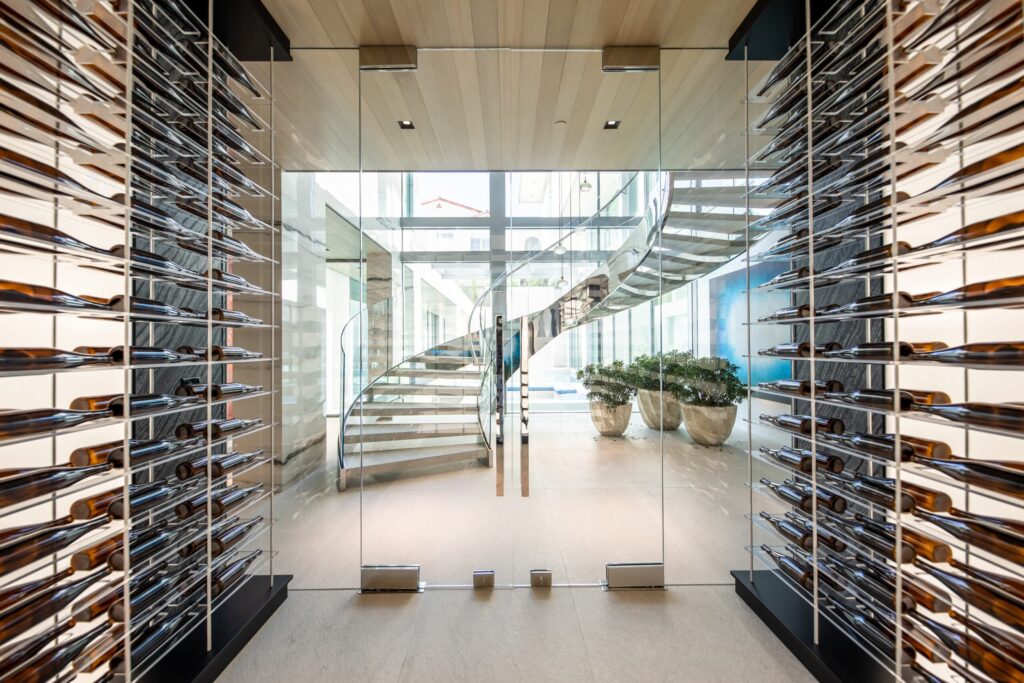
A glass wine cellar door can completely change the look of a wine room. It creates an elegant connection between the wine collection and the surrounding space while allowing bottles, wine racks, and lighting to become part of the home’s design.
But if you’re planning a glass wine cellar door, one important question comes up:
Do you need insulated glass, or will standard non-insulated glass work?
The answer depends primarily on whether the wine space is actively cooled and how different the temperature is between the wine room and the surrounding area.
Choosing the right glass isn’t simply a matter of aesthetics. The door can affect heat transfer, cooling requirements, energy efficiency, and the potential for condensation.
An insulated glass door typically uses two or more panes of glass separated by an insulating spacer, creating an air- or gas-filled space between the panes.
This construction creates a thermal barrier between the wine room and the surrounding environment.
For an actively cooled wine cellar, that barrier can be especially important because the wine room is generally maintained much colder than the surrounding living space.
For example, a properly conditioned wine cellar may be maintained around 55°F, while the adjacent room could be 72–75°F or higher.
That temperature difference creates a constant opportunity for heat to move through the glass.
Benefits of insulated glass include:
For a temperature-controlled glass wine cellar, insulated glass is generally the safer choice.
If you’re installing a cooling system specifically to maintain a wine-storage temperature, the glass enclosure and door should be considered part of the overall heat-load calculation.
This is particularly important when the wine room has multiple glass walls or large expanses of glass.
A single-pane glass door can allow substantially more heat into a cooled wine room than an insulated glass door. The cooling system then has to remove that additional heat.
Insulated glass is especially worth considering when:
1. The wine cellar is maintained around 55°F
The greater the temperature difference between the wine room and surrounding space, the more important thermal performance becomes.
2. The surrounding room is warm
A wine room opening into a kitchen, great room, garage, or other warm area may experience a significant temperature difference.
3. The wine room has large glass areas
A glass door combined with glass walls can create a considerable portion of the cellar’s overall heat load.
4. The cellar is located in a hot or humid climate
In places such as Florida, where outdoor temperatures and humidity can be high, glass selection becomes even more important.
5. You want better cooling-system efficiency
Reducing unnecessary heat gain can help the cooling system maintain the desired temperature more effectively.
Non-insulated or single-pane glass isn’t automatically the wrong choice.
There are situations where it can make perfect sense.
The key is understanding that not every glass wine display is a climate-controlled wine cellar.
If the space doesn’t need to maintain a significantly lower temperature than its surroundings, the thermal performance of the glass becomes much less critical.
If you’re creating a wine display primarily for aesthetics and the bottles are not being stored in a dedicated temperature-controlled environment, non-insulated glass can be an appropriate option.
For example, a homeowner may want a wine display in a dining room or entertaining area where the bottles are intended for relatively short-term storage.
In this situation, there isn’t a 55°F wine-cellar environment that the glass door needs to protect.
The objective is primarily display and organization rather than climate-controlled wine aging.
A wine cabinet located inside an air-conditioned home is another situation where non-insulated glass may be sufficient.
If the cabinet and surrounding room are already maintained at similar temperatures, there may be little benefit from adding an insulated glass door solely to prevent temperature transfer.
For example, if a decorative wine cabinet is located in a climate-controlled dining room and the cabinet does not use a dedicated wine cooling system, standard glass may work well for the intended application.
However, if the cabinet itself is actively cooled, the glass selection should be evaluated again.
Some wine displays are essentially architectural features rather than traditional wine cellars.
A glass wine wall between a dining room and kitchen, for example, may be designed to showcase the collection rather than maintain a dedicated 55°F environment.
In that case, non-insulated glass may provide the desired appearance without the additional thermal performance of insulated glazing.
This is where the decision becomes more important.
An actively cooled wine cellar isn’t simply a storage cabinet with cold air. The wine cooling system is constantly removing heat that enters the room through its walls, ceiling, floor, door, glass, lighting, and other sources.
Every square foot of glass can contribute to the heat load.
That’s why glass should be included when sizing the wine cooling system.
A cellar with one insulated glass door may have a very different cooling requirement from a cellar with a single-pane glass door plus three glass walls.
| Feature | Non-Insulated Glass | Insulated Glass |
|---|---|---|
| Appearance | Excellent | Excellent |
| Thermal performance | Lower | Better |
| Heat transfer | Higher | Lower |
| Suitable for display rooms | Yes | Yes |
| Suitable for conditioned interiors | Often | Yes |
| Actively cooled wine cellar | Depends on design | Generally preferred |
| Large glass wine room | Requires careful calculation | Generally preferred |
| Condensation resistance | Lower | Better |
| Cooling efficiency | Lower | Better |
The important point is that there isn’t one glass specification that is right for every wine room.
One of the most common mistakes when designing a cooled wine cellar is choosing a cooling unit based only on the room’s cubic footage.
The same principle applies to glass doors.
A 100-square-foot wine room with insulated walls and a small insulated glass door can have a dramatically different cooling requirement from a 100-square-foot room surrounded by large areas of single-pane glass.
The calculation should consider factors such as:
This is especially important for glass-enclosed wine rooms, where the glass can represent a substantial portion of the enclosure.
Condensation is another reason glass selection matters.
When warm, humid air comes into contact with a sufficiently cold glass surface, moisture can form on the glass.
This can become a concern in humid climates, particularly when a wine room is maintained at a low temperature while the surrounding space is warm and humid.
Insulated glass can help keep the interior glass surface warmer than comparable single-pane glass, reducing the potential for condensation.
However, insulated glass isn’t a guarantee against condensation.
The entire wine room design matters, including:
This is one reason a glass wine cellar should be designed as a complete system rather than treating the glass door as an isolated product.
Not necessarily.
If you’re building a decorative wine display in a dining room, kitchen, or home bar and there is no dedicated cooling system, paying for higher-performance glazing may not provide a meaningful benefit.
Likewise, a wine cabinet located entirely within a conditioned interior environment may not require the same glass specification as a temperature-controlled wine cellar.
The right question isn’t:
“Which glass is better?”
Instead, ask:
“What job does this glass door need to perform?”
If the door needs to help maintain a 55°F wine-storage environment, thermal performance becomes important.
If the door’s primary purpose is to display bottles in an already-conditioned room, the requirements can be very different.
It’s also important to look at the entire enclosure.
A highly insulated wine cellar with a large single-pane glass door may still have significant heat gain through the door.
Conversely, an insulated glass door installed in a wine room with large areas of poorly insulated single-pane glass won’t solve the overall heat-load problem.
For larger projects, the design should evaluate the entire glass enclosure, including:
The goal is to create a balanced enclosure that allows the cooling system to operate effectively.
Choose insulated glass when:
Non-insulated glass may work when:
The best choice ultimately depends on the complete wine room design and heat-load requirements.
Planning a glass wine cellar? Don’t choose the glass or cooling system based solely on room size.
CoolWineCellar can help you evaluate your glass enclosure and cooling requirements before you order. We offer free glass wine enclosure quotes and can help determine the appropriate approach for your project.
For actively cooled wine rooms, we also recommend getting a professional heat-load calculation before selecting your wine cooling unit. The calculation takes the glass area, insulation, room dimensions, surrounding conditions, and other heat sources into consideration so you can choose a cooling system appropriately sized for the space.
Planning a glass wine cellar? Get your free glass enclosure quote and heat-load calculation from CoolWineCellar before you build.