
Call Us 📞 800-323-3130
Mon–Fri 8am–6pm CST, Sat–Sun 9am–1pm CST
Free design consultations
Showrooms in Miami & Fort Lauderdale
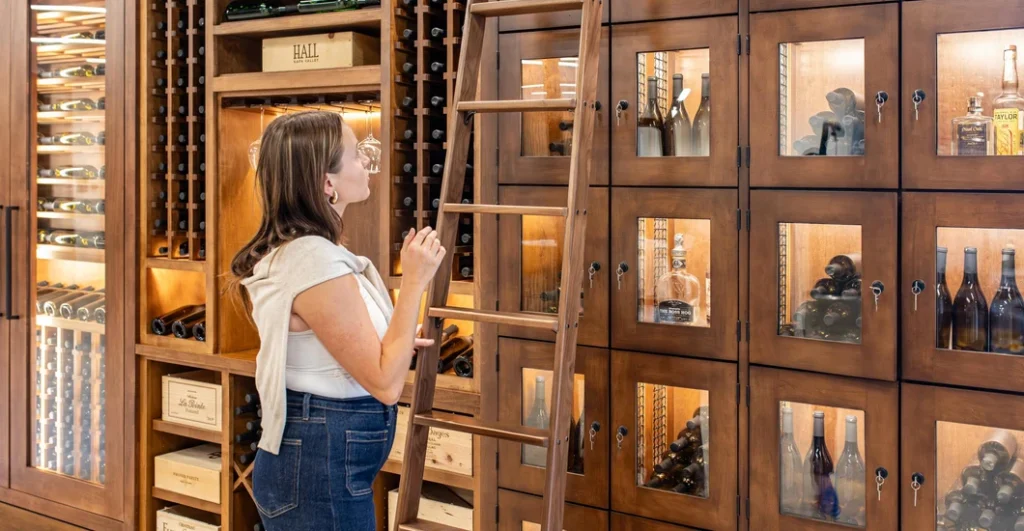
Turn unused Q4 capital into a premium amenity, recurring revenue stream, and stronger member experience with custom wine lockers.
For restaurants, private clubs, country clubs, yacht clubs, and other hospitality businesses, the end of the year often brings an important budgeting question:
What capital project can improve the guest experience while also creating measurable business value?
Wine lockers deserve a closer look.
Unlike a decorative renovation that primarily adds visual appeal, a well-planned wine locker program can create a revenue-generating amenity. Individual lockers can be leased to members or customers on a monthly or annual basis, creating recurring revenue while giving wine enthusiasts a secure, convenient place to store their personal collections.
Industry examples show why the model is attractive. One country-club case reported by Chambers generated an additional $9,000 annually from wine lockers alone, excluding wine sales. Other commercial wine-storage providers similarly describe locker programs as a recurring-revenue model for restaurants and clubs.
For businesses with remaining Q4 budget, that makes wine lockers worth considering as a strategic capital improvement—not simply another décor project.
A wine locker program divides a dedicated wine-storage area into individual secured compartments.
Each locker can be assigned to a member, customer, wine-club participant, or private collector. Depending on the design, lockers can incorporate:
Cool Wine Cellar offers wine lockers as part of its broader wine-storage collection, including commercial and custom wine-racking solutions.
The result is more than a place to put bottles. Properly designed, a wine locker room becomes part of the club or restaurant experience.
Year-end spending decisions are often focused on projects that can deliver value beyond the current fiscal year.
Wine lockers have an important advantage: the physical installation can continue producing revenue after the project is completed.
Consider the basic model:
Capital investment → Wine locker installation → Locker memberships → Recurring monthly or annual revenue
Instead of selling the same product once, the business can lease individual storage spaces repeatedly over time.
For example, a hypothetical 40-locker program charging $75 per month at full occupancy would generate:
40 lockers × $75 × 12 months = $36,000 annual gross locker revenue
At 50 lockers and $100 per month:
50 × $100 × 12 = $60,000 annual gross locker revenue
These are illustrative calculations—not guaranteed revenue. Actual pricing, occupancy, construction costs, cooling requirements, maintenance, taxes, and operating expenses will vary by property and market.
That distinction matters when presenting the project to ownership or a finance committee.
One of the most compelling aspects of a locker program is its ability to monetize space that may otherwise have limited revenue potential.
An unused wall, underutilized room, hallway section, or portion of a wine-storage area can potentially become a premium member amenity.
Rather than treating the space purely as storage, the business can design it as part of the customer experience.
Imagine a private club where members walk past an illuminated wall of individually labeled wine lockers on their way to the dining room.
Or a restaurant where wine-club members have dedicated storage behind glass.
Or a yacht club where members can keep favorite bottles on-site instead of transporting them back and forth.
The locker becomes a physical representation of membership.
The financial attraction is straightforward.
A traditional wine rack generates no direct revenue after installation.
A wine locker can be sold or leased as a service.
Depending on the business model, a restaurant or club might charge:
Commercial wine-storage providers describe monthly and annual leasing as common approaches for generating recurring revenue.
This also gives management flexibility. Instead of setting one price for every locker, the program can be structured around different sizes and levels of access.
The revenue opportunity isn’t necessarily limited to the locker fee.
A member who stores wine at the club has another reason to return.
Their bottles are already there.
They may come in for:
That creates an opportunity for additional food and beverage spending.
Research and industry case studies describe wine-storage programs as tools for increasing member engagement and encouraging repeat visits.
The key point is that locker revenue and hospitality revenue can work together.
For private clubs, the value of a locker program can extend beyond direct revenue.
A dedicated wine locker can become a member benefit that feels personal.
Instead of simply receiving access to another club facility, members receive their own designated place for something they value.
That sense of ownership can make the amenity more memorable.
It can also support a broader wine culture within the club.
For example, the club could organize:
Member Wine Tastings
Members bring bottles from their lockers for organized tasting events.
Wine Dinner Series
The culinary team creates menus around wines stored by members.
Sommelier Events
Members receive guidance on building and managing their collections.
Wine Club Memberships
Locker access can become part of a premium wine-club package.
Private Celebrations
Members can access their own bottles when hosting special occasions at the club.
The locker therefore becomes part of a larger hospitality strategy rather than an isolated construction project.
If your restaurant or club has remaining capital budget late in the year, the question shouldn’t simply be:
“What can we spend the remaining budget on?”
A better question is:
“What improvement can turn this capital investment into long-term value?”
Wine lockers can potentially satisfy several objectives simultaneously:
1. Improve the property
A custom wine locker wall can become an architectural feature.
2. Create a new revenue category
Lockers can be leased monthly or annually.
3. Support existing wine sales
Members who store wine at the property may have more opportunities to dine and purchase beverages.
4. Strengthen member engagement
The locker gives members a personal connection to the venue.
5. Differentiate the property
A professionally designed locker program can become a distinctive amenity.
Before approving a project, management should build a simple financial model.
Start with:
Number of lockers
×
Monthly or annual locker fee
×
Expected occupancy
=
Annual locker revenue
Then subtract:
For example, consider a hypothetical project:
| Item | Example |
|---|---|
| Number of lockers | 50 |
| Monthly fee | $100 |
| Annual gross revenue at 100% occupancy | $60,000 |
| Example occupancy | 80% |
| Revenue at 80% occupancy | $48,000 |
Again, these numbers are illustrative only. A real project should use actual construction pricing, proposed locker rates, realistic occupancy assumptions, and operating expenses.
This type of model gives ownership a clearer way to evaluate the investment.
One common mistake is to calculate locker revenue without accounting for the infrastructure required to protect the wine.
A commercial wine-storage project may require:
The cooling requirements are particularly important.
A locker wall located in a properly conditioned wine room is fundamentally different from a collection of cabinets sitting in an uncontrolled environment.
The wine-storage environment should be designed around the needs of the collection and the property’s operating conditions.
If you’re investing capital into a wine locker program, don’t hide it.
A beautifully designed locker wall can become one of the most visually memorable areas of the property.
Consider:
Glass Doors
Glass allows members and guests to see the wine collection while maintaining individual storage areas.
Wood Finishes
Mahogany, redwood, oak, and other wood finishes can create a traditional wine-cellar atmosphere.
Modern Metal
Metal framing can create a contemporary appearance for modern restaurants and clubs.
LED Lighting
Integrated lighting can turn the locker wall into an architectural feature.
Personalized Nameplates
Member names or locker numbers can make the program feel exclusive and personal.
Custom Layouts
Locker sizes can be varied to accommodate different member needs and available wall dimensions.
The objective is to make the wine lockers feel like part of the property’s architecture—not an afterthought.
Restaurants can use lockers as part of a private wine-club strategy.
Imagine offering regular customers the ability to maintain their own wine collection at the restaurant.
Instead of bringing a bottle from home every time they visit, members know their preferred wines are already waiting for them.
The restaurant can combine locker access with:
Cool Wine Cellar’s own restaurant wine-storage guidance identifies individual wine lockers as particularly suitable for restaurants with private clientele or wine-club membership programs because they can create recurring revenue and customer loyalty.
Private clubs may have an even stronger use case.
Members already pay for access to an exclusive environment. Wine lockers can become another premium amenity within that membership ecosystem.
A club could offer different locker sizes based on collection size and pricing.
For example:
Standard Locker
For members who maintain a smaller personal collection.
Large Locker
For members who entertain frequently or maintain a larger collection.
Premium Locker
A larger or more prominently located locker with additional design features.
This tiered approach allows the club to serve different members while creating multiple revenue opportunities.
The most important way to think about a wine locker project is not simply as a construction expense.
It is a combination of:
Capital improvement + member amenity + recurring revenue opportunity
The physical installation becomes part of the property.
The lockers can generate revenue year after year.
And the wine program can support the broader food, beverage, and hospitality experience.
That combination is what makes wine lockers particularly interesting when evaluating year-end capital projects.
Before committing remaining capital budget, restaurant and club operators should answer these questions:
Space
Capacity
Climate
Revenue
Member Experience
Financial Model
Future Growth
A year-end capital project should ideally do more than make a property look better.
For restaurants and private clubs with a strong wine culture, a professionally designed wine locker program can combine premium design, member value, recurring revenue, and long-term functionality.
Industry examples demonstrate that properly structured locker programs can generate recurring income, while case studies have reported additional revenue from lockers alongside increased wine-program participation.
But the economics depend on the individual project. Locker count, pricing, occupancy, construction costs, climate control, maintenance, and local demand all need to be considered before making an investment decision.
If your business has Q4 capital available and you’re looking for a project that can become both a physical improvement and an ongoing revenue opportunity, wine lockers are worth putting on the shortlist.
Explore Wine Lockers at Cool Wine Cellar
Cool Wine Cellar provides wine storage solutions for residential and commercial applications, including wine lockers, custom wine racks, wine cooling systems, and complete wine cellar design solutions.
Planning a restaurant, country club, or private club wine locker project? Start with the available space, desired locker count, target member pricing, and expected occupancy—and build the ROI model before finalizing the design.