Call Us 📞 800-323-3130
Mon–Fri 8am–6pm CST, Sat–Sun 9am–1pm CST
Free design consultations
Showrooms in Miami & Fort Lauderdale
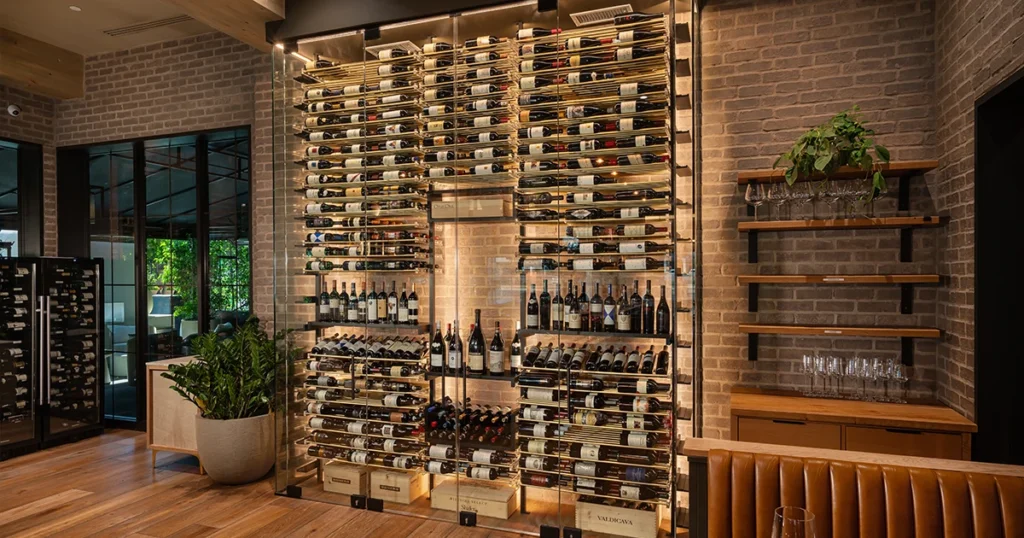
Designing a wine display in a rooftop penthouse can create an exceptional architectural feature, especially when the collection is positioned where it can be viewed from a living room, dining area, or entertainment space. However, rooftop locations present a unique challenge: significant solar exposure can increase heat gain and make it more difficult to maintain a stable wine-storage environment.
The solution is to design the wine display around climate control, insulation, glass performance, shading, and the architecture of the penthouse from the beginning.
Before choosing wine racks or glass, determine how much sunlight reaches the proposed wine display throughout the day.
Consider:
Window orientation
Direct afternoon sunlight
Floor-to-ceiling windows
Skylights
Glass exterior walls
Rooftop heat exposure
Seasonal changes in sunlight
Nearby reflective surfaces
South- and west-facing glazing can be particularly important because strong afternoon sun can introduce substantial heat into the space.
A wine display exposed to direct sunlight should not be treated like a typical interior wine wall.
For a valuable collection, an open wine display may not provide sufficient environmental protection.
A glass-enclosed wine room or display cabinet allows you to create a controlled microenvironment around the bottles.
This approach can provide:
More consistent temperature
Controlled humidity
Protection from household air fluctuations
Reduced exposure to dust
Better protection from sunlight
A more dramatic visual presentation
The enclosure can be designed as a standalone wine room or integrated into the penthouse’s architecture.
If glass is part of the design, glass selection becomes particularly important. It is best to use dual panel insulated glass for wine cellar glass enclosure.
Clear glass provides maximum visibility, but the type and construction of the glass should be evaluated based on the amount of solar exposure.
Depending on the project, consider insulated glass and coatings designed to reduce solar heat gain while maintaining the desired appearance.
Low-E glass may also be worth considering where appropriate.
The goal is to create the visual openness of glass without allowing excessive solar heat to undermine the wine cellar’s climate control.
Motorized shades, blinds, or curtains can significantly reduce direct solar exposure, but they should be considered one part of the overall strategy.
For a luxury penthouse, automated shades can be integrated with the home’s smart system and programmed to respond to sunlight or time of day.
However, shading does not replace proper insulation, glass selection, and mechanical cooling.
A successful wine display uses several layers of protection rather than depending on one solution.
Solar exposure can substantially increase the heat load of a wine room.
The cooling system should therefore be sized based on the actual environmental conditions rather than simply the room’s cubic footage.
Factors can include:
Room dimensions
Glass area
Solar exposure
Insulation
Ambient temperature
Exterior wall exposure
Lighting
Number of occupants
Door openings
Cooling-system location
A professional heat-load calculation is especially valuable for rooftop penthouses because these spaces can experience higher temperatures than interior rooms.
The cooling system should match the architecture of the penthouse.
Depending on the design, possible solutions include:
Self-contained systems:
These can work well for appropriately sized wine rooms when there is a suitable location for the unit and its heat discharge.
Split systems:
These allow the condenser and evaporator to be separated, which can be useful when minimizing noise or preserving interior aesthetics.
Ducted systems:
These can provide a discreet solution when the homeowner wants the mechanical equipment concealed from the wine display.
Ceiling-mounted systems:
These may be appropriate when wall space is limited and the architecture allows for overhead installation.
The best choice depends on the calculated heat load, available mechanical space, noise considerations, and the overall design.
A penthouse located directly below or adjacent to a rooftop can experience significant heat transfer.
The wine display should therefore be separated from excessive heat wherever possible.
During construction or renovation, review:
Roof insulation
Ceiling insulation
Exterior wall insulation
Air sealing
Vapor control
Window performance
Thermal bridges
A beautiful wine display cannot perform properly if the surrounding building envelope is allowing excessive heat into the space.
Wine bottles should not be positioned where direct sunlight strikes them for extended periods.
If the penthouse has panoramic windows, consider placing the wine display along an interior wall or behind a controlled glass enclosure.
You can also use the architecture of the room to create a naturally shaded location.
The best position may not be the wall with the most dramatic view—it may be the location offering the best combination of visibility and environmental protection.
A rooftop penthouse typically benefits from a clean, architectural wine display.
Contemporary options include:
For a more traditional or transitional interior, custom wood wine racks can introduce warmth and contrast.
The rack design should also account for the size and shape of the collection.
Instead of treating the wine display as ordinary storage, consider making it a focal point.
A feature wine wall can combine:
Floor-to-ceiling bottle storage
Backlighting
Decorative stone
Wood paneling
Metal accents
Glass
Custom cabinetry
This approach can make the wine collection feel like part of the penthouse’s interior design.
Lighting is essential when the wine display is intended to be a visual centerpiece.
LED lighting is commonly used for wine displays because it can provide strong visual impact with relatively low heat output.
Consider:
Vertical LED strips
Backlighting
Shelf lighting
Recessed ceiling lights
Accent lighting
Under-cabinet lighting
Avoid excessive illumination and unnecessary heat inside the wine storage environment.
Lighting controls can also allow the homeowner to reduce illumination when the display is not being viewed.
Rooftop penthouses often have open-plan interiors where mechanical noise can become noticeable.
If the wine cooling system is located near a bedroom, living room, or entertainment area, noise should be considered during the design phase.
A split or ducted system may provide a better solution when the homeowner wants the wine display to remain quiet and visually clean.
Mechanical equipment should ideally be located where it can be serviced without disrupting the finished wine display.
A valuable wine collection deserves consideration for power interruptions.
During a new installation, plan the electrical requirements for the cooling system and monitoring equipment.
Depending on the homeowner’s priorities, additional protection may include:
Surge protection
Temperature monitoring
High-temperature alerts
Power-loss notifications
Backup power systems
For a rooftop penthouse where access may be difficult during extreme weather events, remote monitoring can provide additional peace of mind.
Solar exposure isn’t the only environmental challenge.
The interaction between a cool wine enclosure and the warmer penthouse environment can create condensation if the enclosure is not properly designed.
Proper air sealing, insulation, vapor control, glass selection, and climate management are important for minimizing condensation problems.
This is particularly relevant in humid climates.
A rooftop penthouse is often designed around entertaining and views.
Rather than isolating the wine collection, consider positioning the display where guests can see it from the dining or lounge area.
You can create a sophisticated wine feature near:
A dining room
A cocktail bar
An outdoor entertaining area
A kitchen
A private tasting area
A lounge
The wine display can become both functional storage and a conversation piece.
Luxury design should never make service difficult.
Cooling equipment, electrical components, drainage, lighting controls, and other mechanical elements should remain accessible.
Before finalizing the racking and glass design, make sure technicians will be able to access the equipment without dismantling the wine display.
A rooftop wine display should be coordinated with the architect and construction team before the interior finishes are finalized.
The project may require coordination between:
Architect
General contractor
HVAC professional
Wine cellar designer
Glass contractor
Electrician
Millwork company
Lighting designer
Early coordination makes it easier to accommodate cooling equipment, electrical requirements, glass dimensions, insulation, structural supports, and custom racking.
A rooftop penthouse with significant solar exposure can be an incredible setting for a luxury wine display, but it requires more planning than a conventional interior wine wall.
The key is to address solar heat gain before selecting the cooling system or finalizing the glass enclosure. High-performance glass, strategic placement, proper insulation, shading, accurate heat-load calculations, and an appropriately sized wine cooling system can work together to create a stable environment.
With thoughtful planning, your penthouse wine display can combine architectural elegance, climate protection, and effortless visibility—turning your collection into a sophisticated centerpiece without compromising the conditions needed for long-term wine storage.