Call Us 📞 800-323-3130
Mon–Fri 8am–6pm CST, Sat–Sun 9am–1pm CST
Free design consultations
Showrooms in Miami & Fort Lauderdale
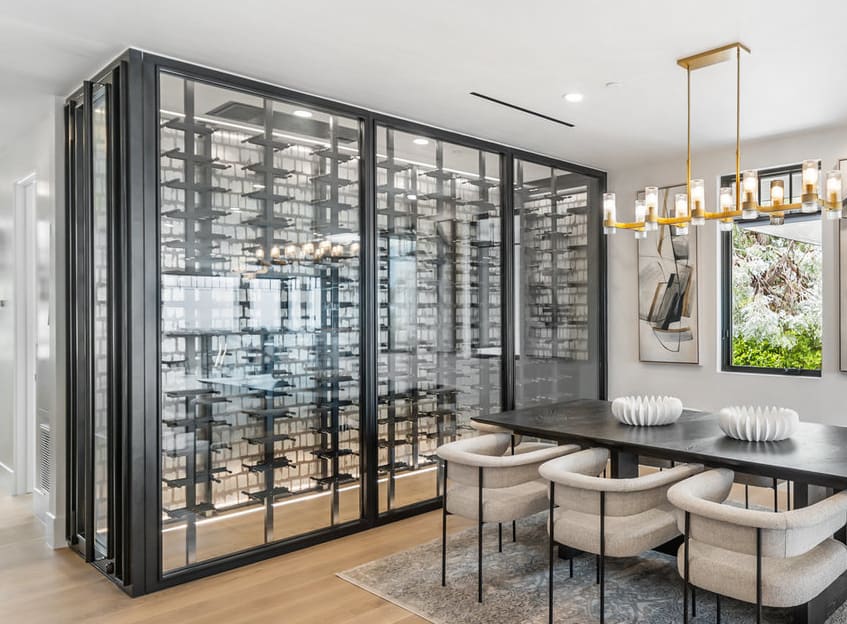
A luxury wine cellar is more than a beautiful place to display bottles—it is a carefully engineered space designed to protect your collection while becoming a distinctive feature of your home. When planned during a new home build, a wine cellar can be integrated into the architecture from the beginning, making it easier to achieve the right combination of climate control, insulation, lighting, storage, and aesthetics.
Whether you envision a sophisticated entertaining space, a private tasting room, or a dramatic glass-enclosed wine display, early planning is the key to getting the details right.
The first decision is where the wine cellar will be located. During a new construction project, you have considerably more flexibility than you would when converting an existing room.
Common locations include:
Basement wine cellars
Under-stair spaces
Dining room or kitchen-adjacent wine rooms
Dedicated wine rooms near entertainment areas
Butler’s pantries
Home offices or private lounges
Glass-enclosed wine displays integrated into living spaces
Consider accessibility, available square footage, ceiling height, exposure to sunlight, proximity to exterior walls, and how the cellar will connect with the rest of the home.
For a luxury design, the wine cellar should feel intentional rather than like an afterthought.
Think beyond your current collection. A cellar designed for 300 bottles may quickly become inadequate if you expect your collection to grow.
Estimate:
Your current bottle count
Expected collection growth
Number of standard bottles versus magnums and larger formats
Bottles that require label-forward display
Space for cases or bulk storage
Room needed for future additions
It is generally better to build some additional capacity into the design rather than redesign the cellar later.
Wine racks are one of the most visible elements of a luxury cellar, but they also determine how efficiently the available space is used.
Depending on your design goals, you might combine traditional wood racking with contemporary metal, cable, acrylic, or wall-mounted systems.
Consider incorporating specialized storage such as:
A combination of storage and display racking can create a more sophisticated appearance while making frequently accessed bottles easy to find.
A luxury wine cellar should provide a stable environment rather than simply adding a wine cooling unit to an ordinary room.
Wine generally benefits from consistent temperature and controlled humidity. The cellar envelope should therefore be designed around the cooling system, insulation, vapor management, and ventilation requirements.
During new construction, determine early:
The required cooling capacity
Cooling system type
Location of the evaporator
Location of the condenser
Ducting requirements
Electrical requirements
Drainage requirements
Ventilation requirements
Service access
Cooling equipment can include self-contained, split, ducted, or ceiling-mounted systems. The appropriate choice depends on the cellar’s size, heat load, layout, and architectural requirements.
One of the most important technical considerations is determining the actual heat load.
The required BTU capacity can be influenced by factors such as:
Cellar dimensions
Insulation levels
Exterior wall exposure
Ceiling and floor construction
Ambient temperatures
Lighting
Number of people occupying the space
Location of the condenser
This is particularly important for luxury cellars with large glass walls or doors. A beautiful glass enclosure can introduce substantially more heat into the room than a fully insulated wall.
A professional heat-load calculation can help prevent an undersized system that runs continuously or an unnecessarily oversized system.
Climate control is only effective when the room itself is properly constructed.
During a new home build, coordinate the wine cellar’s insulation and vapor-control strategy with the architect, builder, and HVAC professionals.
Pay attention to:
Walls
Ceiling
Floor
Door assembly
Glass enclosure
Penetrations
Electrical openings
HVAC penetrations
The objective is to create a controlled environment that minimizes temperature fluctuations and prevents unwanted condensation.
The door should be treated as part of the wine cellar system—not simply as an interior door.
A luxury wine cellar may feature a custom wood door, glass door, contemporary metal-framed design, or another architectural style.
Consider:
Insulation
Weather sealing
Door swing
Hardware
Glass type
Frame design
Overall appearance
If the cellar is climate controlled, the door should be appropriately designed to help maintain the controlled environment.
Glass can transform a wine cellar from a storage room into an architectural centerpiece.
A frameless or contemporary glass enclosure can provide dramatic visibility from a kitchen, dining room, hallway, or living room.
However, glass also changes the thermal characteristics of the cellar. The amount, type, orientation, and construction of the glass should be considered when calculating the cooling load.
For this reason, the glass design and cooling system should be planned together—not independently.
Lighting can dramatically change how a wine cellar looks.
Instead of relying on a single ceiling fixture, consider layered lighting such as:
LED shelf lighting
Backlighting
Accent lighting
Recessed ceiling lights
Display lighting
Toe-kick lighting
Lighting inside wine lockers
LED lighting is commonly preferred because it produces relatively little heat compared with older lighting technologies.
Lighting should also be positioned carefully to showcase bottles without creating unnecessary heat or excessive exposure.
If space allows, consider designing the cellar as an experience rather than simply a storage area.
A luxury wine room could include:
A tasting table
Bar seating
Countertops
Custom cabinetry
Glassware storage
Sink
Wine preparation area
Lounge seating
Display shelves
Artwork
For larger projects, the cellar can become an extension of the home’s entertainment space.
New construction provides an excellent opportunity to conceal infrastructure.
Before walls are closed, coordinate requirements for:
Wine cooling equipment
Dedicated electrical circuits
Lighting
Smart controls
Motorized shades
Security systems
Plumbing
Drainage
Audio and entertainment systems
Planning these requirements after construction is complete can result in unnecessary demolition, visible wiring, or expensive modifications.
Luxury homeowners may also want to integrate smart technology into the cellar.
Depending on the system, you can incorporate monitoring for:
Temperature
Humidity
Power interruptions
Cooling-system performance
Door openings
Security
Remote monitoring can provide additional peace of mind, especially for valuable wine collections.
The wine cellar should complement the architectural language of the new home.
Traditional homes may benefit from rich wood racking, natural stone, decorative molding, and warm lighting. Contemporary homes may be better suited to metal wine racks, glass, minimalist cabinetry, LED lighting, and clean architectural lines.
Popular materials include:
Mahogany
Oak
Walnut
Stainless steel
Powder-coated metal
Glass
Stone
Marble
Tile
The best luxury cellars often combine several materials rather than relying on one finish throughout.
An elegant wine cellar should also be practical to maintain.
Make sure the cooling system is accessible for servicing and that important components aren’t permanently enclosed behind millwork.
Also consider access to:
Filters
Drain lines
Electrical components
Condensers
Controls
Cooling-system connections
Good planning ensures that maintaining the cellar does not compromise its appearance.
Luxury wine cellars can vary dramatically in cost depending on their size, materials, cooling requirements, glass construction, custom millwork, and technology.
Your budget should account for more than just wine racks. Consider the complete project:
Construction + insulation + climate control + electrical + glass + doors + racking + lighting + cabinetry + finishes + installation
Establishing the budget early allows your design team to prioritize the features that matter most.
Perhaps the biggest advantage of designing a wine cellar during a new home build is the ability to coordinate everything before construction begins.
The architect, builder, electrician, HVAC contractor, glass company, millwork team, and wine cellar designer should understand the requirements before the walls are finished.
This makes it easier to coordinate cooling equipment, ductwork, insulation, electrical connections, door openings, glass dimensions, lighting, and custom racking.
Designing a luxury wine cellar for a new home build gives you the opportunity to create a space that is both technically reliable and visually impressive. The best results come from treating the cellar as an integrated architectural system rather than simply installing wine racks inside an existing room.
Start with the location and collection size, then plan the insulation, heat load, cooling system, glass, door, racking, lighting, electrical requirements, and finishes together.
With careful planning, your wine cellar can become more than storage—it can be a sophisticated architectural centerpiece designed to protect your collection and enhance the way you enjoy it for years to come.