Call Us 📞 800-323-3130
Mon–Fri 8am–6pm CST, Sat–Sun 9am–1pm CST
Free design consultations
Showrooms in Miami & Fort Lauderdale
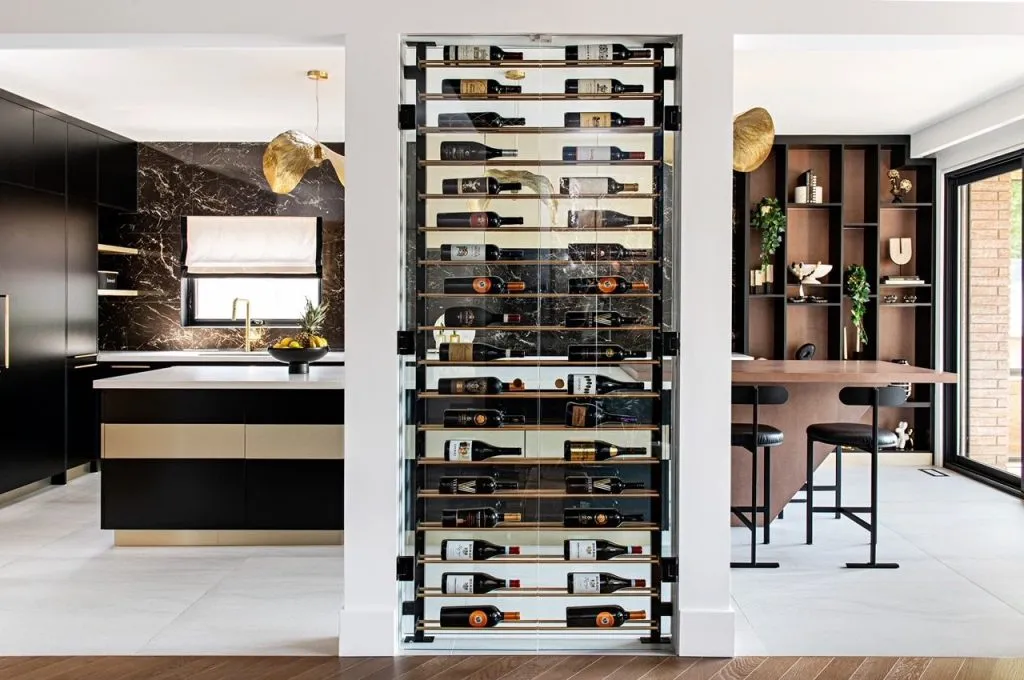
You don’t need a large basement or dedicated wine room to create a functional place for your wine collection. An unused closet can often be transformed into an attractive, climate-controlled wine storage space with the right planning. For homeowners with limited space or a modest collection, a closet conversion can be one of the most cost-effective ways to create a dedicated wine storage area.
The key is to focus your budget on the elements that actually protect your wine: insulation, temperature control, humidity management, proper racking, and an appropriate door or enclosure.
Closets already provide several advantages. They are enclosed, relatively compact, and often located away from direct sunlight. Their smaller volume also means you may not need a large wine cellar cooling system to maintain the desired environment.
A closet can work particularly well under stairs, in a hallway, beside a kitchen, or within a larger walk-in closet. Even a relatively small space can accommodate dozens or hundreds of bottles when the racking is designed efficiently.
However, simply placing wine racks inside a closet isn’t enough. A standard household closet is not automatically suitable for long-term wine storage.
One of the most important investments in a closet wine cellar is insulation.
Wine storage generally benefits from a stable environment around 55°F with controlled humidity, rather than the temperature fluctuations found in typical living spaces. Without proper insulation, a cooling unit may have to work continuously and may struggle to maintain the desired temperature.
For a closet conversion, consider insulating:
Exterior-facing walls
The ceiling
The floor when necessary
Walls shared with hot rooms or garages
Around penetrations, pipes, and electrical openings
Closed-cell spray foam or properly installed rigid insulation can provide an effective thermal barrier. A vapor barrier may also be necessary depending on the construction and climate.
Tip: Don’t spend heavily on decorative racking before addressing insulation. An attractive wine rack cannot compensate for an unstable storage environment.
A small closet doesn’t necessarily require an expensive commercial cooling system. Depending on the size, insulation, location, glass exposure, and surrounding temperatures, a compact wine cellar cooling unit may be sufficient.
However, cooling capacity should not be selected solely according to the closet’s cubic footage. Factors such as:
Room temperature outside the cellar
Number and size of glass surfaces
Wall construction
Insulation quality
Ceiling and floor conditions
Lighting
Door construction
Location of the condenser
can significantly affect the heat load.
A professional heat-load calculation can help determine the appropriate BTU capacity and prevent you from overspending on an oversized system—or dealing with an undersized system that runs constantly.
Wine Racking is another area where you can control costs.
If the goal is maximum bottle capacity, standard modular wood wine racks can be a practical choice. They can be configured into individual bottle openings, diamond bins, case storage, display rows, or combinations of different storage styles.
For a contemporary look, metal wall-mounted or cable wine racks can create an elegant display while using relatively little floor space.
You don’t necessarily need premium custom cabinetry throughout the entire closet. A combination of functional storage and a smaller display section can provide a high-end appearance without dramatically increasing the budget.
Closets are often limited in floor area but offer valuable vertical space.
Floor-to-ceiling wine racking can significantly increase capacity without expanding the footprint. Depending on the closet dimensions, you can combine standard bottle storage with shelving for cases, decanters, wine accessories, or larger bottles.
A narrow closet can also benefit from wall-mounted wine racks that keep the floor open and create a more visually spacious design.
The closet door can have a major impact on temperature control.
A standard hollow-core interior door generally provides little insulation. If your closet is being converted into a temperature-controlled wine cellar, consider an insulated, properly sealed door.
Weatherstripping and a tight seal around the door can help minimize air leakage. If you want a more dramatic presentation, a glass wine cellar door can provide visibility into the collection—but glass introduces additional heat load, so it should be incorporated into the cooling and insulation calculations.
For the most budget-conscious conversion, a well-insulated solid door is often the simplest option.
You don’t need an elaborate lighting system to make a closet wine cellar look luxurious.
LED lighting is an excellent choice because it produces relatively little heat compared with traditional incandescent lighting. Recessed lighting, LED strips beneath shelves, or backlighting around display bottles can add visual interest without significantly increasing the heat load.
Avoid excessive lighting that remains on for long periods. Wine is sensitive to light, particularly ultraviolet exposure, so keeping the collection protected from direct sunlight is important.
Temperature isn’t the only environmental consideration.
Extremely dry conditions can affect natural corks, while excessive humidity can contribute to mold, odors, and damage to labels or finishes. A properly designed wine cellar should maintain a reasonably stable humidity level.
In many closet conversions, humidity can be managed as part of the overall cellar design rather than by installing a separate dehumidifier or humidifier. The exact approach depends on the home’s climate and the cellar’s construction.
A simple digital temperature and humidity monitor is also an inexpensive way to keep track of conditions.
One of the easiest ways to control the cost of a closet wine cellar is to build it in phases.
For example, you could start with:
Proper insulation and vapor protection
An appropriate wine cellar door
A correctly sized cooling system
Functional wine racking
LED lighting
Decorative upgrades and premium display features
This approach allows you to prioritize wine protection first and aesthetics second.
You can always upgrade the racking, lighting, flooring, or display features later.
Although a closet conversion can be affordable, some components are worth doing correctly from the beginning.
Avoid cutting corners on insulation, vapor-barrier design, cooling capacity, and air sealing. These components determine whether your wine storage environment can remain stable over time.
Saving money on racking is relatively easy. Saving money on climate control by installing an ordinary room air conditioner, for example, can create temperature and humidity fluctuations that are not ideal for long-term wine storage.
The cost depends heavily on the closet’s existing construction and the level of customization you want.
A basic conversion using an existing enclosed space, efficient insulation, a straightforward door, modular racking, and an appropriately sized cooling system can be considerably less expensive than building a dedicated wine room from scratch.
A high-end closet conversion with custom millwork, premium wood racking, glass doors, architectural lighting, and sophisticated climate control will naturally cost more.
The biggest advantage is that you’re working with an existing footprint, which can eliminate some of the construction costs associated with creating a new room.
Yes, a closet can be transformed into a cost-effective wine storage space—but the savings come from smart design, not from skipping essential components.
Use the existing enclosure, maximize vertical space, choose efficient racking, install appropriate insulation, seal the door properly, and select a cooling system based on the actual heat load. Then add decorative features according to your budget.
With careful planning, even a small unused closet can become a beautiful and functional wine storage space that protects your collection while adding character to your home.
If you’re considering converting a closet into a wine cellar, Cool Wine Cellar can help you evaluate the space, determine the appropriate climate-control requirements, and select wine racking that fits both your collection and your budget.