
Call Us 📞 800-323-3130
Mon–Fri 8am–6pm CST, Sat–Sun 9am–1pm CST
Free design consultations
Showrooms in Miami & Fort Lauderdale
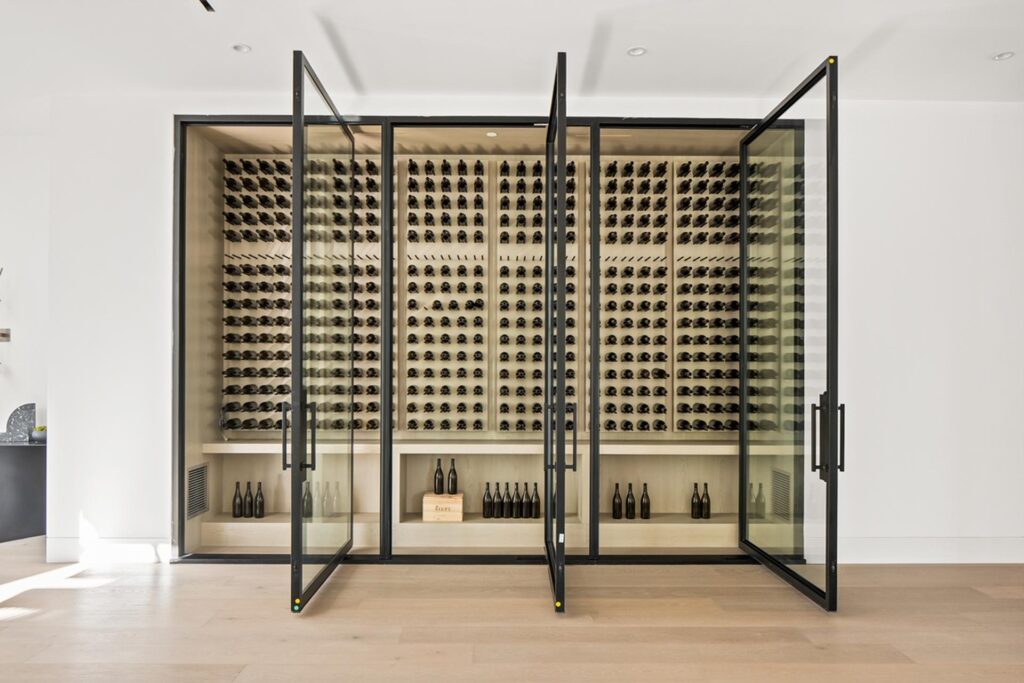
Choosing the right wine cooling unit is one of the most important decisions when building a climate-controlled wine cellar. A common mistake is selecting a cooling system based only on the room’s cubic footage. While room size matters, heat load is what ultimately determines how much cooling capacity your wine cellar needs.
A properly calculated heat load helps ensure the cooling system can maintain a stable wine-storage temperature without running continuously or struggling during hot weather.
Heat load is the total amount of heat that enters the wine cellar and must be removed by the cooling system.
It can come from several sources, including:
The cooling unit must have enough capacity to overcome these heat sources while maintaining the desired cellar temperature. Contact our experts today for a Free Heatload Calculation for your wine room.
Many wine cooling units list a recommended room size in cubic feet. This is useful as a starting point, but it should not be treated as the only sizing factor.
For example, two wine rooms could have exactly the same dimensions but require very different cooling capacities.
Both rooms may have the same cubic footage, but Wine Cellar B could require substantially more cooling capacity.
That’s why BTU heat-load calculations are more reliable than room volume alone.
Cooling capacity is commonly measured in BTUs per hour (BTU/h).
BTU stands for British Thermal Unit and represents a unit of heat energy. In wine cellar applications, the cooling unit’s BTU rating indicates how much heat it can remove under specified operating conditions.
For example, if your calculated heat load is approximately 2,700 BTU/h, selecting a unit with capacity around or above that requirement may be appropriate—but the actual equipment selection should also consider operating conditions, manufacturer ratings, and system configuration.
Start by calculating the room’s cubic footage:
Length × Width × Height = Cubic Feet
For example:
A wine cellar measuring:
would have:
10 × 8 × 8 = 640 cubic feet
This number helps establish a baseline for cooling requirements.
However, don’t stop here.
Walls are a major source of heat gain.
Consider whether each wall is:
An exterior wall exposed to hot outdoor temperatures can contribute significantly more heat than a properly insulated interior wall.
This is especially important in warm climates such as Florida, Texas, Arizona, and other regions where outdoor temperatures can remain high for extended periods.
The ceiling can be one of the largest heat sources if the wine cellar is located below an attic, roof, garage, or other unconditioned area.
Likewise, the floor should be evaluated when the cellar is located above a warm garage, crawl space, or other area with significantly different temperatures.
A professionally calculated heat load considers the temperature difference between the wine room and the surrounding spaces.
Glass can dramatically increase the cooling requirement.
A wine cellar with a glass door is different from one with a solid insulated door. A cellar with an entire glass wall can have an even greater heat load.
Important factors include:
Single-pane glass is particularly important to account for accurately.
If your wine room includes multiple single-pane glass walls, don’t assume a standard cooling unit will be sufficient simply because the room is relatively small.
Lighting generates heat that must eventually be removed by the cooling system.
Calculate the wattage of lighting installed inside the cellar and consider other electrical equipment that operates within the space.
LED lighting is generally a good choice because it can provide efficient illumination with relatively low heat output.
Still, every heat-producing electrical device should be considered when determining the total load.
People also generate heat.
A wine cellar used primarily for storage may have very little human activity. A large tasting room, however, could regularly accommodate several people.
If the cellar is designed as an entertaining space, the expected occupancy should be incorporated into the heat-load calculation.
Every time the wine cellar door opens, warm and humid air can enter the room.
Frequent door openings are particularly important in wine rooms used for entertaining.
The following can increase infiltration:
A properly sealed wine cellar door helps reduce unwanted air exchange.
The location of the wine cellar matters.
A cellar in a cool northern climate may have very different heat-load characteristics than one in South Florida.
In hot and humid regions, the cooling system may have to work harder to maintain the desired wine-storage environment.
For Florida wine cellars, for example, designers should pay close attention to:
Climate should be part of the calculation—not an afterthought.
Suppose you have a 600-cubic-foot wine cellar.
The room has:
The cubic footage alone does not tell you exactly which cooling unit to purchase.
Instead, the designer should estimate the heat contribution from the building envelope, glass, lighting, occupancy, infiltration, and surrounding conditions.
If the resulting calculated requirement is approximately 2,700–2,800 BTU/h, selecting a cooling system based solely on a generic “up to X cubic feet” recommendation could result in an undersized system.
An undersized cooling unit can cause several problems.
1. Continuous Operation
The system may run almost constantly as it struggles to reach the target temperature.
2. Difficulty Maintaining Temperature
During hot weather, the unit may fail to maintain the desired wine-storage temperature.
3. Increased Wear
Continuous operation can place additional stress on the cooling system.
4. Poor Humidity Performance
An improperly sized system may not manage the cellar environment as intended.
5. Shorter Equipment Life
Constant operation under demanding conditions can potentially reduce equipment longevity.
An undersized cooling system is therefore not necessarily a money-saving decision.
Oversizing isn’t always ideal either.
A significantly oversized system may cycle on and off more frequently and may not provide the environmental performance you expect.
The goal is to select a cooling system with appropriate capacity for the actual heat load and operating conditions.
This is where professional equipment selection becomes important.
Adding an arbitrary percentage to the calculated heat load isn’t always the best approach. Instead, consider the manufacturer’s published performance ratings, installation conditions, condenser location, ambient temperature, and the characteristics of the specific wine cooling system.
For example, a system that produces a particular BTU capacity under one ambient condition may perform differently in a much hotter mechanical space.
Where the cooling unit rejects heat is extremely important.
A self-contained system installed in a warm mechanical room may face more demanding conditions than the same system operating in a cooler, properly ventilated space.
Depending on the design, you may be able to:
These choices can affect both performance and installation requirements.
Professional sizing is especially important when the wine cellar includes:
A professional can calculate the heat load and recommend a suitable cooling system rather than relying solely on a generic room-size chart.
Calculating wine cellar heat load is about much more than measuring the room and looking up its cubic footage.
The right cooling system should account for room volume, insulation, exterior walls, glass, sunlight, lighting, people, door openings, surrounding temperatures, humidity, and local climate.
The best approach is to determine the actual BTU requirement first and then select a wine cooling unit that can reliably handle that load under the expected operating conditions.
For a valuable wine collection, proper sizing is an investment in long-term protection. A correctly engineered cellar can maintain a stable environment, operate more effectively, and give you greater confidence that your wines are being stored under the conditions they deserve.