
Call Us 📞 800-323-3130
Mon–Fri 8am–6pm CST, Sat–Sun 9am–1pm CST
Free design consultations
Showrooms in Miami & Fort Lauderdale
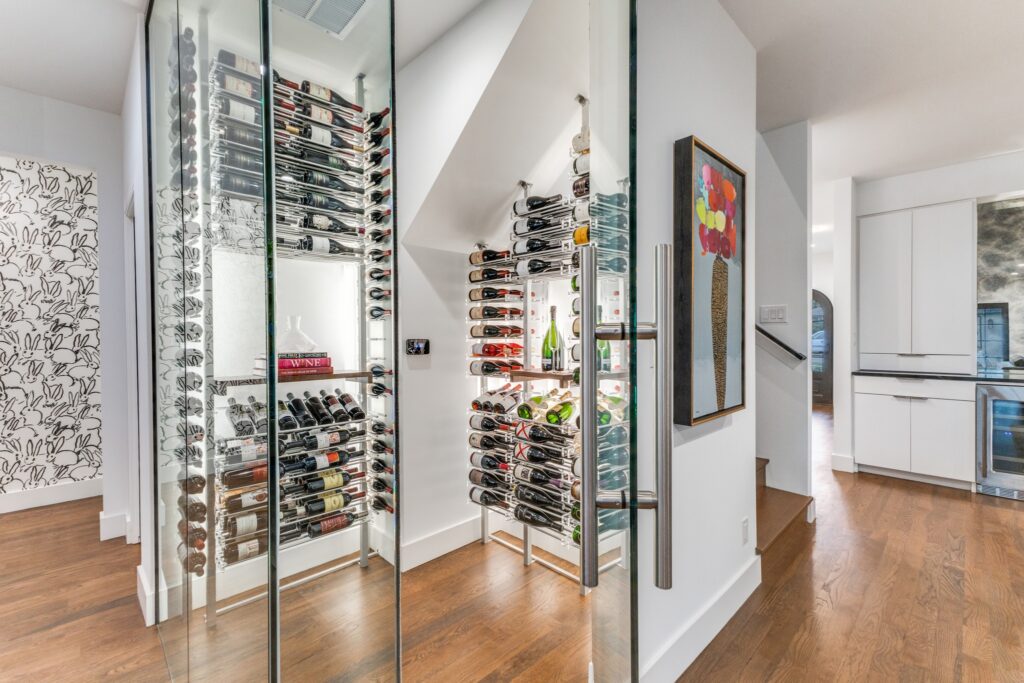
A glass wine cellar door is one of the most striking features of a modern wine room. It showcases your collection, creates an open and luxurious feel, and complements both contemporary and traditional interiors. However, if you’ve noticed water droplets forming on the glass, you’re not alone. Condensation on glass wine cellar doors is one of the most common issues homeowners encounter, especially in warm, humid climates like South Florida.
The good news is that condensation is usually preventable. Understanding why it happens—and designing your wine cellar correctly from the start—can help you maintain a clear, beautiful glass enclosure while protecting your wine collection and surrounding finishes.
Condensation occurs when warm, humid air comes into contact with a surface that is colder than the air’s dew point.
Inside a properly cooled wine cellar:
Outside the cellar, especially during summer, conditions may be:
When the warm air touches the cool glass door, moisture in the air condenses into water droplets.
Think of it like a cold beverage sweating on a hot day—the same principle applies to your wine cellar door.
South Florida’s tropical climate creates the perfect conditions for condensation.
High outdoor humidity means the surrounding air contains a large amount of moisture. When that moisture encounters the cool surface of a wine cellar door, condensation forms quickly.
Homes near the ocean, in coastal communities, or with high indoor humidity are particularly susceptible.
One of the most common causes of condensation is using standard single-pane glass.
Single-pane glass:
As a result, moisture from the surrounding air condenses easily.
For climate-controlled wine rooms, single-pane glass is generally not recommended.
Modern wine cellar doors typically use insulated glass units (IGUs).
These consist of:
Because the exterior surface stays warmer than single-pane glass, condensation is significantly reduced.
Insulated glass also lowers the cooling load on your wine cellar, helping your refrigeration system operate more efficiently.
Low-emissivity (Low-E) coatings further improve glass performance.
These microscopic coatings help:
The result is less opportunity for moisture to collect on the exterior of the glass.
Low-E insulated glass is especially valuable for wine cellars located near windows or in rooms with abundant natural sunlight.
Even high-quality glass can develop condensation if the door isn’t sealed properly.
Warm air can leak through:
Every time humid air enters the cellar, the cooling system must remove additional moisture while maintaining the desired temperature.
Proper weather sealing is essential for long-term performance.
Sometimes the problem isn’t the wine cellar—it’s the house.
Indoor humidity can rise because of:
If the home’s humidity climbs above comfortable levels, condensation becomes much more likely.
Maintaining indoor humidity between 40–55% can significantly reduce moisture buildup on wine cellar doors.
A wine cooling unit that isn’t properly sized may struggle to maintain stable temperature and humidity.
Signs include:
Professional cooling calculations take into account:
Proper sizing helps maintain ideal conditions while minimizing condensation risks.
Many people focus only on the visible condensation, but moisture can also develop inside walls if the cellar isn’t constructed properly.
A continuous vapor barrier prevents humid air from migrating into:
Without a proper vapor barrier, hidden condensation may lead to:
Good wine cellar construction protects both the collection and the surrounding home.
Glass exposed to direct sunlight experiences rapid temperature changes throughout the day.
As sunlight heats the surrounding air while the interior remains cool, moisture can form more readily on the glass surface.
Whenever possible:
Reducing solar exposure helps improve both appearance and cooling efficiency.
Frequent door openings allow warm, humid air to rush into the cellar.
Each opening increases:
If you frequently entertain guests, consider organizing your wine racks for quick bottle access to minimize the time the door remains open.
Even a professionally built wine cellar benefits from periodic inspections.
Check regularly for:
Addressing small issues early can prevent larger—and more expensive—repairs later.
For the clearest glass and most reliable wine storage, follow these recommendations:
These measures work together to reduce moisture while improving energy efficiency and protecting your investment.
Occasional light condensation during periods of extreme humidity isn’t always cause for concern. However, persistent moisture, fogging between insulated glass panes, dripping water, or condensation on surrounding walls may indicate underlying issues such as failed glass seals, poor insulation, air leaks, or an improperly designed cooling system.
If condensation becomes a recurring problem, it’s worth having the wine cellar evaluated by a professional to identify the root cause before moisture damages the room or affects your wine collection.
Condensation on glass wine cellar doors isn’t simply a cosmetic issue—it signals an imbalance between temperature, humidity, insulation, and airflow. Fortunately, most condensation problems can be prevented through thoughtful design and quality construction.
Choosing insulated Low-E glass, installing effective vapor barriers, sealing the enclosure properly, and using a correctly sized cooling system all contribute to a stable environment where your wine is protected and your glass remains crystal clear.
A well-designed glass wine cellar should showcase your collection—not hide it behind fog and water droplets. By investing in the right materials and professional installation, you can enjoy the elegance of a glass wine room while preserving the ideal conditions for every bottle in your collection.