
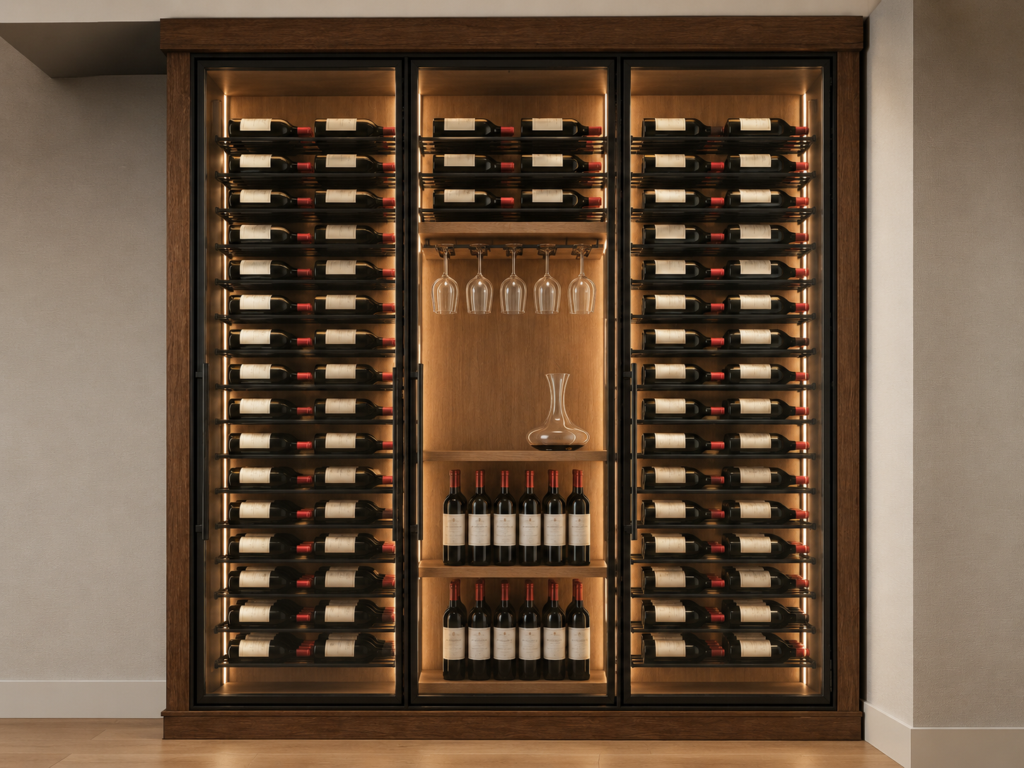
A frameless glass wine room is one of the most striking features you can add to a home. With crystal-clear glass panels, minimal hardware, and uninterrupted views of your wine collection, these contemporary wine rooms transform bottles into architectural artwork while creating a luxurious focal point.
However, while frameless glass wine cellars are visually stunning, they also present unique engineering challenges. Unlike traditional insulated wine cellars built with framed walls and solid doors, glass wine rooms require careful planning to maintain stable temperature and humidity. Poor sealing, incorrect glass selection, or inadequate cooling design can lead to condensation, excessive energy consumption, and inconsistent storage conditions.
If you’re considering a frameless glass wine room, here’s everything you should know before you begin.
What Is a Frameless Glass Wine Room?
A frameless glass wine room uses large tempered or insulated glass panels connected with minimal hardware instead of bulky aluminum or wood frames. Silicone joints and precision engineering create nearly invisible seams, giving the impression that the enclosure is made entirely of glass.
The result is a sleek, modern wine display that integrates beautifully with open-concept homes, luxury kitchens, dining rooms, entertainment spaces, and commercial wine lounges.
Unlike traditional wine cellars hidden behind wood doors, frameless glass rooms showcase the collection from virtually every angle.
Why Homeowners Love Frameless Glass Wine Rooms
Stunning Modern Appearance
The biggest advantage is aesthetics.
Without heavy framing, attention stays on the wine collection rather than the enclosure itself. The clean lines complement contemporary architecture while making even smaller wine rooms feel larger.
Maximizes Natural Light
Glass allows surrounding light to flow throughout the room, making adjacent living spaces feel brighter and more open.
Many homeowners use LED accent lighting inside the cellar to create a dramatic display after dark.
Turns Wine into Artwork
Modern wine racks, floating bottle displays, cable systems, acrylic pegs, and label-forward storage become part of the home’s interior design.
Instead of hiding wine in a basement, the collection becomes a centerpiece.
Adds Luxury Appeal
Luxury buyers increasingly view custom wine rooms as premium home features.
A professionally designed glass wine room can elevate both visual appeal and perceived property value.
Works with Many Wine Rack Styles
Frameless glass complements nearly every storage system:
- Floating cable wine racks
- Metal label-forward displays
- Wall-mounted wine panels
- Acrylic wine pegs
- Contemporary wood wine racks
- Mixed-material custom displays
The Challenges of Frameless Glass Wine Rooms
Although beautiful, glass creates several technical challenges that many DIY projects overlook.
Glass Is Not an Insulator Like a Wall
Even insulated glass transfers more heat than an insulated wall.
That means:
- Higher cooling loads
- Longer cooling cycles
- Increased operating costs
- Greater importance of proper BTU calculations
Many homeowners underestimate this when selecting a cooling unit.
Condensation Can Become a Serious Problem
Condensation occurs when warm humid air meets cold glass surfaces.
Common causes include:
- Single-pane glass
- Poor room sealing
- High indoor humidity
- Improper cooling system sizing
- Missing vapor barriers
Water droplets may form on glass panels, silicone joints, or even flooring surrounding the enclosure.
Every Joint Must Be Properly Sealed
Unlike framed walls that naturally hide insulation and vapor barriers, frameless glass depends almost entirely on precision sealing.
Every connection must prevent warm air infiltration.
Areas requiring careful sealing include:
- Glass-to-glass joints
- Glass-to-floor transitions
- Ceiling connections
- Wall intersections
- Door frame edges
- Thresholds
Tiny air leaks may seem insignificant but can dramatically increase humidity infiltration.
Glass Doors Require Precision Installation
The door is often the weakest point in the enclosure.
Poorly aligned hinges or inadequate weather stripping can allow conditioned air to escape continuously.
Professional installers typically use:
- Magnetic gaskets
- Compression seals
- Automatic door closers
- Premium weather stripping
These components help maintain a consistent cellar environment.
Why Tempered Insulated Glass Matters
One of the biggest mistakes homeowners make is choosing standard tempered glass instead of insulated glass units (IGUs).
Pros:
- Lower initial cost
- Minimal thickness
Cons:
- Poor insulation
- More condensation
- Higher cooling costs
- Greater temperature fluctuation
Pros:
- Better thermal performance
- Less condensation
- Lower cooling load
- Improved energy efficiency
- Better long-term wine protection
Cons:
- Higher upfront investment
For most climate-controlled wine rooms, insulated glass is well worth the additional cost.
Why Vapor Barriers Matter
Many people assume glass eliminates the need for vapor barriers.
It doesn’t.
Only the glass itself is moisture resistant.
The surrounding construction—including ceilings, side walls, flooring transitions, and framing—still requires proper vapor barrier installation.
Without it, moisture can migrate into surrounding walls and insulation, leading to:
- Mold growth
- Damaged drywall
- Rotting wood
- Reduced insulation performance
- Costly future repairs
The vapor barrier should form one continuous sealed envelope around the wine room.
Wine Cooling System Selection Is Even More Important
Because glass transfers more heat than insulated walls, cooling system selection should never rely solely on room dimensions.
Professional designers evaluate:
- Total glass surface area
- Glass thickness
- Number of insulated panels
- Sun exposure
- Interior room temperature
- Ceiling height
- Wall construction
- Door specifications
- Heat generated by lighting
A detailed BTU heat-load calculation ensures the system can maintain approximately 55°F (13°C) and 60–70% relative humidity without running continuously.
Common Sealing Mistakes to Avoid
Many sealing issues don’t appear until months after installation.
Common problems include:
- Using household silicone instead of structural glazing silicone
- Leaving gaps beneath the door
- Poorly sealed ceiling joints
- Missing vapor barriers behind finished walls
- Improper glass panel alignment
- Inadequate weather stripping
- Failing to seal penetrations for electrical wiring or refrigeration lines
Each small leak increases the workload on the cooling system and raises the risk of condensation.
Maintenance Tips for Glass Wine Rooms
Frameless glass wine rooms require minimal maintenance, but regular inspections help preserve performance.
Check periodically for:
- Worn door gaskets
- Cracked silicone joints
- Condensation around edges
- Loose hinges
- Glass chips or cracks
- Cooling unit performance
- Humidity consistency
Replacing worn seals early can prevent larger climate-control issues later.
Are Frameless Glass Wine Rooms Worth It?
For homeowners seeking a modern, elegant showcase for their wine collection, frameless glass wine rooms are an excellent investment. They offer unmatched visual appeal, seamlessly integrate into contemporary interiors, and turn wine storage into a design feature.
However, their success depends on more than beautiful glass panels. Proper engineering, insulated glazing, continuous vapor barriers, precision sealing, and a correctly sized wine cooling system are essential to maintaining ideal storage conditions and protecting your collection for years to come.
When aesthetics and performance are planned together, a frameless glass wine room delivers both stunning design and reliable climate control. Get a Free Custom Glass Enclosure Quote today from our Glass Experts.
Frequently Asked Questions (FAQs)
Do frameless glass wine rooms need insulated glass?
Yes. Double-pane insulated glass significantly improves thermal performance, reduces condensation, and lowers the cooling load compared to single-pane glass.
Can a frameless glass wine room maintain 55°F?
Yes, provided it is properly sealed, constructed with insulated glass, and paired with a correctly sized wine cellar cooling system.
Why does condensation form on glass wine rooms?
Condensation occurs when warm, humid air contacts cooler glass surfaces. Poor sealing, high indoor humidity, or single-pane glass are common causes.
Is a vapor barrier necessary if the walls are mostly glass?
Yes. The surrounding walls, ceiling, and floor transitions still require a continuous vapor barrier to prevent moisture intrusion and protect the building structure.
Are frameless glass wine rooms more expensive than traditional wine cellars?
Generally, yes. Custom insulated glass panels, specialized hardware, precision installation, and engineered cooling systems typically increase the overall project cost.
What type of cooling system works best for a glass wine room?
The ideal system depends on the room’s heat-load calculation, glass area, insulation, and layout. Many glass wine rooms perform best with ducted or split wine cooling systems that are sized based on BTU requirements rather than room volume alone.
How often should the seals on a glass wine room be inspected?
Inspect silicone joints, door gaskets, and weather stripping at least once a year to ensure the enclosure remains airtight and energy efficient.
Can frameless glass wine rooms be installed in open-concept homes?
Yes. They are especially popular in open-concept kitchens, dining rooms, and entertainment spaces, but they require careful engineering to maintain proper temperature and humidity despite the surrounding environment.