
Call Us 📞 800-323-3130
Mon–Fri 8am–6pm CST, Sat–Sun 9am–1pm CST
Free design consultations
Showrooms in Miami & Fort Lauderdale
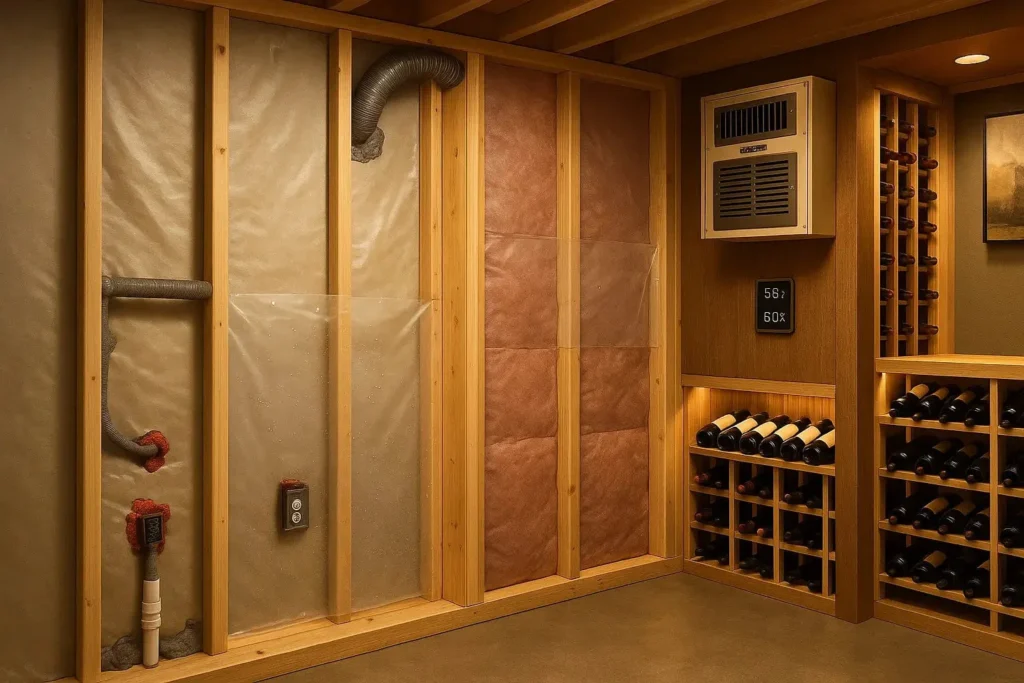
Selecting the right wine cooling unit is one of the most important decisions when building a wine cellar. A unit that is too small may struggle to maintain proper storage temperatures, while an oversized system can cycle inefficiently and affect humidity levels. Understanding how room dimensions and insulation impact cooling requirements can help ensure your collection remains protected for years to come.
Wine is best stored at consistent temperatures, typically between 55°F and 58°F, with humidity levels around 60% to 70%. A properly sized cooling system maintains these conditions regardless of seasonal temperature changes.
An undersized cooling unit may run continuously, increasing energy consumption and shortening equipment lifespan. Conversely, an oversized system may cool the room too quickly without adequately controlling humidity.
The first step in sizing a wine cooling unit is determining the cubic footage of the room.
Formula:
Length × Width × Height = Cubic Feet
For example:
Length: 10 feet
Width: 8 feet
Height: 8 feet
10 × 8 × 8 = 640 cubic feet
This volume serves as the starting point for selecting a cooling unit.
Room insulation significantly affects cooling performance.
A properly constructed wine cellar should include:
R-19 wall insulation or higher
R-30 ceiling insulation or higher
Vapor barrier on the warm side of the walls
Insulated exterior-grade door
Minimal air leakage
Well-insulated cellars require less cooling capacity and operate more efficiently.
If your cellar has:
Glass walls or doors
Uninsulated ceilings
Exterior-facing walls
Excessive air gaps
Warm adjacent rooms
The cooling load increases substantially, often requiring a larger cooling system than room size alone would suggest.
The temperature surrounding your wine cellar has a major impact on cooling requirements.
For example:
Basement cellar with ambient temperatures around 65°F requires less cooling.
Garage or attic cellar exposed to temperatures above 85°F requires significantly more cooling power.
Many cooling unit manufacturers provide sizing charts based on both cellar volume and maximum ambient temperature.
Modern wine cellars frequently incorporate glass walls, glass doors, and custom displays. While visually stunning, these features increase heat transfer.
Additional cooling capacity may be needed for:
Floor-to-ceiling glass wine walls
Multiple glass panels
South-facing windows
Decorative lighting systems
Commercial wine displays
Glass-enclosed wine rooms often require professional load calculations to ensure accurate sizing.
Different cooling technologies serve different cellar designs.
Ideal for:
Small to medium residential cellars
Simple installations
Rooms with adequate exhaust space
Ideal for:
Existing wine rooms
Moderate cellar sizes
Faster installation projects
Ideal for:
Larger custom cellars
Noise-sensitive environments
Luxury residential applications
Ideal for:
High-end wine rooms
Hidden equipment installations
Large residential or commercial projects
While exact requirements vary by manufacturer, the following estimates provide a starting point:
| Cellar Size | Typical Cooling Solution |
|---|---|
| Up to 500 cubic feet | Small cooling unit |
| 500–1,000 cubic feet | Medium-capacity unit |
| 1,000–2,000 cubic feet | Large-capacity unit |
| Over 2,000 cubic feet | Split or ducted system |
Always verify specifications with the manufacturer and consider insulation quality before making a final selection.
A professional heat load calculation is recommended if your cellar includes:
Extensive glass construction
High ambient temperatures
Commercial applications
Unique room shapes
Multiple exterior walls
Large wine collections
Professional sizing helps avoid costly mistakes and ensures optimal long-term performance. Get a free heatload calculation and talk to our wine cooling units experts today.
Sizing a wine cooling unit involves more than simply measuring room dimensions. Insulation quality, ambient temperatures, glass surfaces, and overall cellar construction all influence the cooling capacity required. By accurately evaluating these factors, you can choose a system that maintains ideal wine storage conditions while operating efficiently.
If you’re unsure which cooling unit is right for your project, consulting with experienced wine cellar specialists can help ensure your system is properly sized and designed for long-term success.