Here’s an objective overview of how WhisperKOOL wine cooling systems typically perform when it comes to energy efficiency and reliability, along with a few points to watch for. Their overall suitability really depends on the specific model, the quality of the installation, and the level of ongoing maintenance.
✅ Where they do well
Many WhisperKOOL models are designed for efficiency: for instance, units such as the “Slimline” use less power than traditional cooling systems when cooling cabinets or small cellars.
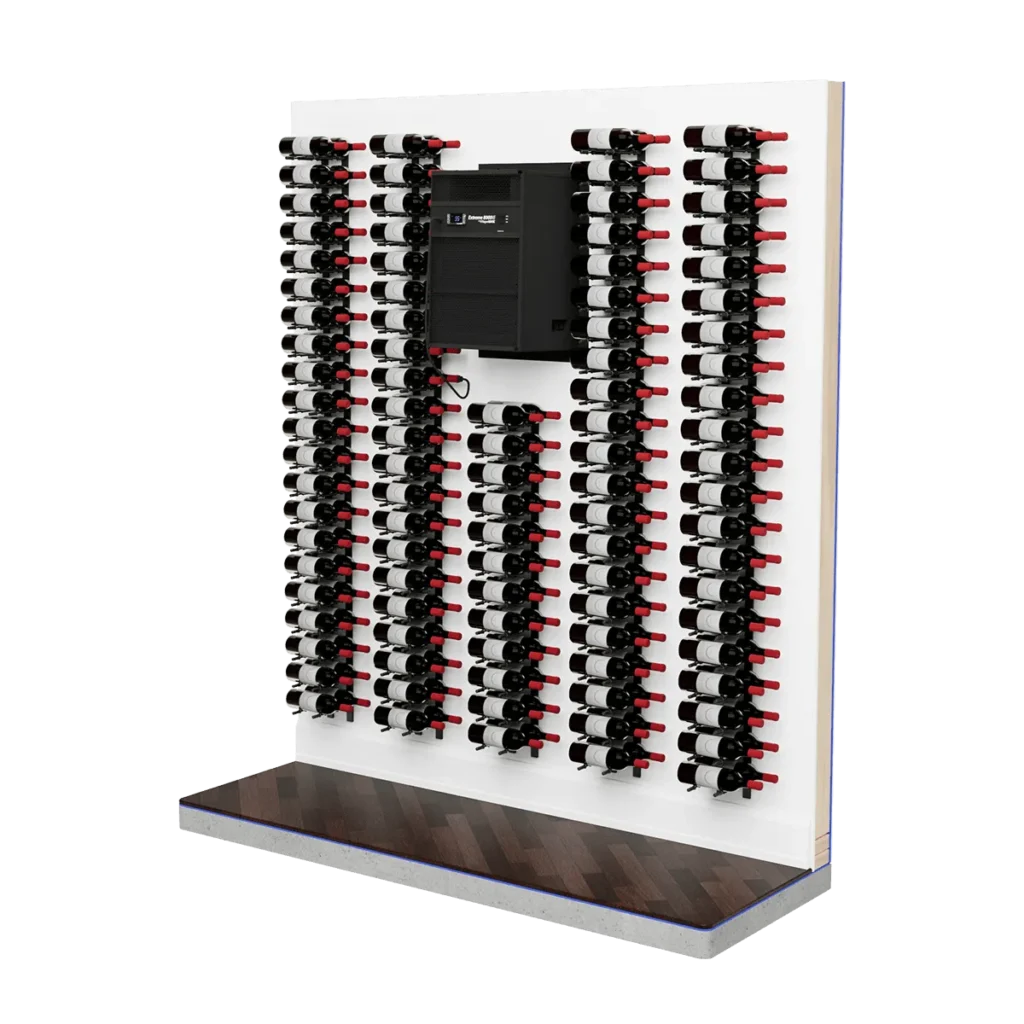
Some of the higher-end or ducted/split-system options (like those in the “Quantum” or “Extreme” series) feature external insulation blankets and advanced air-flow management, which reduce heat loss and improve overall thermal efficiency.
Built-in controllers and monitoring probes in many WhisperKOOL units help maintain stable temperature and humidity, which means the units don’t have to overwork — that helps reduce energy waste.
⚠️ Limitations and caveats
Efficiency — and thus energy savings — depends heavily on the size of your cellar, its insulation, and how well sealed it is. If the cellar is large or poorly insulated, the unit will need to work harder and consume more energy. The best thing to do is to do a Heatload calculation , instead of choosing a wine cooling unit based on cubic feet size.
Smaller or cabinet-specific models (like Slimline) are not suitable for larger wine cellars; using them outside their intended scope may lead to inefficiency or strain.
Bottom line on energy efficiency:WhisperKOOL unitscan be energy-efficient — particularly if you match the right model to your cellar size and ensure good insulation. But energy-efficiency is not automatic — it depends a lot on cellar design and use.
Reliability: Can You Count on WhisperKOOL?
👍 What tends to work in their favor
WhisperKOOL offers a range of models (through-the-wall, split, ducted, etc.), giving flexibility depending on cellar size and use — a feature that supports long-term adaptability.
In their marketed specs, many units are built to operate under harsh ambient conditions and deliver consistent cooling and humidity control, which suggests robust design and materials (especially in their premium series).
👎 What some users and reviews say
Some users report failures after a few years: broken compressors and cellars no longer staying cool in as little as ~3 years.
Replacement parts (e.g. pumps, condensers) appear to be a recurring issue in certain units. According to user reviews, when components fail — sometimes repeatedly — the manufacturer’s warranty may not always cover every replacement, or support may be limited.
In comparison to simpler systems (from some other brands), WhisperKOOL’s advanced, feature-rich units may involve more maintenance (e.g. managing sensors, controls, possibly humidity add-ons), which can affect long-term reliability if maintenance is neglected.
In short: WhisperKOOL has the potential to be reliable — especially if installed correctly, maintained diligently, and matched to the right cellar size. But there is definitely a non-trivial risk of component failures over time, and some users report disappointing longevity or maintenance challenges.
When WhisperKOOL Makes Sense
You should consider WhisperKOOL if:
You have a small to mid-size cellar or wine cabinet and want a compact, relatively efficient unit.
You appreciate digital controls, adjustable fan speeds, and precise humidity/temperature control.
Your cellar is well-insulated and properly sealed, so the unit doesn’t have to overwork.
Final Thoughts
WhisperKOOL wine cellar cooling units can be a good, even excellent choice, provided you match the right model to your cellar size, ensure proper insulation and installation, and stay on top of regular maintenance. They offer energy-efficient operation, flexibility, and control features that are attractive for wine collectors.
However — and this is important — some users have had reliability problems, and maintenance (or lack thereof) can make a big difference. If you prioritize longevity + low maintenance over bells and whistles, you might want to weigh those trade-offs carefully or even explore other brands or simpler cooling solutions.
DONT WASTE YOUR WINE! INVEST IN WINE COOLING UNITS!